
Reviewed · HISTORICAL TOURS
Shared Tour of Bogota’s Historic Downtown (La Candelaria)
Bogotá’s old center is best understood on foot, and this tour tackles its hardest stories head-on: El Bogotazo, the 1948 riot that changed the city, and the long mix of Indigenous, Spanish, political, and modern street culture around La Candelaria. You’ll also see Bolívar Square, Chorro de Quevedo, the emerald trade, Botero, and the famous graffiti of El Embudo alleyway.
I like the clear historical thread, from the Spanish arrival and the myth of El Dorado to today’s Bogotá. I also like the practical local angle: chicha at Concordia market, food and coffee suggestions, and guides such as Lorenzo, Juliana, Leo, Byron, and Santiago who explain the city in plain terms. The catch is the 7-kilometer walk at roughly 8,600 feet, with uphill stretches and sometimes large groups.
Key points to know before you book
- El Bogotazo gives the tour real weight: You’ll learn how the 1948 killing of Jorge Eliécer Gaitán triggered riots and reshaped Bogotá.
- Bolívar Square is the historical anchor: Its surrounding buildings open a window onto Colombia’s government, church, courts, and national identity.
- Chicha connects the past with daily life: A tasting may be offered at Concordia market, though availability is not guaranteed.
- The route mixes monuments with street culture: Expect local graffiti, murals, food alleys, emerald sellers, Botero, and colonial streets.
- The walking is serious: Plan for about three hours, roughly 7 kilometers, rest stops, and some uphill sections.
- The value is strong at $13: You get a live guide, a broad introduction to Bogotá, and practical advice without paying entrance fees.
Starting at the Gold Museum
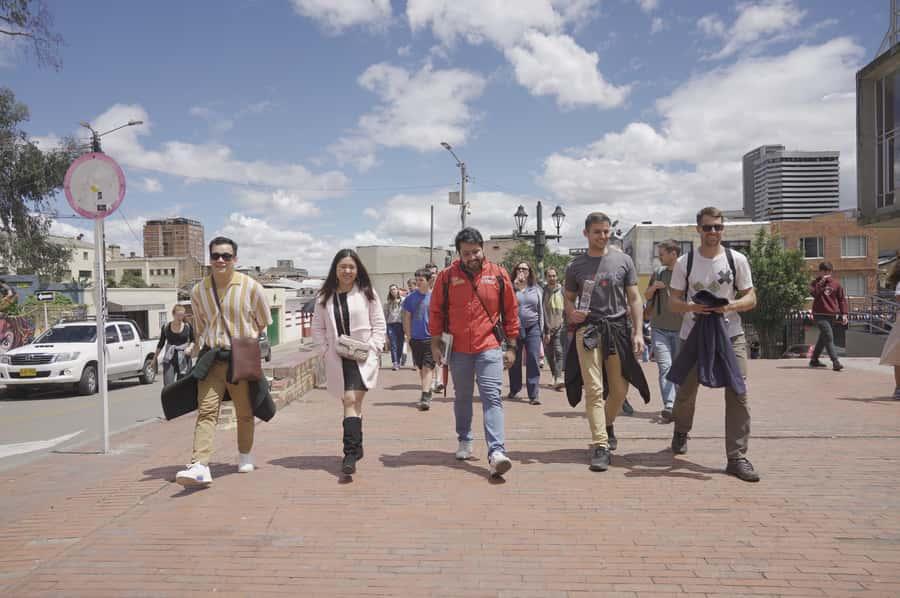
Meet the group in front of the Museo del Oro, marked by Beyond Colombia’s red umbrellas. This is a useful starting point because the Gold Museum sits at the edge of the historic center and introduces one of Colombia’s most famous themes: the connection between gold, Indigenous cultures, and the legend of El Dorado.
You do not enter the museum on this walk, and museum admission is not included. Still, the location helps place Bogotá in context before you begin moving through La Candelaria. If you have extra time, the museum may be worth visiting separately, but the tour itself focuses on the streets, squares, and public buildings nearby.
The guides work in English or Spanish. Beyond Colombia has operated since 2013 and offers several original tours around the country. The guide on your departure can vary. Recent guides include Lorenzo, Juliana, Leo, Santiago, Byron, Lucho, Sergio, Juan, Daniel, and Rafa. Their styles will differ, but the main goal is consistent: connect the city’s buildings and public spaces with the people and events behind them.
Because this is a shared walk, you are not hiring a private guide. Group size can vary. One departure had 36 people, which made the guide’s job harder, especially in the rain. A small group gives you easier access to the guide and a better chance to ask questions, but you should be ready for some crowd management.
More Historical Tours in Colombia
- Historical tour Bogota
★ 5.0 · 72 reviews - 7-hour City Tour of Historic Bogotá with Monserrate
★ 4.7 · 47 reviews - Cartagena: Historic Center and Getsemaní Shared Walking Tour
★ 4.9 · 2,716 reviews
Bogotá’s origins around Chorro de Quevedo
One of the most useful parts of the route explains how Bogotá began and why La Candelaria became the city’s historic core. Chorro de Quevedo is presented as the foundation square, giving you a direct link to the city’s early Spanish period.
This is where the tour moves beyond dates and names. You begin to see why Bogotá developed as the capital of Colombia, how colonial institutions took shape, and how older local traditions survived alongside the new order imposed by Spain.
The setting is compact and atmospheric, but do not expect a quiet museum-style stop. La Candelaria is a working neighborhood, with narrow streets, cafes, shops, walls covered in art, and plenty of foot traffic. The guide’s explanation is what turns these ordinary-looking corners into part of the city’s story.
I particularly like this early stop for first-time visitors because it gives you a framework for the rest of the walk. Once you understand the city’s beginnings, Bolívar Square, the churches, government buildings, and political sites make more sense.
Bolívar Square and the buildings around it
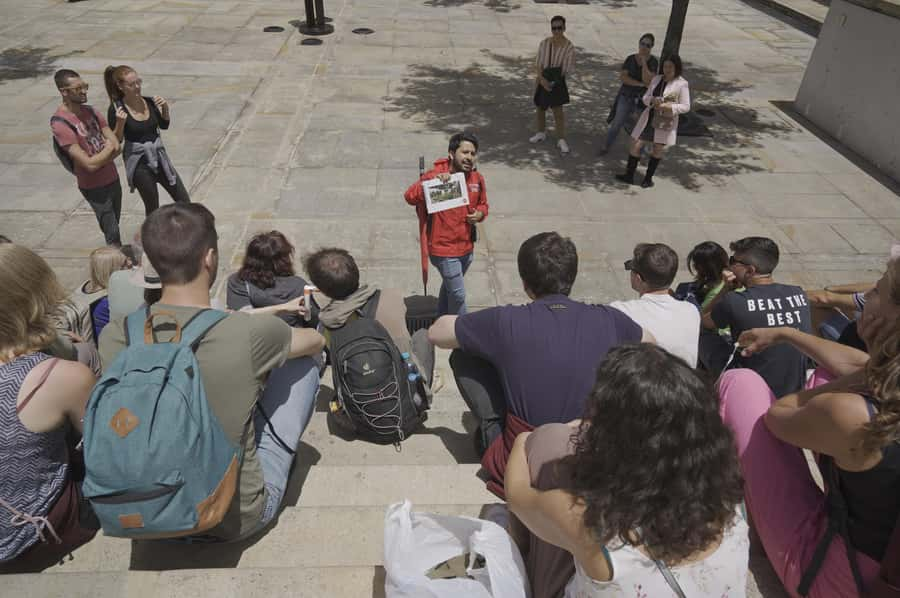
Bolívar Square is the grand center of the tour. It is also where Bogotá’s competing identities meet. The square is surrounded by major buildings and institutions, and the guide explains what they represent and how they developed.
You’ll hear about Simón Bolívar and the role of the square in Colombia’s national story. The surrounding architecture helps show the shift from colonial rule to an independent republic, then to the modern state. The point is not simply to admire façades. It is to understand why this particular space has been used for government, religion, protest, ceremony, and public debate.
The route also covers the Justice Palace siege, one of the more difficult episodes in Colombia’s recent past. This subject may be uncomfortable, but it matters. The tour does not present Bogotá as a polished postcard. It deals with violence, political conflict, and the way national trauma remains tied to public buildings.
A strong guide makes this section clear without turning it into a lecture. Juan was specifically praised for presenting Colombian history in an unbiased way, and that approach is important here. The country’s past includes arguments that remain sensitive. You should expect interpretation and context, not a single simple verdict.
El Bogotazo and the killing of Gaitán
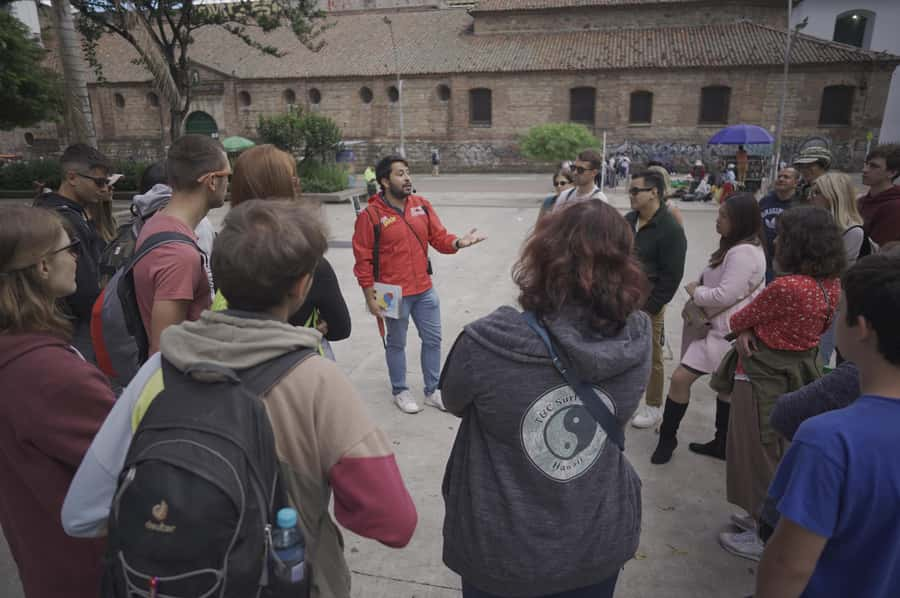
The most important historical stop is the discussion of El Bogotazo, the 1948 riot linked to the killing of political leader Jorge Eliécer Gaitán. This event is central to modern Bogotá. It brought anger and violence into the streets and left a lasting mark on the city’s politics, buildings, and sense of identity.
The tour connects the event to the places around you instead of treating it as an isolated textbook chapter. That makes the subject easier to understand. You can see how a public square, a government institution, or a damaged historic district can carry political meaning long after the original event.
If you know little about Colombian history, this section may become the most valuable part of the walk. It explains why Bogotá can feel both historic and politically charged. It also gives you background for later conversations about inequality, public space, graffiti, and resistance.
The guide’s style matters here. Lorenzo has been singled out for making a long walk feel quick through storytelling, while Juliana has been praised for clear explanations and a friendly manner. Those qualities are useful when the subject is serious. You want enough detail to understand the stakes, but not so much that the tour loses its rhythm.
More Historical Tours in Bogota:
- Lima’s Vibrant Heritage: Exploring the City’s Landmarks Half-day
★ 4.5 · 581 reviews - Santiago: Guided Walking Tour of the Historical Old Town
★ 4.8 · 459 reviews - Maria Fumaça – Wines and History
★ 4.0 · 242 reviews - Rio de Janeiro: Historic Rio and Santa Teresa Half-Day Tour
★ 4.4 · 228 reviews
Chicha at Concordia market
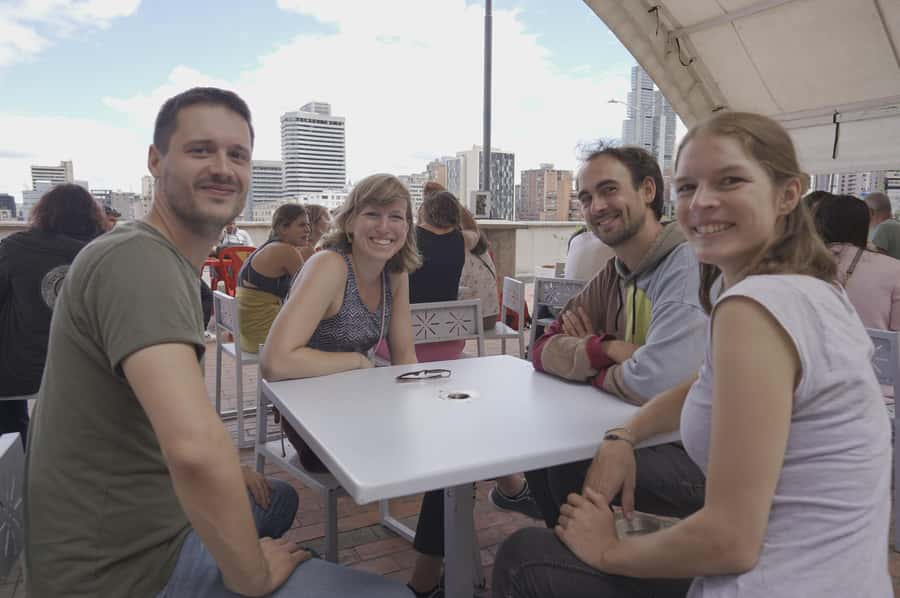
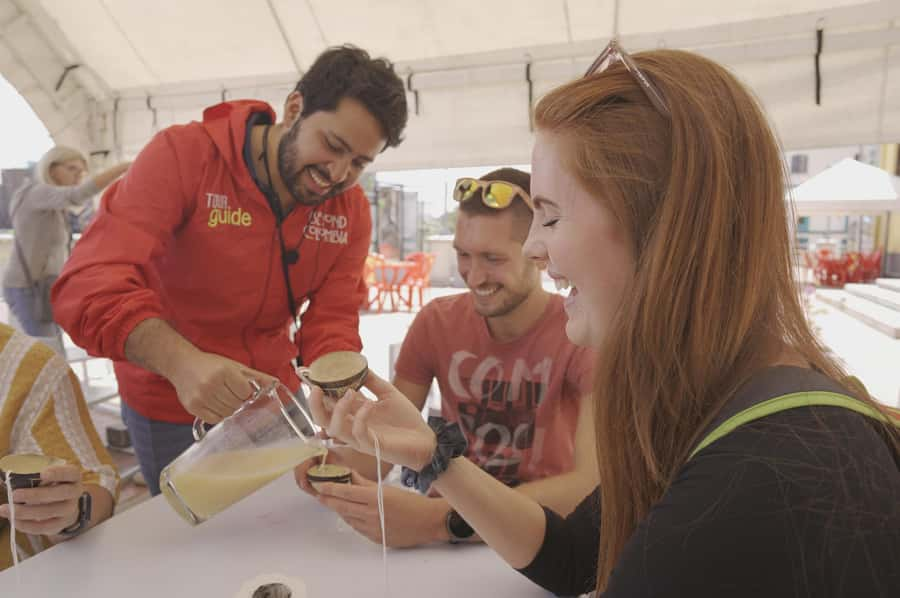
At Concordia market, the tour turns from political history to food and tradition. Chicha is an ancestral drink with a long cultural role in Colombia. The tasting, when available, gives you a small but memorable connection to local heritage.
Chicha is not a guaranteed part of every departure, so you should treat it as a possible extra rather than the main reason to book. It is also not necessarily to everyone’s taste. One participant found the drink disappointing. That is fair warning: this is a cultural experience, not a polished cocktail stop.
The market setting is valuable because food traditions make history easier to grasp. You are not just hearing that an old drink exists. You are seeing how it remains part of Bogotá’s cultural conversation. The route also includes a local gastronomic alley, with suggestions for places to eat later.
Food and drink are not included beyond the possible tasting. Bring water, especially if the day is warm or the group is moving at a steady pace. The tour makes stops to listen, but it is not organized around long breaks for refreshments.
Graffiti, murals, and El Embudo alleyway
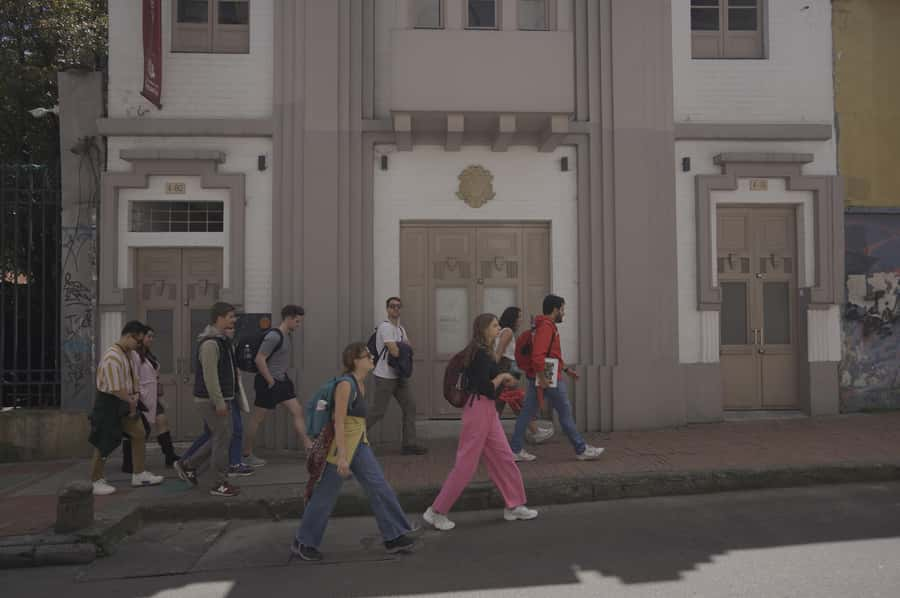
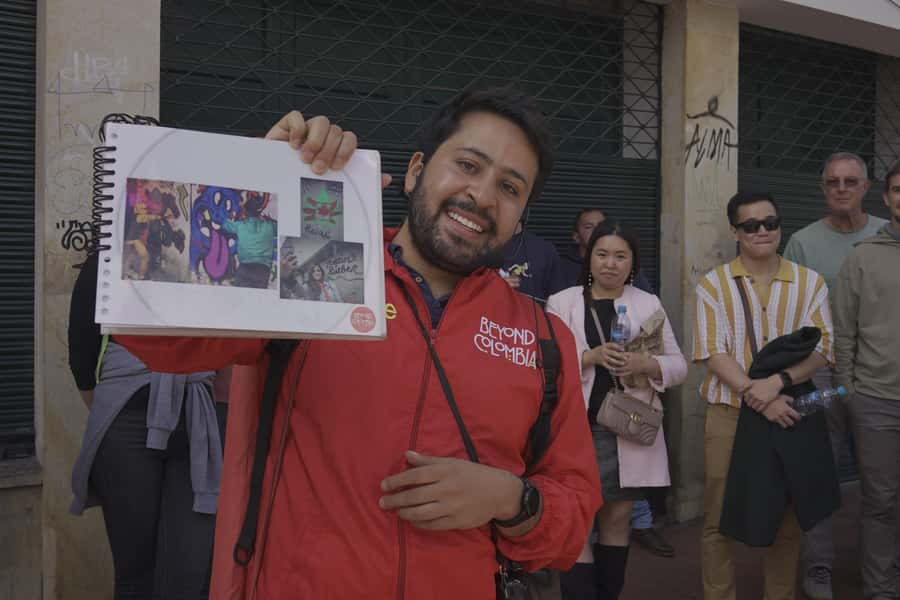
La Candelaria is famous for its street art, and the route includes local graffiti and murals, especially around El Embudo alleyway. The guide explains the influence, techniques, and political resistance connected with the work.
This is one of the tour’s best contrasts. Earlier, you see colonial streets and national institutions. Here, walls become a public gallery for modern voices. The art is not treated as decoration alone. It can express identity, protest, memory, neighborhood pride, and frustration with power.
The graffiti section also helps you understand why La Candelaria feels different from a conventional historic district. The old and new sit close together. A colonial doorway may be a few steps from a large painted wall, a small cafe, or a street vendor.
Bring a camera, but flash photography is not allowed. You should also keep your belongings secure. The route passes through crowded areas, and the company’s advice is sensible: keep your friends close and your valuables even closer.
The emerald market, the False Door, and Botero
Several shorter stops add local color to the main historical story. The informal emerald market introduces one of Colombia’s best-known products and the informal economy that surrounds it. This is not a formal shopping experience, and you should not assume that you will be buying anything.
The False Door provides another small look at everyday Bogotá. The name refers to a local institution with a long place in the city’s food culture, and the stop helps keep the walk grounded in ordinary neighborhood life rather than grand monuments alone.
The route also passes near the Botero Museum and a cultural square. Fernando Botero is one of Colombia’s best-known artists, and the museum offers useful context for his work. Museum entry is not included, so think of this as an orientation stop. If you want to see the collection, you will need to return separately and pay any applicable admission.
This is a good example of how the tour works best as a first or second-day activity. You will not fully explore every museum, market, or building. Instead, you get a map of what deserves more of your time. Lucho’s practical suggestions for other places to visit are exactly the kind of help that can improve the rest of your stay.
How hard is the 150-minute walk?
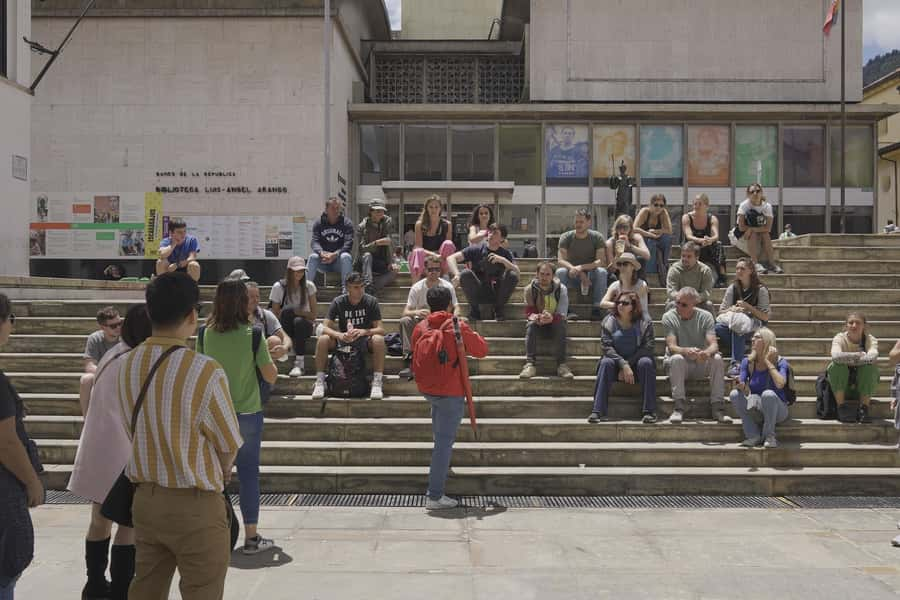
The advertised duration is 150 minutes, though the provider also describes the experience as approximately three hours. Either way, set aside a half day once you include getting to the meeting point and the possibility of delays caused by weather or group size.
The distance is about 7 kilometers. That is a substantial walk, especially at Bogotá’s altitude of roughly 8,600 feet. You may notice the uphill sections more than you expect, even if you are normally comfortable walking around cities.
One participant found the climb to La Candelaria tiring and wished for more stops to buy water or drinks. That is useful advice. Bring your own water rather than counting on the route to provide regular refreshment stops.
Wear comfortable shoes and clothes. A hat, sunscreen, and camera are also recommended. Bogotá’s weather can change quickly, so bring a rainproof coat or umbrella. Rain did not stop one guide, Rafa, from managing the route well, but wet streets and crowded sidewalks can make the walk less comfortable.
This tour is not suitable for wheelchair users or people with mobility impairments. The hills, distance, uneven urban route, and shared pace make that limitation important. If you need frequent seated breaks, ask before booking so you can judge if the walk suits you.
Is $13 a good value?
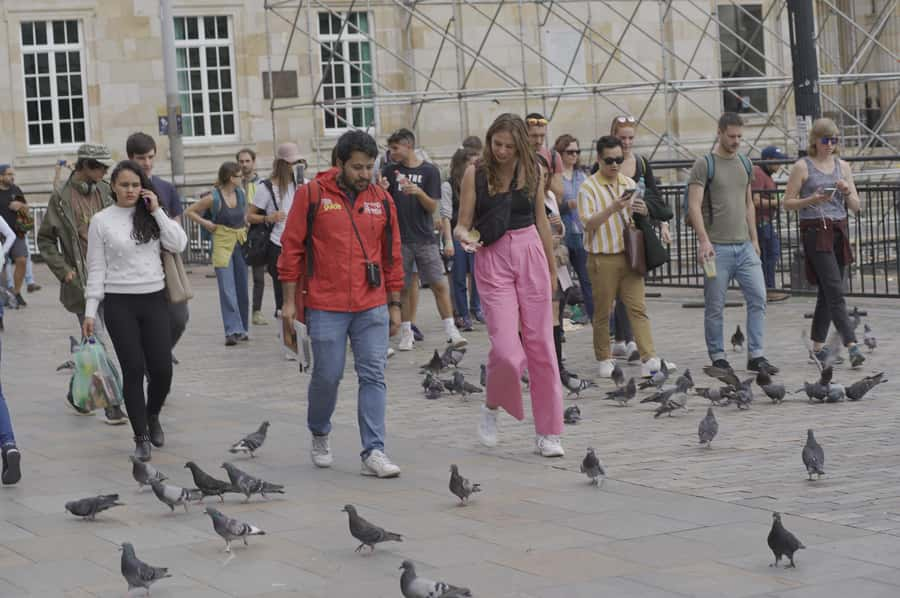
At $13 per person, this is an inexpensive way to get a broad introduction to central Bogotá. You receive a live English or Spanish-speaking guide, an organized route through major historic sites, local recommendations, and a possible chicha tasting.
The value comes from the range. A private tour might give you more time for questions, but it would cost far more. A self-guided walk would be cheaper, yet you would miss the links between El Bogotazo, Bolívar Square, colonial foundations, street art, and local food traditions.
There are limits. You do not get transportation, museum entrances, food, drinks, or souvenirs. The group can be large, and the route is too long for anyone hoping for a gentle stroll. Still, the price is hard to fault if you want orientation and context rather than a luxury experience.
Free cancellation up to 24 hours before the start and reserve-now, pay-later terms add flexibility. The provider also gives participants a wristband with possible discounts at recommended local partners. These benefits are useful, but they should be treated as extras rather than the reason to book.
Who will enjoy this Bogotá walk?
I would choose this tour for a first or second day in Bogotá. It gives you the basic map, introduces the historic center, and leaves you with ideas for museums, meals, coffee, and later walks.
It suits you best if you:
- Enjoy history explained through real places
- Want an introduction to Colombian politics and culture
- Are comfortable walking about 7 kilometers
- Like mixed groups and meeting other people
- Want practical local recommendations
- Prefer a low-cost orientation to a private tour
You may want another option if you dislike group tours, need a slow pace, or want extended time inside museums. You should also think twice if uphill walking at altitude is difficult for you.
Should you book the Beyond Colombia tour?
Book it if you want Bogotá’s historic center explained as a living city rather than a line of monuments. The strongest parts are the discussion of El Bogotazo, the buildings around Bolívar Square, the chicha tradition, and the street art of El Embudo.
Go in prepared for a long walk, changing weather, and a group that may be bigger than expected. Bring water, wear good shoes, and keep your schedule flexible. At $13, this is a sensible introduction to La Candelaria, especially when you want history, local culture, and practical orientation in one outing.
FAQ
Where does the tour meet?
The meeting point is in front of the Museo del Oro, beneath Beyond Colombia’s red umbrellas.
How long does the tour last?
The stated duration is 150 minutes, or two and a half hours. The provider also describes it as approximately three hours.
Which languages are available?
The tour is offered in English and Spanish.
What places are included on the route?
The route includes Bolívar Square, Chorro de Quevedo, La Candelaria, the Justice Palace area, the local gastronomic alley, the informal emerald market, the False Door, Botero’s Museum area, cultural squares, and El Embudo alleyway.
Is chicha included?
A chicha tasting is included when available. Availability is not guaranteed, and other drinks and food are not included.
How much walking is involved?
You should expect to walk about 7 kilometers, with some uphill sections and rest stops along the way.
Is the tour suitable for wheelchair users?
No. The experience is not suitable for wheelchair users or people with mobility impairments.
Just added around Bogota
- Tour of Zipaquirá: Visit the Salt Cathedral and the main squares★ 4.5 · 55 reviews
- Bogota Walking Tour Teusaquillo, a different part of the city★ 5.0 · 41 reviews
- La Candelaria Walking Private Tour (3 Hrs.)★ 5.0 · 51 reviews
- Private Zipaquira Salt Cathedral and Guatavita Lagoon Tour from Bogota★ 4.5 · 44 reviews
- Tejo and Beer Tour in Bogotá★ 5.0 · 35 reviews
- Hiking to the largest paramo on earth : Sumapaz★ 5.0 · 49 reviews
- MINA CATEDRAL DE SAL ZIPAQUIRA Tour Privado★ 4.5 · 38 reviews
- Private Salt Cathedral of Zipaquira Tour from Bogota with Lunch★ 5.0 · 88 reviews
Historical Tours, compared.
Historic Center and Getsemaní Shared Walking Tour
Read our review →
Lima’s Vibrant Heritage: Exploring the City’s Landmarks Half-day
Read our review →
Lima: Historic Center Street Food, Market, and Eateries Tour
Read our review →
Nazis in Buenos Aires: a historical walking tour
Read our review →
Browse the lists this tour appears in