
Reviewed · FAVELA TOURS
Rio De Janeiro: Half-Day Rocinha Favela Walking Tour
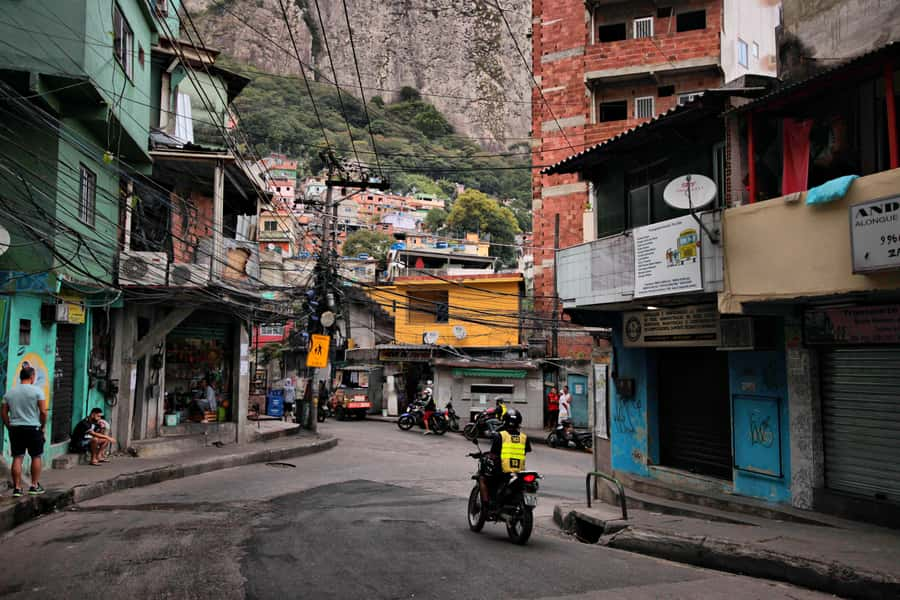
Rocinha is not a movie set or a roadside photo stop. It is a vast hillside community where people live, work, raise families, and build businesses. This three-hour walking tour gives you a closer look than a vehicle tour, with local guides leading you through narrow lanes, stairs, viewpoints, and community spaces.
I like two things right away: the tour is designed around small-group walking rather than jeep sightseeing, and the guides explain daily life through personal experience. Guides such as Wellington, Alberto, Daniel, and Martin have been praised for their warmth and clear explanations. The main drawback is the terrain. Steep stairs and tight passageways can be tiring, and the experience is not suitable for anyone with mobility problems or knee trouble.
Key points to know before you book
- Walk through Rocinha with local guides: The tour focuses on the community’s history, social challenges, and ordinary routines rather than sensational stories.
- Expect steep stairs and narrow alleys: Comfortable shoes are essential, and the route can be physically demanding.
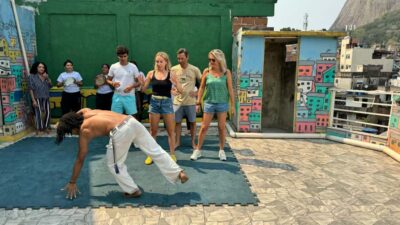
- Capoeira may be a highlight: Several tours include a visit to a local capoeira school, sometimes with music, instruments, dancing, and a demonstration.
- Plan for a rooftop viewpoint: A stop such as Novo Visual Rocinha can bring wide views over the favela and Rio, though drinks and some optional extras cost more.
- Meet at Copacabana Palace: Gather at 13:25 beside the Journalist Ibrahim Sued statue in front of the hotel.
- The $35 price is reasonable: You get a local guide and a three-hour walking experience, but food, drinks, hotel pickup, and optional purchases are extra.
Why Rocinha is worth seeing on foot

Rocinha is often reduced to a few dramatic images in films and news reports. A walking tour gives you a more useful picture. You see a functioning neighborhood, not an abstract symbol of poverty or danger.
The route is meant to correct the easy assumptions outsiders bring with them. Your guide can explain how the favela developed, how people earn a living, and how residents manage everyday life amid social and economic pressure. You also have the chance to ask questions in a setting where the answers are tied to real homes, streets, schools, and businesses.
That personal connection matters. Alberto, one of the guides praised for this tour, has lived in Rocinha for more than 60 years. Daniel has also been described as someone who grew up in the community and shared personal stories about his life there. Guides change from departure to departure, but the local connection is the heart of the experience.
You should still approach the visit with care. Take photographs thoughtfully, follow your guide’s advice, and remember that people live here. The point is not to collect pictures of poverty. It is to understand a part of Rio that is usually discussed from a distance.
More Walking Tours in Brazil
- Rio de Janeiro: Rocinha Favela Walking Tour with Local Guide
★ 4.8 · 3,052 reviews - Sunrise and Sunrise Walk Two Brothers with Local Guide
★ 5.0 · 193 reviews - Rio de Janeiro: Little Africa Heritage Walking Tour
★ 4.9 · 177 reviews
Meeting at Copacabana Palace

The tour begins at 13:25 in front of the Belmond Copacabana Palace at Avenida Atlântica 1702. Look for the statue of journalist Ibrahim Sued on the same sidewalk as the hotel’s main entrance, and wait beside it.
This is a clear meeting point, but do not cut it close. You are responsible for reaching the hotel, since hotel pickup is not included. Give yourself enough time to get to Copacabana and find the statue without rushing.
The starting point also makes the tour easy to pair with a morning at the beach or other nearby sights. Since the walk lasts about three hours, you should expect to finish in the late afternoon, depending on the pace and exact route.
Guides speak English, Portuguese, or Spanish. If language is important to you, confirm the language available when booking. A good guide can make a major difference here because the tour depends on explanation, context, and trust, not just on reaching a viewpoint.
Walking through Rocinha’s narrow lanes
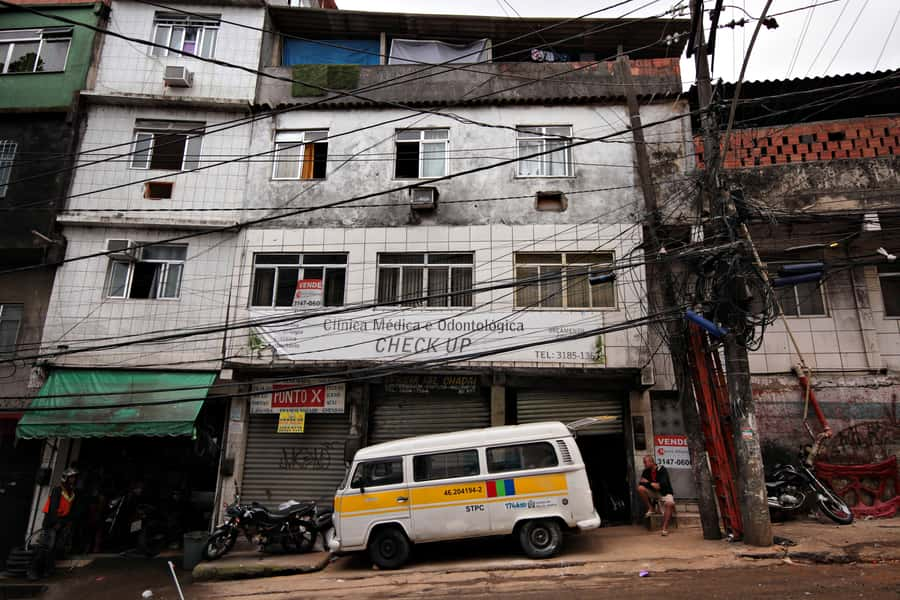
The tour’s main strength is its format. Instead of sitting in a jeep and looking into the streets, you walk through them. That changes what you notice.
You may see people going about ordinary business, hear local stories, and get a sense of how homes and shops fit into the hillside community. The guides explain what you are seeing and help you move through the area respectfully. You are not simply pointed toward a row of buildings and sent on your way.
The route includes narrow alleys and stairs. Some sections are steep enough to demand steady footing, and the terrain can be tiring even though the tour lasts only half a day. Wear closed, comfortable shoes and clothing that lets you move easily. Bring water, since food and drinks are not included.
The physical demands are not a minor footnote. This tour is specifically unsuitable for wheelchair users and people with mobility impairments, recent surgery, knee problems, or other conditions that make stairs difficult. The age guidance also excludes children under six and people over 70 or 75, depending on the booking information. Weight limits are listed at 130 kilograms and 140 kilograms in different parts of the information, so anyone close to those limits should confirm before reserving.
The stories behind everyday life
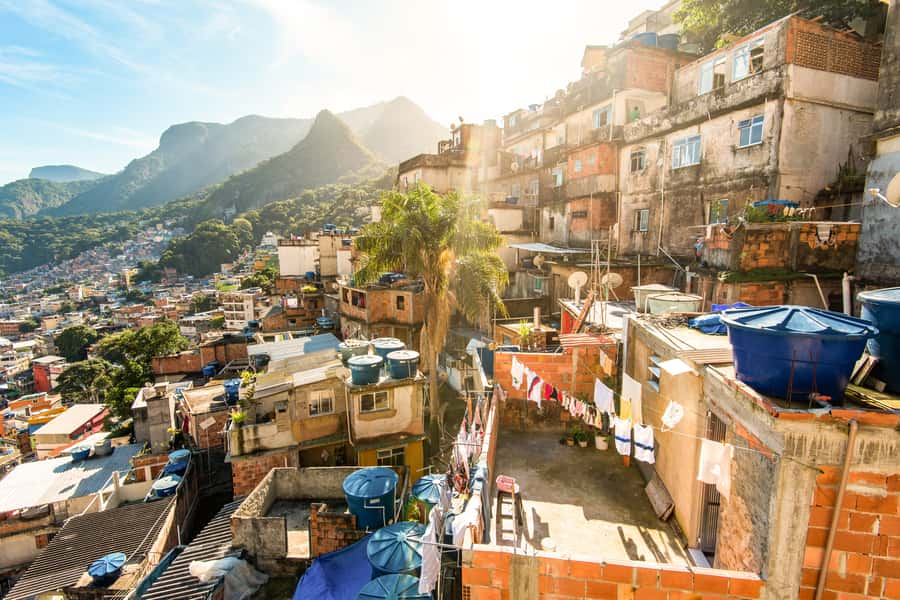
A strong part of the tour is the chance to move past the idea that a favela is defined only by crime or hardship. Your guide discusses the community’s social and economic challenges, but the story does not stop there.
You also hear about families, work, culture, local pride, and the ways residents create a life in difficult conditions. This balance is important. A tour that shows only hardship can be just as misleading as one that pretends problems do not exist.
The best guides use their own connection to Rocinha to make the subject understandable. Alberto’s long life in the community, Daniel’s personal stories, and Wellington’s repeated praise for clear English and a reassuring manner show why the guide matters so much. Martin has also been praised for explaining the political and social side of life in a favela with humor and realism.
You should allow time for questions. Several guides are described as patient and willing to explain rather than rush people through. That makes the visit feel more like a conversation than a checklist of photo stops.
More Walking Tours in Rio de Janeiro
- Learn the History of Rio with an Unforgettable City Center Walking Tour
★ 5.0 · 82 reviews - Rio de Janeiro: Bossa Nova Walking Tour with Guide
★ 4.9 · 46 reviews - Rio de Janeiro: Downtown Walking Tour
★ 4.3 · 41 reviews - Favela Santa Marta: Walking Tour with local guide
★ 4.8 · 41 reviews
The rooftop view over Rio
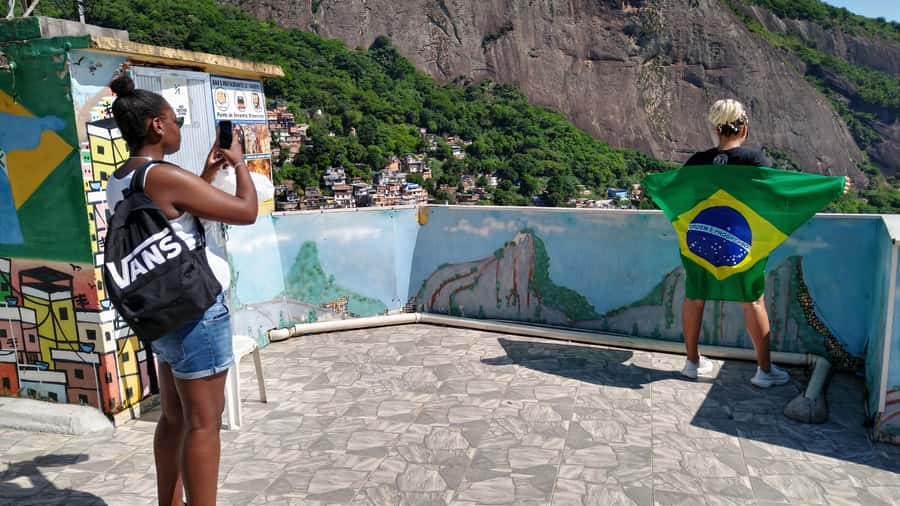
A rooftop stop is one of the tour’s most memorable contrasts. From high in Rocinha, you can look across the community and out toward Rio’s famous hills and coastline. The view helps you understand the physical relationship between the favela and the wealthier areas nearby.
A stop at Novo Visual Rocinha has been singled out for its broad panorama. It can be a good place to pause, take photos, and see how densely the community climbs the hillside.
The rooftop is also a commercial stop, so budget accordingly. Drinks are not included, and one account noted a charge for a drone video, priced at R$200. You do not need to buy such extras to enjoy the viewpoint, but you should know that the tour may offer optional purchases along the way.
I like this stop because it adds geographic context. From street level, Rocinha can feel like a maze of lanes and stairways. From above, you can see its scale and its position within Rio. Just keep the camera pointed where your guide advises, and do not treat private homes as display pieces.
Capoeira, music, and community culture
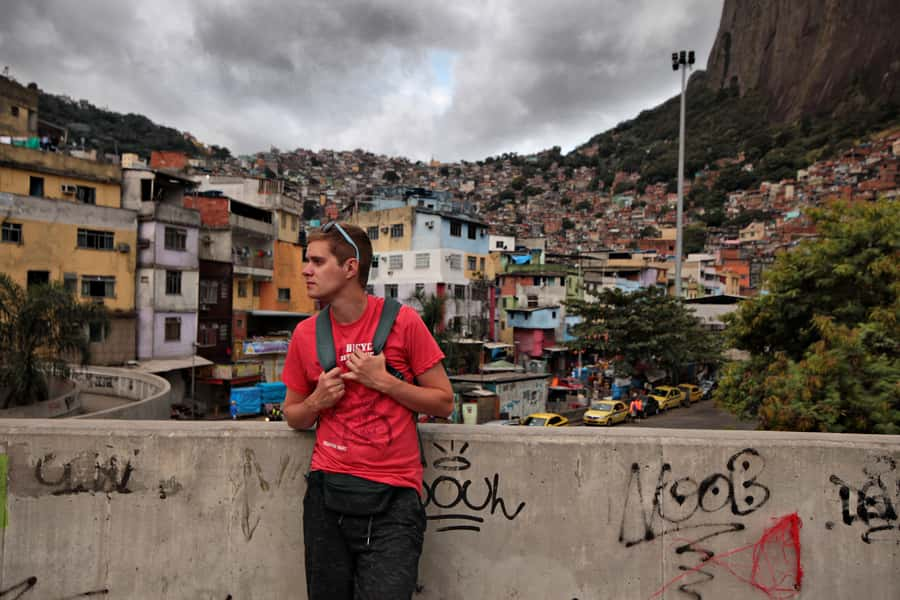
The capoeira portion gives the tour a welcome change of pace. Several itineraries include a visit to a local capoeira school, where you may see a demonstration, learn about the tradition, and sometimes play instruments or join in simple movements.
Capoeira is not just a performance added for tourists. It combines movement, music, history, and community teaching. The visit helps explain how culture develops and survives in places often described only through their problems.
Tiane and her team have been praised for their work with local children. One account described a session that included music, dancing, and instruments, while another highlighted the passion of a former professional female football player who works with children in the community.
Expect the format to vary. This is not advertised as a formal capoeira class with a fixed program. It is better to think of it as a cultural visit that may include a demonstration and participation. Donations may be suggested, so carry some Brazilian reais if you want to support the school directly.
Safety and the ethics of visiting a favela
Safety is the concern most people have before booking. The tour is organized with local guides and hosts, and the guide’s relationship with the community is intended to help the group move respectfully through Rocinha.
Many participants have described feeling well looked after, including in areas they might not have visited alone. That does not mean you should wander off independently or assume conditions are identical every day. Stay with the guide, follow local instructions, and avoid drawing attention with expensive jewelry or large amounts of cash.
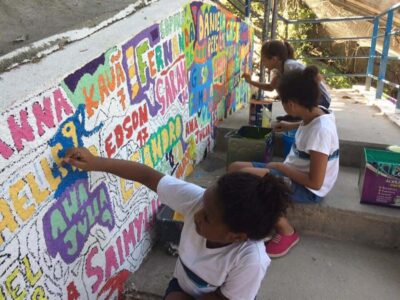
The ethical question is just as important as the safety question. A favela tour can become exploitative if residents are treated like scenery. This experience tries to avoid that by walking in small groups, using local guides and hosts, and including a monetary contribution to the community.
Still, your behavior matters. Ask before photographing people, especially children. Listen to the guide’s instructions about cameras and private spaces. A respectful attitude is not a bonus here. It is part of what makes the tour worthwhile.
What the $35 price includes
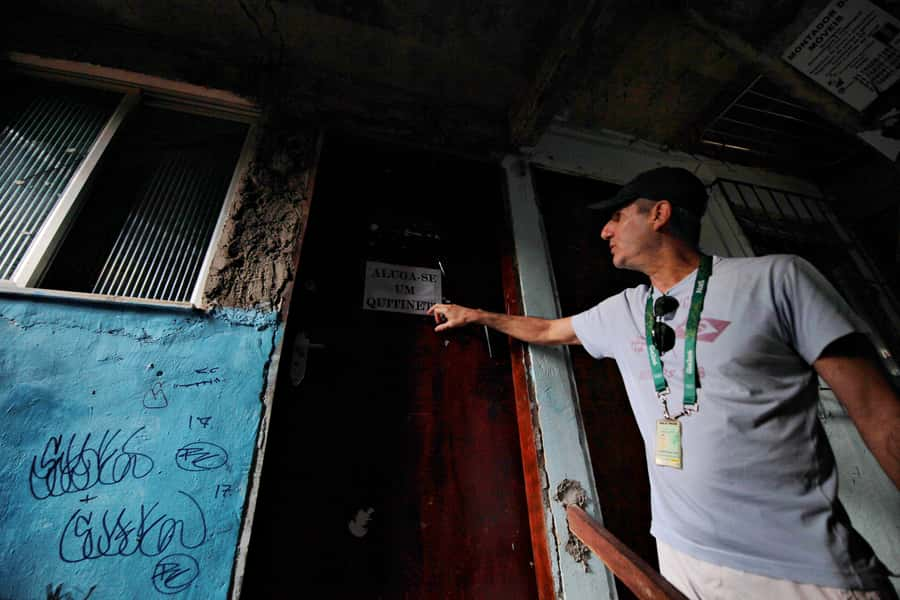
At $35 per person, this is a modestly priced half-day experience for Rio. The fee includes a local guide and the walking tour, plus a contribution to the favela community. You are paying for access, interpretation, and local organization rather than transport or a long list of included meals.
The value is strongest if you want context. A quick viewpoint visit might cost less, but it would not give you the same chance to ask questions, meet local hosts, or understand what you are seeing. The walking format also gives you more contact with the physical layout of Rocinha than a vehicle ride.
The price does not include food, drinks, hotel pickup, rooftop purchases, drone videos, or possible donations connected with the capoeira visit. Bring some cash for a drink or small purchase, but do not feel obliged to buy every optional extra.
Free cancellation is available up to 24 hours before the start time, and you can reserve now and pay later. Those terms are useful if your Rio schedule is still shifting.
Who should book this experience

You should consider this tour if you want a guided look at Rio beyond beaches, viewpoints, and polished tourist districts. It suits curious adults who are comfortable walking on uneven ground and who want to hear about social issues without reducing the community to a headline.
It is also a good choice if you prefer direct contact with local guides. Wellington, Daniel, Alberto, Martin, and other guides have been praised for their warmth, humor, personal stories, and ability to explain difficult subjects. You cannot guarantee a particular guide unless the operator confirms one, but the guide is central to the experience.
You may want to skip it if stairs are difficult, if you dislike group walking, or if you expect a conventional sightseeing tour with fixed attractions. Rocinha is a living neighborhood, so the route and cultural stops may have some variation.
This is not the right tour for someone seeking a polished, predictable show. It is better for you if you want a grounded introduction and are willing to listen as much as you look.
Practical advice for a better visit

Wear comfortable shoes with good grip. Sandals or thin-soled shoes are a poor match for steep stairs and uneven paths.
Dress simply and comfortably. Avoid flashy jewelry, large cameras, and anything you would worry about carrying through a crowded area. Bring a camera if you like photography, but use it with restraint.
Carry water and some Brazilian reais. Food and drinks are not included, and you may want to buy a drink at the rooftop or make a donation during the capoeira visit.
Keep the group together. Your guide knows how to move through the neighborhood and when to pause, explain, or change direction. The safest and most respectful approach is to follow that lead.
Should you book the Rocinha walking tour?
I would book this tour if you want to understand a part of Rio that most standard sightseeing leaves out. The combination of a local guide, personal stories, street-level walking, a rooftop view, and capoeira gives you more substance than a drive-by favela visit.
The best reason to go is not the photo from the top. It is the chance to replace simple stereotypes with a more human and complicated picture. The main tradeoff is physical effort, and the tour is not suitable for everyone.
At $35, the experience offers good value for a three-hour guided visit, especially since a contribution to the community is included. Go with comfortable shoes, an open mind, and respect for the people who live there, and Rocinha can become one of the most meaningful parts of your time in Rio.
FAQ
Where does the Rocinha tour meet?
Meet at 13:25 in front of the Belmond Copacabana Palace at Avenida Atlântica 1702, Copacabana. Wait beside the Journalist Ibrahim Sued statue on the same sidewalk as the hotel’s main entrance.
How long does the tour last?
The walking tour lasts three hours.
Which languages are available?
The live guide service is available in English, Spanish, and Portuguese.
Is hotel pickup included?
No. You need to reach the meeting point at the Belmond Copacabana Palace yourself.
Is the tour suitable for people with mobility problems?
No. The route includes narrow alleys and stairs and can be physically demanding. It is not recommended for people with knee problems, mobility impairments, recent surgeries, or wheelchair users.
What does the price include?
The $35 price includes a local guide and the walking tour. A monetary contribution to the favela community is also included. Food, drinks, hotel pickup, and optional purchases are not included.
More Favela Tours in Rio De Janeiro
- Rio de Janeiro: Favela Santa Marta Top Tour with Local Guide
★ 4.9 · 488 reviews - Rio de Janeiro: Favela Santa Marta Tour with Resident Guide
★ 4.6 · 220 reviews - Rio: Favela Rocinha Tour with Local Guide & Secret Spots
★ 4.7 · 218 reviews - Favela Tour The Original, Rocinha & Vila Canoas since 1992
★ 4.5 · 113 reviews
Just added around Rio De Janeiro
- Skip the Line: Lagoa Misteriosa Admission Ticket with Scuba Diving Experience★ 5.0 · 81 reviews
- Rio de Janeiro: Tijuca Peak Guided Hike★ 4.7 · 56 reviews
- Sugarloaf Mountain Fast-Pass Ticket and Guided Tour★ 4.4 · 62 reviews
- Rio de Janeiro: Sugarloaf Mountain Hike and Climb★ 5.0 · 45 reviews
- Rio de Janeiro: Sunrise Lookout and Christ the Redeemer Tour★ 5.0 · 121 reviews
- Rio de Janeiro: Samba Class and Samba Night Tour★ 4.6 · 115 reviews
- Rio Surf Experience★ 4.9 · 37 reviews
- Rio Samba Bus: hop-on hop-off city tour in Rio de Janeiro★ 3.8 · 94 reviews
Favela Tours, compared.
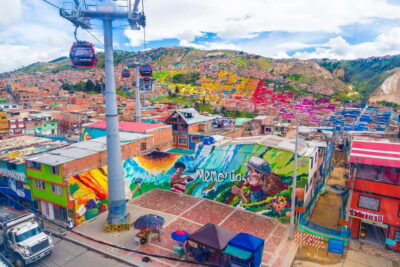
Bogotá´s Barrios: El Paraíso Favela Tour with Cable Car
Read our review →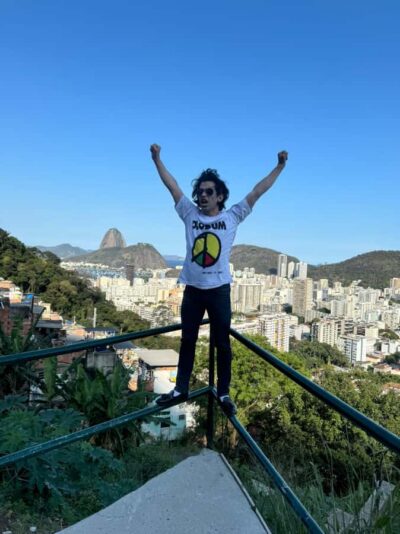
Favela Rocinha Tour with Local Guide & Secret Spots
Read our review →
Favela Tour The Original, Rocinha & Vila Canoas since 1992
Read our review →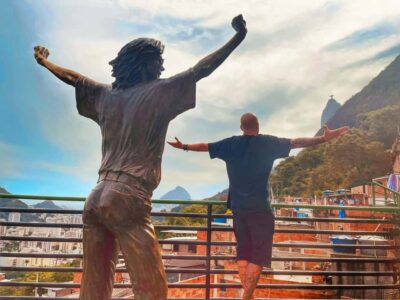
Favela Santa Marta: Walking Tour with local guide
Read our review →Browse the lists this tour appears in