
Reviewed · STREET ART
Rio Street Art Tour
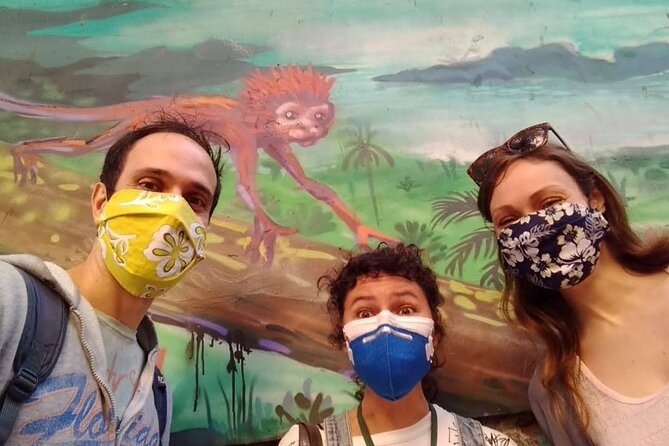
Rio’s street art is not just decoration. It is a public record of the city’s artists, neighborhoods, politics, humor, and daily life. This four-hour walk takes you from Copacabana to Botafogo, with a quiet stop at São João Batista Cemetery for an optional tribute to Chilean artist Selarón.
I like the small group limit of 15, which gives your guide room to answer questions and adjust the pace. I also like the human side of the tour: guides such as Nina explain the artists behind the work, share stories from Rio’s art scene, and help you see murals as more than colorful walls.
The main consideration is price. At $75 per person, this is not a cheap walking tour, especially since transport between neighborhoods and hotel pickup are not included. You are paying for focused art expertise and a four-hour route, not a full-day city tour.
Key points to know before you book
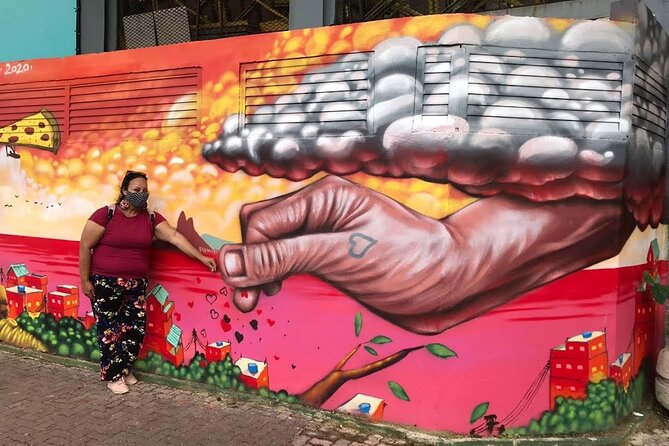
- Three distinct Rio neighborhoods: The route begins in Copacabana, pauses at São João Batista Cemetery, and ends in Botafogo.
- A guide who brings the artists into focus: Nina is praised for explaining personal stories, current Brazilian artists, and the meaning behind individual works.
- A quiet Selarón connection: You may visit Selarón’s resting place for a personal tribute to the artist behind Rio’s famous tiled staircase.
- A walk with local context: The tour connects folk art, street art, neighborhood life, and the changing identity of Rio.
- A practical metro-to-metro route: You meet near Siqueira Campos station and finish near another metro station in Botafogo.
- A premium price for a half-day outing: The experience suits art lovers who value a specialist guide more than a low-cost overview.
Why Rio’s street art deserves a closer look
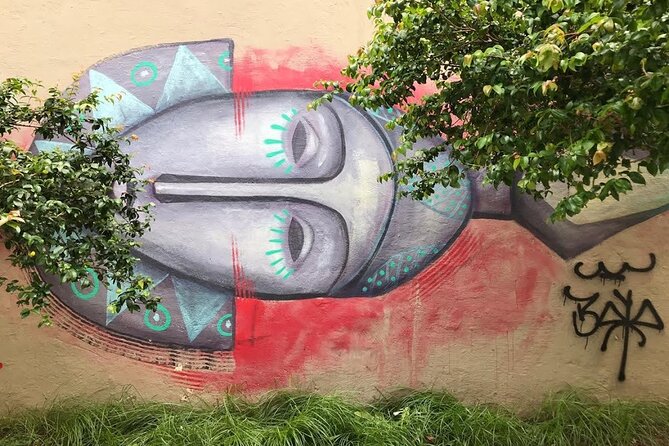
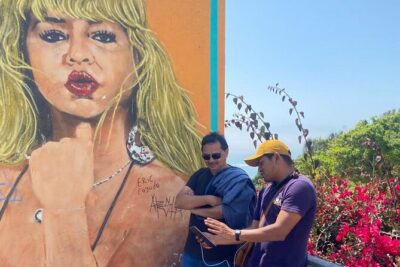
A street art tour gives you a different way to read Rio. Instead of moving from one famous viewpoint to another, you spend time looking at buildings, houses, walls, and neighborhood corners. The city becomes the gallery, and the setting matters as much as the paint.
Your guide provides the missing layer. You learn who made a piece, what sort of work the artist is known for, and how folk art and graffiti fit into Rio’s culture. That context is useful because street art can be temporary. A mural may be painted over, altered, or partly hidden by construction, so the story you hear during the walk may be as lasting as the image itself.
I especially like that this is not presented as a simple hunt for large murals. The route includes art in several settings, including residential streets and buildings. That gives you a better sense of how art belongs to everyday Rio rather than existing only in designated art districts.
The experience is also personal in tone. Nina is repeatedly praised for her passion, clear English, good humor, and ability to explain artists without making the subject feel academic. She also checks whether people need water or a rest, a small point that matters during four hours on foot.
More Street Art Tours in Rio de Janeiro:
- Rio Street Art Tour
★ 5.0 · 39 reviews - Palermo: Graffiti and Street Art Guided Tour in English
★ 4.8 · 684 reviews - Valparaiso: Street Art, Funiculars and Port City Tour
★ 4.8 · 214 reviews
Copacabana: begin with art in the neighborhood
The first section lasts about one hour and 30 minutes in Copacabana. The meeting point is Rua Siqueira Campos, 96, in Copacabana, Rio de Janeiro.
This opening section helps you get oriented. Rather than rushing straight to a single famous wall, you look at art around the neighborhood while hearing about Rio’s street art scene and the city itself. Copacabana is a useful starting point because you see the work in a familiar urban setting, among buildings and homes rather than inside a museum.
Expect to spend time stopping at individual works and discussing what you are seeing. Your guide may help you identify artists, explain a technique, or point out connections between folk art and modern street work. Several people who took the tour with Nina particularly valued her ability to explain both major names and lesser-known artists.
This is also where the walking format begins to pay off. You are not viewing art through a vehicle window. You can pause, look closely, ask questions, and notice how a piece fits its wall or street. Bring comfortable shoes and water. The tour includes several hours of walking, and the guide’s flexible pace helps, but it is still an active half-day.
The drawback is that the tour does not promise a fixed list of artworks. Street art changes, and the exact stops can depend on what is present and accessible on the day. If you need a predictable checklist of famous murals, this may feel less tidy than a standard sightseeing route.
São João Batista Cemetery: a quieter link to Selarón
The second stop lasts about one hour and 10 minutes at São João Batista Cemetery. Admission is included, and the itinerary allows you to choose whether to see an intimate tribute to Selarón at his resting place.
This stop adds a more personal note to the tour. Selarón is closely associated with Rio’s colorful tiled staircase, and visiting his grave shifts the focus from public walls to the life and memory of an artist. It is a thoughtful pause after the street scenes of Copacabana.
The cemetery also changes the rhythm of the outing. You are not only looking at art in public spaces. You are considering the person behind a well-known artistic identity and the way Rio remembers him. If you are interested in artists as people, this may be one of the most meaningful parts of the route.
The wording matters here: seeing the Selarón tribute is a choice. It is not presented as a compulsory stop for everyone. If your main interest is graffiti and murals, you may prefer to use the time for discussion or simply enjoy the change of setting.
Do not expect the cemetery stop to function like a large museum visit. There is no admission charge listed, and the value comes from the guide’s explanation and the connection to Selarón. That makes it especially worthwhile if you appreciate context and personal stories, less so if you want nonstop wall art.
Botafogo: finish among more art and city stories
The final section lasts about one hour and 20 minutes in Botafogo. The tour ends at Parcão da Nelson Mandela, at R. Nelson Mandela, 53-31, near another metro station.
Botafogo gives the tour a different closing mood. It is a younger neighborhood filled with art and stories, and the final section continues the focus on local artists and the role of public art in city life. By this point, you should have a better eye for spotting artists and recognizing styles.
One of the strongest features of a guide such as Nina is the ability to make the art feel connected. Instead of treating every mural as an isolated image, she can explain the people and ideas that link one work to another. One particularly useful detail is her attention to current Brazilian artists and recent developments in the local scene.
The ending near a metro station is practical. You are not returned to your hotel, but you finish in a place where you can continue exploring or make your way back using public transport. The tour’s start and end points are different, so plan your day around that rather than assuming a hotel return.
The route also gives you a glimpse of three different parts of Rio. You see how public art appears in a beach district, a cemetery setting, and a residential and commercial neighborhood. That variety is more valuable than spending four hours in one concentrated mural zone.
A few more Rio de Janeiro days worth comparing
- Rio de Janeiro: 6-Stop Highlights of Rio with Lunch
★ 4.4 · 5,157 reviews - Christ the Redeemer Entry Ticket by Corcovado Train
★ 4.4 · 4,476 reviews - Rio de Janeiro: Rocinha Favela Walking Tour with Local Guide
★ 4.8 · 3,052 reviews - Rio de Janeiro: Sugarloaf Cable Car Official Ticket
★ 4.6 · 2,873 reviews
What the guide adds to the experience
The guide is the main reason to book this rather than simply search for Rio murals on your own. A good street art guide explains what you cannot get from a photograph: the artist’s background, the local reaction, the work’s place in the neighborhood, and the difference between a commissioned mural and a more spontaneous piece.
Nina is the guide most closely associated with this experience. She is described as an art lover with strong knowledge of Brazilian artists, and she has a talent for explaining the stories behind the work in a relaxed, approachable way. She has also been praised for taking a slight detour to show a particular artist’s work when it suited the guest’s interests.
That sort of flexibility is valuable in a small group. If you are curious about a certain artist or style, you have a better chance of getting a real answer than you would on a large coach tour. The group cap of 15 is not truly private, but it is small enough for conversation.
There is also a practical benefit for solo visitors. The guide can help you feel part of the group while giving you a structured way to explore neighborhoods. Couples and families can enjoy the walk together, while art-focused visitors get enough explanation to make the route worthwhile.
The tour is conducted in English according to the supplied accounts, and Nina has been praised for speaking clearly. Children must be accompanied by an adult. Service animals are allowed, and most people can participate, but you should still be comfortable walking for several hours.
Is $75 a fair price?
At $75 per person, this sits in the premium range for a four-hour walking experience. The price includes the local guide and all tour activities, but not alcoholic drinks, hotel pickup, or hotel drop-off. You also handle your own transport to the starting point and from Botafogo at the end.
The price makes more sense if you are booking the guide’s art expertise. You are not paying only for time spent walking. You are paying for a planned route across three areas, interpretation of changing public art, and access to stories about artists that you may not find easily on your own.
Still, the price is the clearest weakness. A four-hour route without private vehicle service will feel expensive to some people. If your priority is seeing as much of Rio as possible, a broader city tour may offer more sightseeing per dollar. If you mainly want an inexpensive walk, free or lower-cost street art options may be better.
I would book this for the quality of the explanation, not for transportation convenience. The strongest value comes when you ask questions, care about Brazilian artists, and want to understand how art fits into local life. If you only want photographs of murals, $75 may feel hard to justify.
The experience is usually booked well ahead, with an average booking time of about 44 days. That does not mean you must reserve far in advance every time, but it is sensible to book early if your Rio dates are fixed.
Group size, meeting points, and pace
The maximum group size is 15 people. That is a useful middle ground. You get more personal attention than on a large group outing, but you do not pay the much higher price of a fully private tour.
Meet at Rua Siqueira Campos, 96, in Copacabana. Check the exact location carefully, since the tour starts near public transport and nearby stations can be easy to confuse. One group went to the wrong metro station nearby, but Nina located them quickly. The practical lesson is simple: confirm the address and station before you leave.
The tour ends at Parcão da Nelson Mandela in Botafogo, near another metro station. There is no hotel pickup or drop-off, so allow extra time before and after the four-hour experience. Alcoholic drinks are not included, though they are available for purchase.
The weather matters. This activity requires good weather, and a cancellation caused by poor conditions results in either a different date or a full refund. For your own comfort, choose light clothing, bring water, and wear shoes suited to a long urban walk.
Free cancellation is available if you cancel at least 24 hours before the start time. Changes or cancellations made within 24 hours are not accepted for a refund.
Who will enjoy this tour most?
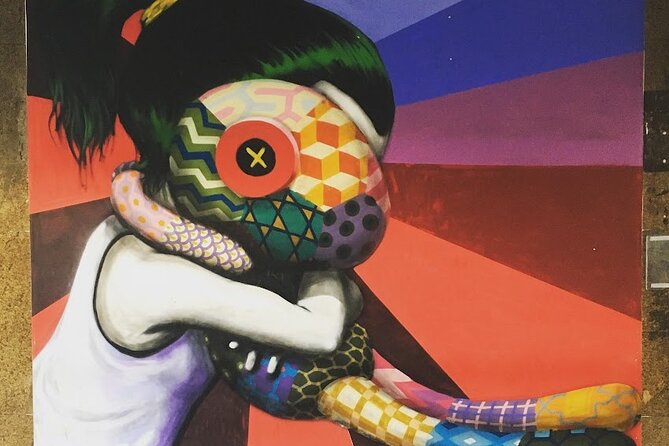
I would recommend it first to people who already like graffiti, murals, folk art, photography, or the stories behind creative work. You do not need formal art training. Curiosity is enough, especially if you enjoy asking who made something and why it appears in that particular place.
It also suits visitors who want to see Rio beyond its postcard sights. The route takes you through neighborhoods and public spaces, giving you a closer look at daily city life. It is a good fit for a first visit if you want one half-day focused on culture rather than beaches and viewpoints.
Families can take part, provided children are accompanied by an adult. Solo visitors should find the small-group setting comfortable, and couples can expect a shared activity with plenty to discuss afterward.
I would hesitate to recommend it to anyone with limited mobility unless they have confirmed that the walking route works for them. The general participation guidance is broad, but the experience lasts about four hours and moves through several neighborhoods. I would also steer budget travelers toward a less expensive option if they are not especially interested in the guide’s art commentary.
Should you book the Rio Street Art Tour?
Book it if you want artist stories, neighborhood context, and a guide who treats street art as culture rather than decoration. Nina’s warm style and clear explanations are a major part of the experience, and the Selarón tribute gives the route a memorable personal moment.
Skip it if your main goal is the lowest possible price, a private vehicle, or a full-day survey of Rio. At $75, this is a specialist walking tour, not a bargain city sampler.
For the right person, the route offers a fresh way to understand Rio. You leave with more than mural photographs. You begin to recognize artists, notice how public art changes a street, and see the city’s walls as part of its ongoing story.
FAQ
How long does the Rio Street Art Tour last?
The tour lasts approximately four hours. The schedule includes about one hour and 30 minutes in Copacabana, one hour and 10 minutes at São João Batista Cemetery, and one hour and 20 minutes in Botafogo.
Where does the tour begin?
The meeting point is Rua Siqueira Campos, 96, in Copacabana, Rio de Janeiro, postal code 22031-072.
Where does the tour end?
The tour ends at Parcão da Nelson Mandela, R. Nelson Mandela, 53-31, in Botafogo. The ending point is near another metro station.
Is hotel pickup included?
No. Hotel pickup and drop-off are not included. You are responsible for reaching the Copacabana meeting point and leaving from Botafogo after the tour.
What neighborhoods does the tour visit?
The route includes Copacabana, São João Batista Cemetery, and Botafogo.
Will I see Selarón’s resting place?
You can choose to see an intimate tribute to Chilean artist Selarón at his resting place in São João Batista Cemetery.
How many people can join the tour?
The maximum group size is 15 people.
What happens if the weather is poor?
The experience requires good weather. If poor weather causes a cancellation, you will be offered another date or a full refund.
Just added around Rio de Janeiro
- Rio de Janeiro: Vidigal Favela Tour and Two Brothers Hike★ 4.5 · 121 reviews
- Art Of Wine – Travel Through The So-Called Wine Route Visiting Various Wineries★ 5.0 · 40 reviews
- Tijuca Forest Hike – Waterfalls & Caves, Nature & Wild Life!★ 5.0 · 51 reviews
- Walking tour of the bohemian neighborhoods of Santa Teresa and Lapa★ 5.0 · 59 reviews
- Guided Market Fruit Tasting in Rio with 15+ Exotic Flavors★ 5.0 · 68 reviews
- Rio Highlights: Christ, Sugarloaf, and More in a Private Tour★ 5.0 · 36 reviews
- Guided Tour to Favela Santa Marta★ 5.0 · 60 reviews
- Trail and Rappel on Morro Dois Irmãos★ 5.0 · 77 reviews
Street Art, compared.
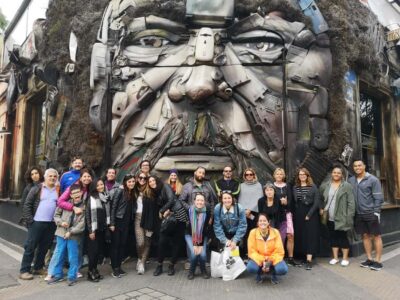
Palermo: Graffiti and Street Art Guided Tour in English
Read our review →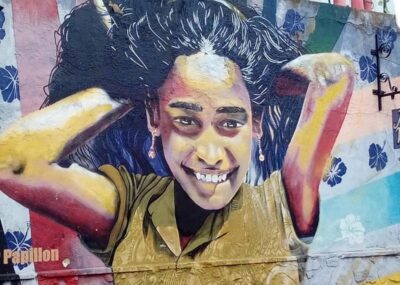
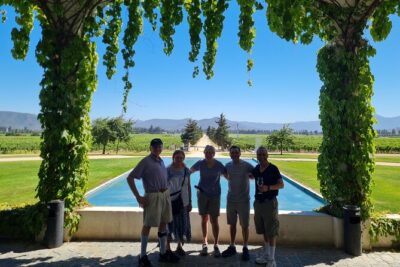
Street Art in Valparaiso and Wines in Casablanca from Santiago
Read our review →

2-Hours Street Art Walking Tour in Medellin Comuna 13
Read our review →Browse the lists this tour appears in