
Reviewed · MUSEUMS
Museum of Tomorrow Guided Tour, Admission & Transfer
Rio’s Museum of Tomorrow is less a traditional museum than a hands-on argument about how we live. Inside Santiago Calatrava’s spaceship-like building, you’ll move through exhibits about science, technology, culture, the environment, and the choices shaping the planet’s future.
I like two things right away: your museum ticket and transport are bundled, and the outing adds two worthwhile waterfront stops. You also get a look at Porto Maravilha, a part of Rio many first-time visitors miss. The main drawback is time control. A late pickup or a fast guide can cut short the museum visit, and the quality of the English or German guiding may vary.
Key points to know before booking
- The museum is the main event: Plan on roughly two to three hours inside, since the interactive displays reward a slow visit.
- The building is part of the experience: Santiago Calatrava’s futuristic structure is worth seeing from outside before you enter.
- You get more than a museum ticket: The route includes Maua Square and Olympic Boulevard, with Guanabara Bay views and Kobra’s enormous Mural das Etnias.
- Transport helps in a spread-out city: Pickup and return are arranged from the Rio Othon Palace in Copacabana in an air-conditioned vehicle.
- Guiding can make or break the visit: Guides including Jaqueline, Renato, Marcos, and Christian have been praised for clear explanations and personal help, but language ability has not been consistent for everyone.
- Check the pickup details carefully: Barra and Recreio pickups cost an extra $10 per person, and the tour needs at least two people to operate.
Why the Museum of Tomorrow feels different
Rio has no shortage of historic churches, beaches, viewpoints, and old neighborhoods. This museum gives you something else: a chance to think about the next century while standing in a building that looks as if it arrived from one.
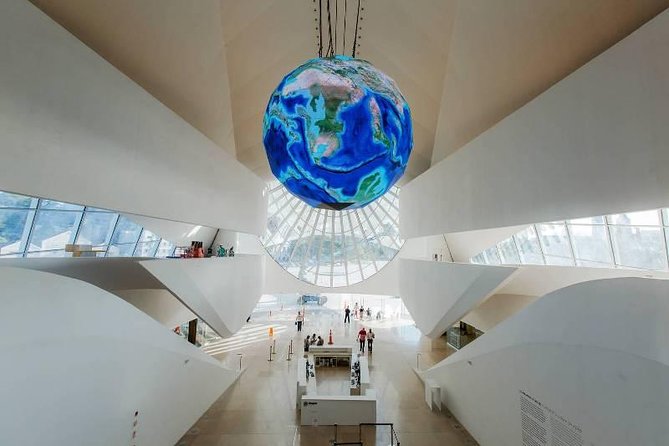
The subject is the future of human life. That sounds broad, but the museum approaches it through clear themes tied to daily choices. Science explains the changes taking place around us. Technology shows possible responses. Art and culture ask how people understand those changes. Environmental displays bring the discussion back to oceans, resources, politics, and the planet itself.
The exhibits use interactive elements rather than relying only on labels and glass cases. You may find yourself comparing present-day conditions with possible future figures, watching visual presentations, and making choices that connect personal behavior with global consequences.
That approach is useful because it avoids treating sustainability as a dry school lesson. You are asked to think about scale. A decision made by one person may seem small, but millions of similar decisions affect water, energy, food, cities, and the climate.
I would allow at least 90 minutes inside, and preferably closer to two hours. The full schedule allows about three hours at the museum stop, though one guide may move faster than another. If you are curious and like to read or interact with displays, tell your guide early that you want enough time.
More Museum Tours in Brazil
- Petrópolis Day Trip from Rio de Janeiro including Imperial Museum and Crystal Palace
★ 4.0 · 101 reviews - Olympic Boulevard, Museum of Tomorrow & Historical Rio
★ 4.5 · 66 reviews - Rio: Olympic Boulevard, AquaRio and Museum of Tomorrow Tour
★ 4.5 · 54 reviews
Calatrava’s building deserves your attention
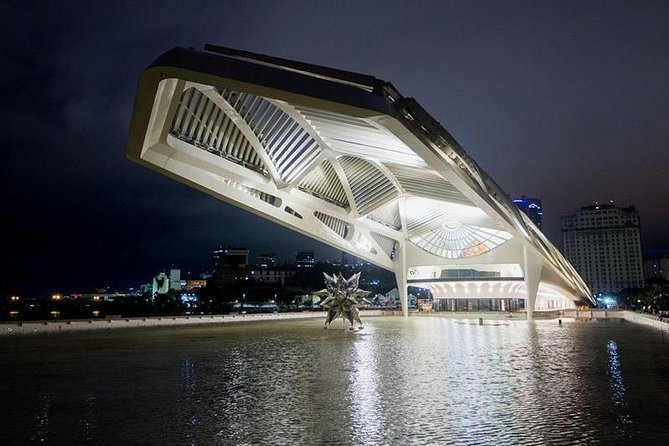
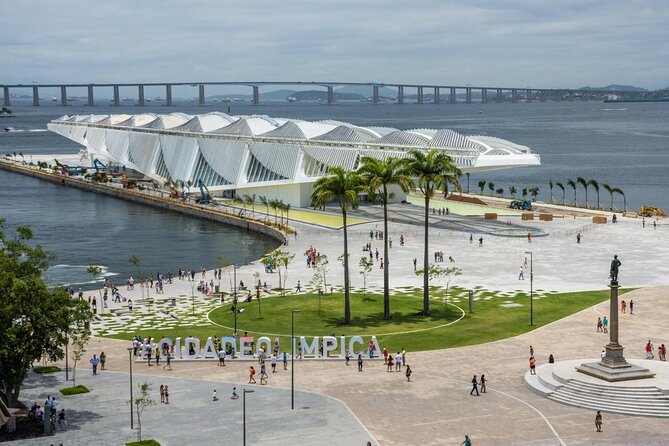
Before you focus on the exhibits, look at the museum itself. Santiago Calatrava designed the structure with long white forms, sharp angles, and a spaceship-like profile. It was built as a centerpiece of the Porto Maravilha regeneration project, so the architecture also tells you something about Rio’s effort to renew its old port area.
The building is especially rewarding from the outside. Walk around it, take pictures, and notice how it relates to the water and the open public space. The structure feels deliberately forward-looking, which fits the museum’s subject better than a conventional gallery would.
The exterior also gives you a useful pause between exhibits. You can step outside, look toward the harbor and cruise terminal, and reset before continuing. If your guide takes photos, this is one of the best places to ask for them.
The museum is not simply a pretty shell. The design supports the idea that the future will require new ways of thinking. You may love that connection between the building and its message, or you may find the presentation more conceptual than historical. This is not the place for a traditional timeline of Rio or Brazil.
What you see during the three-hour museum stop
The museum stop takes up most of the outing, and that is appropriate. The displays connect science, art, technology, culture, and the environment instead of putting them in separate boxes.
One part of the experience considers the planet as a living system. Ocean conditions, environmental pressure, and resource use appear as measurable problems rather than distant warnings. The information can be sobering, but the museum tries to make it understandable through images, comparisons, and interactive tools.
Another thread concerns human activity. You are encouraged to consider how population growth, consumption, politics, and technological change may shape the future. Some sections quantify possible risks and compare them with current values, which helps turn vague concern into something easier to grasp.
The material is presented in Portuguese, so a guide can add real value. One successful visit included explanations of Amazon-related material that was written in Portuguese. That is a useful service if you cannot read the display text easily.
The best guides do more than escort you from room to room. Jaqueline has been praised for shaping the visit around individual interests. Renato has been singled out for combining historical information with an organized tour. Marcos was especially attentive to a visitor with mobility issues, and Christian was noted for explaining the exhibits and taking photographs.
Still, you should set reasonable expectations. The tour is conducted by different guides, and language ability can vary. One English-speaking visitor found the guide’s English weak, while a German-speaking visitor did not receive the expected German guidance. If language is important to you, confirm it before booking rather than assuming it is guaranteed.
Maua Square and Guanabara Bay in 30 minutes
After the museum, the group heads to Maua Square for about 30 minutes. This is not another major museum stop. It is a short outdoor break with room for photographs and a look at Guanabara Bay.
The square is named for the Barão de Mauá, a 19th-century industrial and transport pioneer. Your guide can explain why his name is attached to the area and point out his statue. That small historical detail helps connect the renewed port district with Rio’s older commercial ambitions.
The bay view is the practical highlight. You can pause, take pictures, and see how the museum sits within the wider port zone. The cruise ship terminal is nearby, and the open waterfront gives you a different view of Rio than you get from Copacabana.
The limitation is simple: 30 minutes passes quickly. If you want a long waterfront walk or a leisurely coffee, this tour does not provide that. Think of Maua Square as a scenic orientation stop, not a full afternoon in the port district.
More Museum Tours in Rio de Janeiro:
- Rio: Olympic Boulevard, Museum of Tomorrow & History Tour
★ 4.1 · 47 reviews - Rio: Petrópolis Trip with Palace, Imperial Museum & Brewery
★ 4.6 · 42 reviews - Bogotá City Tour with Monserrate, Gold and Botero Museums
★ 4.9 · 584 reviews - Buenos Aires: Tickets to Boca Juniors Museum & Stadium
★ 4.5 · 581 reviews
Olympic Boulevard and Kobra’s giant mural
The final stop lasts about 30 minutes at Boulevard Olimpico, created for the 2016 Olympic Games. The area became known for large-scale street art, and the major attraction is Kobra’s Mural das Etnias.
The mural is huge, colorful, and designed to represent Indigenous peoples from different parts of the world. Its scale is difficult to appreciate in a single photograph, so walk along it and look at how the images change from one section to the next.
This stop adds a welcome human touch after the museum’s scientific and environmental themes. You move from future-facing displays to public art made for an open city space. It also gives you another reason to explore Porto Maravilha instead of treating the museum as an isolated building.
Again, half an hour is enough for a look and some pictures, but not for a slow tour of every piece of street art in the district. If you already know you want extensive photography time, you may prefer to return to the area on your own.
What the $58 price includes
At $58 per person, the value depends on how much you want the transport and guiding. The price includes admission to the Museum of Tomorrow and an air-conditioned vehicle. You return to the same meeting point, the Rio Othon Palace in Copacabana.
That arrangement saves you from working out transport to the port district yourself. It also makes sense if you are staying in Copacabana and want a half-day plan with several connected stops. A guide can explain the museum, identify the main features in Portuguese displays, and help with photos.
Food and drinks are not included. Since the activity lasts about four hours, eat before you go or carry what is permitted for the outing. Do not expect a meal break to be part of the plan.
The group can be as large as 19 people in a minivan, though the overall activity capacity is listed as high as 99. A smaller van should feel more manageable than a large coach, but the exact group size matters. If personal attention is important to you, ask when confirming pickup.
The $58 cost is less attractive if you only want museum admission and prefer to explore independently. It becomes more reasonable if you value hotel-area pickup, an air-conditioned ride, context from a guide, and the two extra stops.
Pickup, timing, and walking advice
The stated meeting point is the Hotel Rio Othon Palace at Avenida Atlântica, 3264, in Copacabana. The exact pickup time depends on your hotel location, and the operator contacts you after booking. Check both email and your phone so you do not miss the update.
For hotels in Barra or Recreio, expect an extra $10 per person paid directly to the guide. That additional charge can affect the value, especially if you are traveling as a group.
Wear comfortable clothing and walking shoes. You will spend time inside the museum, walk around the exterior, and move through two open-air areas. A visitor with mobility concerns received helpful attention from Marcos, but you should still tell the operator about your needs in advance.
Pickup delays are worth taking seriously. One shortened visit resulted from a late vehicle, so arrive ready and confirm the pickup time clearly. The museum is the core of the experience, and losing even 30 minutes there can matter.
The tour requires at least two people to operate. If that minimum is not met, the activity may be rescheduled or replaced with another option. Confirmation is issued at booking, but that does not remove the need to check the final pickup details.
Who will get the most from this outing
I would recommend this experience to you if you want to see a modern side of Rio and prefer a planned half-day rather than arranging transport and tickets yourself. It is a good fit for first-time visitors who want an introduction to Porto Maravilha, as well as repeat visitors looking for something beyond beaches and landmarks.
It suits curious adults, older children, and anyone interested in environmental questions, technology, public art, or modern architecture. The displays are not just decorative, and you will get more from them if you are willing to read, compare, and think about the choices being presented.
It is less suitable if you want a relaxed, unstructured day. The schedule moves from one stop to the next, and the outdoor visits are short. It is also not the best choice if you need guaranteed guiding in a particular language unless that is confirmed before payment.
The tour has a minimum age requirement listed as suitable for most participants, and most people can take part. If you have limited mobility, ask for details in advance and explain what support you need.
Should you book the Museum of Tomorrow tour?
Book it if the museum is high on your Rio list and you want transport, admission, and a guide handled together. The building, interactive exhibits, Guanabara Bay views, and Kobra mural create a varied four-hour outing rather than a single indoor visit.
I would not book it solely for the two outdoor stops. Maua Square and Olympic Boulevard are useful additions, but each receives only about 30 minutes. The museum is the reason to go.
Before booking, confirm the pickup time, group size, and guiding language. If those details suit you, $58 is a fair price for the convenience and structure. You can cancel for a full refund up to 24 hours before the start time, but poor weather or failure to reach the minimum group size can also lead to a reschedule or refund.
FAQ
How long does the Museum of Tomorrow tour last?
The activity lasts about four hours. The museum stop is scheduled for roughly three hours, followed by about 30 minutes at Maua Square and 30 minutes at Olympic Boulevard.
Where does the tour begin and end?
Pickup and return are at the Hotel Rio Othon Palace, Av. Atlântica, 3264, Copacabana, Rio de Janeiro.
Is museum admission included?
Yes. Admission to the Museum of Tomorrow is included, along with transport in an air-conditioned vehicle.
Is food included in the price?
No. Food and drinks are not included.
Is there an extra pickup charge from Barra or Recreio?
Yes. Pickup from Barra or Recreio costs an additional $10 per person, paid directly to the guide.
Can I cancel for a full refund?
Yes, if you cancel at least 24 hours before the experience begins. Changes or cancellations made less than 24 hours in advance are not accepted for a refund.
More Transfers in Rio de Janeiro
- Private Transfer GIG International Airport To or From Rio de Janeiro
★ 4.5 · 109 reviews - Private Bilingual Transfer – City of Rio de Janeiro
★ 5.0 · 74 reviews - Rio de Janeiro Airport Roundtrip Private Transfer
★ 4.5 · 57 reviews - Favela Tour in Rio with Transfer service
★ 5.0 · 40 reviews
Just added around Rio de Janeiro
- Rio de Janeiro: Vidigal Favela Tour and Two Brothers Hike★ 4.5 · 121 reviews
- Art Of Wine – Travel Through The So-Called Wine Route Visiting Various Wineries★ 5.0 · 40 reviews
- Walking tour of the bohemian neighborhoods of Santa Teresa and Lapa★ 5.0 · 59 reviews
- Tijuca Forest Hike – Waterfalls & Caves, Nature & Wild Life!★ 5.0 · 51 reviews
- Guided Market Fruit Tasting in Rio with 15+ Exotic Flavors★ 5.0 · 68 reviews
- Rio Highlights: Christ, Sugarloaf, and More in a Private Tour★ 5.0 · 36 reviews
- Guided Tour to Favela Santa Marta★ 5.0 · 60 reviews
- Trail and Rappel on Morro Dois Irmãos★ 5.0 · 77 reviews
Museums, compared.
Bogotá City Tour with Monserrate, Gold and Botero Museums
Read our review →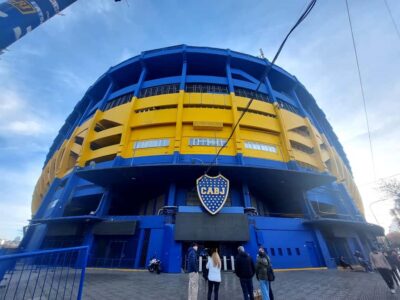
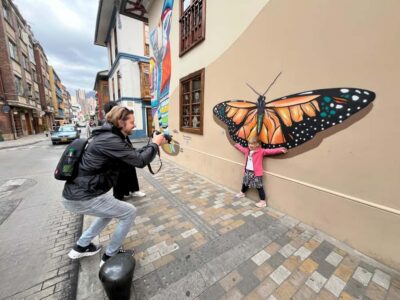
City Tour, Monserrate, Gold Museum, Plaza de Bolivar
Read our review →
City Tour in Cusco & visit Museum South American Camelid Private.
Read our review →
City Tour, Monserrate, Gold Museum, Botero Museum, Plaza Bolívar
Read our review →
Petrópolis Day Trip from Rio de Janeiro including Imperial Museum and Crystal Palace
Read our review →
City Tour in Cusco & visit Museum South American Camelid
Read our review →
Browse the lists this tour appears in