
Reviewed · HOP-ON HOP-OFF TOURS
Montevideo: Sightseeing Hop-On Hop-Off Bus Tour
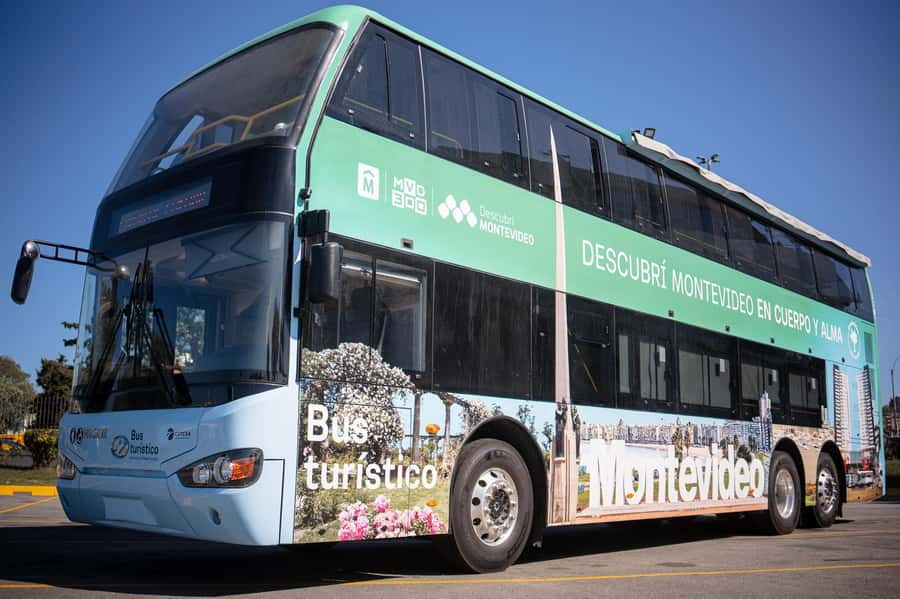
Montevideo is spread out, and this double-decker bus gives you a useful citywide view without forcing you to piece together taxis and local buses. One route links the port, historic center, markets, Prado, and Centenario Stadium. The other follows the Rio de la Plata waterfront toward Malvín and Carrasco.
I like the 24-hour ticket, which starts when you first board, not when the calendar day ends. I also like the clear multilingual audio, clean buses, helpful staff, and stop signs that show expected arrival times. The main caution is simple: the coastal route runs less often, and some stops are exposed to sun, wind, or rain.
Key points to know before you board
- Two very different routes: The Central Circuit focuses on Montevideo’s buildings, markets, parks, and major civic sights. The Rambla Circuit is mainly for waterfront views, beaches, shopping areas, and Carrasco.
- The ticket lasts 24 hours: You can board, get off, explore, and board again within that period.
- The port stop is easy to find: Look for the marked totem across the main road from Montevideo Port.
- Central buses run more often: Expect the central service roughly every 30 minutes, while the coastal route may be about hourly.
- Audio comes in six languages: Spanish, English, Portuguese, Italian, French, and German are available through supplied headphones.
- Plan for exposed stops: Waiting areas may not have shelter from strong sun, rain, or wind.
Why this bus works well in spread-out Montevideo
Montevideo does not put all its main sights in one compact pocket. The old port and Ciudad Vieja are close to the center, but the Legislative Palace, Prado, Centenario Stadium, and coastal neighborhoods require more time and road miles. This bus is useful because it connects those areas in one ticket.
You can stay aboard for a full circuit to get your bearings, then choose the places worth a closer look. The Central Circuit takes about two hours for a full loop, depending on traffic and operating conditions. That is a long ride if you never get off, but it is a good overview if you have only one day.
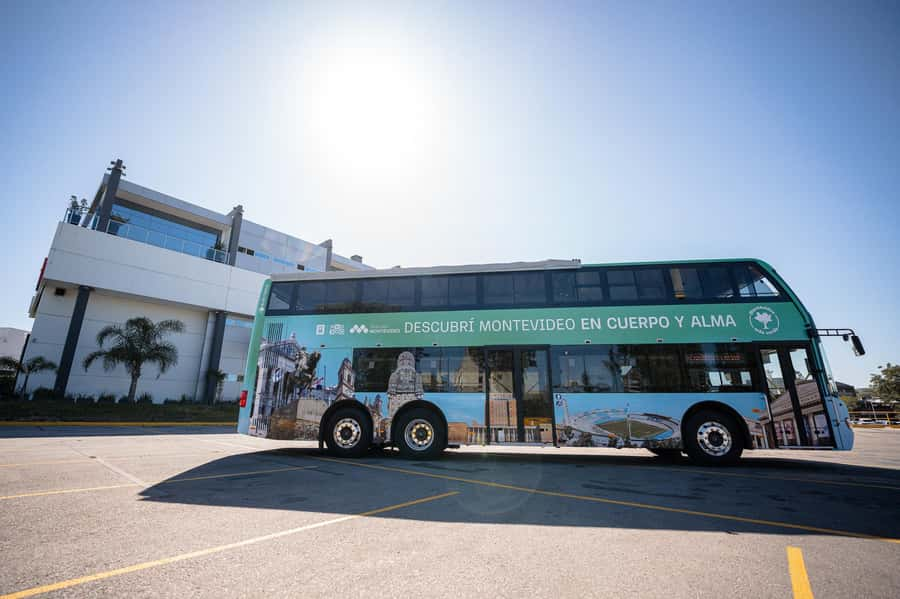
The tour uses open-top double-decker buses, so the upper deck gives you a clear view of balconies, domes, statues, street trees, and the broad waterfront. The tradeoff is exposure. Bring protection from the sun, and keep in mind that the upper deck is not the best place during rough weather.
The service has earned a 4.5 rating from 320 bookings, with especially strong marks for staff, audio quality, clean buses, and route coverage. That matches the main strength of the experience: it is less about a single guided attraction and more about making a large capital city manageable.
More Hop-On Hop-Off Tours in Uruguay:
- Buenos Aires Hop-On Hop-Off Bus, Free Walking Tours & Discounts
★ 4.5 · 2,218 reviews - Buenos Aires: Hop-On Hop-Off City Bus Tour
★ 4.2 · 1,855 reviews - Buenos Aires Hop-On Hop-Off Bus and Exclusive Benefits
★ 4.4 · 1,714 reviews
Starting at Montevideo Port
The main meeting point is in front of Montevideo Port, with a totem marking the bus stop. If you arrive by cruise ship, this is particularly convenient. You do not need to spend your limited shore time finding a distant terminal, and the first pickup is across the main road from the cruise port.
Staff can help with route changes and explain the timetable. Matias is one team member singled out for friendly, thorough assistance, and the service has other attendants who speak English, Portuguese, Italian, French, and German as well as Spanish.
Ask for the printed map and note the departure times before setting off. Stop signs are reported to be well marked, with expected arrival times posted. That small detail matters because a hop-on hop-off plan can fall apart when you do not know if the next bus is five minutes away or nearly an hour away.
The ticket is valid for 24 hours from first activation. If you board at 11 a.m., you should be able to use it until 11 a.m. the next day, subject to the operating timetable. Do not treat it as a ticket that ends at the close of the first calendar day.
Central Circuit: the best route for a first visit
The Central Circuit is the stronger choice if your priority is Montevideo’s architecture, civic buildings, markets, and historic core. It also runs more often than the Rambla Circuit, making it easier to get off and back on without losing too much time.
Port Market and Independence Square
The route begins near the port and heads toward the Port Market, known locally as Mercado del Puerto. This is one of the best places to stop for the food side of Montevideo. The smell of grilled beef and other classic Uruguayan dishes reaches you before you have decided where to sit.
This is not a quick photo stop if you want to eat. Allow time for a meal, and remember that getting off here can affect your ability to catch the next bus. The market is a natural place to begin or end your day because it connects the port area with Montevideo’s traditional parrilla culture.
The bus then reaches Independence Square, a key urban space between the old city and newer central streets. From the upper deck, look for the surrounding civic buildings and the architectural shift from colonial-era streets toward the broader avenues of central Montevideo.
A few more Uruguay days worth comparing
- Skip the Line: Casapueblo Museum Admission Ticket in Punta del Este
★ 4.5 · 281 reviews - Colonia del Sacramento:Best Walking Tour (Historic Old Town)
★ 4.9 · 180 reviews - Full day Punta del Este tour
★ 4.5 · 177 reviews - Montevideo Electric Bicycle Tour
★ 5.0 · 169 reviews
Municipal Palace and the panoramic viewpoint
The Municipal Palace area gives you a look at the city’s government center and large-scale public architecture. The Mirador Panorámico de la Intendencia de Montevideo is one of the more useful stops for seeing the city from above.
If you get off here, check how much time you have before the next bus. A viewpoint can be a quick stop, but you may prefer to linger for photographs and orientation. The bus itself gives you a moving view, while this stop lets you pause and make sense of Montevideo’s broad street plan.
National Library and the Legislative Palace
The National Library stop introduces another important civic building. The audio guide helps put the streets and institutions into context, which is useful when you are looking at buildings from the bus rather than touring each one inside.
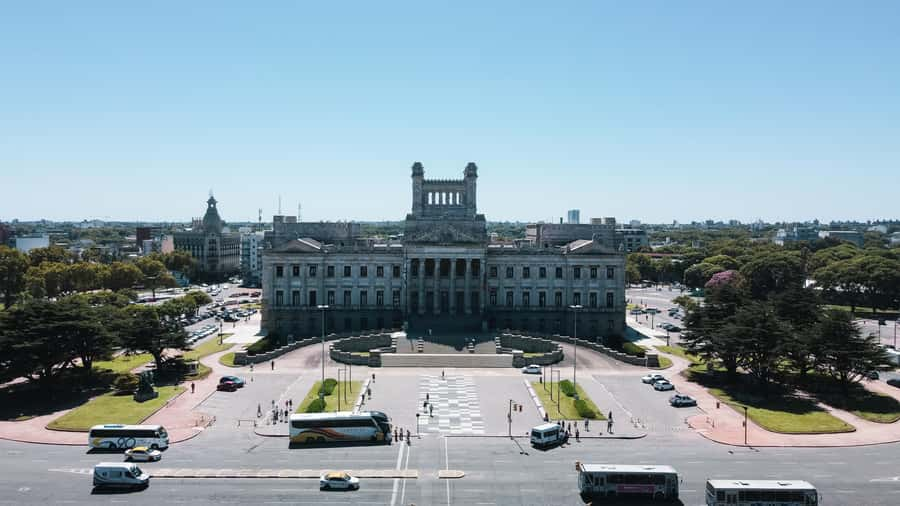
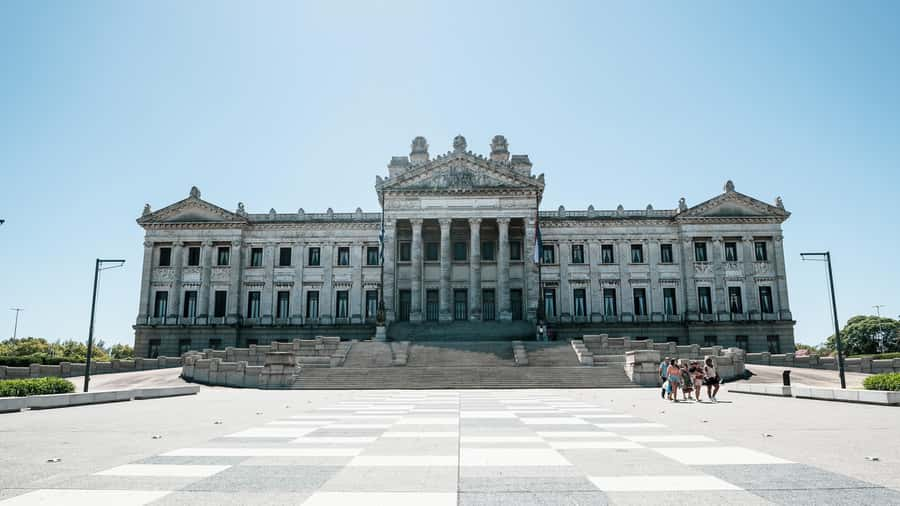
The Legislative Palace is one of the route’s major visual highlights. Its formal design and surrounding streets make it worth a closer look, especially for visitors interested in public architecture. The bus allows you to see it without arranging separate transport, but you should check the timetable before getting off because the next departure may not be immediate.
This is a good example of the bus’s value. It takes you to places that are too far apart for a comfortable walking day, while leaving you free to decide which building deserves your time.
Mercado Agrícola de Montevideo
The Mercado Agrícola is another strong stop for food and everyday city life. Unlike a purely historic monument, a market gives you a sense of how Montevideo shops, eats, and gathers.
The stop works well for lunch or a snack, but do not confuse the two markets. Mercado del Puerto is associated with grills and the port district. Mercado Agrícola offers a different look at local shopping and neighborhood life. If you have a full day, both are worth considering, but visiting both requires sensible timing.
The route between the central stops is not packed with major attractions every minute. That is fine if you want to rest and listen to the audio, but less ideal if you expect nonstop sightseeing.
Prado Park and the Botanical Garden
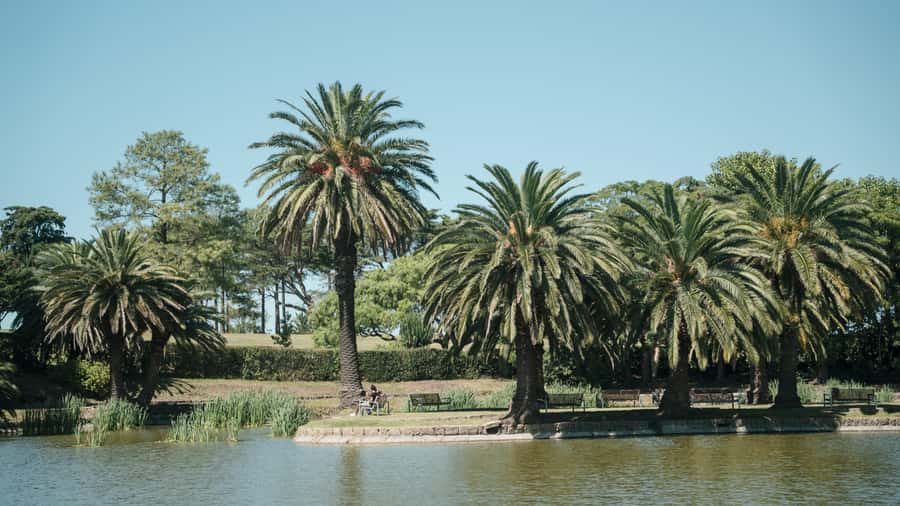
Prado is one of Montevideo’s greener areas, with room to slow down after the dense center. The Botanical Garden adds another reason to get off if you enjoy plants, open space, and a quieter break from traffic.
This part of the circuit is a better fit for a longer stop rather than a quick photograph. If you are in Montevideo for only a few cruise hours, you may need to choose between Prado and the central markets. If you have the full 24-hour period, Prado makes the ticket more useful because you can see an area that would otherwise take extra planning to reach.
Nuevocentro, Tres Cruces, and Centenario Stadium
Nuevocentro Shopping and Tres Cruces Shopping are practical transport and shopping landmarks, but they are not essential stops for every visitor. The bus includes them because they help connect different parts of the city, yet you may prefer to stay aboard unless you need shopping, a break, or a convenient place to wait.
Tres Cruces is also a useful point for understanding how the routes fit together. Check the current timetable there if you plan to switch between the Central and Rambla circuits. A small amount of planning can save a long wait.
Centenario Stadium is a worthwhile stop for football fans and for anyone interested in Uruguay’s sporting identity. Even if you do not enter, the stadium is a notable city landmark. This is one place where the bus gives you something beyond colonial streets and government buildings.
Rodó Park
Parque Rodó links the central route with the coastal side of Montevideo. It is a pleasant place to get off, especially if you want a park break before continuing toward the waterfront.
The route returns through this area, so Rodó can be a convenient transfer point. Still, the two circuits may not line up perfectly. The Central Circuit can run about every half-hour, while the coastal service may be closer to hourly, so confirm the next departures before leaving the bus.
Rambla Circuit: beaches, views, and a slower pace
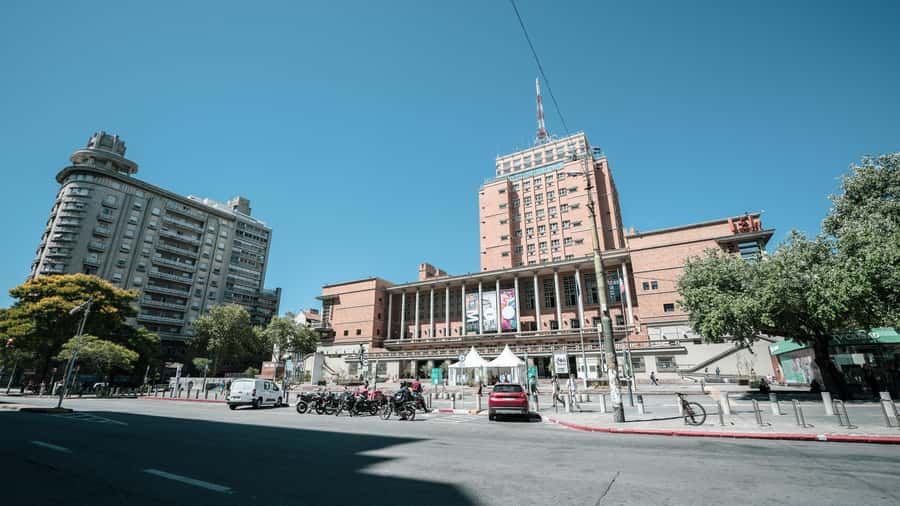
The Rambla Circuit follows Montevideo’s long waterfront road. This is the route to choose for open views, beaches, waterfront neighborhoods, and Carrasco rather than museums and old-city buildings.
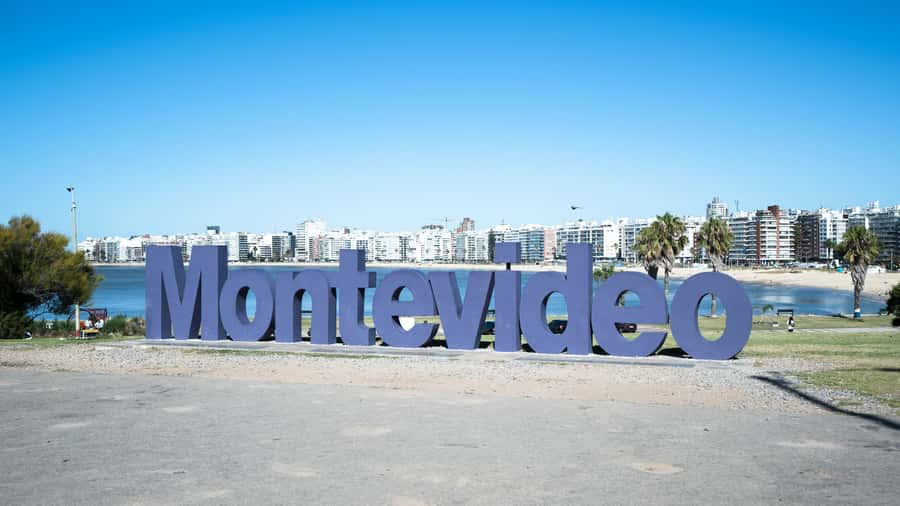
The scenery changes as the bus moves away from the center. You see the Montevideo Sign, coastal stretches around Malvín, and the more polished Carrasco area. The route is pleasant, but it is less dense with classic sightseeing stops than the Central Circuit.
Montevideo Sign and Malvín Beach
The Montevideo Sign is an easy photo opportunity and one of the route’s most recognizable modern stops. Malvín Beach gives you a look at the city’s relationship with the Rio de la Plata. The water and broad shore make this route feel very different from the central streets.
Do not expect a beach circuit packed with historic attractions. The pleasure here is the ride itself, the changing waterfront, and the chance to see how Montevideo’s neighborhoods stretch along the coast.
Carrasco Casino Hotel
The Carrasco Casino Hotel is one of the route’s grandest architectural sights. Its location at the far end of the coastal circuit gives you a reason to stay aboard longer rather than treating the Rambla route as a short city loop.
The distance is also the main drawback. If the coastal bus is running about once an hour, getting off in Carrasco can turn a brief visit into a long wait. Use the timetable carefully, particularly if you need to return to a cruise ship or another fixed appointment.
Tango and Turf Museum
The Tango and Turf Museum adds cultural context to the coastal route. Tango connects Uruguay with the wider River Plate culture, while turf reflects the country’s horse-racing tradition.
This stop is a good option if you want more than views and shopping. Check the available visit time before getting off, since the route’s lower frequency gives you less flexibility than the central loop.
Montevideo Shopping and Punta Carretas Shopping
The coastal route also serves Montevideo Shopping and Punta Carretas Shopping. These are useful if you need a meal, a restroom, or retail time, but they are not priorities for most first-time visitors with only one day.
One practical benefit is that shopping centers can provide a break from the weather and a reliable place to pause. The downside is opportunity cost. Every stop here means less time for the old city, markets, Prado, or the stadium.
Audio, seating, and the ride itself
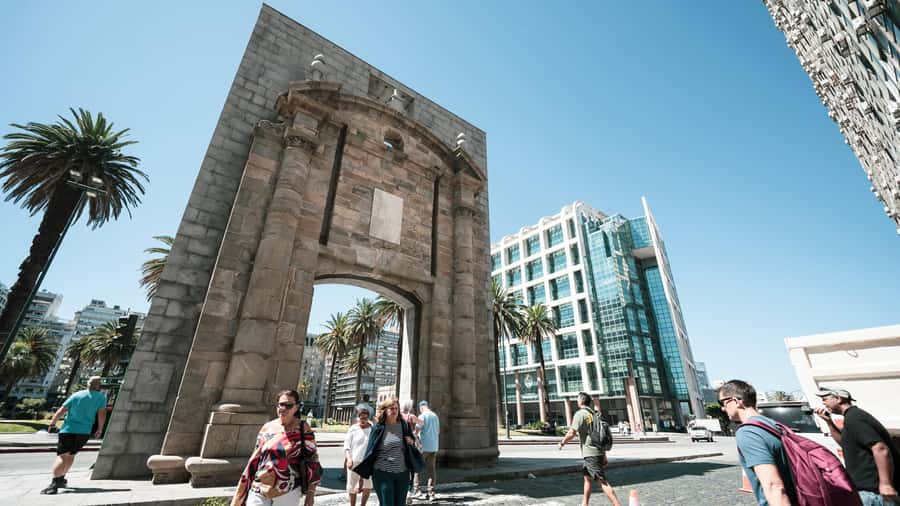
The audio guide is available in Spanish, English, Portuguese, Italian, French, and German. Headphones are included, and the English program has been praised for being clear and informative.
Audio is most useful while you remain on the bus. It fills the longer stretches between stops and explains the history, anecdotes, buildings, and neighborhoods passing by. Some passengers have found that the music between points of interest can feel repetitive, especially on the longer Central Circuit, but you can remove the headphones when you prefer a quiet ride.
The buses are described as clean and modern. Some departures have used new electric vehicles, and WiFi has been available on at least some buses, though I would not book this tour solely for onboard internet. The strongest practical features are still the route coverage, working headsets, and helpful attendants.
The buses are wheelchair accessible. If you need specific boarding assistance, speak with the staff at the port stop before boarding so they can explain the current arrangement.
Timing the two circuits in one day
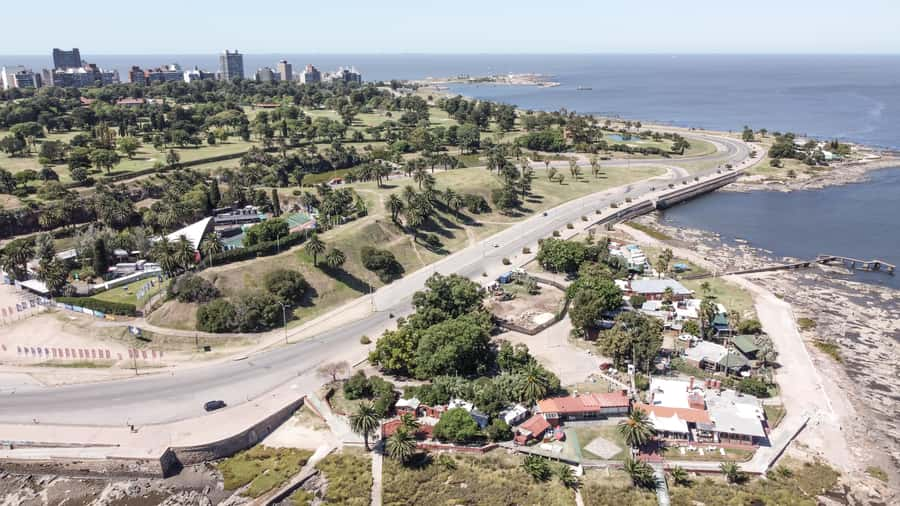
You can use both routes on the same 24-hour ticket, but do not assume you can see every stop in detail in one day. The Central Circuit alone covers a large area, and the Rambla Circuit takes you far along the coast.
For a limited shore visit, I would prioritize the Central Circuit. Stay aboard for part of the loop to see the city, then get off at one or two high-value stops such as Mercado del Puerto, Mercado Agrícola, the Legislative Palace, Prado, or Centenario Stadium.
If you have most of a day, add the Rambla Circuit afterward. Treat it as a separate outing rather than a quick extension of the central route. The coastal bus may be hourly and can be out of sync with the central service.
Build in a time cushion. One scheduled trip has been skipped for a private group, leaving passengers waiting around 45 minutes. That may be unusual, but it is a good reason not to plan your final return to the port too tightly.
Is $25 a fair price?
At $25 per person, the tour is good value if you use the transport as well as the sightseeing. Montevideo’s attractions are spread across the city, and reaching the port, center, Prado, stadium, and coastal neighborhoods separately could take more time and money.
The value is strongest for first-time visitors, cruise passengers, and anyone with only one day. You get a printed map, headphones, multilingual audio, a 24-hour ticket, and access to two routes. The ticket also gives you flexibility that a fixed guided bus tour does not.
The price is less compelling if you plan to spend the whole day walking in Ciudad Vieja or visiting only one neighborhood. In that case, you may not use enough of the route to justify it. But if you want a broad first look at Montevideo, the bus covers ground efficiently.
Who should book this Montevideo bus tour?
I would choose this tour if you want a quick city overview, need transport between distant sights, or are visiting from a cruise ship. It also suits visitors who prefer to hear context in their own language while watching the city from an open upper deck.
It is less suitable if you want a fully guided walking experience at every stop. The audio explains what you see, but the format remains independent. You decide when to get off, how long to stay, and which places deserve a closer visit.
Book it if you can accept flexible timing and plan around the slower Rambla Circuit. Skip it if your only goal is the compact old city and you do not want to spend time on roads between sights. For most first-time visitors with a day in Montevideo, the Central Circuit alone makes the ticket useful, while both routes give you a fuller picture of the capital.
Free cancellation is available up to 24 hours before the activity, and you can reserve now and pay later. That adds useful flexibility when cruise schedules or weather may change.
FAQ
How long is the Montevideo hop-on hop-off ticket valid?
The ticket is valid for 24 hours from the time you first activate it by boarding the bus.
Where does the tour start?
The meeting point is at the Bus Turístico stop in front of Montevideo Port. A totem identifies the location.
How many routes are included?
The ticket includes two routes: the Central Circuit and the Rambla Circuit.
Which languages are available for the audio guide?
The audio guide is available in Spanish, English, Portuguese, Italian, French, and German.
Are headphones included?
Yes. Headphones and a printed city map are included.
What are the main stops on the Central Circuit?
The Central Circuit serves the Port Market, Independence Square, the Municipal Palace, National Library, Legislative Palace, Mercado Agrícola, Prado Park, Botanical Garden, Nuevocentro Shopping, Tres Cruces Shopping, Centenario Stadium, and Rodó Park.
What does the Rambla Circuit visit?
The Rambla Circuit includes Parque Rodó, the Montevideo Sign, Malvín Beach, Carrasco Casino Hotel, the Tango and Turf Museum, Montevideo Shopping, and Punta Carretas Shopping.
Is the bus wheelchair accessible?
Yes, the activity is listed as wheelchair accessible.
Can I cancel the booking?
Yes. You can cancel up to 24 hours in advance for a full refund. Reserve now and pay later is also available.
Just added around Uruguay
- Private Transportation from Carrasco Airport to Port in Montevideo★ 5.0 · 84 reviews
- Private Have It Your Way Tour in Montevideo★ 5.0 · 89 reviews
- Montevideo Private Your Way – Perfect for Cruise Passengers.★ 5.0 · 82 reviews
- Shared Montevideo Tour for Cruisers★ 4.0 · 118 reviews
- From Montevideo to Punta del Este Complete★ 4.0 · 123 reviews
- Montevideo Highlights: Shared City Tour for Cruise Passengers★ 4.5 · 141 reviews
- The Best Punta del Este Day Trip from Montevideo★ 4.0 · 158 reviews
- Colonia del Sacramento Full Day from Montevideo★ 4.0 · 165 reviews
Hop-On Hop-Off Tours, compared.
Buenos Aires Hop-On Hop-Off Bus and Exclusive Benefits
Read our review →
City Sightseeing Hop-On Hop-Off Bus Tour & Extras
Read our review →
Hop-ON Hop-OFF Sightseeing Bus in Rio de Janeiro – Rio Samba Bus
Read our review →



Browse the lists this tour appears in