
Reviewed · URUGUAY TOURS
Shared Montevideo Tour for Cruisers
Montevideo gives you a lot in a short span: a Spanish colonial core, a grand marble Parliament, a famous football stadium, long beaches, and a waterfront road that seems to keep going. This three-hour cruise-port tour links those far-flung sights without asking you to figure out city transport on a tight ship schedule.
I like the broad route and the low $27 price. Guides such as Rodrigo and Rosario have been praised for clear explanations, patience, and humor, and the air-conditioned vehicle saves your feet when the city’s sights are spread out. The main tradeoff is time: several stops last only 5 to 15 minutes, so you get a useful first look rather than a slow, close study.
Key points at a glance
- A city sampler from the port: You see the Old Town, Parliament, MAM market, Pocitos, the football stadium, and the waterfront in one outing.
- Good value at $27: The price is notably lower than many cruise-line shore excursions, while transport and guiding are included.
- A strong guide can make the difference: Rodrigo and Rosario receive especially warm praise, but English clarity and presentation style can vary by departure.
- Photo stops are built in: Plaza Independencia, the Montevideo letters, La Carreta, and Pocitos Bay give you several chances to leave the vehicle.
- Expect a moving tour, not museum time: The Parliament stop is listed at five minutes, and the Old Town stop at ten.
- WiFi is promised, not guaranteed: Some departures have had connection trouble, so treat it as a useful extra rather than a reason to book.
What this Montevideo tour is really designed to do
This is a city orientation by road. You meet at the Point Terminal de Cruceros Montevideo, near the internet café and souvenir shop inside the cruise terminal, then travel through several districts before returning to the same meeting point.
The route works well for a cruise stop because Montevideo’s attractions are not all clustered together. The Old Town sits near the port, while Parliament, Parque Batlle, Pocitos Beach, and the farther coastal districts require more time on the road. A guide fills those transfer stretches with facts about the city, Uruguay, and the sights outside your window.
The vehicle is air-conditioned, and the advertised maximum is 38 people. In practice, the vehicle may be a large coach or a smaller minibus, depending on the departure. That matters. A small group makes it easier to get on and off at photo stops, while a full coach can mean slower loading and less personal contact with the guide.
This is best understood as a first meeting with Montevideo. You will not have much time for shopping, long café stops, or interior visits. You will see the major markers, learn how the city fits together, and return to the ship with a useful sense of place.
A few more Uruguay days worth comparing
- Montevideo: Sightseeing Hop-On Hop-Off Bus Tour
★ 4.5 · 320 reviews - Skip the Line: Casapueblo Museum Admission Ticket in Punta del Este
★ 4.5 · 281 reviews - Colonia del Sacramento:Best Walking Tour (Historic Old Town)
★ 4.9 · 180 reviews
Starting in the Old Town at Plaza Matriz
The first formal stop is Plaza Matriz, in the historic center. This is where Montevideo’s colonial character is easiest to read, with older buildings, the Metropolitan Cathedral, the Cabildo, and nearby museums and galleries.
The guide may point out the former Spanish fortifications and the old Ciudadela area, whose walls once defined the fortified city. You also get a look toward the Solís Theatre and the Museo Torres García, along with cafés, antique shops, and small galleries in the surrounding streets.
The listed stop is only ten minutes. That is enough for orientation and photographs, but not enough to visit a museum or wander every side street. If the historic center is your main interest, you may find the stop rushed. Still, a guided introduction here is useful because it gives the later drive a clear starting point: Montevideo began as a fortified colonial port, then spread outward along the coast.
Be ready to walk at the guide’s pace. One departure received criticism because the guide moved too quickly for older members of the group. If you need more time on steps or uneven pavement, stay near the guide and mention it early.
Parliament and the city’s civic face
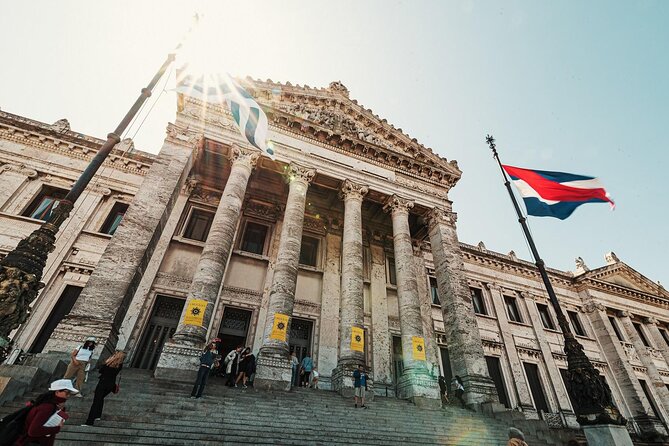
The Palacio Legislativo is one of Montevideo’s most impressive buildings. It houses Uruguay’s legislative power and is known for its marble interiors, formal design, and broad grounds.
The stop is listed at five minutes, so you should expect an exterior view and a quick explanation rather than a tour inside. The building’s neoclassical design is especially meaningful in a country that takes pride in its democratic institutions. Even from the vehicle or sidewalk, it gives you a sense of the scale Uruguay chose for its public buildings.
A short stop has a practical advantage: you keep moving toward the next district. The disadvantage is obvious. If grand architecture is your priority, five minutes will feel thin, and parking conditions may affect how close the vehicle can get. One poor experience involved the Parliament stop being missed because the coach could not park. That is not a routine outcome, but it is a useful reminder that this is a road tour in an active city, not a private sightseeing car.
A 30-minute look at Mercado Agrícola Montevideo
Mercado Agrícola Montevideo, usually called MAM, is the longest stop on the route, with about 30 minutes to explore. From Parliament, the ride gives you a look at more of the city before arriving at this iron-built market.
The market began in 1913 as a fruit and vegetable stand. It later grew into a block-sized shopping center, and its refurbishment in 2006 helped renew the surrounding neighborhood. Fresh produce is still part of the experience, though the building now includes a wider mix of shops and food businesses.
This is one of the most useful stops for seeing daily Montevideo rather than only official buildings and monuments. You can look at the market structure, browse the stalls, and possibly pick up a snack or small item if time allows. Thirty minutes is still not long, so I would not plan a full meal or serious shopping session here.
Pay attention to practical information from the guide. One departure did not clearly explain that toilets were available at the market, leaving some people unsure where to go. Also, if shopping matters to you, do not assume this is an open-ended market visit. The schedule keeps you moving.
Same trip, a completely different kind of day:
- Full day Punta del Este tour
★ 4.5 · 177 reviews - Montevideo Electric Bicycle Tour
★ 5.0 · 169 reviews - Colonia del Sacramento Full Day from Montevideo
★ 4.0 · 165 reviews - The Best Punta del Este Day Trip from Montevideo
★ 4.0 · 158 reviews
Plaza Independencia and Uruguay’s national story

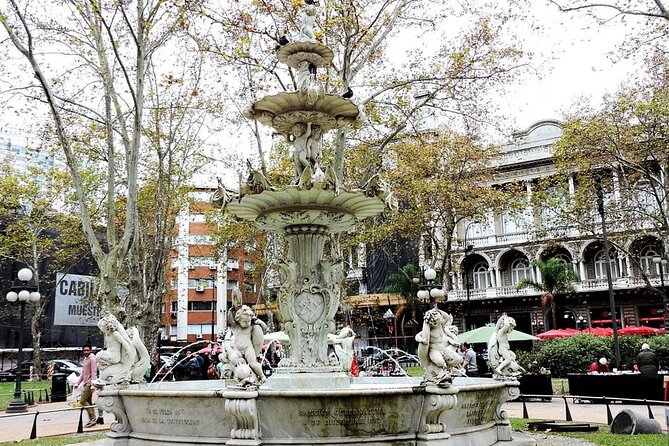
Plaza Independencia is a central square where old and modern Montevideo meet. Here you see the statue and mausoleum of General José Artigas, Uruguay’s national hero, along with the Presidential offices, Palacio Estévez, Palacio Salvo, and the Ciudadela Gate.
The square helps connect several periods of the city’s story. The gate recalls the fortified settlement, while the surrounding government buildings show the later capital. The Artigas mausoleum, set beneath the square, gives the stop a national focus rather than a purely architectural one.
The listed visit is ten minutes. That is enough to take photographs and hear the main explanation, but you will not have time to examine every building closely. The guide’s commentary matters here because the square can otherwise feel like a collection of grand façades. A good guide, such as Rodrigo or Rosario, can turn the stop into a compact lesson in Uruguay’s independence and civic identity.
La Carreta and Estadio Centenario
The Monumento a la Carreta sits in Parque Batlle, one of Montevideo’s major green spaces. José Belloni created the bronze work in 1934, showing oxen pulling a covered wagon. It recalls the gaucho way of life and the older system of moving goods before cars and railways changed the country.
The stop gives you a quick look at rural Uruguay inside the capital. The sculpture is large and easy to photograph, and the guide can explain why a wagon monument matters in a nation whose identity includes both city life and the countryside.
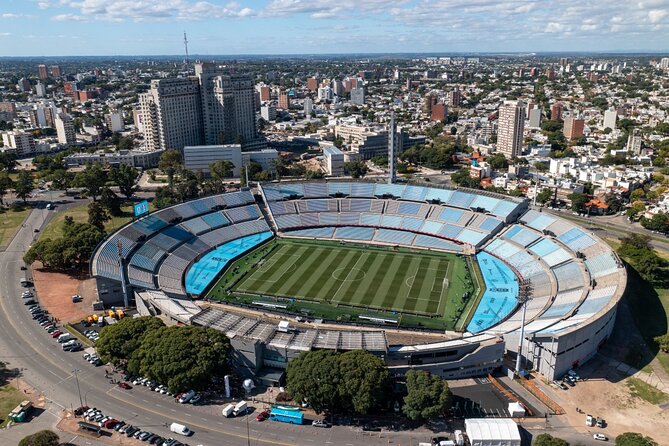
Nearby is Estadio Centenario, built for the 1930 World Cup, which Uruguay won. FIFA later declared it a World Football Historical Monument, described as the only construction of its kind in the world. Even if you are not a serious football fan, the stadium adds useful context. Football is not just a sport here. It is part of the country’s public story and international reputation.
The time at this area is listed as 15 minutes. You should expect an exterior look and photographs, not a stadium tour. The combination of La Carreta and Estadio Centenario is one of the route’s better pairings because it shows two sides of Uruguay in one short stop: rural tradition and modern national pride.
Pocitos Beach and the Montevideo letters
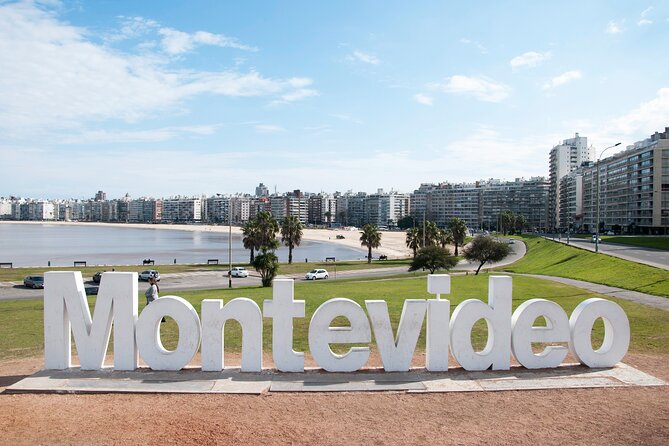
The route then reaches Pocitos Beach, where you can pose beside the large Montevideo sign and look across Pocitos Bay. This is likely to be one of the most popular photo stops, especially on a clear day.
Pocitos also shows you why Montevideo feels different from a standard inland capital. The city’s long coastal edge is part of everyday life, and the beach districts are not merely postcard scenery. They connect to the Rambla, the 24-kilometer avenue and promenade that follows the Río de la Plata.
The listed time at the letters is 15 minutes. That should allow photographs and a quick view over the bay, though a large group may create a short queue for the best sign photo. If you want a personal photo, be ready when the guide gives the group permission to move around.
The Rambla is an important part of the wider route, even when you are not stopping for long. It passes beaches including Ramírez, Pocitos, Buceo, Malvín, and Carrasco, with places for walking, cycling, skating, fishing, birdwatching, and boating. The ride along the water gives you a better feel for local life than a string of monuments alone.
Mercado del Puerto and the ride back
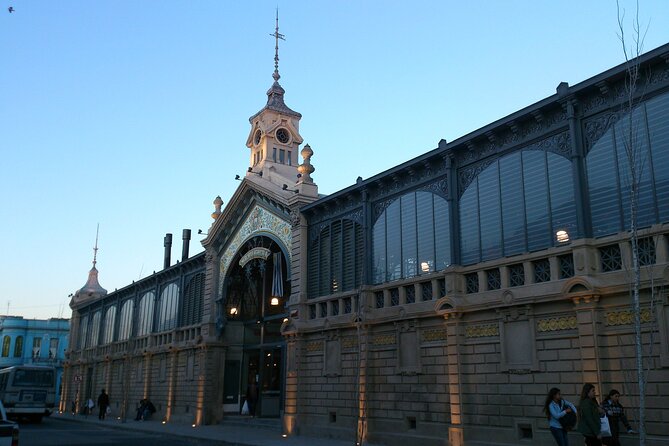
The final sightseeing stop is Mercado del Puerto, the Port Market. Its iron structure was built in Liverpool, and the market is now one of the city’s best-known food areas.
Inside and around the market, large grills cook Uruguayan beef. The stop is listed at only eight minutes, so you should not count on a full meal. Think of it as a brief look at the building and the surrounding food scene. Artists may perform in the nearby streets, adding to the atmosphere, but the short schedule can make this stop feel more like a preview than a proper visit.
The return follows the Río de la Plata and brings you back toward the cruise port. This final stretch is useful because it lets you see the city from its waterfront side after spending time inland. If you have extra time after the tour, the port area itself may offer a chance to walk, browse, or eat, but the tour ends back at the cruise-terminal meeting point.
Guides, language, WiFi, and group size
The best part of this experience can be the guide. Rodrigo receives repeated praise for his English, humor, patience, and ability to answer questions. Rosario is described as attentive, pleasant, and careful with details. Other guides, including Facundo, have also made a strong impression.
That said, the standard may vary. Some departures have had guides who spoke quickly, turned away from the bus while speaking, or were difficult to understand from the back. In some cases, commentary was given in both English and Spanish, which can make a three-hour tour feel slower and harder to follow if you expected English only.
The vehicle has a microphone system, which helps, but seating still matters. If you have trouble hearing, sit as close to the front as possible and ask the guide to repeat key points. The tour is advertised with WiFi, yet several departures had difficulty connecting. On one occasion, the driver eventually fixed it. I would treat WiFi as a bonus, not a central feature.
The advertised maximum is 38 people, though one account described a larger bus. A smaller minibus is clearly preferable for this route, since frequent boarding and exiting can take time. If the group is large, expect less flexibility and a slower pace at stops.
Is $27 good value for a cruise stop?
Yes, provided you want breadth more than depth. For $27, you get transport across a spread-out city, a guide, air conditioning, and a route that includes the Old Town, Parliament, two markets, a national monument, a World Cup stadium, a beach, and the Rambla.
The comparison with cruise-line excursions is important. One person paid about $30 for this tour while seeing a similar ship excursion priced around $80. That makes the independent tour appealing for budget-minded passengers who are comfortable meeting outside the cruise company’s own program.
You are paying with time rather than money. The stops are brief, and some of the best places, including Plaza Matriz and Mercado del Puerto, deserve more than the schedule allows. I see this as a good first-day overview. If you already know Montevideo or mainly want shopping and food, a self-guided walk may give you more control.
The tour is offered daily, with the listed meeting window around 9:00 to 9:30 a.m. Confirm the exact time for your sailing and arrive at the terminal meeting point early. One departure left before late arrivals, and a small transfer vehicle had to bring some people to the main bus after they missed the opening portion.
Who should book this tour?
I would choose it if you have one day in port, want to cover many districts, and prefer a guide to explain what you are seeing. It suits first-time visitors, couples, families, solo passengers, and anyone who does not want to arrange taxis between the Old Town, Parliament, Parque Batlle, Pocitos, and the port.
It is less suitable if you need a slow pace, want interior visits, or care most about shopping. Older passengers should be comfortable getting on and off several times, and anyone with hearing concerns should request a front seat.
The tour offers free cancellation up to 24 hours before the start time. Service animals are allowed, most people can participate, and the activity is near public transport, though cruise passengers will normally use the terminal meeting point.
Final booking advice
Book this tour if your goal is to get your bearings fast and see the main faces of Montevideo for a modest price. The route is smart, the coastal drive is worthwhile, and a strong guide can turn a series of quick stops into a memorable introduction.
Skip it if you want a relaxed Old Town walk, a long market lunch, or guaranteed English-only commentary and reliable WiFi. For the best chance of a smooth outing, arrive early, ask for a front seat, keep expectations realistic about stop lengths, and confirm the meeting time for your ship.
FAQ
Where does the Montevideo tour begin?
It begins at the Point Terminal de Cruceros Montevideo, near the internet café and souvenir shop at the cruise terminal entrance on Yacaré in Montevideo.
Where does the tour end?
The activity ends back at the cruise-terminal meeting point.
How long does the tour last?
The tour lasts approximately three hours.
What is the price?
The listed price is $27 per person.
What sights are included?
The route includes Plaza Matriz, Palacio Legislativo, Mercado Agrícola Montevideo, Plaza Independencia, the Monumento a la Carreta, the Montevideo letters at Pocitos Beach, Estadio Centenario, Mercado del Puerto, and views along the Rambla.
Is transportation provided?
Yes. You travel between stops in an air-conditioned vehicle.
Is WiFi available?
WiFi is advertised on board, but connections have not worked reliably on every departure.
How many people can join?
The stated maximum is 38 people.
Can I cancel for a refund?
You can cancel up to 24 hours before the experience starts for a full refund. Changes or cancellations made less than 24 hours in advance are not accepted for a refund.
Just added around Uruguay
- Montevideo Private Your Way – Perfect for Cruise Passengers.★ 5.0 · 82 reviews
- From Montevideo to Punta del Este Complete★ 4.0 · 123 reviews
- Private Transportation from Carrasco Airport to Port in Montevideo★ 5.0 · 84 reviews
- Private Have It Your Way Tour in Montevideo★ 5.0 · 89 reviews
- Montevideo Highlights: Shared City Tour for Cruise Passengers★ 4.5 · 141 reviews
- The Best Punta del Este Day Trip from Montevideo★ 4.0 · 158 reviews
- Colonia del Sacramento Full Day from Montevideo★ 4.0 · 165 reviews
- Full day Punta del Este tour★ 4.5 · 177 reviews
Uruguay Tours, compared.
Colonia del Sacramento Full Day from Montevideo
Read our review →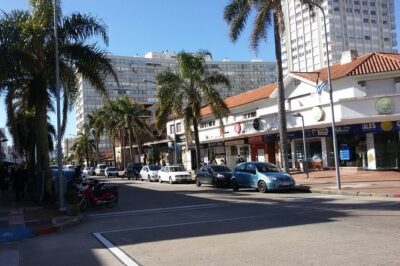
The Best Punta del Este Day Trip from Montevideo
Read our review →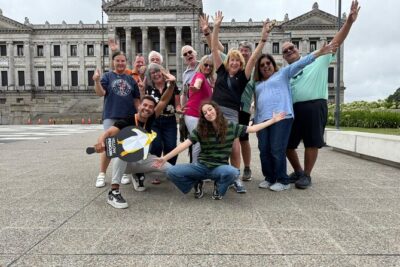
Montevideo Highlights: Shared City Tour for Cruise Passengers
Read our review →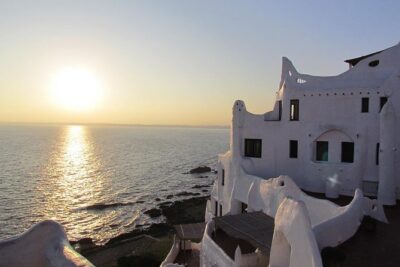
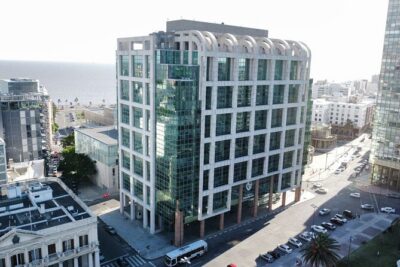
Private Transportation from Carrasco Airport to Port in Montevideo
Read our review →Browse the lists this tour appears in