
Reviewed · STARGAZING TOURS
Astronomical Tour with Guide and Pick Up San Pedro de Atacama
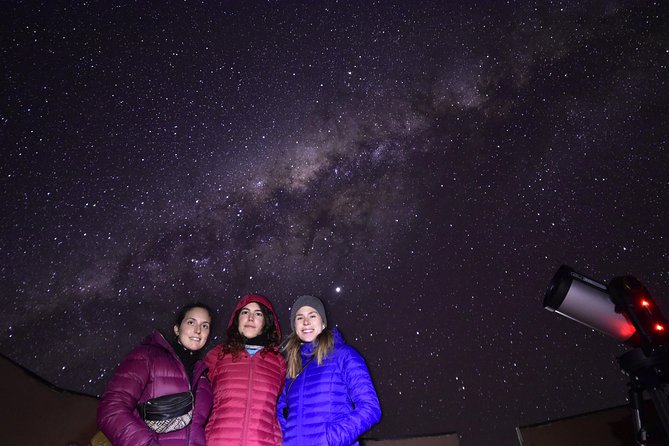
The best part of this San Pedro de Atacama evening is the chance to see the southern sky through a real telescope, not just admire a field of stars with the naked eye. Guides such as Patricio explain what you are seeing, point out constellations with a laser, and help you make sense of the enormous distances above you. Saturn, Jupiter, the Moon, star clusters and galaxies may appear on the program, depending on the season and conditions.
I like the mix of clear astronomy lessons and hands-on telescope viewing, and I like that the tour includes blankets, chairs, hot drinks, snacks and a night-sky photograph. The main concern is timing: with a group, you may spend more time waiting for your turn than looking through the eyepiece. A bright Moon, clouds, wind or an uneven English translation can also change the quality of the night.
Key points to know before booking
- A 9:30 p.m. start gives you a proper dark-sky outing, with hotel pickup and return included.
- Patricio and other astronomy guides explain stars, planets and galaxies in an accessible way, with English translation available on some departures.
- Telescopes do the heavy lifting: the Moon, planets and star clusters can look far more detailed than they do overhead.
- Moon phase matters: a new or nearly new Moon gives you the best chance of seeing the Milky Way clearly.
- The group is advertised at 16 people maximum, though group size and waiting time have not always felt consistent.
- A professional photo is included, but the best part of the tour is the guide and telescope time, not the photograph alone.
Why Atacama nights are made for astronomy
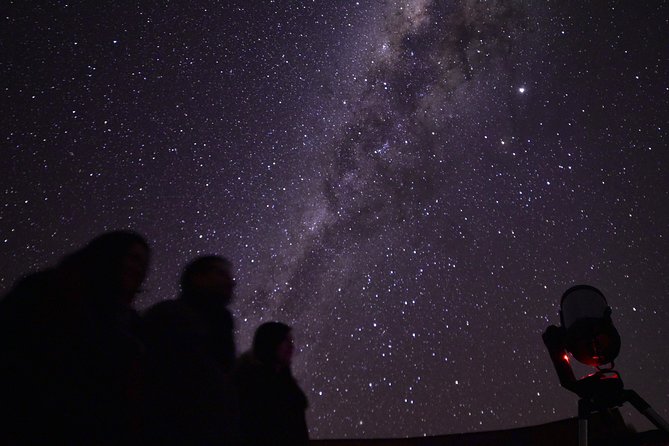
San Pedro de Atacama is a natural base for stargazing because the town sits beneath famously clear, dark skies. The dry desert setting and distance from major city lights create the right conditions for seeing far more stars than you usually can at home.
That does not mean every night delivers the same view. Clouds, wind, humidity, seasonal weather and the Moon all matter. A bright full Moon can wash out the faintest stars and make the Milky Way difficult to see, but it can also give you a striking telescope view of craters and ridges. A clear moonlit night is not a failed astronomy night, but it is a different one.
I would check the lunar calendar before booking. For the broadest field of stars, choose a night close to the new Moon. For an excellent look at lunar detail, a brighter Moon can work well. The guide may still show planets, clusters and other objects when the Moon is bright, but you should not expect the same dark-sky effect.
More Stargazing Tours in San Pedro de Atacama:
- San Pedro de Atacama: Etno-Stargazing Tour with Transfer
★ 4.8 · 629 reviews - San Pedro de Atacama: Stargazing Experience
★ 4.7 · 489 reviews - San Pedro de Atacama: Guided Atacama Desert Stargazing Tour
★ 3.9 · 93 reviews
Leaving San Pedro around 9:30 p.m.
The evening begins with pickup from your accommodation in San Pedro de Atacama. The exact route depends on the pickup list, and collecting several people can take time. Past outings have included roughly 15 to 20 minutes of hotel pickups, followed by a short drive to the observation site. Return transport is included as well.
The schedule is late, but that is the point. You need darkness for this activity, and the 9:30 p.m. start places the main viewing session well after sunset. Plan your dinner accordingly, and do not book another late-night activity for the same evening.
Pickup is not offered from the ayllus of Cucuter, Tulor, Coyo, Solor or Quitor. If you are staying in one of those areas, you need to confirm how you will reach the meeting point before paying. This is a small detail, but it can become a large problem at night in an unfamiliar desert town.
The telescope session and southern constellations
At the site, chairs are arranged around the telescopes so the group can listen, look and take turns. The equipment includes computerized and manually operated telescopes. Past sessions have used two telescopes, while another outing had three telescopes for 12 people, so the setup can vary.
The guide first locates an object and explains it before people take turns at the eyepiece. Depending on the date, you might see planets, star clusters, galaxies, nebulae, individual stars or the Moon. The guide also uses an astronomical laser pointer to trace the main constellations of the southern hemisphere.
This is where the tour earns its price. You are not simply standing outside while someone names a few stars. A good guide gives scale to what you see: the size of a planet, the distance of a cluster, the life cycle of a star, or the difference between a bright point and a cloudy deep-sky object.
Patricio has led many of these sessions and is described as a particularly strong teacher. Nathan has also guided departures, including some in excellent English. Other sessions use one Spanish-speaking guide and a second person to translate. If English is important to you, ask about the language arrangement before booking. The quality of the explanation can depend on who leads the night and how many languages the group needs.
How much telescope time will you get?
This is the most important practical question. The tour is advertised for a maximum of 16 people, but some past departures have felt larger, including one reported group of more than 20. A group of 12 with three telescopes can move along comfortably. A larger group sharing two telescopes can mean long pauses between views.
You may look through the telescope for only a few minutes at a time, then wait while others have their turn. That is normal for a shared telescope session, but it can disappoint you if you expect a private observatory visit. The guide may also stop to answer questions, adjust the equipment or explain an object to the whole circle.
I would book this with the right expectation: it is a guided group introduction to the night sky, not an all-night personal observing session. If you want the most viewing time, choose a weekday or a quieter period. April through August is described as a lower-demand period, except on holiday weekends. Ask about the expected group size when you confirm.
A few more San Pedro de Atacama days worth comparing
- San Pedro de Atacama: El Tatio Geysers Tour
★ 4.7 · 943 reviews - Piedras Rojas, Altiplanics Lagoons & Salar Full-Day Tour
★ 4.7 · 592 reviews - San Pedro Atacama: Baltinache Lagoons
★ 4.6 · 359 reviews - San Pedro de Atacama: Valle de la Luna Guided Tour
★ 4.4 · 312 reviews
Moonlight, clouds and the season
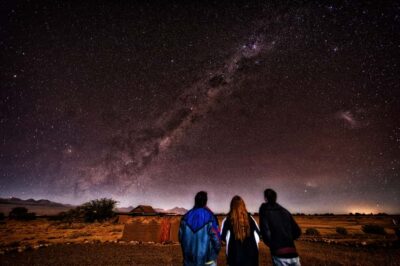
The Moon can make or break the kind of night you want. On a moonless night, the Milky Way and faint stars have a better chance of showing clearly. On a bright night, the guide can still point the telescope at the Moon, planets and star clusters, and the lunar surface may be the most impressive sight of all.
Clouds are a more serious problem. This activity requires good weather, and the operator can cancel if visibility is poor. Some departures have been postponed for several nights before conditions improved. That can be frustrating during a short stay, but a telescope tour cannot create stars behind cloud.
Summer in Chile, especially January through March, can bring periods of unstable weather and high-altitude rain. The operator says it uses weather reports, satellite views, wind and humidity readings when deciding whether to run the activity. Conditions can change, so the tour may proceed on one night and cancel on another.
If the tour is canceled for poor weather, you are offered another date or a full refund. You can also cancel your own booking for a full refund if you do so at least 24 hours before the start time. Changes made inside that 24-hour window are not accepted.
The night-sky photograph
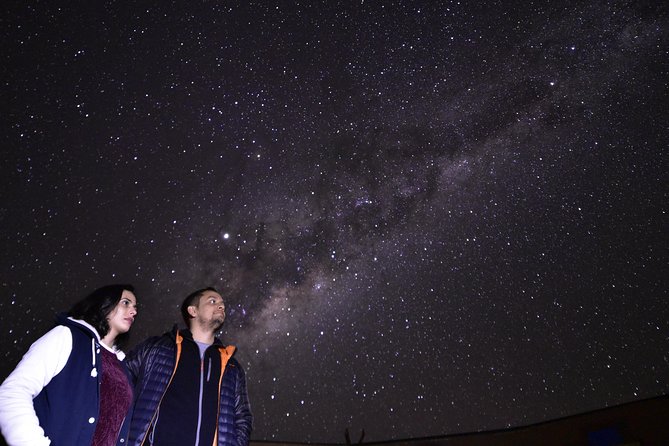
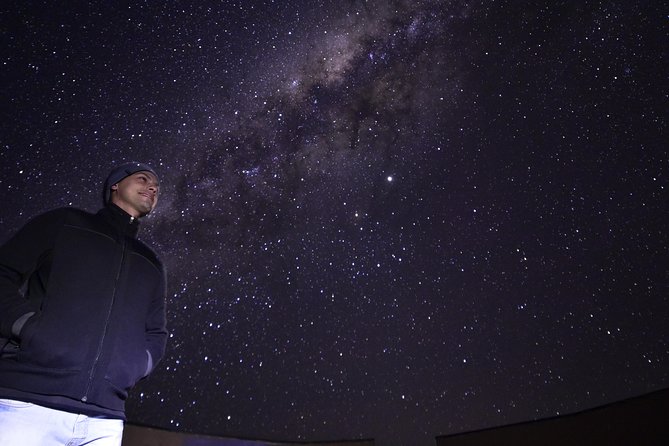
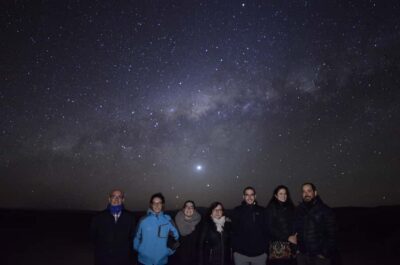
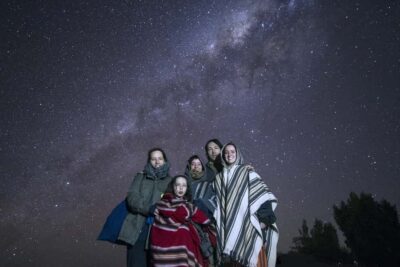
A professional photograph is included, with the exact approach depending on the Moon and conditions. On a moonless night, the setup can place you beneath the stars or Milky Way. With a bright Moon, the photographer may create a lunar image or a different night-sky composition.
The photograph is a nice extra, especially if you want a clear souvenir without carrying a tripod or learning manual camera settings. Still, I would not book the tour only for the picture. A photo session can take a noticeable portion of the evening, particularly when several people want individual and group shots. That can add to the waiting time around the telescopes.
Photographers should bring their own camera if they want to learn more. One guide has helped a participant set up a personal camera for basic astrophotography. The tour is not presented as a dedicated photography workshop, but the staff may offer useful pointers when time allows.
Staying warm with drinks and snacks
The desert can feel cold late at night, even after a warm day. Blankets and chairs are supplied, and drinks and snacks are part of the experience. Depending on the departure, you may have coffee, tea, soda, wine, whiskey or other alcoholic drinks, with food served during or after the telescope session.
The timing of the refreshments matters. Some sessions offer drinks only near the end, rather than during the entire astronomy lesson. Bring an extra warm layer anyway. The supplied blanket helps, but it is not a substitute for a jacket, long trousers and closed shoes.
The refreshments give the evening a social finish, but they do not turn the tour into a meal. Think of them as simple comfort items after standing or sitting outside in the cold.
Is the $38 price fair?
At $38 per person, the tour is reasonably priced for a 2.5-hour evening that includes hotel pickup, return transport, guides, telescopes, chairs, blankets, refreshments and a photograph. A private astronomy session would cost more, while renting a car and finding a dark place could give you longer under the sky but would require your own planning and equipment.
The value depends on what you want. If you are curious about astronomy, the guide can add far more than a self-guided constellation app. If you already know the sky and mainly want uninterrupted observing time, the group format may feel less rewarding.
The included photo improves the value, but I would treat it as a bonus. The real purchase is the explanation, the access to telescopes and the chance to see southern-sky objects with someone who knows where to aim.
Who will enjoy this night most?
Families usually have a lot to gain. Children can see the Moon or a planet through the eyepiece, then ask questions while the guide explains what is happening in space. The short 2.5-hour format is long enough to feel substantial without becoming an all-night campout.
Couples may enjoy the quiet setting, the drinks and the photograph, especially on a clear moonless night. It also suits solo visitors who want an organized outing rather than navigating a dark road outside town.
You should be comfortable with a shared activity. The experience is less suitable if you dislike waiting, need private instruction or want guaranteed views of a specific planet. You also need patience with bilingual presentations if your departure includes Spanish and English speakers.
Practical booking advice for San Pedro
Book the astronomy night early in your stay if your schedule permits. The activity averages 23 days of advance booking, and building in another night gives you some protection if weather causes a cancellation.
Try to avoid the brightest lunar dates if your main goal is the Milky Way. If the Moon is already bright during your visit, do not assume the activity is pointless. A strong guide can still show the Moon, planets and clusters, and the astronomy lesson remains useful.
Before booking, confirm three details: your pickup location, the expected group size and the language of the guide. Also ask what happens if your night is canceled, especially if you are leaving San Pedro the next morning.
Should you book this astronomy tour?
I would book it if you want a friendly, guided introduction to the Atacama sky and like the idea of looking through telescopes rather than only taking photos with your phone. Patricio and guides such as Nathan can make complex astronomy easy to follow, and the included transport, warm drinks and photo keep the $38 price sensible.
I would hesitate if you want long, uninterrupted telescope sessions or a private English-language experience. In that case, look for a smaller group and confirm the moon phase first. For most families, couples and curious first-time stargazers, this is a good way to turn San Pedro’s famous night sky into a real lesson rather than just a pretty view.
FAQ
How long does the astronomy tour last?
The activity lasts approximately 2 hours and 30 minutes, including pickup, the astronomy session and return transport.
What time does the tour start?
The stated start time is 9:30 p.m.
Is hotel pickup included?
Yes. Pickup from accommodation in San Pedro de Atacama is included.
Which areas are not included in pickup?
Pickup is not provided from the ayllus of Cucuter, Tulor, Coyo, Solor or Quitor.
What can I see through the telescopes?
Depending on the season and conditions, you might see planets, star clusters, galaxies, stars, nebulae or the Moon.
Is the tour available in English?
Some departures include English, and some use a Spanish-speaking guide with a second guide translating into English. Ask about the language arrangement before booking.
What is the maximum group size?
The advertised maximum is 16 people.
Are drinks and snacks included?
Yes. The inclusions list coffee or tea, soda, alcoholic drinks and snacks.
Is a photograph included?
Yes. Astro photography is included when conditions allow, with the listing specifying the service without Moon. Past sessions have also included professional photographs under the stars and photos of the Moon.
What happens if the weather is poor?
The operator may cancel because of poor weather. You will be offered another date or a full refund.
Just added around San Pedro de Atacama
- San Pedro de Atacama: Guided Atacama Desert Stargazing Tour★ 3.9 · 93 reviews
- Sandboarding Tour in San Pedro de Atacama, Chile★ 4.9 · 77 reviews
- San Pedro de Atacama: Rainbow Valley & Hierbas Buenas Tour★ 4.7 · 40 reviews
- San Pedro de Atacama: Red Rocks & Altiplano Lagoons Day Trip★ 4.9 · 108 reviews
- San Pedro de Atacama: Guided Buggy Tour Through the Desert★ 5.0 · 99 reviews
- San Pedro de Atacama: 3 D. Tour Uyuni and Back to San Pedro★ 4.8 · 61 reviews
- Caracoles: Red Stones of Atacama and Chaxa Guided Day Trip★ 4.8 · 56 reviews
- From San Pedro de Atacama: Rainbow Valley Tour★ 4.9 · 48 reviews
Stargazing Tours, compared.
Cusco by Night: Planetarium Cusco, Dinner, and Pisco Sour
Read our review →
Browse the lists this tour appears in