
Reviewed · GUIDED
Jeep Adventure: Guided Tour through Tijuca Rain Forest
Rio’s Tijuca Rain Forest is a surprising piece of wild country only about ten minutes from the city center. This four-hour outing combines an open Jeep ride, an easy 15 to 30-minute forest walk, waterfalls, old landmarks, and broad views toward Copacabana, Ipanema, Guanabara Bay, and Niterói. It is less a wildlife safari than a quick introduction to Rio’s tropical forest.
I like two things here: hotel pickup and drop-off make a half-day visit easy, and guides such as Everton, George, Lucy, and Andrea have earned praise for explaining the forest, reforestation, Brazilian history, and local plants in clear, friendly terms. I also like the mix of nature and viewpoints, since you are not spending four hours looking only at trees.
The main caution is communication at pickup. Some customers were left waiting or sent to a different hotel, while others had smooth, punctual service. Confirm your meeting point and departure time carefully, and do not assume that every listed viewpoint is available every day.
Key things to know before you book
- A rainforest close to downtown: Tijuca National Park begins roughly ten minutes from Rio’s city center, so you can see substantial forest without giving up a full day.
- An easy walk, not a hard trek: The trail to the waterfall takes about 15 to 30 minutes and follows a gradual route.
- Views are part of the appeal: Vista Chinesa, Emperor’s Table, and other stops give the outing its strongest photo moments.
- Wildlife is possible, not promised: You might spot monkeys, sloths, butterflies, birds, coatis, lizards, or hummingbirds, but the focus is plants and forest ecology.
- Weekend restrictions matter: Vista Chinesa cannot be visited on Saturdays, Sundays, and holidays, and Emperor’s Table may require a walk on weekends.
- Pickup needs checking: Service covers selected hotels in downtown Rio, the South Zone, and Barra da Tijuca, but pickup choices and prices vary by neighborhood.
Why Tijuca Forest works as a half-day Rio outing
Rio is famous for beaches and granite peaks, yet its forest is just as important to understanding the city. Tijuca National Park brings thick Atlantic Forest close to the urban core. The Mata Atlântica once covered a large part of Brazil’s coast, and the tour explains how Tijuca was replanted and protected after heavy clearing.
That history gives the ride more meaning than a simple scenic drive. You see forest, city, and old roads in a compact area. The guide also explains the wider Mata Biosphere Reserve, which reaches across 14 Brazilian states.
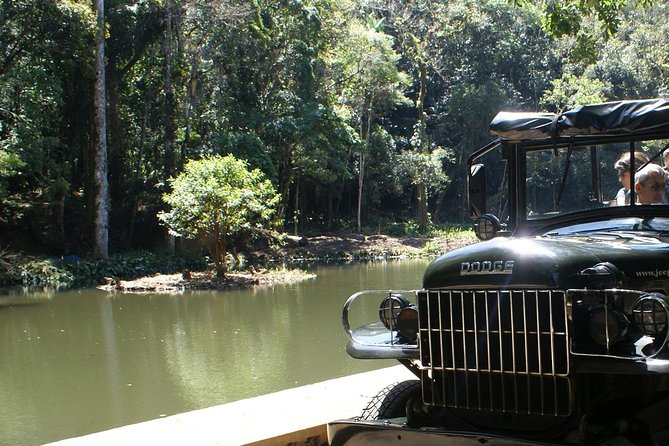
The open Jeep adds fresh air and a bit of theater to the ride. It is fun when the vehicle is moving through the tropical hills, though the small bench seats are not especially plush. If you expect a traditional safari vehicle that drives slowly in search of animals, adjust your expectations now. This is mainly a guided nature walk and sightseeing tour, with the Jeep used to connect the stops.
The group can reach up to 20 people. That is small enough for a guide to explain plants and history, but large enough that you may wait for late pickups or slow walkers. One delayed group reportedly added nearly 30 minutes to the morning, so keep that possibility in mind if you have another booking afterward.
A few more Rio de Janeiro days worth comparing
- Rio de Janeiro: 6-Stop Highlights of Rio with Lunch
★ 4.4 · 5,157 reviews - Christ the Redeemer Entry Ticket by Corcovado Train
★ 4.4 · 4,476 reviews - Rio de Janeiro: Rocinha Favela Walking Tour with Local Guide
★ 4.8 · 3,052 reviews
The drive into Tijuca National Park
Pickup is available from selected hotels in downtown Rio, the South Zone, and Barra da Tijuca. The exact departure time is confirmed after booking, and there are two pickup options with different prices depending on the neighborhood. Check the wording carefully rather than assuming your hotel door is the meeting point.
Once collected, you join the guide and driver in an open-top Jeep. The short ride from the city gives the guide time to set the scene: Tijuca is protected forest, close to dense urban districts, and its survival is tied to reforestation.
This first hour is not dead time. It frames what you are about to see. Instead of treating the forest as a wall of green, you learn why it exists where it does and how it fits into Brazil’s coastal ecosystem. Guides who have led this tour, including George, Everton, and Lucy, have been praised for answering questions and switching among languages.
English, Spanish, German, Italian, French, and Portuguese are listed as available languages. Still, because several pickup complaints involved unclear communication, I would confirm both the language and the exact pickup instructions before the day of the tour.
Visitor Center and the first look at the forest
The Tijuca National Park Visitor Center is scheduled for about 15 minutes. It is a brief stop, but it helps you identify the area’s plants and animals before you begin walking.
Do not expect a large museum visit. The value is in getting basic context about local biodiversity. If your guide points out a plant later on the trail, you have a better chance of remembering it instead of seeing only another tropical leaf.
The forest itself may be the most rewarding part for people who enjoy plants, birds, and quiet paths. The tour presents the Mata Atlântica as a living ecosystem, not just scenery for photographs. Look carefully for movement in the branches and along the trail, but keep wildlife expectations modest. Sightings can include monkeys, sloths, butterflies, birds, coatis, lizards, hummingbirds, and fish, yet no guide can arrange an animal appearance.
Several customers found the forest walk relaxed and easy. The route is gradual, and most people can participate. Wear shoes with a decent grip, especially if the ground is wet, and bring water, sunscreen, sunglasses, and a hat.
Cascatinha Taunay and the waterfall walk
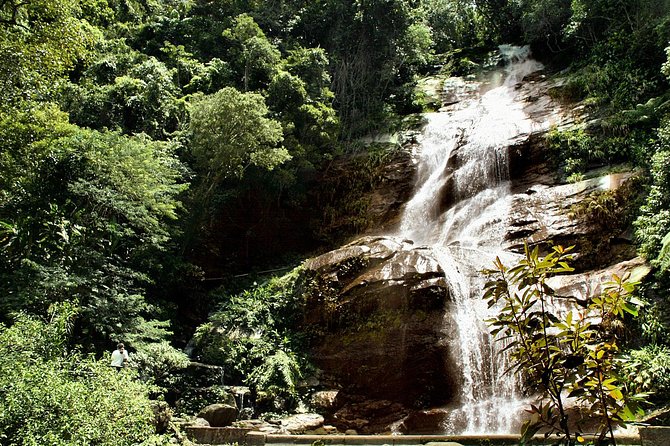
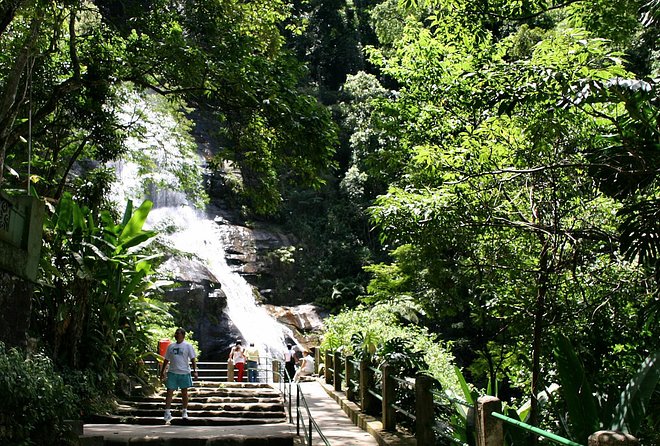
Cascatinha Taunay is one of the prettiest early stops. You walk a short distance to a clear cascade framed by forest. The visit is brief, about ten minutes, so this is a photo and atmosphere stop rather than a long swim or picnic break.
The main walk leads toward Cachoeira dos Macacos, also described in the tour details as Cachoeira dos Primatas. The route takes roughly 15 to 30 minutes and is classed as an easy eco hike. You follow the guide along a gradual trail, with the chance to see smaller cascades and rainforest life along the way.
This is where the tour earns its name as an eco outing. You are not simply being driven to a lookout, then returned to the hotel. You get a short stretch of walking under the trees, with the guide pointing out flora and explaining how the forest functions.
The walk is still modest. If you want a demanding hike, a remote waterfall, or a full-day trail, this will feel too light. If you have only one free morning and want a safe introduction to Tijuca, the length is useful. It gives you a taste of the forest without taking the whole day.
Same trip, a completely different kind of day:
- Rio de Janeiro: Sugarloaf Cable Car Official Ticket
★ 4.6 · 2,873 reviews - Rio: Christ the Redeemer, Sugarloaf, Selaron & BBQ Lunch
★ 4.5 · 2,428 reviews - Rio De Janeiro: Half-Day Rocinha Favela Walking Tour
★ 4.7 · 2,272 reviews - Rio: Maracanã Stadium Official Entrance Ticket
★ 4.4 · 1,632 reviews
Emperor’s Table and the old road through the hills
Emperor’s Table sits at about 487 meters above sea level. The viewpoint recalls the days when Dom Pedro I reportedly left Quinta da Boa Vista by cart for a meal with a view along the road toward Vista Chinesa.
Today, the appeal is simple: city views framed by forest. Stairs around the parapet lead toward the edge, where the urban sprawl and wooded slopes meet. It is a good place to pause and understand how close Rio’s neighborhoods are to protected forest.
The stop is usually around ten minutes. On weekends, reaching Emperor’s Table may involve walking, so do not count on pulling up directly beside every viewpoint. That detail matters for anyone with limited walking ability or a tight schedule.
Mayrink Chapel, a small surprise in the woods
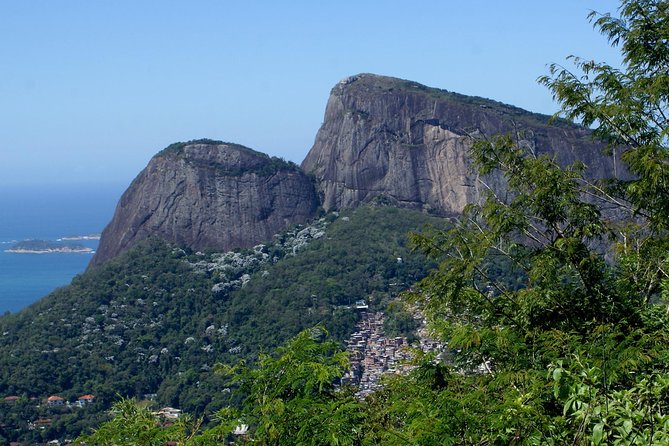
The pink Mayrink Chapel is an unusual stop because it feels more like a country church than a national park attraction. Built in 1860 by Portuguese banker Viscount de Souto, it sits about 460 meters above sea level in the forest.
The chapel’s interior includes reproductions of religious panels by Cândido Portinari. Its gardens, Carrara marble, and tiled patio were designed by landscape designer Roberto Burle Marx. You only stop for about five minutes, so you may not have time for a long look, but the setting makes it worthwhile.
This is also a reminder that Tijuca is not untouched wilderness. Its roads, chapels, viewpoints, reforestation story, and royal connections all overlap. The tour works best when you enjoy that blend of nature and Rio’s past.
Vista Chinesa and the best city photographs
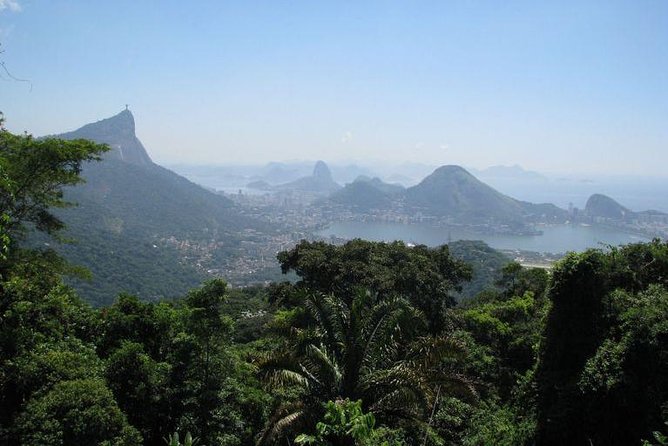
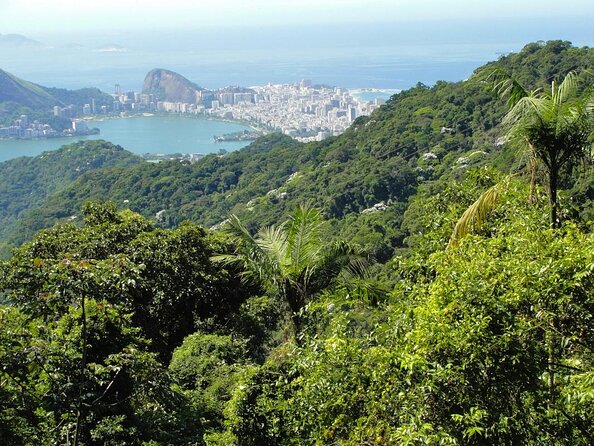
Vista Chinesa is the signature lookout. The pagoda-style structure was built between 1902 and 1906 to honor the Chinese workers who brought tea cultivation to Brazil in the early 19th century. Made from bamboo and cement, it sits at about 380 meters above sea level.
From here, you can photograph Ipanema and Copacabana beaches, Guanabara Bay, and, in clear conditions, Niterói. The view gives you a sharp sense of Rio’s layout: forested hills rise above a city shaped by beaches, water, and steep slopes.
Weather makes a real difference. Even in rain, the forest can look dramatic, but distant beaches and the bay may fade into cloud. On a clear morning, this is likely to be the strongest photography stop of the day.
Pay close attention to the calendar. Due to forest regulations, Vista Chinesa is not available on Saturdays, Sundays, or holidays. If that viewpoint is the reason you are booking, choose a weekday and confirm the current route.
What the guides add to the ride
The best part of this experience depends heavily on the guide. A good guide turns a short walk into a lesson about reforestation, local plants, animal sounds, and Brazilian history. George has been praised for explaining flora and fauna, while Everton has been singled out for his command of the park and his ability to give guests time for photographs.
Lucy Morozini has been praised for clear explanations and answering questions. Andrea has been noted for her Brazilian culture and history knowledge, as well as helping a solo visitor with photographs. These examples show the kind of guiding the tour aims to provide, but the assigned guide can change.
Multilingual ability is a real advantage for mixed groups. Still, several customers had trouble reaching the operator or receiving clear pickup information. The guide in the forest may be excellent while the office communication remains weak, so treat those as two separate parts of the service.
Is $88.21 a fair price?
At $88.21 per person, the cost is reasonable if you value convenience. You are paying for hotel transport, a private open Jeep seat within a group of up to 20, a multilingual guide, park access, the short hike, several viewpoints, and roughly four hours of activity.
It is less attractive if you mainly want a long wildlife drive. The Jeep does not roam the forest in search of monkeys and sloths. Much of the value comes from transport between stops, interpretation, and the ease of seeing several Tijuca sights in one morning.
Food and drinks are not included. Bring water and eat before pickup if you need a substantial breakfast. The tour is short enough that you should not need a meal break, but the open vehicle, sun, and walking can make water especially important.
The overall rating is 4 out of 5 from 554 ratings, which fits the pattern here. The strongest experiences center on friendly guides, clear explanations, pretty views, and a simple half-day schedule. The weakest experiences center on missed pickups, unclear meeting points, refund problems, and expectations of abundant wildlife.
Who should book this Tijuca Jeep tour?
I would recommend it to a first-time Rio visitor who wants to see forest without giving up a full day. It also suits solo visitors, couples, families, and groups who prefer a gentle walk over a serious hike.
It is a good fit if you enjoy plants, waterfalls, viewpoints, and local history. It is less suitable if you dislike open-air vehicles, need generous seating, want guaranteed animal sightings, or prefer to explore at your own pace.
Wear comfortable clothes and walking shoes. Bring water, sunscreen, sunglasses, and a hat. I would also save the pickup confirmation, check your hotel neighborhood, and ask exactly where the Jeep will meet you.
Free cancellation is available up to 24 hours before the start time for a full refund. Cancellations or changes inside that window are not accepted for a refund, and the cutoff uses Rio local time.
Should you book it?
Book this tour if you want a well-packaged introduction to Tijuca Forest with minimal planning. Its strongest features are the short transfer from Rio, the easy waterfall walk, the city views, and guides who can make the plants and reforestation story interesting.
I would book on a weekday if Vista Chinesa matters to you. I would also confirm pickup in writing and avoid placing an important activity immediately afterward. With those precautions, this is a practical way to add rainforest, waterfalls, and high viewpoints to a Rio itinerary.
FAQ
How long does the Tijuca Rain Forest tour last?
The experience lasts approximately four hours, including hotel pickup and drop-off, the Jeep ride, forest stops, viewpoints, and the easy walk.
Where does hotel pickup operate?
Pickup is available from most selected hotels in downtown Rio, the South Zone, and Barra da Tijuca. The available pickup options and prices differ by neighborhood, so check your hotel location carefully.
Is the forest walk difficult?
The walk is described as easy and follows a gradual trail. It generally takes about 15 to 30 minutes to reach the waterfall.
Which waterfalls does the tour visit?
The route includes Cascatinha Taunay and a waterfall identified as Cachoeira dos Macacos. The stop list also names Cachoeira dos Primatas for the waterfall seen during the hike.
Can I see monkeys and sloths?
You might see monkeys, sloths, butterflies, birds, coatis, lizards, hummingbirds, or fish, but animal sightings are not guaranteed. The tour focuses heavily on forest plants, ecology, and reforestation.
Is Vista Chinesa available every day?
No. Forest regulations prevent visits to Vista Chinesa on Saturdays, Sundays, and holidays.
What languages are available?
The tour lists English, Spanish, German, Italian, French, and Portuguese. The exact language arrangement should be confirmed when your departure is reconfirmed.
What should I bring?
Wear comfortable clothing and shoes. Bring water, sunscreen, sunglasses, and a hat, especially in hot weather. Food and drinks are not included.
Just added around Rio de Janeiro
- Skip the Line: Lagoa Misteriosa Admission Ticket with Scuba Diving Experience★ 5.0 · 81 reviews
- Rio de Janeiro: Tijuca Peak Guided Hike★ 4.7 · 56 reviews
- Sugarloaf Mountain Fast-Pass Ticket and Guided Tour★ 4.4 · 62 reviews
- Rio de Janeiro: Sugarloaf Mountain Hike and Climb★ 5.0 · 45 reviews
- Rio de Janeiro: Sunrise Lookout and Christ the Redeemer Tour★ 5.0 · 121 reviews
- Rio de Janeiro: Samba Class and Samba Night Tour★ 4.6 · 115 reviews
- Rio Surf Experience★ 4.9 · 37 reviews
- Rio Samba Bus: hop-on hop-off city tour in Rio de Janeiro★ 3.8 · 94 reviews
Guided, compared.


From Lima: Paracas and Huacachina Oasis Full Day Guided Tour
Read our review →



Palermo: Graffiti and Street Art Guided Tour in English
Read our review →
Guided Tour, with La Popa Convent, and San Felipe
Read our review →Browse the lists this tour appears in