
Reviewed · CYCLING TOURS
Montevideo Electric Bicycle Tour
Montevideo is spread out, and this private e-bike tour gives you a practical way to see its historic center, football landmarks, parks, and long waterfront in one morning. You cover about 18 to 19 kilometers, yet the motor assistance keeps the ride manageable for a wide range of fitness levels.
I like two things in particular: the route uses bike paths for much of the day, including the unusual protected lanes running down the center of some main streets, and the guides bring local personality to the ride. Santiago, Felipe, Freddy, and Fabiola are described as friendly, careful, and well informed. The main consideration is that this is still a three-hour bicycle outing, so you should be comfortable riding in city traffic and spending time in the saddle.
Key details that shape the ride
- About 18 to 19 kilometers lets you see far more than a walking tour in the same time.
- Electric bicycles do the heavy work, making the route suitable for riders who want exercise without an exhausting climb.
- The Rambla is the visual highlight, with open views across the Río de la Plata and a long stretch of waterfront riding.
- The route joins several sides of Montevideo, from public institutions and football history to Ciudad Vieja, beach districts, and parks.
- English and Spanish support is included, with both a live guide and an audio guide.
- The experience returns to La Gaceta 1282, and an Uber is a practical choice from Ciudad Vieja or the cruise port.
Starting near La Gaceta at 10:00
The tour begins at 10:00 a.m. at La Gaceta 1282 in Montevideo. The address is in a residential area rather than an obvious storefront, so do not be surprised if your taxi or rideshare drops you at a house-like setting. That is the correct meeting point.
The location is near public transportation, but an Uber may be easiest if you are staying in Ciudad Vieja or arriving from the cruise port. You return to the same place after roughly three hours and 15 minutes.
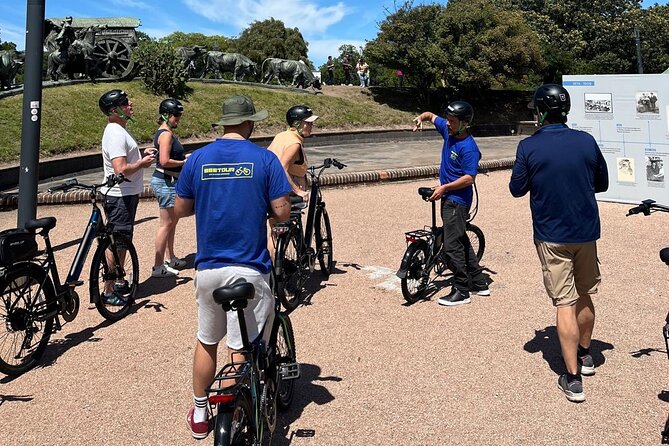
Before setting off, you receive an electric bicycle, helmet, and reflective vest. The bikes have earned especially strong praise for being new, comfortable, and easy to use. You get an introduction to the controls, then follow the guide through the city.
The private format is useful here. You are not being folded into a large sightseeing group, and the guides can adjust the pace to the abilities of your party. The route still includes traffic lights and urban riding, so listen closely to the guide and stay together.
More Bike Tours in Uruguay:
- Bogota: Bicycle City Tour
★ 4.9 · 2,156 reviews - Buenos Aires: North or South Buenos Aires Bike Tour
★ 4.7 · 719 reviews - La Paz: Mountain Bike Down the World’s Most Dangerous Road
★ 4.9 · 386 reviews
Batlle Park links public life, art, and football
The first section moves through important civic and sporting landmarks. At the Hospital Universitario of UDELAR, you see an emblematic university hospital known for its architecture and role in Uruguay’s public health system. The stop is brief, but it gives you a useful look at how education and public medicine fit into Montevideo’s identity.
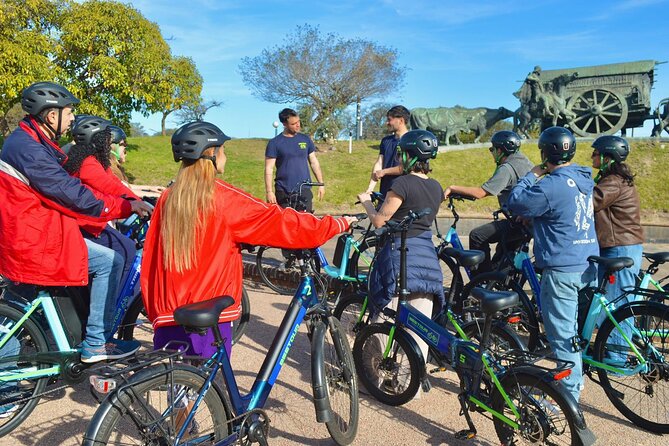
The route then reaches one of the city’s three major green lungs before stopping at La Carreta. This large monument in Batlle Park depicts a traditional form of transport and reflects Uruguay’s artistic and rural heritage. It is a quick photo stop, not a long museum visit.
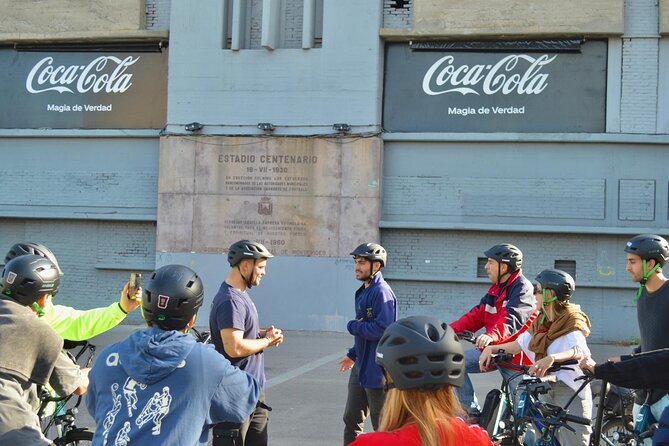
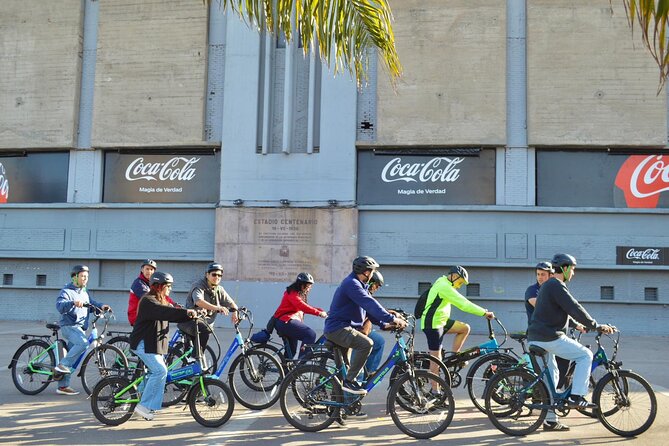
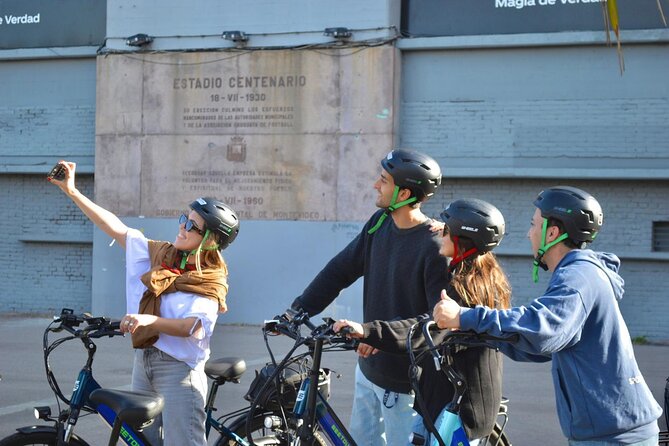
Next comes Estadio Centenario, one of the essential stops for anyone interested in football. The stadium hosted the first World Cup in 1930, and its place in Uruguayan sporting life is hard to miss. You have about ten minutes here, enough to take in the exterior and hear the story without turning the bike tour into a stadium tour.
The nearby Montevideo Municipal Velodrome adds another cycling connection. It is used for competitions and sporting events, and it makes sense on a route built around bicycles. The stop is short, but it reinforces how sport shapes this part of the city.
At the Obelisco a los Constituyentes, the focus shifts from sport to politics. The monument commemorates the Constituent Assembly of 1830, an important moment in the country’s political formation. These early stops work well together because they show public health, transport, sport, and government in quick succession.
Avenida 18 de Julio brings you into the city center
Avenida 18 de Julio is Montevideo’s main central artery, lined with shops, cafés, public buildings, and everyday city life. You spend about 30 minutes in this area, which is longer than at most individual landmarks.
That extra time matters. From a bicycle, you get a street-level view of the city rather than seeing the avenue through a bus window. You may also appreciate the protected cycle lanes, which can run down the middle of major roads and are separated from traffic. The arrangement feels different from the usual roadside bike lane and gives you a more direct sense of the city.
The guide pauses at points of interest and explains the buildings and neighborhoods. Santiago and Felipe are especially active in sharing information about Montevideo’s government, districts, and daily life. The explanations are reported as detailed without becoming a nonstop lecture, which is the right balance for a moving tour.
Plaza Independencia opens the way to Ciudad Vieja
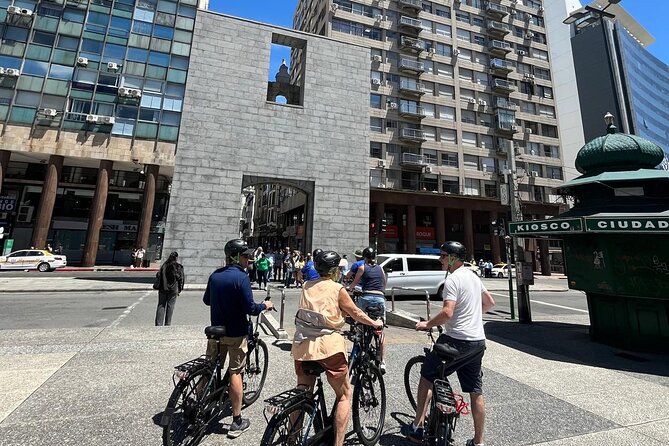
Plaza Independencia is one of Montevideo’s key public spaces. The monument to José Artigas dominates the square, and the edge of the Old City begins here.
You also see Salvo Palace, the famous early skyscraper that was once the tallest building in South America. Its unusual architecture makes it one of the city’s most recognizable sights. The stop is short, but the guide can give you the basic context before the group moves on.
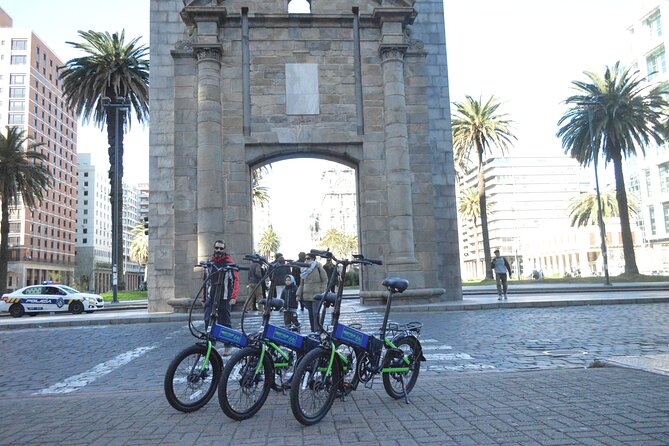
The Puerta de la Ciudadela marks the transition into Ciudad Vieja. This surviving historic entrance connects the modern central city with Montevideo’s colonial past. It is an important place to pause because the change in streets and buildings becomes clear almost immediately.
From there, the bikes continue along Peatonal Sarandí, a pedestrian street with shops, galleries, and cafés. You will not ride the entire pedestrian area at speed. Instead, expect to stop or move carefully as the route takes in the atmosphere. At Plaza Matriz, the oldest square in the country, you see a place linked to major events across the 18th, 19th, and 20th centuries.
The itinerary also passes one of Latin America’s important theaters, noted for its architecture and cultural programming. The supplied route does not identify the theater by name, so your guide’s explanation will be more useful than trying to memorize a label. This portion of the ride is strongest for people who want a broad introduction rather than a long interior visit. Most stops last five to 15 minutes.
A few more Uruguay days worth comparing
- Montevideo: Sightseeing Hop-On Hop-Off Bus Tour
★ 4.5 · 320 reviews - Skip the Line: Casapueblo Museum Admission Ticket in Punta del Este
★ 4.5 · 281 reviews - Colonia del Sacramento:Best Walking Tour (Historic Old Town)
★ 4.9 · 180 reviews - Full day Punta del Este tour
★ 4.5 · 177 reviews
The Rambla is the ride’s open-air reward
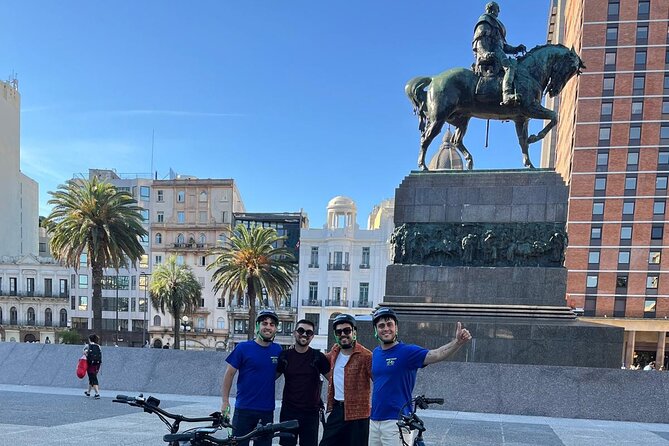
After the compact streets of Ciudad Vieja, the route reaches the Rambla de Montevideo. This extensive waterfront promenade follows the Río de la Plata and provides the clearest change of pace on the tour.
You spend about 30 minutes along the Rambla, with several points of interest along the way. The open views, fresh air, and broad public space make this the section where the e-bike feels most useful. You can cover a long stretch without burning out, and there are regular chances to stop for photos.
The waterfront is also where the tour feels most like daily Montevideo rather than a list of monuments. People use the Rambla for walking, cycling, and outdoor time, and the route lets you see how central the coast is to the city’s routine.
The ride passes the headquarters of the regional bloc, a building connected with cooperation and integration among South American countries. It also reaches Parque Rodó, one of Montevideo’s three major green lungs, alongside Parque Rivera and the park in Prado.
Parque Rodó provides a natural break in the route. Its gardens, lakes, and open spaces offer a calmer setting after the central streets. You spend about 15 minutes here, enough for a pause and a look around before continuing.
Punta Carretas and Pocitos show Montevideo’s coastal neighborhoods
The next part of the route moves through Punta Carretas, an elegant district with cafés, shops, and waterfront access. The former prison, now used as a shopping center, gives the neighborhood an unusual layer of social and architectural history. You only stop for about five minutes, so do not expect a detailed visit inside, but the guide can explain why the building matters.
At Universo Pittamiglio, also known as the Alchemist’s Castle, you see one of Montevideo’s strangest architectural works. The building is associated with legends and mystery, making it a welcome change from the formal monuments earlier in the day. Ten minutes is enough for exterior views and a short explanation.
Pocitos follows, with its beach, restaurants, and relaxed coastal character. The stop is brief, but it helps you compare the neighborhood with Ciudad Vieja and Punta Carretas. This is one of the best reasons to choose a bicycle tour: you see how quickly Montevideo changes from civic center to waterfront suburb.
The final stop is the Mirador Panorámico de Montevideo, where the famous city sign creates an easy photo opportunity. You have about 15 minutes to take pictures and look across the Río de la Plata before returning to the starting point.
What the e-bike changes
The motor assistance is not just a comfort feature. It changes the scale of the morning. A walking tour could cover the center, but it would struggle to connect the stadium, parks, waterfront, Punta Carretas, Pocitos, and the city viewpoint in one outing.
You can choose how much effort to put in. The ride can feel like moderate exercise, or you can use the motor to keep it closer to a leisurely cruise. One rider over 65 covered roughly 19 kilometers without feeling worn out, which gives a useful sense of the bike’s help.
You still need a moderate level of physical fitness. The bike does not remove the need to balance, steer, stop, and ride for several hours. The route includes city traffic and traffic lights, although much of it uses designated cycle paths. Sunday may feel calmer than a weekday, based on one account of a Sunday ride.
Weather also matters. This experience requires good weather, and a chilly day in May or June can feel colder than expected once you are moving along the waterfront. Bring a jacket in cooler months. The company provides the helmet and reflective vest, but your clothing and comfort remain your responsibility.
Guide style, language, and group comfort
The tour includes an English and Spanish guide, plus an audio guide in both languages. The live guide is the more valuable part because you can stop for questions and receive context about neighborhoods, public institutions, and local government.
Santiago and Felipe are the founders of the small operation, and their close connection with the business comes through in the way the tour is run. Freddy and Fabiola also guide rides. The strongest pattern is attention to safety, clear route management, and an easygoing style.
A guide recently managed a group of eight through downtown traffic lights while keeping everyone together. That detail matters more than polished commentary. On a bike tour, a cheerful guide who watches the group is worth far more than a fast rider with a memorized script.
The company also helps with practical local advice. Santiago has offered restaurant suggestions and post-tour ideas based on a rider’s interests. That makes this a good first activity in Montevideo, since you can use the route to mark places you want to revisit on foot.
Is $59 a fair price?
At $59 per person, the tour costs more than renting a bicycle for a few hours, but you are paying for much more than the machine. The price includes the e-bike, helmet, reflective vest, English or Spanish guidance, and an audio guide.
The main value is the amount of ground covered with local explanation. You see football history, civic landmarks, Ciudad Vieja, the Rambla, three coastal districts, parks, and a city viewpoint in just over three hours. A bus could cover similar ground, but the bike keeps you close to the streets and makes it easier to stop for photos.
The private format improves the value for couples, families, or friends who want a flexible pace. It is less compelling if you dislike city cycling, want long interior visits, or prefer a slow walking tour focused on just one district.
The current rating is five out of five from 169 reviews, with 100 percent recommending the experience. That high level of approval fits the strongest features: comfortable bikes, useful routes, careful guides, and a good mix of history and outdoor activity.
Who should book this Montevideo ride?
I would choose this tour if you have only a short stay, are arriving by cruise ship, or want an overview before exploring individual neighborhoods later. It is also a strong choice for active couples, families with capable older children, and solo visitors who want a structured introduction to Montevideo.
You should think twice if you have difficulty riding for three hours, dislike traffic, or need a completely flat, low-effort outing. The electric motor helps, but it does not turn the experience into a sightseeing vehicle.
Book at least a day ahead if your plans are firm, since cancellations are free only until 24 hours before the start time. If bad weather cancels the ride, you are offered another date or a full refund. A minimum number of participants is also required, with the same choice of another date or a full refund if the activity cannot run.
Final call on the Montevideo Electric Bicycle Tour
I would book this early in a Montevideo visit. It gives you a strong city orientation, reaches places that are too far apart for a comfortable walking tour, and keeps the experience personal rather than sealed inside a bus.
The best reasons to go are the Rambla, the well-kept e-bikes, the protected cycling routes, and the guides’ clear affection for their city. The main tradeoff is simple: you must be ready to ride. If that suits you, $59 buys an efficient and enjoyable morning that can shape the rest of your time in Montevideo.
FAQ
How long is the Montevideo Electric Bicycle Tour?
The tour lasts approximately three hours and 15 minutes.
What time does the tour begin?
The tour starts at 10:00 a.m.
Where does the tour begin and end?
It begins at La Gaceta 1282, 11300 Montevideo, and returns to the same meeting point.
What is included in the price?
The price includes use of an electric bicycle, a helmet, a reflective vest, an English and Spanish guide, and an English and Spanish audio guide.
How far do you ride?
The route covers about 18 to 19 kilometers, based on the distance reported for recent rides.
Is the tour available in English?
Yes. English and Spanish guiding and audio support are included.
Is this a private tour?
Yes. Only your group participates in the activity.
What happens if the weather is poor?
The experience requires good weather. If it is canceled because of poor weather, you can choose another date or receive a full refund.
Just added around Uruguay
- Montevideo Private Your Way – Perfect for Cruise Passengers.★ 5.0 · 82 reviews
- Shared Montevideo Tour for Cruisers★ 4.0 · 118 reviews
- From Montevideo to Punta del Este Complete★ 4.0 · 123 reviews
- Private Transportation from Carrasco Airport to Port in Montevideo★ 5.0 · 84 reviews
- Private Have It Your Way Tour in Montevideo★ 5.0 · 89 reviews
- Montevideo Highlights: Shared City Tour for Cruise Passengers★ 4.5 · 141 reviews
- The Best Punta del Este Day Trip from Montevideo★ 4.0 · 158 reviews
- Colonia del Sacramento Full Day from Montevideo★ 4.0 · 165 reviews
Cycling Tours, compared.
La Paz: Mountain Bike Down the World’s Most Dangerous Road
Read our review →
Lima Bike Tour Miraflores – Barranco + Huaca Pucllana!
Read our review →
History & Local Life Essentials Tour on an E-Bike
Read our review →Browse the lists this tour appears in