
Reviewed · BIRD WATCHING TOURS
Guided Birding Photography Experience
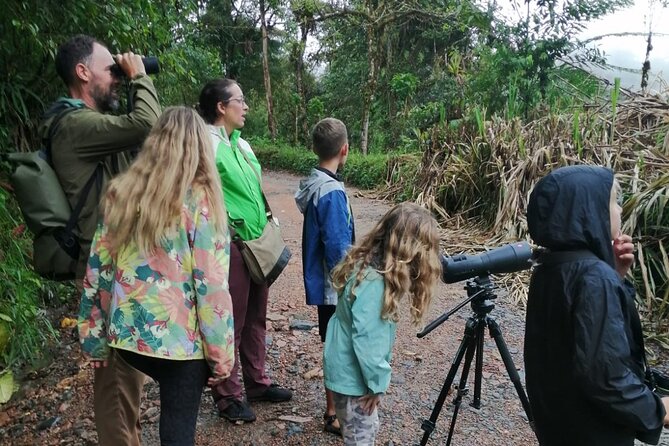
Mindo gives you a rare chance to see colorful cloud forest birds before breakfast, when the forest is cool and active. With a guide such as Irman Arias, you may watch toucans, tanagers, parrots, hummingbirds, and even elusive quetzals through a telescope, then walk among the trees looking for more.
I like the private transport, which saves you from dealing with rough rural roads, and the small-group format, which lets the guide adjust the morning to your interests. At $180 per group of up to five, the price is especially fair when shared by several people. The main caution is the word photography: you may need to handle your own camera or phone through the scope, and cloudy or rainy weather can make good images difficult.
Key points to know before you book
- Start at 6:00 am: Early morning gives you the best chance of finding active birds.
- Private group of up to five: You can birdwatch at your own pace instead of following a large group.
- Private transport is included: This matters in Mindo, where some birding sites are reached by rough, potholed roads.
- Expect a wide bird list: Toucans, tanagers, parrots, hummingbirds, and many other species may appear.
- Photography help is available, but not always hands-on: Guides help locate birds and set up equipment, though you may take the actual photo yourself.
- The famous Cock-of-the-rock site may be separate: Ask ahead if this bird is a main goal, since it can require an earlier start and a different outing.
Why Mindo is such a strong birding base
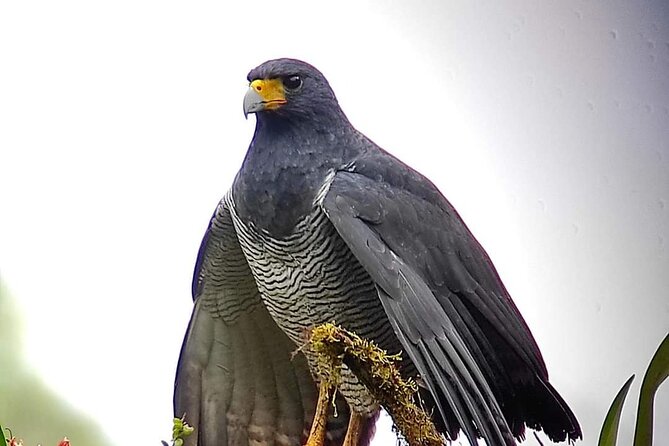
Mindo sits in Ecuador’s Andean Chocó, a cloud forest zone known for an exceptional variety of birds. You do not need to be an expert to enjoy it. The payoff comes quickly: a flash of blue, orange, or green through the trees, followed by the satisfying work of finding the bird again.
This experience is built around roughly four hours in and around Mindo. That is enough time for a useful introduction or a focused morning outing, but it is not a full-day expedition. If you want to visit several reserves, stop for lunch, or chase a particular bird across different sites, you may need to arrange extra time.
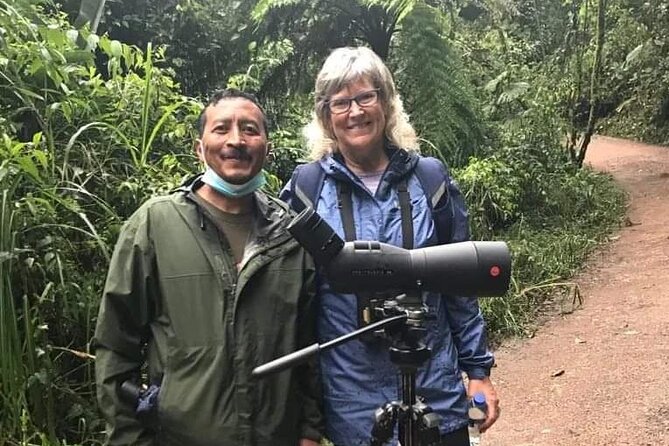
The guide makes a major difference here. In thick forest, birds often reveal themselves first through sound. Irman Arias is noted for recognizing bird calls, spotting movement before it becomes obvious, and even copying some calls to bring birds closer. That skill can save you from staring at an empty branch while a bird sits just beyond your view.
More Bird Watching Tours in Quito:
- Full-Day Mindo Cloud Forest Tour Birdwatching Waterfalls and Hike
★ 5.0 · 84 reviews - Papallacta Hot Springs & Guango Birding Reserve Private Tour
★ 5.0 · 70 reviews - Private Full-Day Mindo Cloud Forest,Butterfly Farm, Chocolate Tour bird watching
★ 5.0 · 62 reviews
The 6:00 am start and private pickup
The morning begins at 6:00 am. That early hour is practical, not just a scheduling quirk. Birds are generally easier to find when the forest is waking up, and the cooler conditions make walking more pleasant.
Private transport is included, which adds real value. Some remote roads around Mindo are little more than rough dirt tracks with potholes. Having a dedicated driver means you are not trying to arrange local transport between birding spots, and the guide can focus on the outing rather than solving road logistics.
A previous outing with guide Julia Patino and driver Paul was praised for careful driving and a strong sense of safety on these roads. Guide assignments can vary, so do not assume Julia, Paul, or Irman will be the exact team for your booking. Still, the experience gives you a useful picture of what private transport adds: less waiting, fewer road worries, and more control over the morning.
If you are coming from Quito, allow extra time before the birding begins. One private outing arranged from Quito left around 5:30 am and reached Mindo about an hour and a half later. The standard experience itself starts at 6:00 am, so confirm where pickup occurs before booking if you are not already staying in town.
What happens at the first birding stop
A common first stop is a private property with viewing platforms above a broad forest ravine. This kind of location is useful because birds may come into more open views, rather than staying hidden among dense foliage.
This is where a telescope can transform the morning. You may see toucans perched in clear view, tanagers moving through the trees, parrots crossing the ravine, and hummingbirds working around nearby plants. With a phone held carefully to the telescope eyepiece, you may also capture photos or video.
The guide’s job is to locate the bird, identify it, and help you get a usable view. Irman has been praised for noticing birds quickly and for knowing their calls. In one morning, a birder recorded 48 species, including 14 kinds of hummingbird. That number is not a promise, but it shows how much can appear when you have a sharp pair of eyes beside you.
Do keep your expectations realistic. A birding guide can improve your chances, but cannot order a toucan to sit still or make a quetzal appear on schedule. Even a carefully followed call may lead nowhere. That uncertainty is part of birdwatching, though it can be frustrating if you have come with one must-see species in mind.
Walking through the cloud forest
After the platform, you may continue on foot through the forest. Walking gives you a different kind of birding experience. At the platform, you can watch birds across a wider view. On the trail, you listen for calls, scan the branches, and notice small movements close to the path.
The guide can help you set up your equipment and direct your attention to the right tree or branch. This is particularly useful for beginners, who often look directly at a bird without seeing it. A guide can also tell you the name of what you are seeing and, if you ask, explain more about its habits and calls.
Irman’s bird identification is one of the strongest reasons to consider this experience. He has been praised for using sound as well as sight, and his calls have even fooled a bird-identification app. Still, communication styles differ. If you want more natural history, ask questions directly rather than expecting a long explanation for every species.
The forest portion can also be slower than the platform. You may see only a few birds during a stretch of walking, then suddenly find a toucanet, hummingbird, or other species that makes the quiet worthwhile. If a certain bird matters most to you, say so at the beginning and remind the guide during the outing.
More Photo Tours in Quito:
- From Medellín: Paragliding Tour with GoPro Photos & Videos
★ 4.9 · 1,210 reviews - Niterói: Paragliding Experience with GoPro Photos and Video
★ 4.8 · 131 reviews - Photo Tour
★ 5.0 · 63 reviews - Tour to Mirante Dona Marta at sunrise with guide and photos!
★ 5.0 · 52 reviews
Photography: useful equipment, realistic expectations
The title promises a birding photography experience, and you can certainly come away with memorable images. But you should understand the setup before you book.
The telescope is mainly an observation tool. Photographing through it with a phone can work well when the bird is still and the scope is steady. It can also be fiddly. One account found an older scope somewhat wobbly for phone photography, while other guides or staff sometimes helped capture better images through their scopes.
That means you should not expect a full professional photography workshop unless you confirm it in advance. The guide helps locate birds and set up the equipment, but you may need to hold your phone, line up the eyepiece, and press the shutter yourself. Doing that can pull your attention away from the bird.
I suggest deciding what matters most before the tour:
- If your priority is seeing and identifying birds, the scope and guide support are excellent tools.
- If your priority is phone photos, ask how the telescope and phone adapter work.
- If you carry a serious camera, ask what equipment is supplied and what you should bring.
- If you want the guide to take the actual pictures, make that clear before the morning begins.
Weather also matters. Mindo can be cloudy and rainy, especially in some seasons. Cloudy light can be beautiful for viewing, but it is less forgiving for fast, well-exposed bird photographs. A later visit in drier, brighter weather may suit photographers better, though birds themselves remain unpredictable.
The birds you might see
The list of possible birds is broad. Toucans are the obvious stars, with their large bills and strong colors making them easy to appreciate even at a distance. Tanagers can be smaller and quicker, but they reward patience. Parrots may appear in flight or settle briefly in the trees.
Hummingbirds are a major attraction. Mindo is known for many local species, and one morning produced sightings of 14 different hummingbirds. Their speed makes them challenging photographic subjects, but a telescope can give you a far better look than the naked eye.
Quetzals are possible but never guaranteed. A golden-crowned quetzal eluded one morning’s search, while another outing found both a male and female after the guide kept looking. That is a good lesson: the guide improves your odds, but birding is not a checklist service.
The Andean Cock-of-the-rock deserves special attention. It is often associated with Mindo, but seeing it may require a separate outing to a particular site, with a much earlier pickup around 5:00 am. At the lek, several males may gather while waiting for a female. If mating season is not underway, you might see the males but not the full display.
If Cock-of-the-rock is your top goal, do not assume the regular four-hour experience includes it. Ask for a separate plan.
The guide can shape the whole morning
This is a private activity, so you have more influence than you would on a fixed group trip. You can tell the guide if you prefer a high species count, longer views of a few birds, better photography chances, or a search for a specific species.
That flexibility matters. At one viewing platform, a group left before more toucans appeared later. The birds were not following a timetable, of course, but staying longer might have suited someone whose main aim was toucans. Speak up if you want to wait.
Some guides may keep the identification brief unless you ask for more detail. That is not necessarily a problem. An experienced birder may prefer to keep scanning while you watch, rather than pause for a lecture. But if you want information about behavior, habitat, or calls, ask specific questions.
The strongest guide qualities to look for are quick bird detection, good English communication, patience, and a willingness to adjust the route. Irman is particularly associated with these strengths, but guide availability can change.
Is $180 a fair price?
At first glance, $180 may sound high for a four-hour outing. The calculation changes when you use the group limit. Five people sharing the price pay about $36 each. Even two people pay $90 each for private transport, a guide, and access to productive birding sites.
The value is strongest if you are new to Mindo, do not have a car, or care about finding more than the birds you happen to notice from town. The guide’s ears and eyes can add far more than a self-guided walk.
Solo visitors pay the full group price, so the cost is less attractive if you are alone. Even then, serious birders may consider it worthwhile because a productive morning can add dozens of species to a list, along with access to viewing platforms and areas that are harder to reach independently.
Lunch is not part of the standard four-hour description. A longer customized outing once included lunch and several different areas, returning around 5:30 pm, but treat that as an extended arrangement rather than part of the basic booking.
Who should book this experience?
I would choose this outing if you want a focused introduction to Mindo’s birds without joining a large group. It suits beginners, couples, families with an interest in nature, and experienced birders who want help adding local species to a life list.
It is also a good fit if you have limited time. Four hours gives you a real morning in the forest while leaving the rest of the day for Mindo’s other activities.
I would pause before booking if you expect a formal camera class, guaranteed quetzals, or a full-day search across many reserves. The experience is best understood as guided birdwatching with photography opportunities, not a guaranteed photo safari.
Book at least a day ahead if your schedule is tight. The experience is often reserved well in advance, with an average booking lead time of about 60 days. You can cancel for a full refund up to 24 hours before the start time. Changes or cancellations inside that window are not accepted for a refund.
My verdict on the Mindo birding morning
I like this experience because it puts local expertise where you need it most. Mindo’s birds are colorful, but the forest can hide them quickly. A guide who recognizes calls, spots movement, and knows productive viewing points can turn a quiet walk into a morning of toucans, hummingbirds, tanagers, and surprises.
Book it if you value finding birds more than simply walking through the forest, and if you are comfortable doing some of the photography work yourself. Ask about the exact guide, telescope setup, pickup point, and Cock-of-the-rock plans before you pay. With those expectations clear, the private format, included transport, and $180 group price make this one of Mindo’s better-value nature outings.
FAQ
What time does the experience start?
The experience starts at 6:00 am.
How long does the birding experience last?
The standard experience lasts approximately four hours.
How many people can join the private tour?
Up to five people can participate in the private group.
Is private transport included?
Yes. Private transport is included as part of the experience.
What birds might I see?
You may see toucans, tanagers, parrots, hummingbirds, and many other bird species. Quetzals and Andean Cock-of-the-rocks are possible but are not guaranteed as part of the standard outing.
Is the experience suitable for beginners?
Yes. Most people can participate, and the guide helps locate birds and set up equipment for viewing and photography.
Is Andean Cock-of-the-rock included?
It may require a separate experience at a specific site, with an earlier start, sometimes around 5:00 am. Ask about it when arranging your outing.
What is the cancellation policy?
You can cancel up to 24 hours before the start time for a full refund. Cancellations or changes made less than 24 hours before the start time are not accepted for a refund.
Just added around Quito
- Quilotoa-Baños 2-Day Tour Including All Activities★ 5.0 · 40 reviews
- Walking Tour Quito★ 5.0 · 43 reviews
- Night Tour in Quito with free time at Old Town★ 4.5 · 49 reviews
- Quito Cultural Bike Tour – Group★ 5.0 · 35 reviews
- Quito Oldtown: A Cultural-Gastro Walking Tour and Shopping★ 5.0 · 73 reviews
- Daydream in Quilotoa: Laguna’s Enchanting Embrace Awaits★ 5.0 · 50 reviews
- Quito City Tour, Mitad del Mundo, Teleferico & Panecillo Included★ 5.0 · 66 reviews
- Private Full-Day Mindo Cloud Forest,Butterfly Farm, Chocolate Tour bird watching★ 5.0 · 62 reviews
Bird Watching Tours, compared.
Full-Day Mindo Cloud Forest Tour Birdwatching Waterfalls and Hike
Read our review →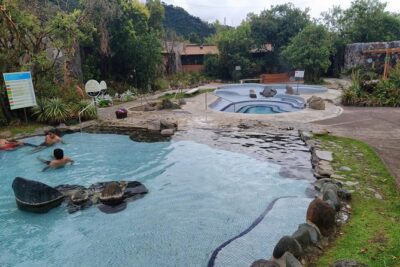
Papallacta Hot Springs & Guango Birding Reserve Private Tour
Read our review →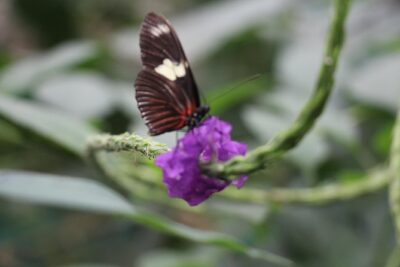
Private Full-Day Mindo Cloud Forest,Butterfly Farm, Chocolate Tour bird watching
Read our review →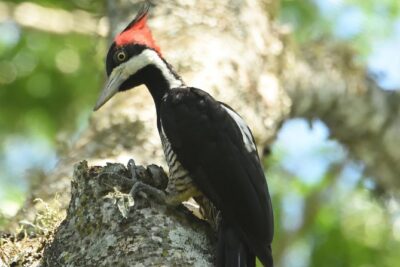
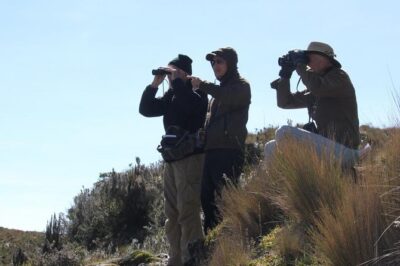
Birdwatching Tour in Cajas National Park from Cuenca
Read our review →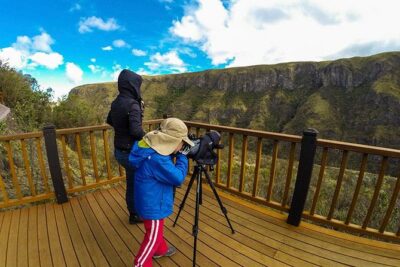
Antisana Volcano Birding & Natural History Condor Tour PRIVATE, all included
Read our review →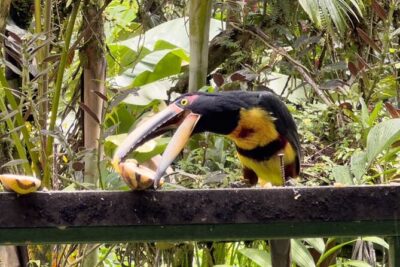
Mindo Cloud Forest Day Trip from Quito – Birdwatching & Adventure
Read our review →Browse the lists this tour appears in