
Reviewed · CLIMBING & MOUNTAINEERING
Climbing Huayna Potosí
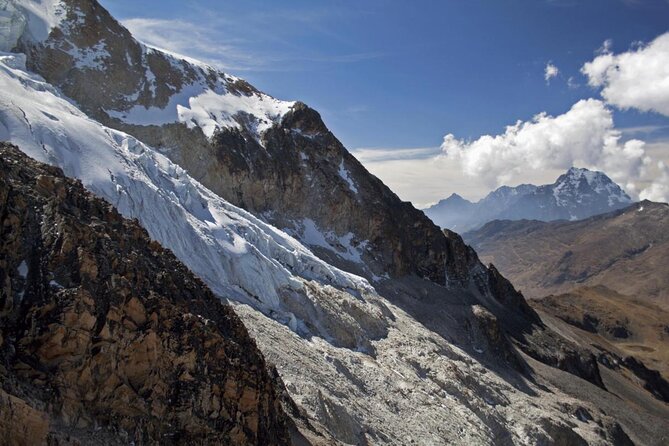
Huayna Potosí gives you a real high-mountain climb without committing to a long expedition. In three days, you go from La Paz to a 6,088-meter summit, practicing ice climbing on day one before tackling a glacier route in the dark. The reward is a sunrise over Bolivia’s Royal Andes, but the altitude and steep upper wall are serious business.
I like the built-in glacier practice, which lets you handle the ice axe and climbing equipment before summit night. I also like the private format, meals, transport, shelter, and major climbing gear included for $230.77. The drawback is just as clear: this is not a sightseeing walk. You need moderate fitness, good acclimatization, and the willingness to climb for up to seven hours overnight.
Key points to know before booking
- A 6,088-meter summit: Huayna Potosí offers a genuine high-altitude mountaineering goal near La Paz.
- Glacier training on day one: You practice with the equipment on an old glacier before heading higher.
- A midnight start: Summit day begins with breakfast around midnight and climbing at about 1:00 a.m.
- A steep upper section: The route includes a 50-meter wall angled at roughly 55 to 60 degrees.
- Strong guide praise, but mixed safety feedback: Jhonny and Cristian are repeatedly praised for patience and encouragement, while one account raises serious concerns about communication and supervision.
- Bring the extras: A sleeping bag, headlamp, sunglasses, water, entrance fee, and porter are not included.
Why Huayna Potosí is a serious but reachable summit
At 6,088 meters, Huayna Potosí is not a casual mountain excursion. You climb on a glacier, travel roped to a guide, sleep at high altitude, and face a steep wall near the top. Still, the three-day structure gives you a useful introduction to mountaineering without requiring a long stay in remote camps.
The mountain sits close enough to La Paz for the approach to be practical. The drive to base camp takes about one hour and 45 minutes in private transport, rather than consuming an entire day. That leaves time for training and acclimatization before the harder climb begins.
The operator reports a 4.8 rating from 50 ratings, with 94 percent recommending the experience. That is encouraging, especially because the strongest praise centers on the parts that matter most on a high mountain: patient instruction, encouragement during hard sections, and help reaching the summit.
But I would not treat those numbers as a substitute for your own preparation. One detailed account describes poor communication, unclear guide introductions, equipment charges, and guides leaving people to walk without close supervision. On a mountain where altitude sickness and route conditions can change quickly, those concerns deserve attention. Ask clear questions before departure about guide-to-climber ratios, emergency procedures, and what happens if you cannot continue.
More climbs and summits near La Paz:
- Villarrica Volcano Ascent – Zenit
★ 5.0 · 111 reviews - Climbing Mateo – Your first 5 thousand
★ 5.0 · 52 reviews - Rock Climbing full day
★ 5.0 · 47 reviews
Day one: La Paz to 4,700 meters
The first morning begins at 8:30 a.m. at the operator’s office, All Transport Tour Operator Entre Linares E, on Avenida Illampu 339 in La Paz. You test and collect your climbing equipment there before leaving the city.
The included equipment is extensive: helmet, feather jacket, wind jacket, thermal pants, grass boots, and ice axe. The precise fit and condition matter more than the list itself, so use this time to check every item. Make sure your boots are comfortable, your layers allow movement, and the ice axe feels manageable in your hand.
The private vehicle takes you to base camp at approximately 4,700 meters. Reaching that altitude by road means your body must adjust quickly. You may feel the thin air as soon as you arrive, so keep your pace slow and drink water steadily.
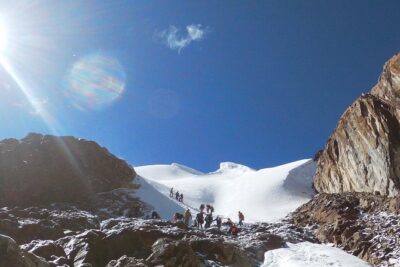
After lunch, you walk for about an hour and a half to an old glacier. This is the most useful part of the opening day. You practice ice climbing with the equipment you will use later, rather than meeting crampons, a helmet, an ice axe, and a rope for the first time at midnight.
The training lasts about an hour before you return to the base camp refuge. Dinner is scheduled for 6:00 p.m., followed by rest. The early finish is welcome because the next days involve more altitude and a broken sleep schedule.
The camp is basic by design. Your price includes shelter and food, but not a sleeping bag. Bring one, and do not assume the provided clothing replaces a proper insulation system. You also need a headlamp, sunglasses, and two liters of water. A headlamp rental may be available, but one account found the rented lamp weak and lacking batteries, so bringing your own is the safer choice.
Day two: the climb to 5,130 meters
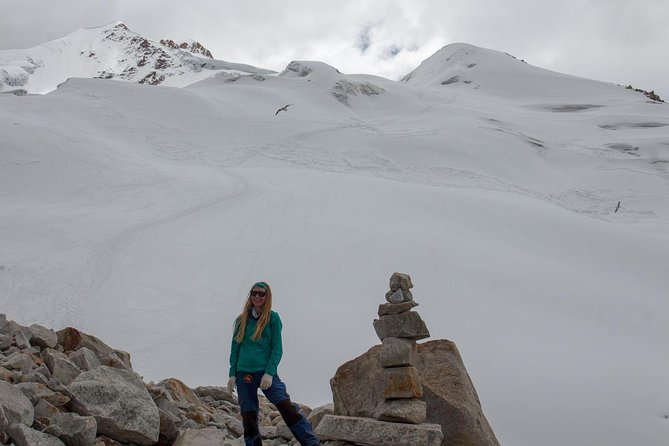
Day two is built around acclimatization. You rest during the morning and eat lunch at base camp before beginning the climb to Campo Alto, the high camp at 5,130 meters.
The ascent takes about three hours. This is not a throwaway transfer. You are gaining more than 400 meters of elevation while carrying your personal equipment, and the thin air will make the climb feel slower than the distance suggests.
At high camp, you eat dinner and have free time for further acclimatization. Rest begins around 6:00 p.m., with the alarm coming near midnight. That means your night is short and interrupted, even before the summit effort begins.
This schedule is one reason you should arrive in Bolivia with time to adjust before attempting Huayna Potosí. The tour itself includes acclimatization time, but the itinerary does not give you a long cushion if your body reacts badly to altitude. The listed physical requirement is moderate fitness, yet altitude tolerance is separate from fitness. A fit person can still struggle at 5,000 meters.
Watch how you feel, and speak up early if you have a problem. A guide can support a difficult climb, but no guide can remove the effects of altitude. The experience information does not specify a medical evacuation plan, a sickness policy, or a detailed turnaround rule, so ask about those points before you pay.
Summit night: a 1:00 a.m. glacier start
Breakfast comes around midnight. The climb begins at roughly 1:00 a.m., when the glacier route is frozen and the group can aim for the summit around sunrise.
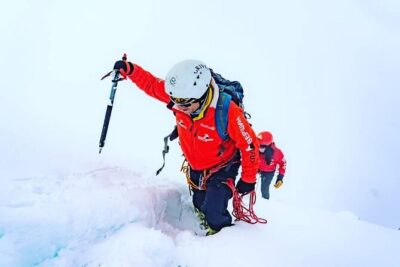
You are attached to your guide with a rope. The lower part of the route has an incline of about 35 to 40 degrees and takes most of the effort. The first section is described as relatively easy up to approximately 5,500 meters, but easy is a relative word at this altitude and in darkness.
The summit ascent usually takes four to seven hours. That wide range matters. Your pace, the group’s pace, weather, snow conditions, and how your body handles the altitude all affect the timing. You should be prepared for a long night rather than counting on reaching the top at a precise hour.
Near 5,500 meters, the route becomes more demanding. You climb a wall about 50 meters long, with an angle of roughly 55 to 60 degrees. This is the technical highlight of the trip, and your day-one practice suddenly has a purpose. You need to be comfortable using your ice axe and moving while roped to the guide.
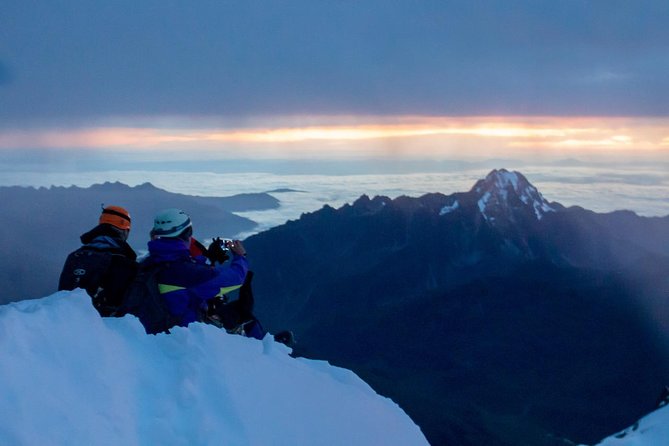
At around 5,800 meters, the route reaches a plateau. From there, you continue along a ridge toward the summit. The top is 6,088 meters, with a planned arrival around 6:30 a.m. If the timing works, you see daylight spread across the Royal Andes from the highest point of the climb.
That sunrise is the emotional payoff. It is also the point where fatigue, cold, darkness, and altitude have all accumulated. The strongest guide praise goes to Jhonny and Cristian, with specific appreciation for their patience, encouragement, and repeated checks during difficult sections. That kind of support can make a real difference when your legs and confidence begin to fade.
One climber nearly quit but reached the top after Jhonny kept encouraging them. Another described Cristian as the guide who helped the group reach the summit. These accounts point to the personal side of the experience: you are not simply following a marked trail. You are relying on a guide to manage pace, rope travel, and morale.
A few more La Paz days worth comparing
- La Paz and El Alto: Cable Car Rides and Walking Tour
★ 4.8 · 790 reviews - La Paz Half-Day Walking Tour
★ 4.8 · 591 reviews - La Paz: Private City Tour with Cable Car & Moon Valley Visit
★ 4.9 · 508 reviews - La Paz: Full Day Trip to Copacabana and Isla del Sol
★ 4.5 · 400 reviews
The descent to La Paz
Time at the summit is brief, about ten minutes, before the return to high camp. The descent takes roughly two hours, where you collect equipment and continue down to base camp in another hour and a half.
Do not underestimate this part. The summit photographs are finished, but your body is tired and the terrain remains steep. Snow and ice travel can be awkward in both directions, and concentration often drops after the goal has been reached.
From base camp, private transport returns you to La Paz. Arrival is expected around 2:00 p.m. The full summit day is therefore long, and you may have little energy left for evening plans. Keep your schedule open after the climb.
The activity ends back at the original meeting point on Avenida Illampu. Transport, meals, base camp shelter, and the listed high-altitude equipment are included, which keeps the logistics fairly simple. A personal porter is not included, so pack carefully and expect to carry your own belongings unless you arrange another option.
What the $230.77 price really covers
At $230.77 per person, the cost pays for more than a guided walk. You receive private transport from La Paz, meals, base camp and high camp shelter, climbing equipment, and an English or Spanish-speaking guide.
The major value is the equipment package. Renting a helmet, jacket, thermal pants, boots, and ice axe separately can be difficult to organize, especially if you are not carrying mountaineering gear around Bolivia. The glacier lesson also adds value because it turns the first day into practical preparation.
The price needs a closer look, though. A sleeping bag, headlamp, sunglasses, two liters of water, entrance fee, and personal baggage carrier are excluded. Small add-on costs can change the final figure, particularly if you arrive without suitable cold-weather gear.
I would ask for a written list of every included item before booking. Confirm whether the equipment is provided for the full three days, whether batteries are included with any headlamp rental, and what kind of sleeping arrangement exists at both camps.
The private format is another value point. Only your group participates, so you are not placed into a large general excursion. The actual climbing pace and guide arrangement should still be confirmed, since private booking does not automatically explain how many climbers each guide handles.
Guide support, communication, and safety
The most highly praised part of this experience is the human support on the mountain. Jhonny is described as attentive, helpful, patient, and encouraging. Cristian receives similar praise for helping climbers reach the top and making the sunrise possible. The operator’s wider team has also been praised for professional service and flexibility when illness required a date change.
That is the good news. The less comfortable news is that one detailed account describes guides who did not introduce themselves, gave little explanation, left people to walk without supervision on two occasions, and did not stay close while a climber experiencing altitude sickness crossed a river.
I cannot smooth over that conflict. High-altitude climbing requires clear communication. Before you leave the office, make sure you know your guide’s name, the plan for each day, the hand signals or rope instructions, and what happens if someone turns around. If you feel unwell, say so immediately and expect the guide to take the concern seriously.
The activity is rated highly overall, but the mixed experience means you should stay engaged rather than assume everything will be explained automatically. Check your own equipment, keep your water accessible, and carry your essential items yourself. The guide is there to lead and support you, but you remain responsible for telling the guide how you feel.
Who should book this climb?
You should consider Huayna Potosí if you want a genuine summit attempt and are comfortable with cold, altitude, glacier travel, steep climbing, and a midnight start. It suits someone who values a short itinerary and wants basic mountaineering instruction rather than a sightseeing day near La Paz.
It is also a good fit if you prefer a private activity and want the main transport, meals, shelter, guide, and climbing equipment arranged in advance. The three-day schedule is compact and practical.
You should think twice if you dislike early starts, have no experience with sustained physical effort, or are not prepared to sleep at 4,700 and 5,130 meters. Moderate fitness is required, and the route’s upper wall is steep enough that nervousness around exposure or rope travel could become a real issue.
The activity is non-refundable and cannot normally be changed after booking. If poor weather cancels the climb, you are offered another date or a full refund. The same applies if the minimum number of participants is not reached, though this is a private activity for your own group.
Should you book Huayna Potosí?
I would book this climb if reaching a 6,088-meter summit is a major goal and you are willing to prepare properly. The glacier training, included equipment, compact timing, and repeated praise for guides such as Jhonny and Cristian make it an attractive package at $230.77.
I would not book it casually. Ask about guide ratios, safety procedures, equipment condition, sleeping bags, headlamps, and altitude-sickness decisions before committing. Bring your own headlamp with batteries, sunglasses, water, and sleeping bag, and leave room in your plans for the possibility that weather or altitude changes the schedule.
If you want a real mountain challenge close to La Paz, this experience offers a strong route to the summit. Just treat it like mountaineering, not a simple tour, and choose it only if the physical and safety details are clear to you.
FAQ
Where does the Huayna Potosí experience begin?
It begins at All Transport Tour Operator Entre Linares E, Av. Illampu 339, in La Paz, Bolivia.
Where does the experience end?
The activity ends back at the original meeting point in La Paz after the return from base camp.
How long does the experience last?
The planned duration is approximately three days.
What altitude is base camp?
Base camp is at approximately 4,700 meters.
What altitude is high camp?
Campo Alto, or high camp, is at approximately 5,130 meters.
What altitude is the summit?
The summit of Huayna Potosí is approximately 6,088 meters.
What equipment is included?
The included equipment consists of a helmet, feather jacket, wind jacket, thermal pants, grass boots, and an ice axe. Meals, base camp shelter, and an English or Spanish-speaking guide are also included.
What do I need to bring or pay for separately?
You need a sleeping bag, headlamp, sunglasses, two liters of water, the entrance fee, and money for a personal baggage carrier if you want one.
Just added around La Paz
- Private Tiwanaku and Titicaca Day Trip from La Paz★ 4.5 · 62 reviews
- Cholet Tour – Andean Architecture and Culture – El Alto★ 5.0 · 72 reviews
- Customizable Private City Tour – La Paz★ 5.0 · 69 reviews
- La Paz City Tour and Moon Valley★ 4.2 · 38 reviews
- La Paz: Andean Architecture Tour in El Alto★ 4.7 · 46 reviews
- From La Paz: Day Trip to Chacaltaya and Moon Valley★ 4.4 · 65 reviews
- From La Paz: 2-Day Tour to Isla del Sol & Lake Titicaca★ 4.3 · 54 reviews
- From La Paz: The World’s Most Dangerous Road Biking Tour★ 4.7 · 68 reviews
Climbing & Mountaineering, compared.
Tour Climbing Nevado Mateo | Your First 5,150 m Summit | 12 Hours
Read our review →
Browse the lists this tour appears in