
Reviewed · HIKING & TREKKING
Ausangate Trek 5 Days
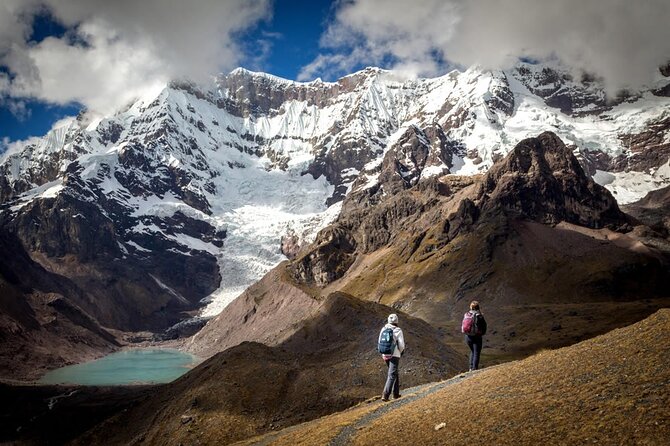
Ausangate is Peru without the crowds of the Inca Trail. This five-day circuit takes you high into the Cordillera Vilcanota, where turquoise lakes, glaciers, alpacas, and broad empty valleys replace the usual Cusco sightseeing circuit. The hardest part is not the distance alone. It is the altitude, with camps above 4,200 meters and a high point of 5,200 meters.
I like the personal scale of the trip, with a maximum of 10 people, and I like the way the route mixes scenery with living Andean culture. You get hot springs at Upis and Pacchanta, a ceremony for Apu Ausangate, and a visit with a local family that includes food and weaving. The drawback is clear: this is a serious high-altitude trek, not a gentle walking holiday, and cold nights can be rough without proper gear.
Key points to know before booking
- The highest pass reaches 5,200 meters: Altitude is the main challenge, even on days when the mileage looks manageable.
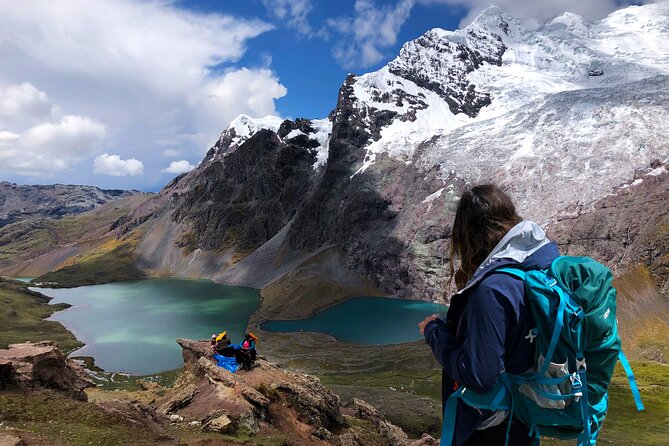
- You camp beside some of Peru’s finest alpine scenery: Expect turquoise lakes, glacial colors, and repeated views of Ausangate.
- Hot springs bookend the trek: Upis comes early, while Pacchanta provides the final soak before returning to Cusco.
- Meals are a major part of the service: Breakfast, lunch, and dinner are included on the scheduled camping days, with a dedicated cook and assistant.
- Horses carry the equipment: You hike with less weight while the horse driver and support crew handle camp duties.
- The route feels quiet: Several people describe seeing very few other groups, a real advantage on a well-known Peruvian route.
Why Ausangate feels different from Cusco’s famous treks
The Ausangate Trek is built around one enormous mountain rather than an Inca ruin. Ausangate is sacred to local Andean communities and is treated as an Apu, a powerful mountain spirit. That idea is not tacked on as a museum lesson. It appears in the route itself, in the ceremony at Palomani Pass, and in the way guides explain local customs.
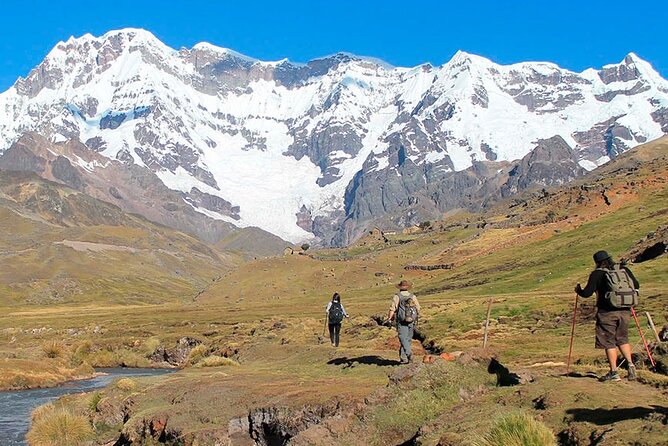
You also get a stronger sense of distance from towns. The route moves through high valleys and around glacial lakes, with few buildings and, at times, few other groups. That quiet is one of the best reasons to choose this trek instead of a busier route near Machu Picchu.
The trip costs $660 per person. That is a fair price for five days at altitude when you consider the guide, cooks, horse support for equipment, camping equipment, private transport at the start, meals, and the return bus to Cusco. You still need to pay the 20 soles entrance fee and arrange a sleeping bag, so budget for those separately.
More Hiking Tours in Cusco
- From Cusco: 7 Lakes Ausangate Trek with Breakfast and Lunch
★ 4.8 · 360 reviews - Cusco: Rainbow Mountain Tour and Red Valley Hike (Optional)
★ 4.7 · 149 reviews - Cusco: Full-Day Rainbow Mountain & Red Valley Trekking Tour
★ 4.5 · 121 reviews
Day 1: Cusco to Upis and the first hot springs
The day begins early, with a 5:00 a.m. start from Cusco. Your guide takes you by private transportation toward Tinke, where you can buy last-minute supplies and have breakfast. This is useful because once the walk begins, you are committing to several days far from ordinary shops.
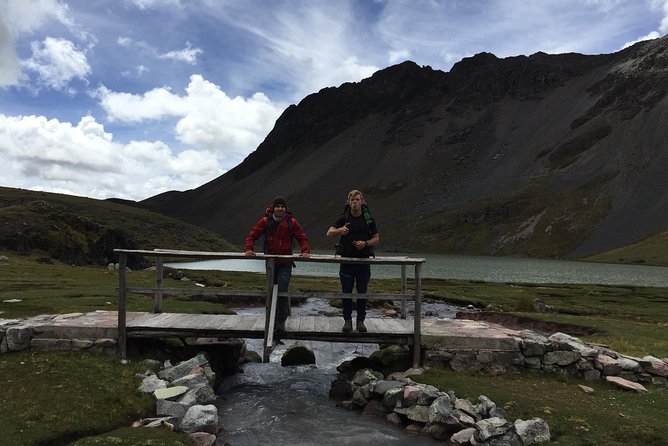
From Tinke, the vehicle continues to Rondoca, the trailhead. Here you meet the cook and horse driver who support the trek. That small introduction matters. You are not simply following a guide from point to point. A working team carries the equipment, prepares meals, sets up camp, and keeps the expedition moving.
The first walking section takes about two hours before lunch. The reward comes quickly: views toward Ausangate begin to frame the route. After lunch, you continue toward Upis, hiking for roughly three to four hours in total and covering about 8 kilometers according to the itinerary.
Upis sits at about 4,200 meters, already higher than many people have ever slept. The hot springs are the day’s practical luxury. After a morning of transport and a short but high walk, soaking while drinking coca tea gives you a chance to loosen tired muscles before dinner.
Do not underestimate this first night. You may feel fine during the walk and still sleep poorly at altitude. The camp elevation rises from roughly 3,800 to 4,200 meters, so this is a demanding start rather than a warm-up in the usual sense.
Day 2: Arapa Pass, green lakes, and Apacheta Pass
A hot coca tea wake-up gets the morning moving, followed by breakfast. The first major climb is Arapa Pass at 4,850 meters. The pass is high enough that your pace should be slow and steady. I would treat this as a day for controlled breathing, short steps, and regular water breaks.
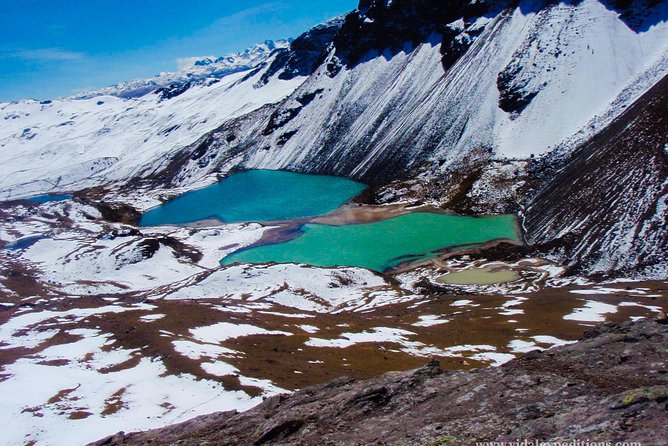
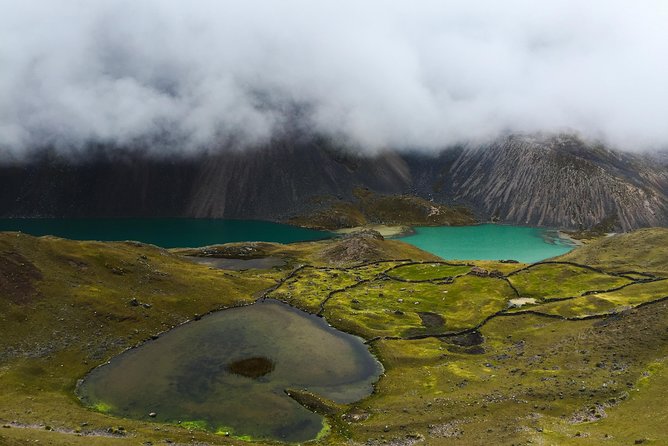
From Arapa, the trail descends for about two and a half hours through the valley. You pass Puqa Q’ocha, described as a green lake, before reaching the turquoise Jatun Puqa Q’ocha. Lunch beside the lake gives you one of the trip’s classic views, with Ausangate rising beyond the water.
The afternoon brings another serious climb to Apacheta Pass at about 4,980 meters. From here, you can look down toward a turquoise lagoon fed by melting snow from Ausangate. The color contrast is the sort of thing that makes the long ascent worthwhile, but the altitude remains the boss of the day.
You then descend for about an hour to Ausangate Qocha, where the second camp is set. The day covers around 12 kilometers and takes approximately seven to eight hours of hiking. Camp is listed at roughly 4,630 meters, making this another very cold night.
This is where good clothing matters. One person who had previously trekked in the Himalayas found the Ausangate nights just as cold. Bring your warmest mountain layers, gloves, a hat, and a sleeping bag suited to high-altitude camping. A sleeping bag is not included, so confirm what you need before departure.
Day 3: Palomani Pass and the Apu Ausangate ceremony
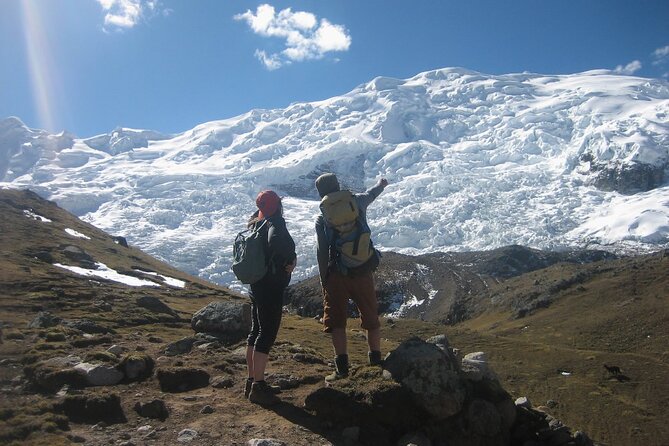
Day three reaches the highest point of the trek. After breakfast, you climb toward Palomani Pass, at 5,200 meters or about 17,060 feet. The ascent takes roughly two hours, though your actual pace will depend on how your body is handling the altitude.
At the pass, your guide conducts a ceremony for Apu Ausangate. This is one of the most meaningful parts of the route because it connects the scenery to Andean belief. The mountain is not just something to photograph. It is a spiritual presence, and the ceremony gives the setting cultural weight.
After Palomani, you descend for about an hour to Uchuy Phinaya for lunch. The afternoon continues with another couple of hours of walking toward camp. The full day takes six to seven hours and covers approximately 13 kilometers, with the route moving from around 4,600 meters up to 5,200 meters and down to about 4,300 meters.
The camp is listed at approximately 4,500 meters. That means the descent from the pass does not bring you anywhere close to low altitude. You should expect another cold evening, and you should not plan demanding activities for the night.
Guides such as Guillermo and Urbano, also called Chino, have been praised for explaining local culture, wildlife, terrain, and traditions along the route. Guide assignments can vary, but the trip clearly depends on more than trail navigation. The best moments come when the guide helps you understand what you are seeing.
More Hiking Tours in Peru
- From Cusco: Rainbow Mountain Trek
★ 4.5 · 98 reviews - Private Palccoyo Rainbow Hike Without the Crowds
★ 5.0 · 86 reviews - Humantay Lake Full Day Hike
★ 5.0 · 75 reviews - Full-Day Trek to Humantay Lake from Cusco with Guide
★ 4.5 · 66 reviews
Day 4: Glacial lakes and the Pacchanta hot springs
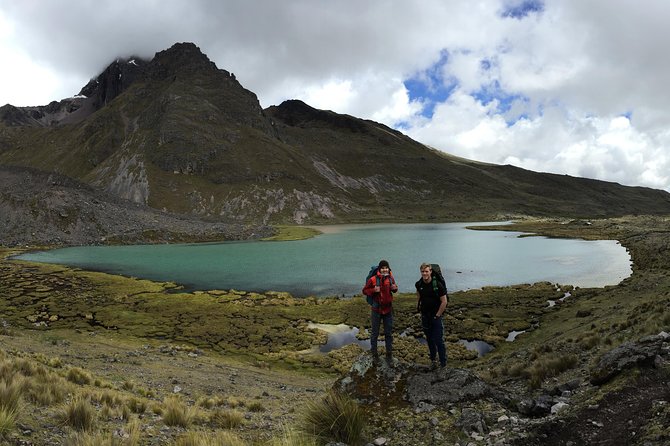
After two hard days of high passes, day four offers a slightly more relaxed rhythm. There is one pass to cross, and the route focuses on lakes in shades of blue and glacial colors. Ausangate remains visible, but the mountain appears from a new angle as you approach Pacchanta Valley.
The itinerary says the walk takes about six hours and covers around 15 kilometers. That is not a short day, even if the climbing is less intense. Your legs may be tired by now, and the descent can be harder than expected on uneven ground.
There is an invitation to cool off in the lakes if you are brave enough. I would treat this as optional, not essential. At these elevations, air and water temperatures can be severe, and the main bathing stop is Pacchanta’s hot springs.
Pacchanta is a fitting finish to the walking portion. You can soak in warm water with Ausangate above you, a simple pleasure after four days of steep trails and cold camps. The itinerary describes the camp elevation as about 4,300 meters while descending, so you should still expect a high-altitude night unless your arrangements change.
Day 5: Food, weaving, and the return to Cusco
The final morning begins with breakfast and a ceremony with a local family. You learn about local food, traditions, and weaving techniques before taking the bus back to Cusco. This gives the trip a human ending instead of treating the communities along the route as scenery.
The cultural visit is especially valuable because it shows skills that remain part of daily life. Weaving is not simply a souvenir topic, and local food is not just something to sample quickly. The visit gives context to the people who live in this high region.
The final day is listed as about three hours. Since the trek itself is complete, the pace should be much easier than the previous days. Still, the road transfer back to Cusco marks a full change in setting, from remote high valleys to city streets.
Food, camp support, and what the price really covers
Food is one of the strongest parts of this trip. Five lunches, four dinners, and four breakfasts are included. The crew includes a cook and assistant cook, and the people who have taken this trek describe meals as varied, hot, and more generous than expected from a camp kitchen.
That matters at altitude. A good meal is not just a comfort after seven hours of hiking. It helps you recover for the next pass. The cook named Benigno received special praise for producing a wide variety of food, while Euden was also part of the support team on some departures.
Horses carry the equipment, with a horse driver handling the animals and helping with camp work. Angel is one horse driver named by people who took the trip. You are not carrying a full multi-day load, though you still need a day pack with water, warm clothing, rain protection, snacks, and personal items.
Camping equipment is included, but the sleeping bag is not. Ask what tent and sleeping equipment are supplied, then bring or rent a sleeping bag appropriate for very cold nights. The itinerary does not give a temperature rating, so do not assume an ordinary lightweight bag will be enough.
Fitness, altitude, and the real difficulty
The tour asks for moderate physical fitness, but that phrase needs context. The route includes passes at 4,850, 4,980, and 5,200 meters, plus long days of six to eight hours. The mileage ranges from about 8 to 15 kilometers per day.
The issue is not only endurance. Altitude can affect people differently, and the schedule gives you little time at low elevation once the trek begins. If you are not already acclimatized, you may find the climbs much harder than the distance suggests.
You should be comfortable walking for several hours on consecutive days and prepared for steep ascents and descents. The trip is best for someone who wants a real mountain trek and accepts that comfort will come from the food, crew, horses, and hot springs rather than from low camp elevations.
Group size, guides, and the feel of the route
The maximum group size is 10 people. That is small enough for the guide to keep the group together and for meals and camp routines to feel personal. Some departures may be much smaller. One account describes a trek run for only two people, with the crew providing very attentive support.
The route also appears quieter than many famous Peruvian treks. You may see very few other groups, which makes the high valleys feel more remote. That solitude is a major benefit, but it also means the route feels less forgiving. There are fewer easy exits and fewer casual services along the way.
The guide makes a real difference. Guillermo is praised for explaining local culture and taking people to less-used spots. Urbano, known as Chino, is described as encouraging and skilled with photos as well as trail and cultural information. Names can change by departure, but Vidal Expeditions clearly uses a full support team rather than relying on one person to do everything.
Who should book the Ausangate Trek?
I would recommend this trip if you want:
- A demanding high-altitude circuit rather than a short day tour
- Big mountain views with fewer groups around
- Hot springs at both the early and late stages
- Strong food and full camp support
- A cultural encounter that includes food and weaving
- A small-group setting with a maximum of 10 people
I would think twice if you dislike cold camping, long uphill walks, or sleeping above 4,000 meters. I would also avoid treating this as an add-on to a busy Cusco schedule unless you have time to rest and prepare for the altitude.
Cancellation is free up to 24 hours before the 5:00 a.m. start, but late cancellations are not refunded. Poor weather or failure to meet the minimum group size can lead to a rescheduled trip or full refund. Those rules are worth checking before you lock in flights and hotels.
Should you book this five-day Ausangate trek?
Book it if your priority is high Andean scenery, quiet trails, cultural contact, and a capable camp crew. The combination of turquoise lakes, Ausangate views, three major high passes, hot springs, and strong meals gives the $660 price real value.
Do not book it because you expect an easy scenic walk from Cusco. This is a cold, strenuous expedition at serious altitude. Bring the right sleeping bag, take the physical demands seriously, and allow your body time to adjust before the trek. If that sounds like the kind of challenge you came to Peru for, Vidal Expeditions offers a well-supported way to circle one of the Andes’ most powerful mountains.
FAQ
Where does the Ausangate Trek begin?
The experience begins with an early pickup in Cusco, followed by private transportation to Tinke and then Rondoca, where the walking portion starts.
What time does the trek start?
The listed start time is 5:00 a.m.
How long is the Ausangate Trek?
The trek lasts approximately five days, including four nights of camping and the return to Cusco on day five.
What is the highest point on the route?
The highest point is Palomani Pass at approximately 5,200 meters, or 17,060 feet.
How many people can join the tour?
The maximum group size is 10 people.
Are meals included?
Yes. The package includes five lunches, four dinners, and four breakfasts.
Is camping equipment provided?
Camping equipment is included, and horses carry the equipment. A sleeping bag is not included.
Are entrance fees included?
No. The entrance fee is listed separately at 20 soles.
Will the trek visit hot springs?
Yes. You can soak in the hot springs at Upis on the first day and at Pacchanta on the fourth day.
What happens on the final day?
After breakfast, you meet a local family, learn about local food, traditions, and weaving techniques, and then take a bus back to Cusco.
More 5-Day Trips in Cusco
- 5-Day: Salkantay Trek to Machupicchu and Humantay Lake
★ 5.0 · 42 reviews - La Paz: 5-Day Uyuni Salt Flats by Bus
★ 4.3 · 153 reviews - Small Group 5 Days Salkantay and Machu Picchu by Llactapata Tour
★ 5.0 · 88 reviews - Machu Picchu: 5-Day Salkantay Trek with Panoramic Train
★ 5.0 · 79 reviews
Just added around Cusco
- rainbow mountain full day★ 5.0 · 44 reviews
- Rainbown mountain cusco 1 Day★ 4.5 · 72 reviews
- Manu National Park Tour 4days/3night★ 5.0 · 69 reviews
- Tour to the HUMANTAY LAGOON from CUSCO★ 5.0 · 35 reviews
- Vegan Peruvian Cooking Class Cocktails and Local Market in Cusco★ 5.0 · 46 reviews
- Cusco Private Airport Transfer: Fast, Reliable Hotel Drop-Off★ 5.0 · 80 reviews
- 1 Day Tour to Palccoyo (Alternative Rainbow Mtn) from Cusco, Peru★ 5.0 · 53 reviews
- 5-Day: Salkantay Trek to Machupicchu and Humantay Lake★ 5.0 · 42 reviews
Hiking & Trekking, compared.
Perito Moreno Glacier Trekking Tour and Cruise
Read our review →
Tijuca Forest Small Group Hike to Caves and Waterfalls
Read our review →
Pedra do Telégrafo Hike and Beach Full-Day Tour
Read our review →
From Cusco: 7 Lakes Ausangate Trek with Breakfast and Lunch
Read our review →
Salinas Grandes, Purmamarca & Los Colorados Hike
Read our review →Browse the lists this tour appears in