
Reviewed · STARGAZING TOURS
San Pedro de Atacama: Stargazing Experience
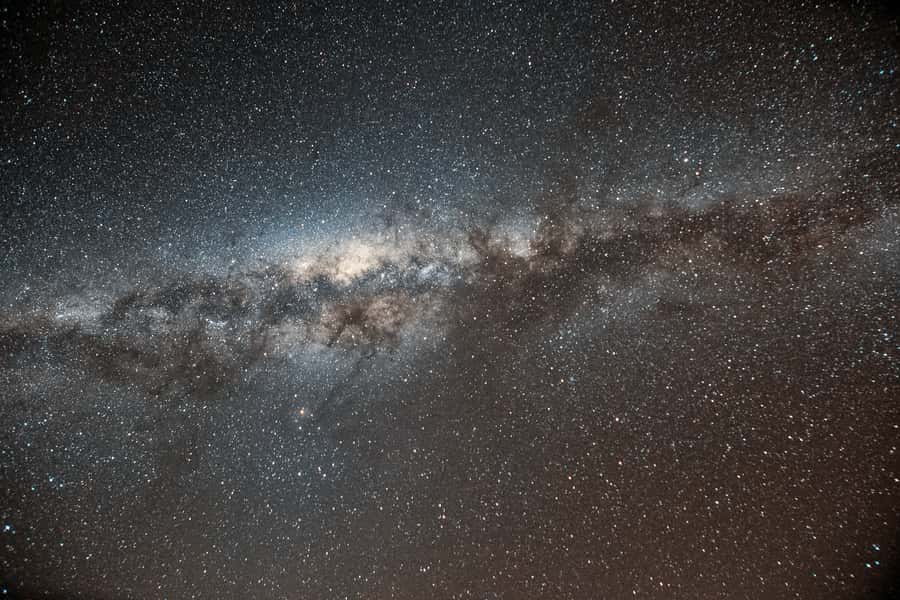
San Pedro de Atacama is one of the best places on Earth to look up, and this 150-minute stargazing outing makes good use of the dark desert sky. You begin with the naked eye, then move to telescopes for closer views of planets, binary stars, clusters, nebulae, and galaxies. On a clear night, the Milky Way can look startlingly bright, while Saturn’s rings, Jupiter’s moons, or the Magellanic Clouds may appear through the telescope.
I like two things especially: the guides turn a cold, dark night into an understandable lesson, and the tour includes both telescope time and a finished night-sky photograph. Guides such as Alejandro, Alberto, and Rafael have been praised for clear explanations and friendly answers. The main catch is the cold. The desert air bites after sunset, and a full moon can wash out many faint stars.
Key points
- See the southern sky from a dark desert site: The observation area is about 15 minutes outside San Pedro de Atacama, away from the town center’s lights.
- Telescopes make the difference: Depending on the date, you may see planets, moons, galaxies, nebulae, binary stars, or stellar clusters.
- The guide shapes the evening: English and Spanish tours use astronomy stories, constellation explanations, and practical help with questions.
- The moon changes the experience: A dark sky favors the Milky Way, while a bright moon offers its own impressive telescope view but hides fainter stars.
- Warmth and comfort are built in: Blankets, benches, cushions, hot drinks, snacks, and wine or pisco sour help during the long outdoor session.
- The $35 price is reasonable, but compare locally: One recent booking found the same type of outing cheaper in town, so check local options if you have time.
Why San Pedro’s night sky is the main event
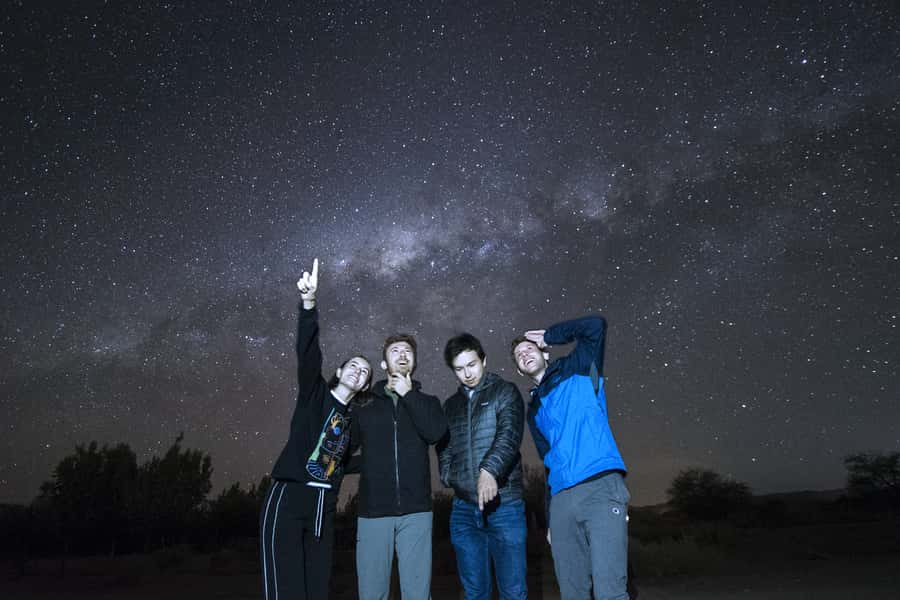
The Atacama Desert is famous for its dry air and remote setting, but you do not need to be an astronomy expert to appreciate the night sky here. The first part of the experience is simply looking up. Your guide helps you identify stars and constellations, explains how to find the Southern Pole, and shows how earlier cultures made sense of the heavens.
The tour also brings in Ancient Greek astronomy, which gives the constellations a human story rather than leaving you with a list of unfamiliar names. A good guide, such as Alejandro or Alberto, can connect the stars to mythology, science, and the mechanics of the solar system without making the lesson feel like school.
That balance matters. One guide may spend about 20 minutes explaining the sky before moving to the telescopes. For some people, this is the best part. If you are new to astronomy, it gives you a framework for what you are seeing. If you already know the basics, you will want to ask questions and request more time at the eyepiece.
The experience is strongest when the guide reads the group well. Alberto, for example, has been praised for welcoming questions and adjusting the telescope after each person looked. That small detail makes a difference in a group, since a telescope can lose its focus or alignment as people take turns.
More Stargazing Tours in San Pedro De Atacama:
- San Pedro de Atacama: Etno-Stargazing Tour with Transfer
★ 4.8 · 629 reviews - Astronomical Tour with Guide and Pick Up San Pedro de Atacama
★ 4.5 · 145 reviews - San Pedro de Atacama: Guided Atacama Desert Stargazing Tour
★ 3.9 · 93 reviews
The 15-minute ride into the desert
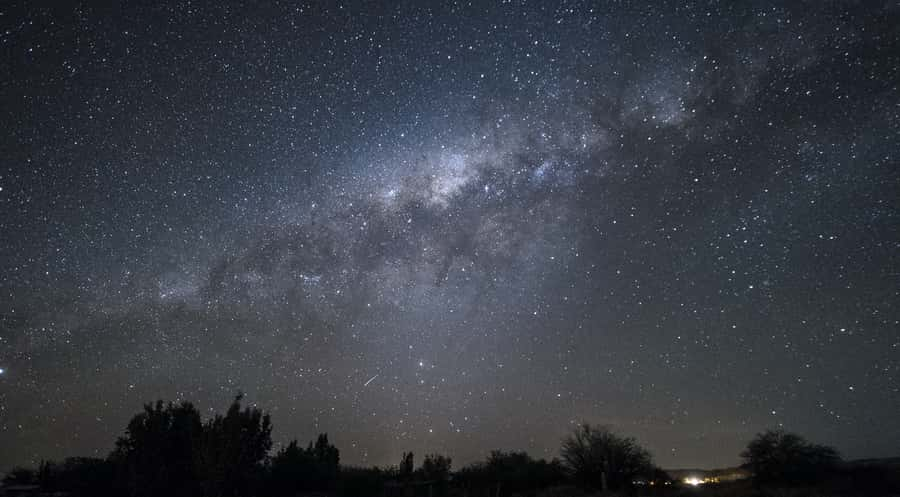
You meet at a designated point in San Pedro de Atacama, which can vary according to the option you book. From there, the vehicle takes about 15 minutes to reach the observation site. The ride is short, but it changes the mood quickly. Town lights fade, the road gets dark and dusty, and the open desert gives the sky room to show itself.
If you have your own rental car, following the tour vehicle is possible, but driving the dark road is not ideal. A family who did so found the bus easier and safer. I would take the provided transport unless you have a strong reason not to.
The small-group option is worth considering. A smaller party means less time waiting at each telescope and a better chance to ask questions. Group size can vary, so check the selected option when booking. The guides speak English and Spanish, but language availability may depend on the departure you choose.
The trip returns you to San Pedro after the session. Drop-off points can include addresses on Ignacio Carrera Pinto, including numbers 499 and 530, as well as other locations in town. Confirm your exact meeting and drop-off details before setting off, since these can differ by option.
Starting with the naked eye
At the site, you receive a short introduction before looking through any equipment. This opening is important because the sky can feel overwhelming at first. There are so many stars that it is easy to lose track of direction and scale.
Your guide points out major stars and constellations and explains how people have read meaning into them. The Ancient Greek view receives particular attention, although you can ask about the southern sky and other astronomical traditions if that interests you. One person wanted more discussion beyond the Greek tradition, so this tour may not satisfy you if cultural astronomy from Indigenous South American traditions is your main goal.
The presentation is generally clear and accessible. Still, the style can vary with the guide. One guide may tell stories and invite questions, while another may give a more technical explanation. If you are not naturally interested in astronomy, ask for practical examples and let the guide know what you want to understand.
This is also when your eyes begin adjusting to the darkness. Avoid bright phone screens during the talk. You will see more once your eyes have had time to adapt, though the exact viewing conditions depend on cloud cover, moonlight, and the time of year.
Taking turns at the telescopes
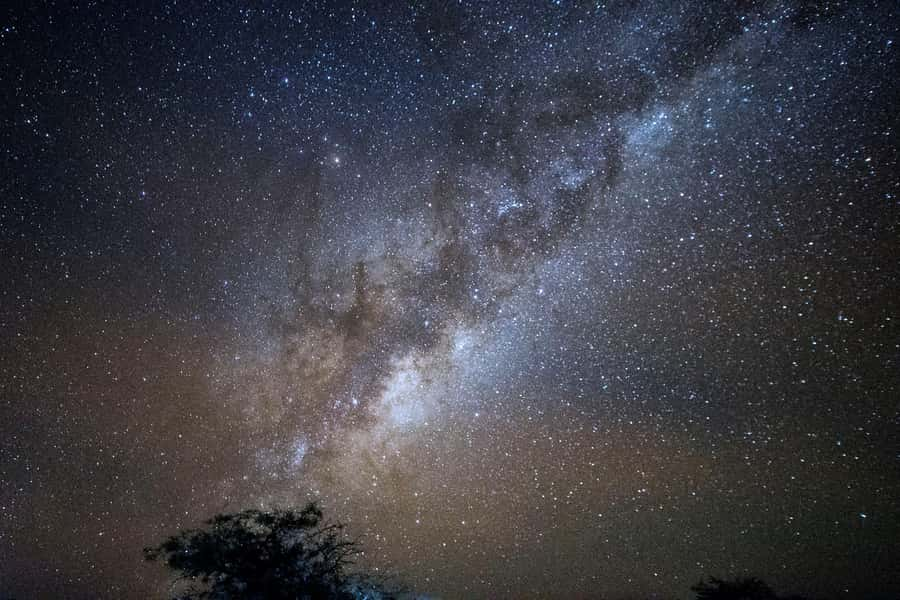
The telescopes are the heart of the outing. Looking at a star field with your eyes is beautiful, but a telescope adds a sense of place. The moon becomes a detailed object rather than a bright disc. Saturn may show its rings. Jupiter can reveal several moons when it is visible, and a nebula or galaxy can turn into a faint, ghostly shape.
The exact objects depend on the season and the night. You might see planets, star clusters, binary stars, nebulae, galaxies, or particularly bright stars. One evening included Mars, Jupiter and three of its moons, the International Space Station, the Magellanic Clouds, and several constellations. You should treat that as a good example, not a promise of the same program on your date.
The guides take care to reset the telescope between viewers. That is especially useful for children, who may need a step stool to reach the eyepiece. Families with elementary-school children have found the guides patient and welcoming, although the minimum age is four.
Expect some waiting if the group is large. A telescope shows one person’s view at a time, and the guide needs to refocus or reposition it. The experience feels more personal in a small group, particularly if you want to ask about what you have just seen.
A few more San Pedro De Atacama days worth comparing
- San Pedro de Atacama: El Tatio Geysers Tour
★ 4.7 · 943 reviews - Piedras Rojas, Altiplanics Lagoons & Salar Full-Day Tour
★ 4.7 · 592 reviews - San Pedro Atacama: Baltinache Lagoons
★ 4.6 · 359 reviews - San Pedro de Atacama: Valle de la Luna Guided Tour
★ 4.4 · 312 reviews
The moon can help or hurt
Moon phase is one of the most important details to check before booking. A dark or nearly dark moon gives you the best chance of seeing the Milky Way and faint galaxies. A bright moon reduces the number of visible stars, especially near the moon itself.
That does not make a full-moon outing pointless. On one evening, the moon rose after 11 p.m., leaving enough early darkness for the Milky Way, the Magellanic Clouds, Saturn, and many stars. Once the moon appeared, it became the main telescope subject. Watching its surface close up can be remarkable.
During a full moon, the guide can still explain constellations and astronomy, and the moon itself is a worthwhile object. But if your main goal is a dense field of stars, schedule around the moon when possible. Ask about the lunar phase before booking, and check the starting time as well. A tour that begins before moonrise can offer the best of both views.
The time of year matters too. The visible planets and deep-sky objects change across the calendar. There is no single fixed list of sights, so keep your expectations flexible.
Drinks, snacks, and staying warm
The outdoor setup includes benches, cushions, and blankets. Drinks may include red wine, pisco sour, juice, tea, coffee, and hot chocolate, along with a snack. Some outings begin with a cold drink while you adjust to the darkness and finish with a hot drink and cake or another small treat.
These extras are useful, not just decorative. San Pedro can feel warm in the daytime and sharply cold at night. A blanket helps, but it is not a substitute for proper clothing. Bring warm layers, a jacket, and comfortable shoes. Wear more than you think you need, especially if you tend to get cold while sitting still.
The welcome drink is not the reason to choose this tour. Its quality can be uneven, and one person found it underwhelming. The hot drinks and snack later in the evening are more valuable because they give you a brief warm-up before the ride back.
Alcohol is not required, and alcohol and drugs are not allowed beyond the listed drink service. If you prefer juice or a hot drink, those options are available.
There is no bathroom at the observation site. Use facilities before departure, because the two-hour outdoor session leaves little chance to return to town.
Getting a photograph beneath the stars
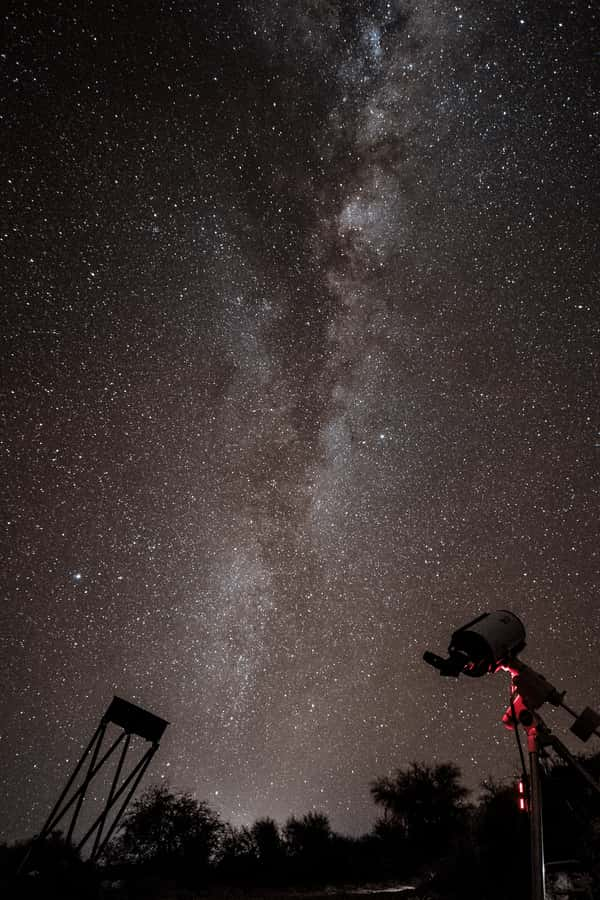
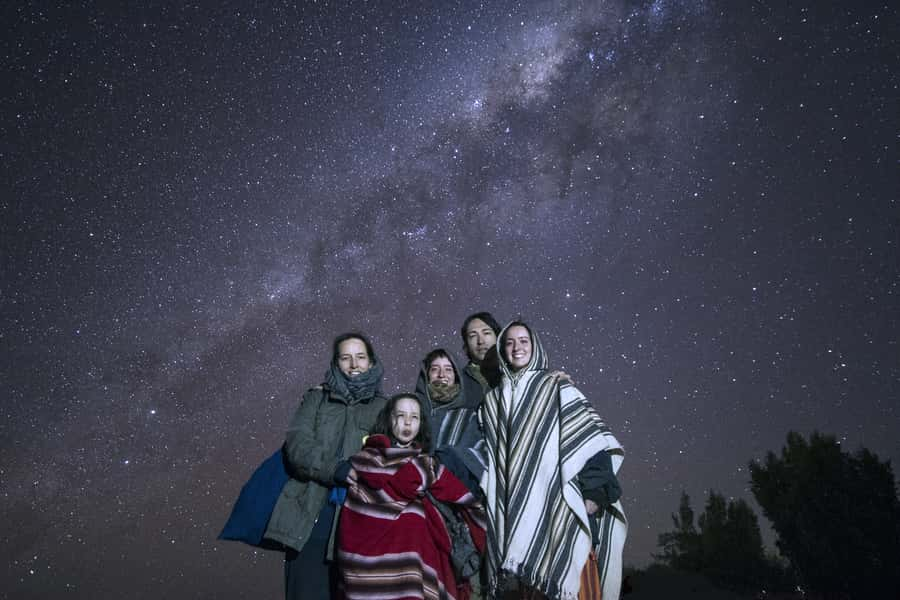
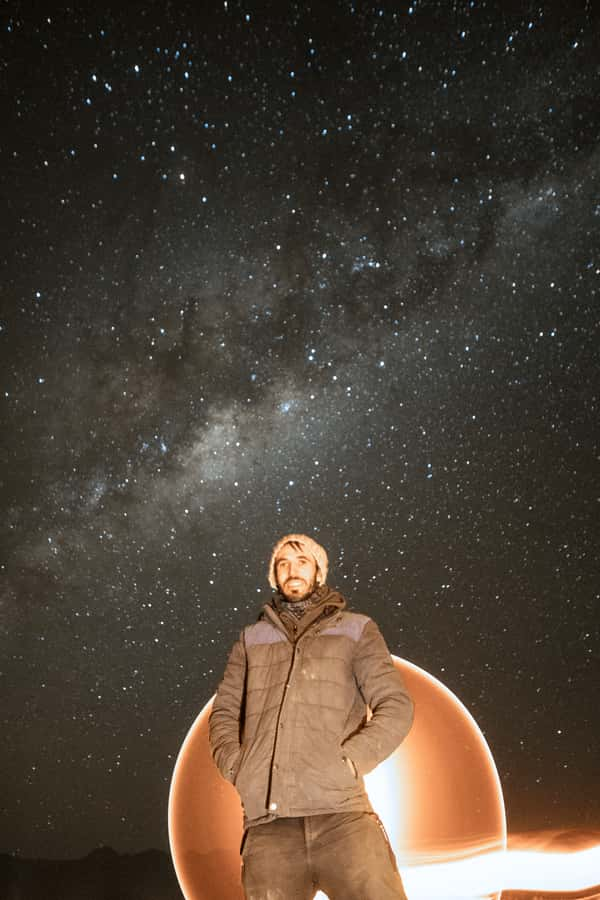
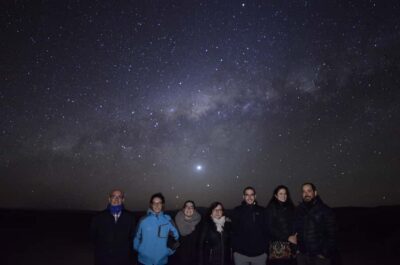
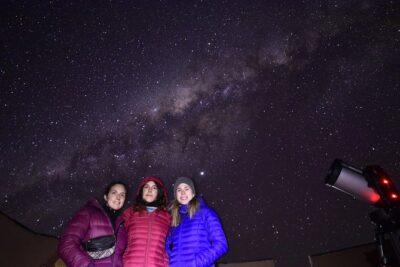
The included astrophotography is a real advantage. A guide or photographer takes a portrait with the night sky behind you, giving you something more distinctive than a quick phone snapshot. Several people considered their finished images a highlight of the outing.
You may also receive tips for taking your own night-sky photographs. Bring a phone or camera if that is important to you, but do not expect ordinary handheld shots to capture the Milky Way as your eyes see it. The staff can offer useful advice, yet the included photograph is the easiest way to leave with a polished image.
There is one practical warning: confirm how and when the photo will be delivered. Most people receive it, but at least two bookings reported not getting the promised image even after trying to contact the operator. Keep your booking details and ask before leaving if the file will be sent electronically.
The photo stop should not take over the evening. The strongest part of the experience is the guide and the telescope time. Think of the image as a valuable souvenir rather than the main product.
Is $35 a fair price?
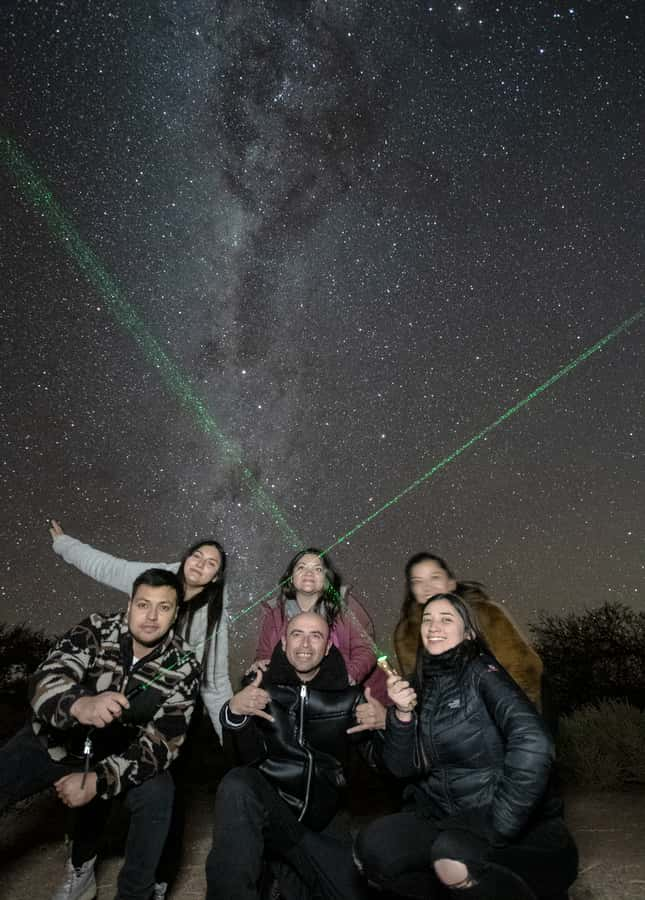
At $35 per person, this is a moderate-cost evening activity for San Pedro de Atacama. You are paying for transport, a guide, telescope access, the outdoor setup, blankets, drinks, snacks, and astrophotography. If you value instruction and want help finding objects in the sky, the price is easier to justify than simply paying for a ride to a dark place.
The value improves in a small group. You get more time to ask questions and fewer people between you and the telescope. A private tour is available in some cases, but it can become expensive for two people.
There is a price comparison worth making. One person found that buying locally would have cost about a third less than booking through a large online platform. That saving may not always apply, and booking online gives you convenience, flexible cancellation up to 24 hours before the start, and a reserve-now, pay-later option. If you have extra time in San Pedro, ask local astronomy operators for current prices before committing.
The tour is not good value if you want guaranteed clear skies, a specific planet, or a long professional photography session. Astronomy depends on weather, moonlight, season, and the guide’s available equipment. It is a guided night-sky experience, not a private observatory visit.
Who should book this evening?
I would recommend it to first-time visitors who want a clear introduction to the southern sky. Families can also enjoy it, especially when the guide is as patient as Alberto was with children. The step stool and telescope setup help younger participants, but children under four are not accepted.
You do not need prior astronomy knowledge. The guides explain the basics, and the telescope views give you something concrete to focus on. If you already know a lot about astronomy, ask detailed questions and consider a small-group or private option.
This is less suitable for anyone who dislikes sitting outdoors in cold air. People over 80 are not accepted, and the activity requires standing, walking a little around the equipment, and using telescope eyepieces. The bathroom situation also matters if you need frequent facilities.
The tour works best as part of a wider Atacama trip. After several days of geysers, salt flats, and desert drives, looking upward gives you a different view of the region. It is quiet, slow, and far removed from the daytime excursions.
Should you book Llama Stargazing?
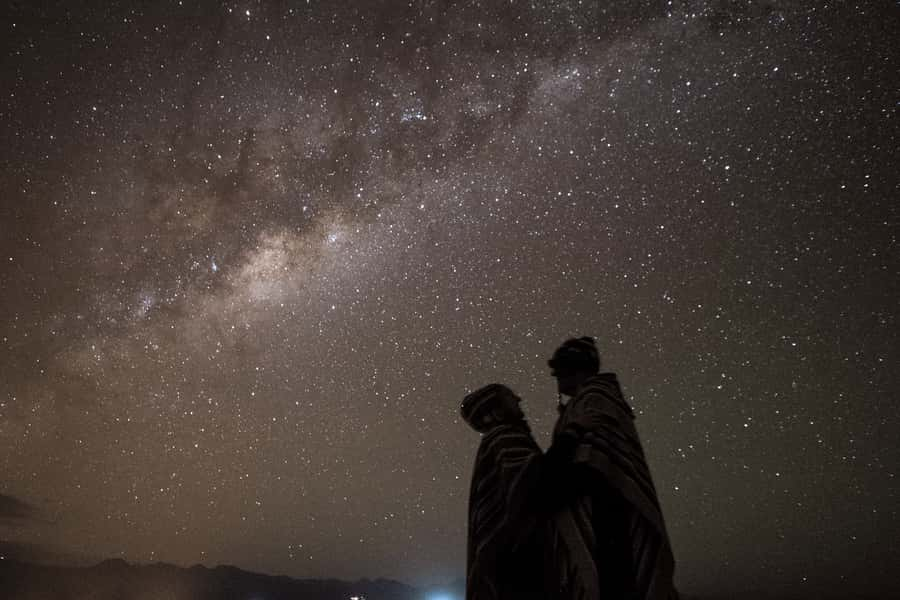
Yes, if you want a friendly, guided introduction to astronomy and the chance to see planets or deep-sky objects through a telescope. The strongest reasons to book are the skilled guides, the southern-sky setting, the included photograph, and the thoughtful cold-weather touches.
Before paying, check the moon phase, compare local prices, and confirm the photo delivery process. Bring serious winter clothing, use the bathroom before departure, and keep your expectations tied to the sky conditions.
Book it for the experience of learning where you are looking, not simply for a checklist of stars. On a clear, dark night, the Milky Way may be the lasting memory. On a bright-moon night, the lesson, the moon through the telescope, and the quiet desert setting can still make the evening worthwhile.
FAQ
How long does the San Pedro de Atacama stargazing experience last?
The experience lasts 150 minutes, including the vehicle ride to and from the observation site and roughly two hours at the site.
How far is the observation site from San Pedro de Atacama?
The site is about 15 minutes by van from the town center.
What might I see through the telescopes?
Depending on the season and conditions, you might see planets, stars, binary stars, stellar clusters, nebulae, galaxies, and the moon. The exact objects are not fixed.
Is the tour available in English?
Yes. Live guides are available in English and Spanish, although the language may depend on the option you select.
What is included in the price?
The tour includes a guide, telescope use, red wine, pisco sour, juice, tea, coffee, hot chocolate, a snack, blankets, and astrophotography.
What should I wear?
Bring warm clothing, a jacket, and comfortable shoes. Desert nights can be very cold, especially while sitting still for the astronomy presentation.
Is there a bathroom at the stargazing site?
No. Bathroom access is not included at the observation site, so use facilities before leaving town.
Just added around San Pedro De Atacama
- San Pedro de Atacama: Guided Atacama Desert Stargazing Tour★ 3.9 · 93 reviews
- Sandboarding Tour in San Pedro de Atacama, Chile★ 4.9 · 77 reviews
- San Pedro de Atacama: Rainbow Valley & Hierbas Buenas Tour★ 4.7 · 40 reviews
- San Pedro de Atacama: Red Rocks & Altiplano Lagoons Day Trip★ 4.9 · 108 reviews
- San Pedro de Atacama: 3 D. Tour Uyuni and Back to San Pedro★ 4.8 · 61 reviews
- San Pedro de Atacama: Guided Buggy Tour Through the Desert★ 5.0 · 99 reviews
- Caracoles: Red Stones of Atacama and Chaxa Guided Day Trip★ 4.8 · 56 reviews
- From San Pedro de Atacama: Rainbow Valley Tour★ 4.9 · 48 reviews
Stargazing Tours, compared.
Astronomical Tour with Guide and Pick Up San Pedro de Atacama
Read our review →
Cusco by Night: Planetarium Cusco, Dinner, and Pisco Sour
Read our review →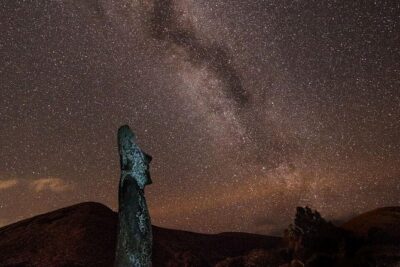
Browse the lists this tour appears in