
Reviewed · FAVELA TOURS
Bogotá´s Barrios: El Paraíso Favela Tour with Cable Car
El Paraíso gives you a very different view of Bogotá, both from the cable car and from its steep streets. I like the mix of spectacular city views and honest local context, especially the chance to hear about community projects from people connected to the neighborhood. I also like that guides such as Samuel, David, Jorge, and John focus on the area’s progress, not just its problems.
The main drawback is time spent getting there. The advertised duration is 4.5 hours, but some departures can include several hours in traffic and a shorter period on foot. Bring water, leave valuables behind, and remember that El Paraíso sits high above Bogotá.
Key points to know before booking
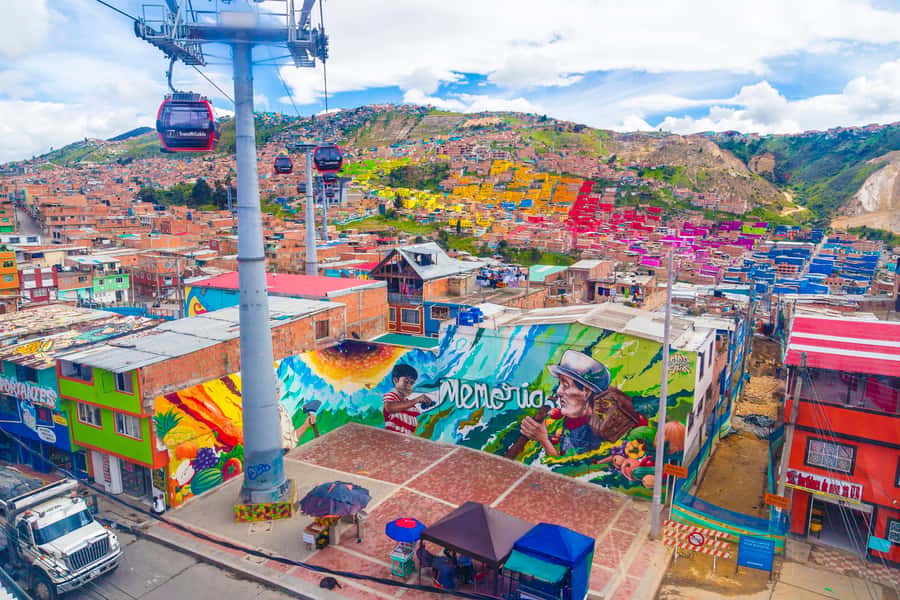
- Cable car views: The ride up offers a striking bird’s-eye view of Bogotá and the colorful homes below.
- Local perspective: A neighborhood guide and security escort join the walk, adding context and helping you feel at ease.
- Graffiti and murals: El Paraíso’s painted walls turn the walking route into an open-air display of local art.
- Community work: Your booking supports the Juan Manuel Ortiz community library in Ciudad Bolívar.
- High altitude: El Paraíso is listed at about 9,500 feet, so water and a steady pace matter.
- Transport time: Hotel pickup can be convenient, but traffic may take up a large share of the 270-minute tour.
Why El Paraíso is worth seeing
Most first-time visits to Bogotá focus on La Candelaria, the Gold Museum, Monserrate, and the city center. Those places deserve their time, but El Paraíso shows how Bogotá changes as it climbs into the southern hills.
This is not a polished sightseeing district. You see homes built up the slopes, narrow streets, brightly painted walls, local shops, and the ordinary routines of a large community. The tour is most valuable when it gives you a clearer idea of how residents live and how public and local projects are trying to improve the area.
I appreciate the tour’s basic approach: it does not present El Paraíso as a spectacle. Guides explain the neighborhood’s past, its social challenges, and the work being done to make daily life safer and more connected. The focus is on people and change, not on collecting dramatic photographs.
That said, you should be comfortable visiting an underserved area with an open mind. Some scenes may be confronting. Photography should be discreet, and you should not treat residents or their homes as background props.
More Favela Tours in Bogota:
- Rio de Janeiro: Rocinha Favela Walking Tour with Local Guide
★ 4.8 · 3,052 reviews - Rio De Janeiro: Half-Day Rocinha Favela Walking Tour
★ 4.7 · 2,272 reviews - Rio de Janeiro: Favela Santa Marta Top Tour with Local Guide
★ 4.9 · 488 reviews
Starting at the Gold Museum or your hotel
If you do not choose hotel or airport pickup, meet your guide beside the wooden chairs at the western entrance of the Gold Museum. This is a practical meeting point in central Bogotá, though you will need to make your own way there if you are staying elsewhere.
Pickup and drop-off are available from neighborhoods outside La Candelaria when that option is selected. The trip may include a private vehicle or small-group transport, depending on your booking. Drivers such as Jairo have been praised for handling Bogotá’s heavy traffic, and the drive itself can offer a useful introduction to the city’s different districts.
Allow more time than the simple distance on a map suggests. Bogotá traffic can be slow, particularly when crossing from the central districts toward Ciudad Bolívar. One four-and-a-half-hour outing included roughly three hours of driving for one group. That is not a flaw in the neighborhood visit, but it is an important part of the decision.
If you want the most time in El Paraíso, ask about the route and pickup timing before you book. Some small groups move quickly and finish in less than the full duration, while others spend longer on transport.
The cable car ride to El Paraíso
The cable car is the tour’s first major feature, and it makes the trip worthwhile before the walking route even begins. As the cars rise, the city opens below you. You see layers of houses spreading across the hills, busy streets, and the changing shape of southern Bogotá.
This ride also provides useful context. From above, it becomes easier to see how the city has expanded and why transportation matters so much in steep districts. Instead of treating El Paraíso as an isolated stop, the guide can show how it connects to the larger city.
If you dislike heights, take the warning seriously. The activity is not suitable for people with vertigo, and the cable car may feel more intense on a cloudy or windy day. Sunglasses can help with glare, while a camera is useful for the wide views. Keep phones and cameras secure, and avoid displaying other valuables.
The cable car is not just a scenic extra. It is part of the story. A direct road journey might get you to the neighborhood, but the ascent shows the physical distance between central Bogotá and the hill communities in a single, memorable ride.
Walking through painted streets
At the top, you leave the cable car for a guided walk through El Paraíso. The route is described as manageable rather than strenuous, but the altitude changes the effort. El Paraíso is listed at around 9,500 feet, about 1,600 feet higher than Bogotá, so drink water and do not rush.
The streets bring together two very different impressions. You see colorful houses and walls covered in bright graffiti, yet you also see the limits of infrastructure and the pressures faced by an underserved district. The murals add pride and character, but they do not hide the area’s difficulties.
A good guide helps you read these details. Samuel has been praised for explaining how Bogotá continues to expand and how infrastructure tries to keep up. David has focused on the development of the favelas and the people who live there. Jorge has also been praised for explaining the district and the wider city in a friendly, personal way.
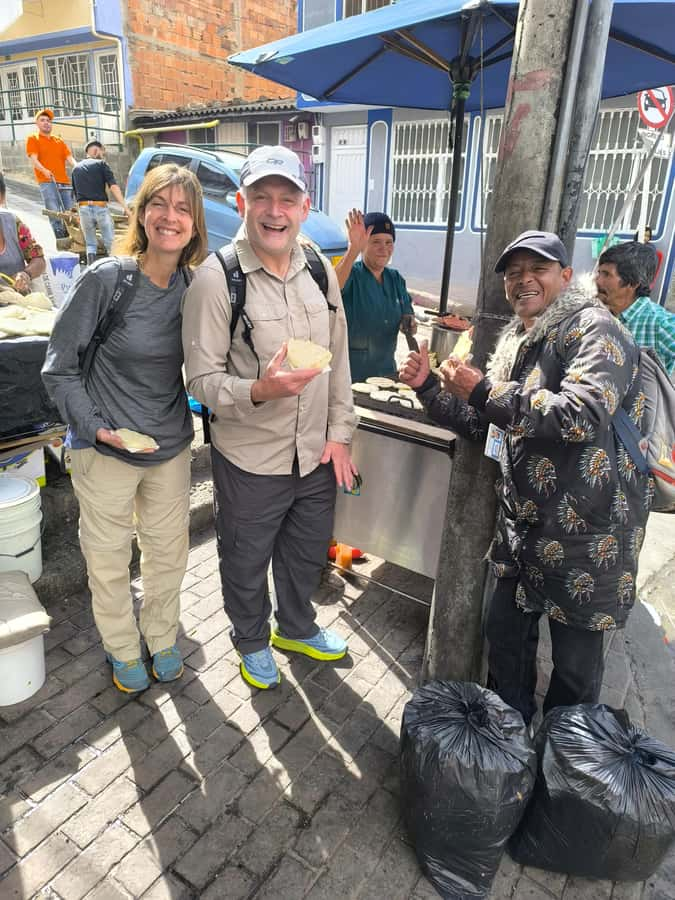
The walk is not a rapid checklist of photo stops. You may pause to look at murals, hear about local initiatives, and understand how different parts of the neighborhood developed. Some routes include a local bakery or café, where you can try a snack and drink. Arepas with eggs and cheese, coffee, and other simple Colombian refreshments have been part of some outings.
Do not expect a restaurant meal or a formal food tour. The snack is a small but useful part of the visit. It gives you a chance to pause, support a local business, and connect the neighborhood to everyday Colombian food.
More Cable Car Rides in Bogota:
- Cable car to el Paraiso, the city slum
★ 5.0 · 44 reviews - Medellin: Comuna 13 Graffiti Tour, Cable Car & Street Food
★ 4.8 · 9,046 reviews - Rio de Janeiro: Sugarloaf Cable Car Official Ticket
★ 4.6 · 2,873 reviews - Medellín: Comuna 13 District Tour with Cable Car Ride
★ 4.8 · 1,467 reviews
Meeting local leaders and the security escort
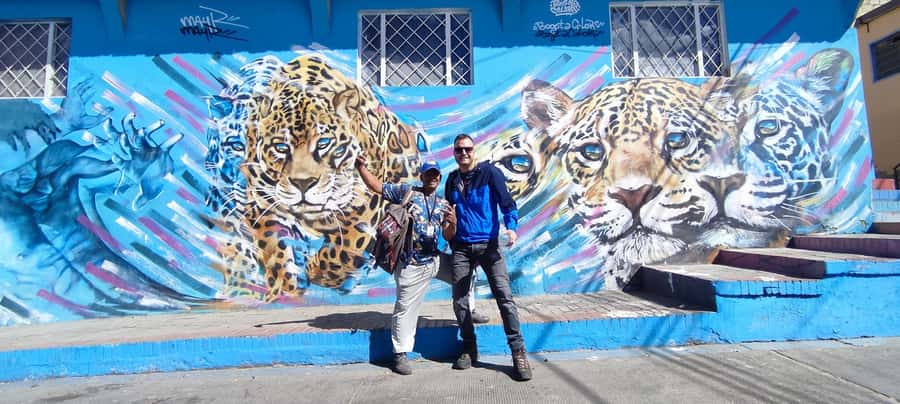
A local guide joins the group in El Paraíso, sometimes alongside a security escort. John, also spelled Jhon in some tour details, has been described as an older local man involved in improving life in the area and supporting children’s education.
This local connection is one of the tour’s strongest features. A guide arriving from central Bogotá can explain the city, transport, and wider history. Someone connected to the neighborhood can add a more immediate view of its streets, projects, and problems.
The security presence may feel unusual at first, but it is intended to help you move through the area with confidence. Several guides have been praised for keeping an eye on the group, including solo women and small private groups. That does not remove the need for common sense. Keep your phone tucked away when you are not using it, avoid carrying expensive items, and follow your guide’s advice.
The tour’s safety approach is practical rather than theatrical. You are not promised that the neighborhood is risk-free. Instead, you are accompanied by people who know the area and understand how to guide visitors respectfully.
Community projects and the bigger picture
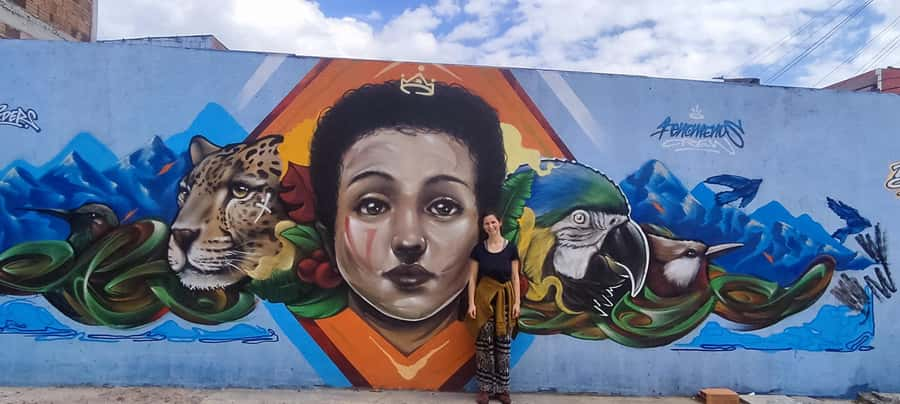
The tour also supports the Biblioteca comunitaria Juan Manuel Ortiz in Ciudad Bolívar. This matters because the visit connects tourism spending with a local education project rather than stopping at sightseeing.
You may hear about efforts to support children, improve public spaces, and build stronger community networks. The details can vary by guide and route, but the main message is consistent: El Paraíso is not frozen in the past. Residents, community leaders, and public programs are working to improve conditions.
I like this part because it gives you something more useful than a simple before-and-after story. The neighborhood has serious economic and social challenges, but it also has people trying to solve them. You see both realities in the same visit.
The best conversations are likely to come from asking respectful questions. Ask how the area has changed, what local projects need, and how young people use community spaces. Avoid turning poverty into a curiosity. Listen first, photograph second.
The city view from above
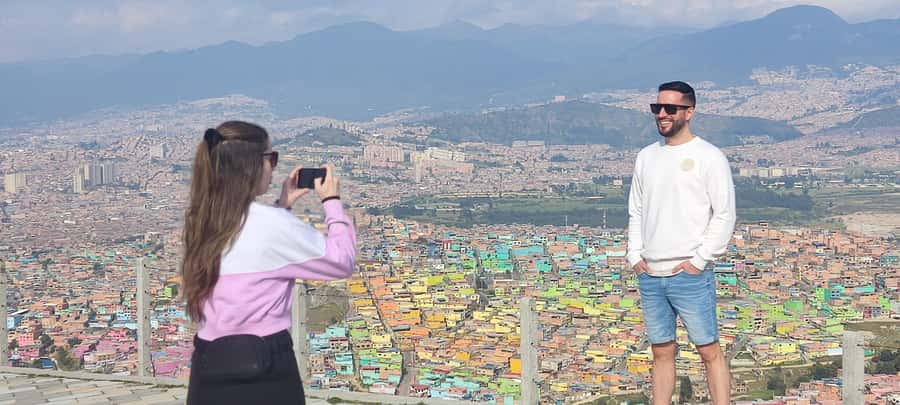
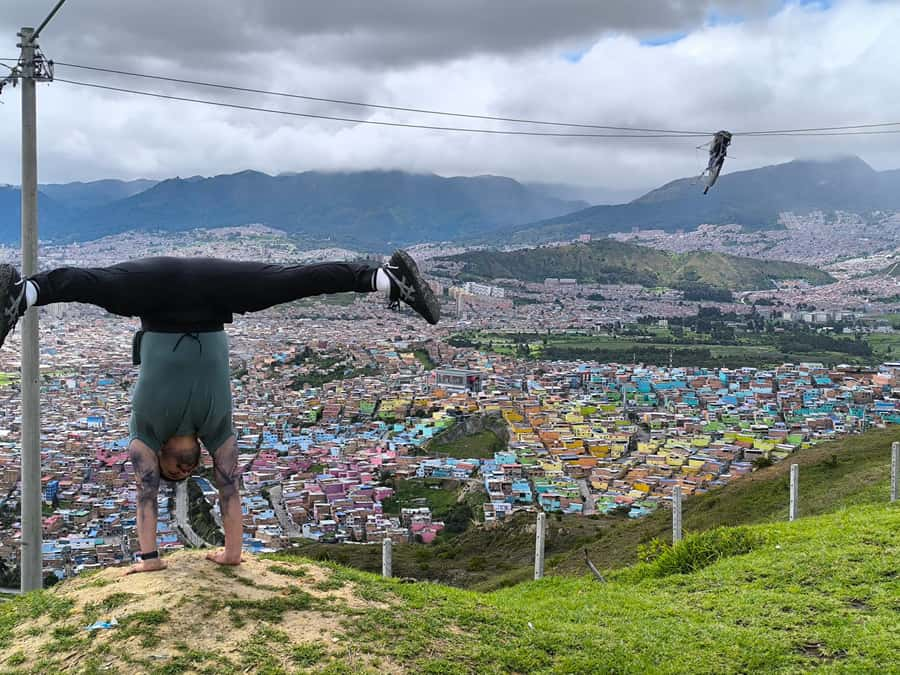
The final viewpoint is one of the tour’s biggest rewards. From the upper part of El Paraíso, you can look across much of Bogotá and see how far the city spreads.
Some people prefer this view to Monserrate because it combines a wide city panorama with a direct sense of how Bogotá’s southern districts fit into the whole. Monserrate offers a classic mountaintop visit. El Paraíso gives you a view tied to a lived-in neighborhood and a public transport system.
Weather will affect the panorama. On a clear day, the city view can be remarkable. On a gray afternoon, the cable car and street art may become the stronger parts of the tour. Either way, the high position helps you understand Bogotá’s size in a way that a museum or central plaza cannot.
Keep your camera ready, but do not let photography take over. The viewpoint is also a good place to ask your guide to identify the parts of the city you have seen or plan to visit.
How much value do you get for $78?
At $78 per person, this is not Bogotá’s cheapest half-day outing. The price makes more sense if you choose hotel or airport pickup, want a guide in English, prefer arranged transport, and value a small or private group.
The cost includes the round-trip transport from the meeting point, cable car tickets, a snack, a guide, a security escort, and medical assistance insurance. Pickup and drop-off are included only with the appropriate option, so check the exact package before paying.
You are also paying for coordination. Reaching El Paraíso independently would require working out the transport, cable car tickets, neighborhood route, and local access yourself. The tour removes much of that uncertainty.
The value is weaker if you are mainly looking for a quick cable car ride or a short city viewpoint. Traffic can consume a large part of the 270 minutes, and the walking portion may be much shorter than the total outing. The price is strongest for someone who wants social context, local guides, and a carefully arranged visit to a part of Bogotá that is not normally on a first-time sightseeing route.
Free cancellation up to 24 hours before the start and reserve-now, pay-later booking make planning easier. Those terms are useful if your Bogotá schedule may change.
Who should book this tour?
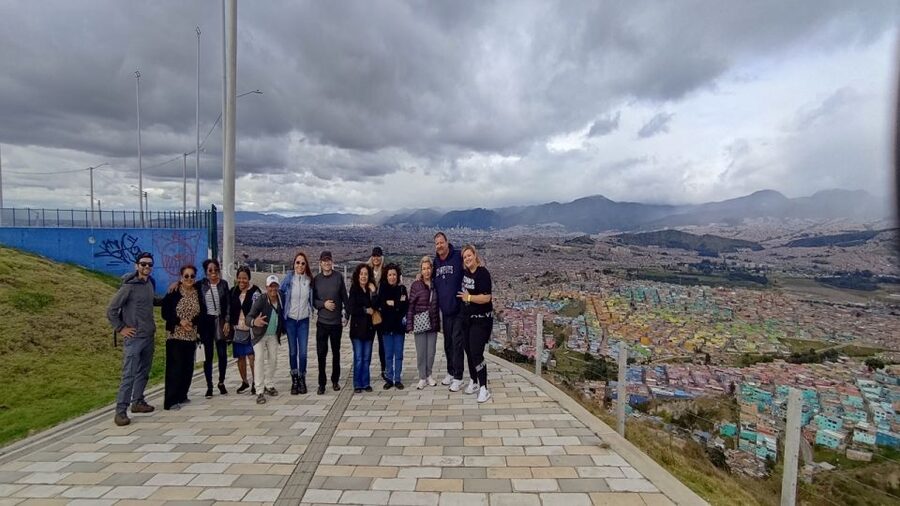
I would recommend it to curious visitors who want more than central Bogotá and who are comfortable hearing about inequality, local development, and community work. It suits solo visitors, couples, and small groups, especially if you want an English or Spanish-speaking guide and do not want to arrange the transport yourself.
It is also a good choice for repeat visitors who have already seen the Gold Museum or Monserrate. The cable car, murals, and hilltop view give you familiar Bogotá from a new angle.
You may want to skip it if you dislike heights, have limited tolerance for long car journeys, or want a relaxed urban walk with no difficult social context. The walking is not described as demanding, but the altitude can make it feel harder than expected. Comfortable clothes and water are sensible.
The activity is listed as wheelchair accessible, but the route includes a neighborhood walk and changing urban surfaces. If you use a wheelchair, confirm the practical route details with the operator before booking.
Should you book the El Paraíso tour?
Book it if you want to understand how Bogotá extends beyond its postcard center. The strongest parts are the cable car, the murals, the local perspective from people such as John, and the explanation of community work supported by your booking.
Just plan for traffic, high altitude, and a respectful visit. Do not bring valuables, do not display expensive belongings, and keep your expectations focused on learning rather than sightseeing alone. If that sounds worthwhile, this is one of the more distinctive ways to spend half a day in Bogotá.
FAQ
Where does the tour meet?
The meeting point is by the western entrance of the Gold Museum, beside the wooden chairs. Hotel or airport pickup and drop-off are available if you select that option.
How long does the tour last?
The stated duration is 270 minutes, or 4.5 hours. Traffic can take up a substantial part of that time, depending on your pickup point and conditions in Bogotá.
Is the tour offered in English?
Yes. Live guides are available in English and Spanish. Guides named in tour information and guest feedback include Samuel, David, Jorge, Jairo, and local guide John or Jhon, though the assigned guide can vary.
What is included in the price?
The tour includes cable car tickets, round-trip transportation from the meeting point, a snack, a guide, a security escort, and medical assistance insurance. Hotel or airport pickup and drop-off apply only when that option is selected.
Is the tour suitable for people with vertigo?
No. The activity is not recommended for people with vertigo because it includes a cable car ride and high viewpoints.
What should I bring?
Bring sunglasses, a camera, comfortable clothes, and plenty of water. Avoid bringing valuables, and do not display personal belongings during the tour.
Just added around Bogota
- Tour of Zipaquirá: Visit the Salt Cathedral and the main squares★ 4.5 · 55 reviews
- Bogota Walking Tour Teusaquillo, a different part of the city★ 5.0 · 41 reviews
- La Candelaria Walking Private Tour (3 Hrs.)★ 5.0 · 51 reviews
- Private Zipaquira Salt Cathedral and Guatavita Lagoon Tour from Bogota★ 4.5 · 44 reviews
- Tejo and Beer Tour in Bogotá★ 5.0 · 35 reviews
- Hiking to the largest paramo on earth : Sumapaz★ 5.0 · 49 reviews
- MINA CATEDRAL DE SAL ZIPAQUIRA Tour Privado★ 4.5 · 38 reviews
- Descubre la Magia: Catedral de Sal & Bogotá en 1 Día★ 4.5 · 39 reviews
Favela Tours, compared.
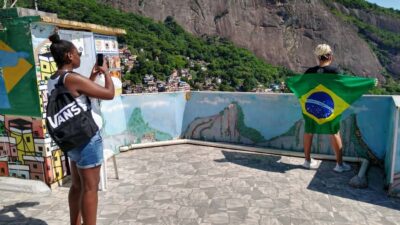
Favela Rocinha Tour with Local Guide & Secret Spots
Read our review →
Favela Tour The Original, Rocinha & Vila Canoas since 1992
Read our review →
Favela Santa Marta: Walking Tour with local guide
Read our review →Browse the lists this tour appears in