
Reviewed · HISTORICAL TOURS
Medellin Historic Walking Tour
Medellin’s past is written across its downtown streets, from the old railway to Botero’s oversized bronze figures. This 210-minute walking tour gives you a useful first look at the city, with local guides who explain both its painful years and its changes. I especially like the focus on Paisa culture and the practical food and activity tips you get along the way.
I also like the route’s mix of major sights and ordinary city life, including El Hueco, the National Palace Mall, and the downtown plazas. The main drawback is that some attractions may not be open on Sundays, and one visitor noted that there is simply not a huge amount to see at certain stops. Think of this as a city orientation with stories, not a museum-heavy sightseeing day.
Key points to know before you book
- A three-and-a-half-hour introduction: The route covers Alpujarra, Botero Square, Parque Berrío, and San Antonio Park at a steady walking pace.
- Local guides shape the experience: Guides including Julio, Dio, German, Hernan, Suzie, Carolina, and Pablo are praised for clear English and personal knowledge of Medellin.
- Paisa culture gets real attention: You learn about local customs, food, society, and the city’s difficult past, not just dates and monuments.
- A useful first-day activity: Restaurant suggestions, activity ideas, and practical local tips can help you plan the rest of your stay.
- The price is modest: At $14 per person, the tour offers strong value if you want context and orientation rather than private touring.
- Plan around opening days: Museum or attraction access can be limited on Sundays, and metro tickets, lunch, and museum admission cost extra.
Why this downtown walk is worth your first afternoon
A good city walk should answer three questions: Where am I? What happened here? What should I do next? This one aims at all three.
You meet on the pedestrian bridge at Alpujarra metro station, then walk through central Medellin for about three and a half hours. The route does not stay inside a polished historic district. It moves through working streets, public squares, shopping areas, transport landmarks, and places tied to the city’s changing identity.
That mix matters. Medellin can be hard to understand from a taxi window or from the hilltop views around other parts of the city. Downtown brings you closer to the city’s public life, and the guide supplies the context that can be easy to miss on your own.
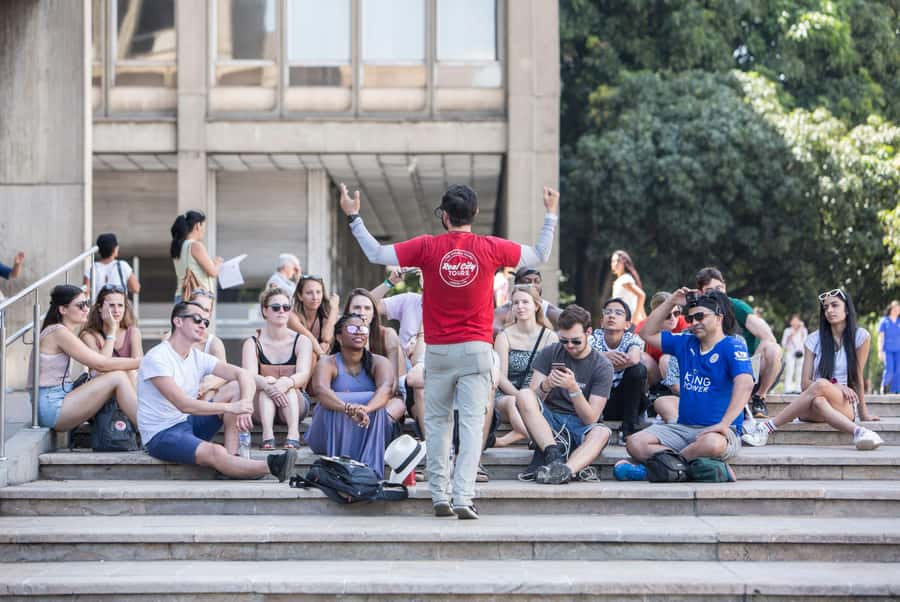
The strongest part is the human explanation. Dio, Julio, German, Hernan, Suzie, Carolina, Pablo, and other guides have each been singled out for clear English, warmth, and a strong connection to Medellin. Dio has shared personal memories of the city’s troubled years. Hernan is known for remembering names quickly and keeping the group involved. Julio is especially effective with detailed questions and historical explanation.
Guide quality can vary on any walking tour, but this company has operated since 2013 and has taken more than 280,000 people through the city. That experience shows in the route and in the practical organization.
More Historical Tours in Colombia
- Medellín: History & Local Life Essentials Tour on an E-Bike
★ 4.9 · 130 reviews - From Medellín: Private Pablo Escobar History Tour
★ 4.9 · 84 reviews - Pablo Escobar Historic Tour and Cable car
★ 5.0 · 38 reviews
Starting at Alpujarra and the old railway
The meeting point is the pedestrian bridge at Alpujarra metro station. This is a practical place to begin because the metro gives you a clear reference point, but allow enough time to find the bridge. One visitor expected the walk from a hotel to take 10 minutes and found it took closer to 30, so do not cut it close.
The first major stop is the Ferrocarril de Antioquia, the old railroad landmark. You have about 30 minutes here for a guided visit and photos. The railway helps explain how Medellin and the wider Antioquia region connected with the rest of Colombia. It is also a good early stop because it gives the tour a clear starting point: the city did not grow in isolation.
From there, the group reaches the Monumento a La Raza. The monument offers another chance to discuss regional identity and the people who shaped Antioquia. This is less about checking off a famous attraction and more about learning why local identity matters so much here.
Your guide is the key to both stops. Without explanation, they might take only a few minutes. With a local story, they become part of a larger account of work, movement, regional pride, and city growth.
Plaza de las Luces and Medellin’s public spaces
Next comes Plaza de las Luces, a modern public square near government buildings and transport routes. The name refers to the tall light columns that shape the plaza. It is a useful place to notice how Medellin has used public space to change the feel of central areas.
This is one of the tour’s better lessons in contrast. Medellin’s downtown has old churches and commercial streets beside newer civic projects. The guide helps connect those pieces instead of presenting them as unrelated photo stops.
You will also see how central Medellin functions during the day. The route passes through places used by office workers, shoppers, vendors, and commuters. The setting can feel crowded and energetic, so stay close to the guide and keep your valuables secure as you would in any busy city center.
El Hueco and the National Palace Mall
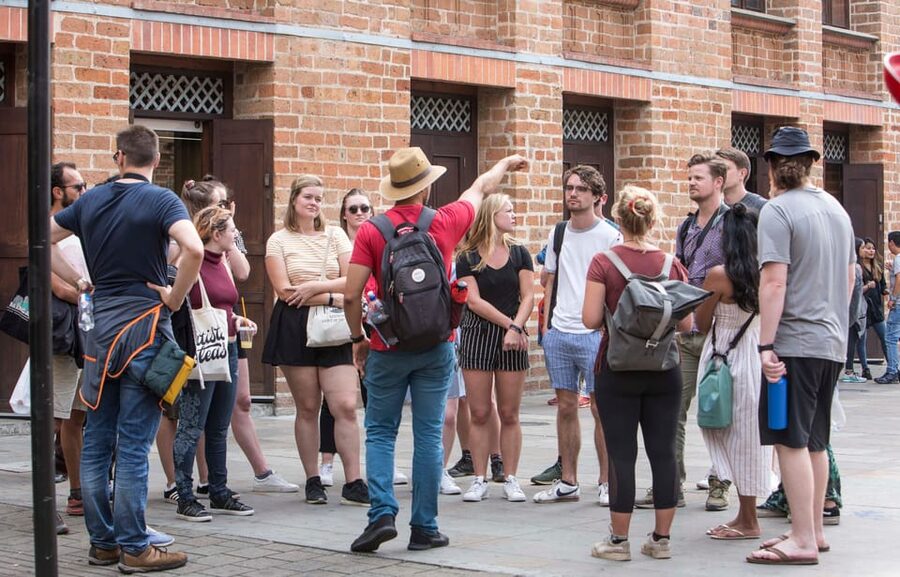
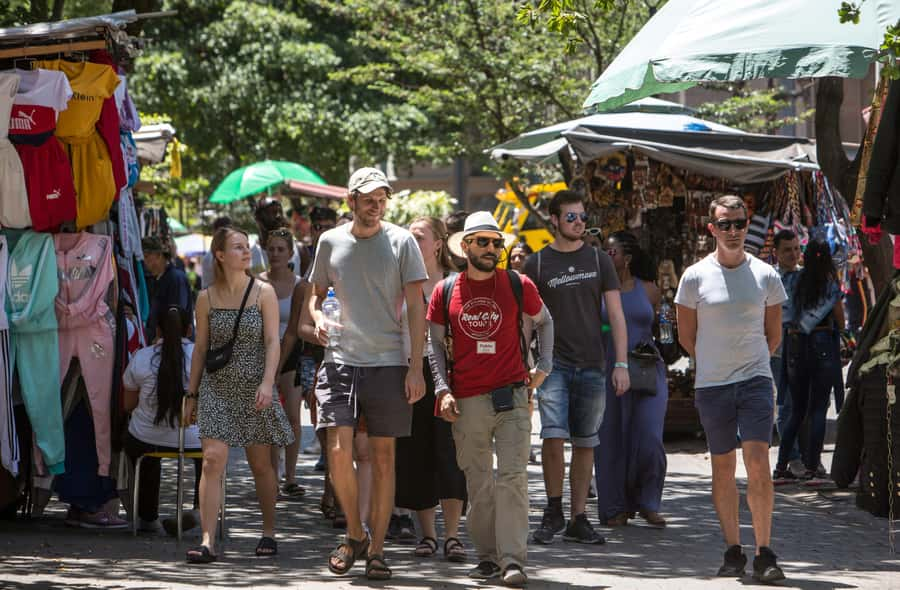
El Hueco is a commercial area known for low-cost shopping and dense retail streets. It gives you a look at a very different side of Medellin from the formal plazas and monuments. The tour includes a guided walk and a street-food opportunity, though lunch is not included.
I like this part because it shows how people actually use downtown. You are not only looking at buildings from the outside. You are passing through a district built around buying, selling, bargaining, and quick meals.
The National Palace Mall provides time for a break, photos, a visit, and some free time. The stop can be useful if you want to browse or pause before continuing. It also adds a practical element to the route, since you are not expected to walk continuously for three and a half hours without a breather.
Do not expect a dedicated food tour. The street-food stop is part of the city walk, not a meal package. Bring money if you want to buy something, and remember that lunch is separate.
Same trip, a completely different kind of day:
- Medellin: Comuna 13 Graffiti Tour, Cable Car & Street Food
★ 4.8 · 9,046 reviews - Medellín: The Real Pablo Escobar Tour
★ 4.8 · 3,205 reviews - Medellín: Comuna 13 True Story and Street Food Tour
★ 4.9 · 1,779 reviews - Medellín: Comuna 13 District Tour with Cable Car Ride
★ 4.8 · 1,467 reviews
La Veracruz and the route to Botero Square
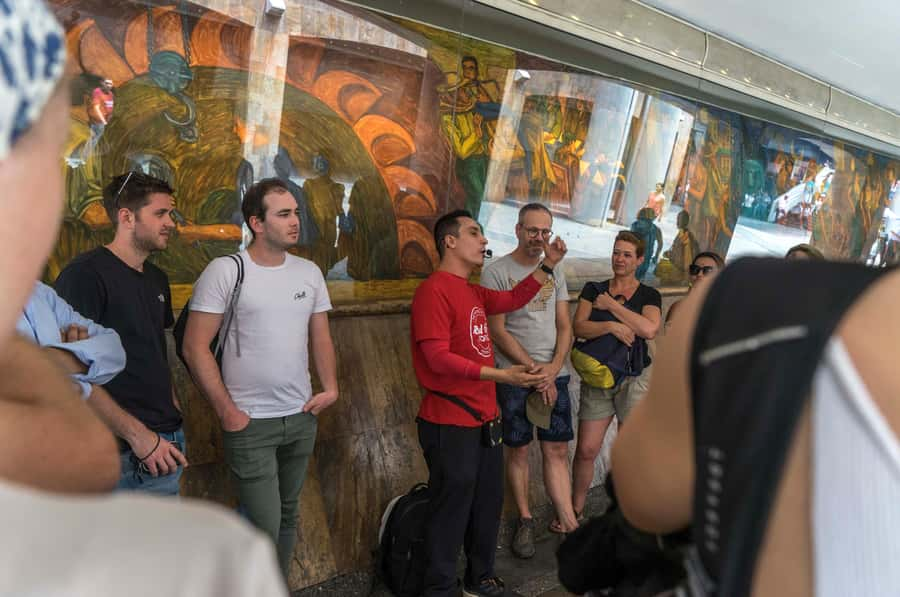
The Ermita de la Veracruz is a small historic church and one of the older religious sites in central Medellin. The guide explains its place in the city and gives you time to look around before the walk continues.
This stop works well because it slows the route down after the commercial areas. You get a change of pace, with architecture and religious history replacing shops and street activity. The church is not a long museum visit, so keep your expectations in proportion. It is a brief stop within a larger downtown story.
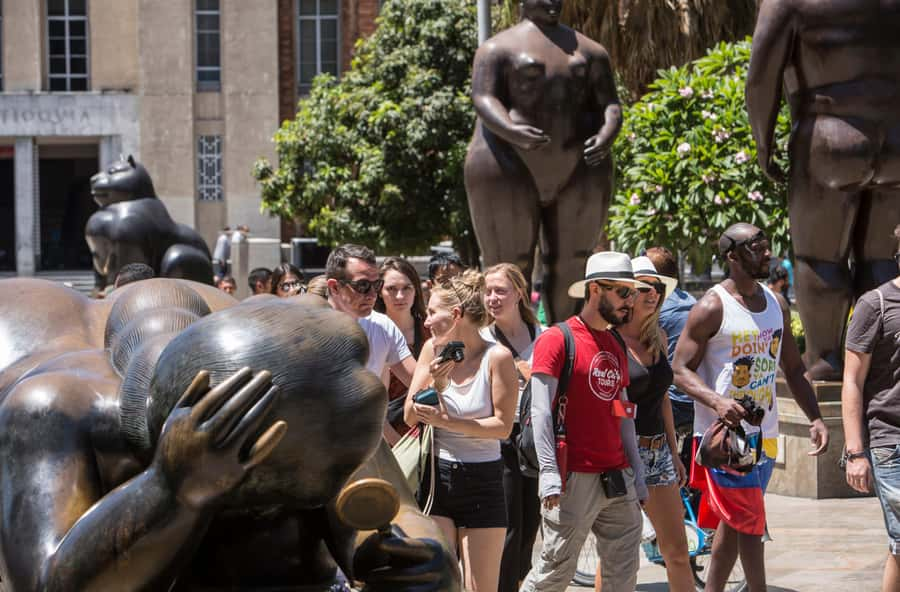
Then comes Plaza Botero, the tour’s most recognizable cultural stop. Fernando Botero’s large bronze figures fill the square, and the open setting makes it easy to take photos and discuss the artist’s style. You also have free time here.
The square is a highlight, but it is worth knowing what this tour does and does not provide. The route introduces you to the public sculptures and the area around them. It does not include museum admission, and Sunday access to some attractions may be restricted. One visitor specifically felt disappointed after finding that certain art spaces were closed on Sunday, so check the day of your visit if museum interiors matter to you.
Parque Berrío, a lesser-known stop, and San Antonio Park
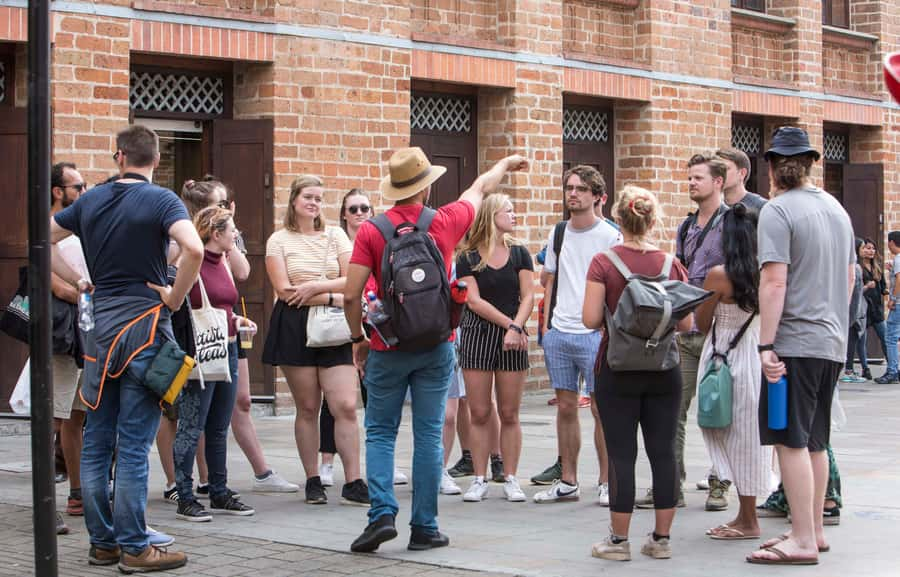
After Botero Square, the tour continues to an additional stop described as a lesser-known local sight. The exact attraction is not specified in the tour details, so think of it as a flexible part of the route rather than a guaranteed headline landmark.
That can be a plus. A guide who knows the city may point out a place you would not find in a basic downtown checklist. It can also be the least predictable section, so do not book this tour expecting every minute to revolve around famous monuments.
Parque Berrío brings the group back to one of the central gathering places of Medellin. The guide discusses the square and gives you time for photos while you watch the city move around you. This is where the tour’s main strength becomes clear: the interest lies as much in how people use the space as in what the space looks like.
The walk ends at San Antonio Park. This gives you a natural point from which to continue exploring or return by public transport. It also makes the route useful as a first-day orientation, since you finish with a better sense of how the central districts connect.
The guides make the difference
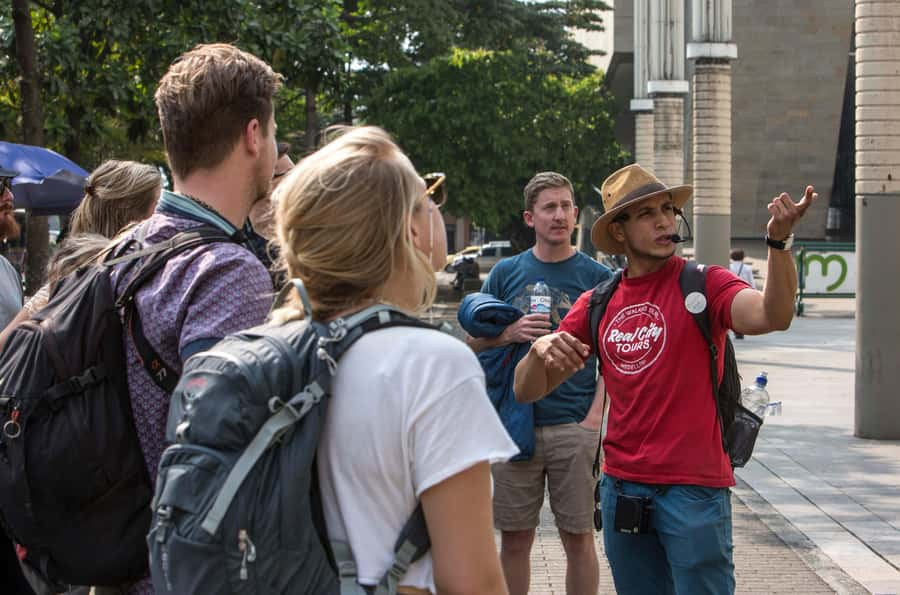
The tour is conducted in English with a bilingual guide. English ability and personal storytelling receive the strongest praise across the available feedback.
Suzie has been described as professional, energetic, and friendly. Carolina is noted for her warm manner and for helping with a vegan restaurant recommendation. German is praised for being engaging and for explaining the city with enthusiasm. Hernan combines local history with humor and pays attention to the people in his group.
Dio is a particularly strong choice if you want personal perspective on Medellin’s difficult past. He has been described as sharing firsthand memories and keeping the group interested well beyond the usual three-hour mark. Julio is valued for detailed answers and for drawing solo visitors into the group.
These details matter because a downtown walk can become a list of names and dates. The better guides make the past understandable without turning Medellin into a crime-history lecture. They also leave room for questions, food suggestions, and advice about what to see next.
What you get for $14
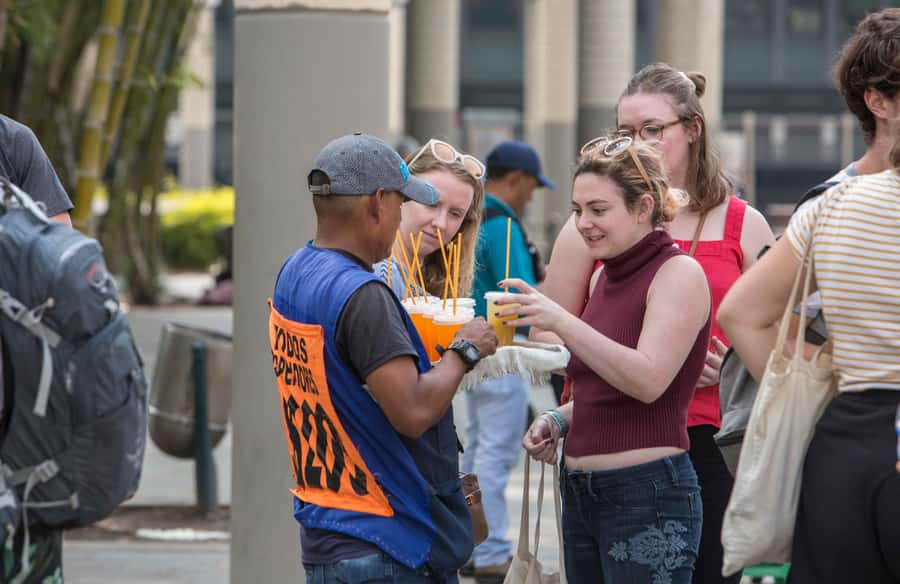
At $14 per person, this is an inexpensive way to get a structured introduction to central Medellin. The value is strongest if you are arriving in the city and want a local framework before exploring on your own.
The fee includes the English-speaking guide, a group picture, restaurant recommendations, activity suggestions, and local tips. Those extras are small, but useful. A good food recommendation can save you from spending your first evening at a place chosen only because it is near your hotel.
You still pay for metro tickets, lunch, and museum admission. That makes the total cost higher if you buy food or enter an attraction, but the base price remains reasonable for 210 minutes with a guide.
The free cancellation policy allows a full refund when you cancel at least 24 hours ahead. You can also reserve now and pay later, which helps if your Medellin plans are still shifting. The tour runs Monday through Sunday and accepts last-minute bookings, subject to availability.
Who should book this walk
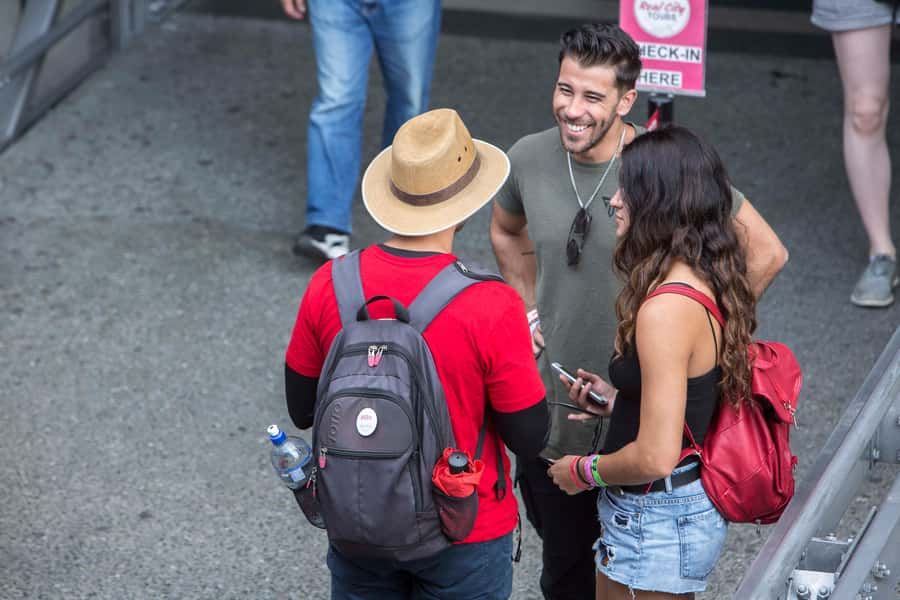
I would choose this tour for a first visit, especially if you want to understand downtown before exploring neighborhoods on your own. It also suits solo visitors because the guide actively brings people into the group, and it works well for anyone who enjoys asking questions rather than simply taking photos.
Families may appreciate the manageable route, local stories, and free time, though children who dislike three hours of walking may lose interest. The tour is wheelchair accessible, an important advantage for visitors who need step-free access.
Art lovers should check Sunday scheduling before booking. Plaza Botero is included, but museum admission is not, and some attractions may be closed on Sundays. If your main goal is to see indoor collections, you may need a separate museum visit.
You should also be comfortable with a city-center setting. This is not a quiet garden walk. You pass through commercial streets and busy public areas, with the normal need to watch bags and stay with the group.
My call on the Medellin Historic Walking Tour
Book it if you want a low-cost, local-led introduction to Medellin’s center, especially early in your stay. The route gives you landmarks, public spaces, art, shopping streets, and a better grasp of Paisa identity in one organized outing.
Skip it if you want a private tour, a long museum visit, or a route built around spectacular views. The downtown sights are spread through an active urban area, and some stops are brief.
For most first-time visitors, the combination of price, local explanation, practical recommendations, and flexible booking makes this a sensible choice. Check the day carefully if you care about museum access, arrive early at the Alpujarra meeting point, and bring a little extra money for food or transport.
FAQ
How long does the Medellin Historic Walking Tour last?
The tour lasts 210 minutes, or three and a half hours.
Where does the tour begin?
The meeting point is on the pedestrian bridge at Alpujarra metro station.
Where does the tour finish?
The tour finishes at San Antonio Park in Medellin.
What language is the tour conducted in?
The live tour guide speaks English. The activity information also describes the guide as bilingual.
What landmarks are included?
The route includes the Ferrocarril de Antioquia, Monumento a La Raza, Plaza de las Luces, El Hueco, National Palace Mall, Ermita de la Veracruz, Plaza Botero, Parque Berrío, and San Antonio Park.
Is museum admission included?
No. Museum entrance is not included in the tour price.
Are metro tickets included?
No. Metro tickets are not included.
Is food included?
No. Lunch is not included, although the route includes a street-food stop and the guide provides restaurant recommendations.
Can I cancel the booking?
Yes. You can cancel up to 24 hours in advance for a full refund. You can also reserve now and pay later.
More Historical Tours in Medellin
- Lima’s Vibrant Heritage: Exploring the City’s Landmarks Half-day
★ 4.5 · 581 reviews - Santiago: Guided Walking Tour of the Historical Old Town
★ 4.8 · 459 reviews - Maria Fumaça – Wines and History
★ 4.0 · 242 reviews - Rio de Janeiro: Historic Rio and Santa Teresa Half-Day Tour
★ 4.4 · 228 reviews
More Walking Tours in Colombia
- Comuna 4 Walking Tour Medellin
★ 5.0 · 217 reviews - Cartagena: Historic Center and Getsemaní Shared Walking Tour
★ 4.9 · 2,716 reviews - Bogotá: Guided La Candelaria Walking Tour
★ 4.8 · 1,229 reviews - Cartagena: Walled City and Getsemani Shared Walking Tour
★ 4.5 · 352 reviews
Just added around Medellin
- Private Coffee Tour in Jardín Antioquia★ 5.0 · 41 reviews
- Private transfer service from or to Medellín Airport★ 4.0 · 93 reviews
- Medellín: Pablo Escobar Tour with Guide and Transportation★ 4.1 · 71 reviews
- Medellin: Private 3-Hour Pablo Escobar Tour★ 4.8 · 37 reviews
- Medellin: Party Bus with DJ & Street Food Tastings★ 4.5 · 112 reviews
- Pablo and the drug trafficking world★ 5.0 · 129 reviews
- Medellin: tasting Street Food with Rooftops of El Poblado★ 4.4 · 61 reviews
- Medellín: Private Comuna 13 Street Art Tour★ 4.8 · 88 reviews
Historical Tours, compared.
Historic Center and Getsemaní Shared Walking Tour
Read our review →
Lima’s Vibrant Heritage: Exploring the City’s Landmarks Half-day
Read our review →

Lima: Historic Center Street Food, Market, and Eateries Tour
Read our review →
Nazis in Buenos Aires: a historical walking tour
Read our review →
Browse the lists this tour appears in