
Reviewed · BOGOTá TOURS
Shared Tour Colombian Conflict War, Drug Trafficking & Peace
Bogotá’s political past is not tucked away in a museum. It is written into the streets around the historic center, and this tour uses those streets to explain how the 1948 Bogotazo helped push Colombia into decades of conflict. You’ll connect the struggle between Liberals and Conservatives with guerrilla groups, paramilitaries, drug trafficking, and the peace process with FARC.
I like two things here. First, the tour tries to explain causes rather than simply list violent events. Second, the English-speaking guides use questions and discussion to make a difficult subject easier to follow. Guides including Lorenzo, Hector, Santi, and Daniel have each been praised for clear explanations, humor, and patience with questions. The main drawback is the pace: you may walk about 9 kilometers in roughly 150 minutes, and one recent experience felt too brief on current politics.
Key points at a glance
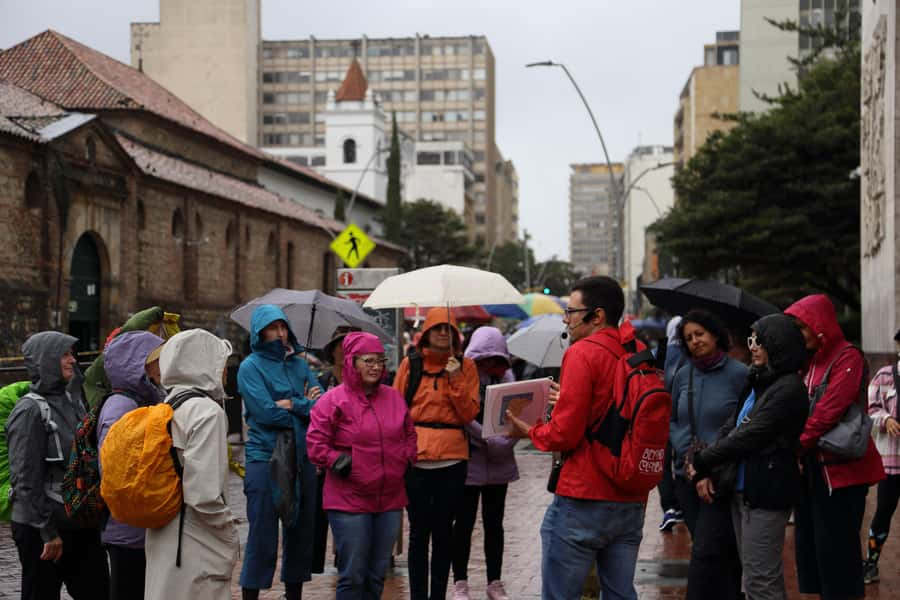
- The Museo del Oro is the meeting point: Find Beyond Colombia’s red umbrellas directly in front of the museum.
- The Bogotazo anchors the story: The 1948 riot is used to explain the start of the period often called La Violencia.
- You cover major armed groups: The route discusses FARC, ELN, M-19, guerrillas, paramilitaries, and their reasons for fighting.
- The walking is substantial: Expect about 9 kilometers, with stops to listen and rest.
- The tone aims for balance: The guide promises objective information without taking a political side.
- The price is low for a history lesson: At $13 per person, the value is strong if you want context rather than museum admission or entertainment.
Why Bogotá’s conflict story belongs on a walking tour
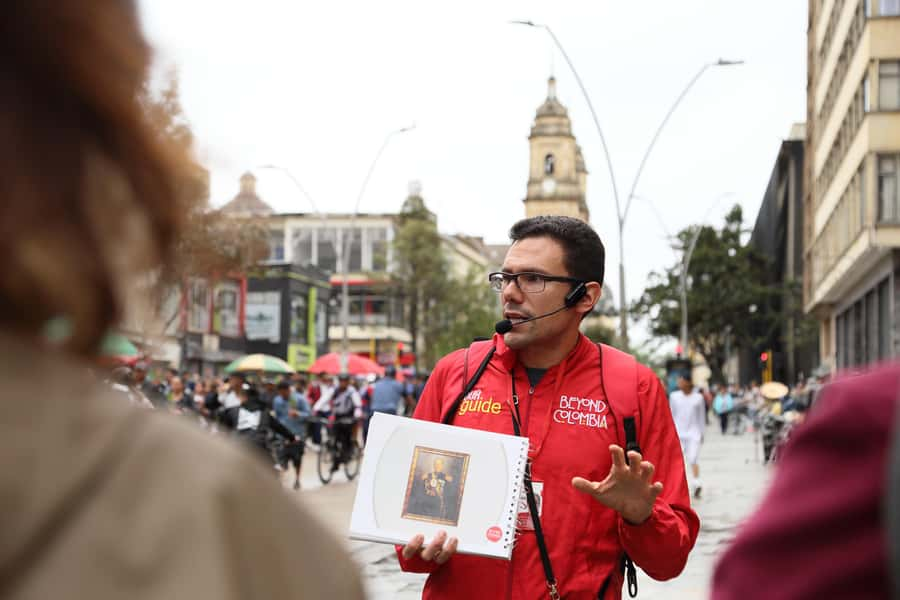
This is a history tour, but it does not treat history as a string of dates. You walk through central Bogotá while the guide explains how political rivalry, inequality, state power, armed rebellion, and the cocaine trade fed one another over time.
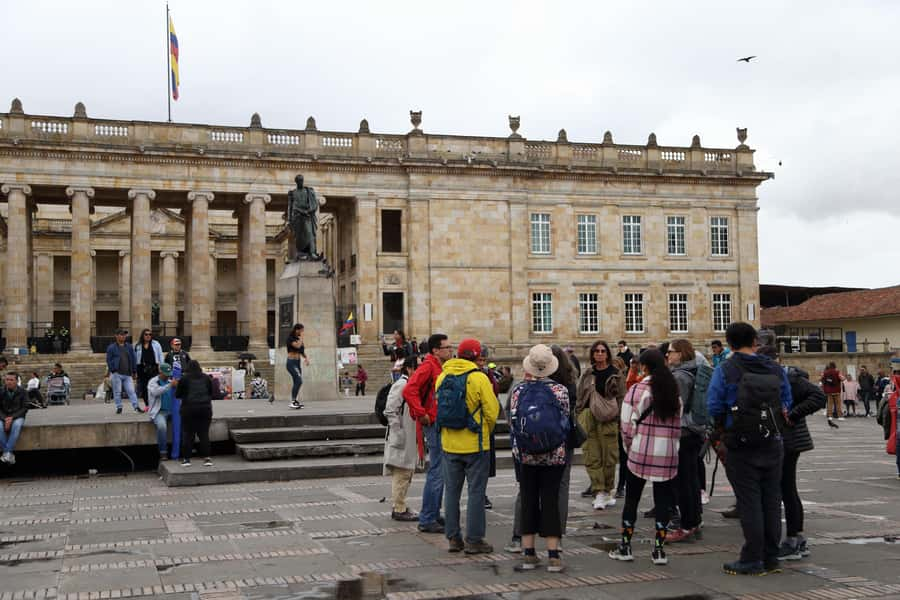
That setting matters. The city center gives the subject a physical frame. You are not only hearing about the country’s conflict in the abstract. You are seeing some of the places connected with Bogotá’s political memory and its scars from the past.
The tour begins with Colombia’s independence process, then moves toward the long struggle between Liberals and Conservatives. That rivalry is a key starting point. If you know little about Colombian politics, the guide’s job is to show how competition for national power helped create a tense setting before the major violence of the twentieth century.
I appreciate this approach because it avoids treating the conflict as something caused by one group or one event. The experience promises not to take sides, which is especially useful when the subject includes military rule, guerrilla warfare, paramilitary violence, political killings, and drug trafficking.
Still, you should arrive with an open mind. This is not a light sightseeing walk with a few dramatic stories added for flavor. You will hear about war, political violence, and the people and institutions involved. The subject is serious, though the guides can bring humor and conversation into the presentation.
A few more Bogota days worth comparing
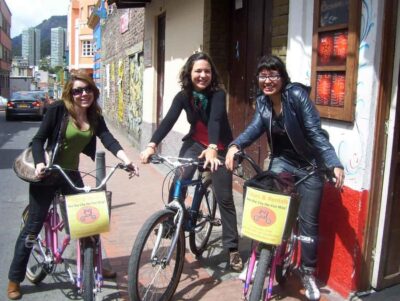
- Bogota: Bicycle City Tour
★ 4.9 · 2,156 reviews - Zipaquirá: Salt Cathedral Group Tour with Pickup
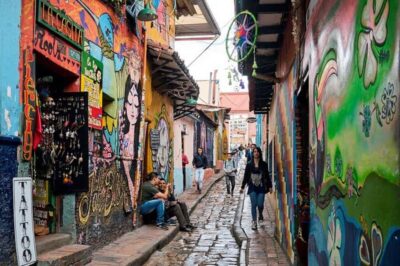
★ 4.8 · 1,606 reviews - Bogotá: Guided La Candelaria Walking Tour
★ 4.8 · 1,229 reviews
The Bogotazo and the beginning of La Violencia
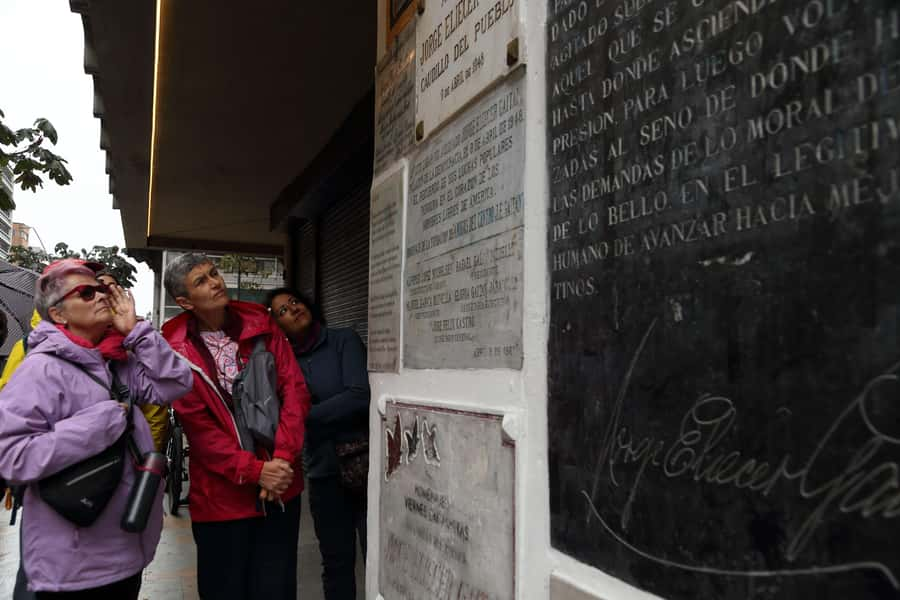
The 1948 riot in Bogotá is the central early episode. Known as the Bogotazo, it followed the assassination of Liberal leader Jorge Eliécer Gaitán and led to widespread unrest in the capital.
You will learn why this event became so important in the country’s story. It was not just a riot in one city. The violence helped deepen the Liberal and Conservative struggle and opened the door to the period commonly called the Colombian Violence Era, or La Violencia.
The guide places this event within the city itself, using stops in the historic center to help you understand how political anger became street violence. This is one of the strongest reasons to take the tour early in your Bogotá stay. The story gives you useful context for later visits to museums, churches, government buildings, and other central sights.
You should not expect a specialist seminar on every detail of the Bogotazo. The experience has a broad span to cover, from independence to current politics, so the explanation is designed for a general audience. If you already know Colombian history well, you may want more detail than the standard tour can provide.
From political rivalry to military rule
After the Bogotazo, the tour follows the changing balance between Liberals and Conservatives. You will hear about the effort by each side to gain supremacy, along with the political conditions that helped keep Colombia unstable.
Military rule is another important part of the story. The guide explains how the military dictatorship fits between the earlier partisan conflict and the later creation of armed groups. This helps you see that guerrilla warfare did not appear without warning. It grew from a mix of political exclusion, rural conflict, mistrust of the state, and disputes over power.
The value here is the connection between events. A weaker tour might mention the dictatorship, then jump to FARC and drug cartels. This experience aims to show the links between them, so you can follow the country’s shift from partisan violence to organized insurgency and counterinsurgency.
The discussion also helps explain why the words Liberal and Conservative carry more weight in Colombia than they may in a visitor’s home country. The guide can place those labels in a national setting rather than treating them as simple left and right categories.
FARC, ELN, M-19, and the reasons groups took up arms
The tour discusses the creation of FARC, ELN, and M-19, along with current guerrilla and paramilitary groups. You will learn that these organizations did not all form for the same reason, use the same methods, or represent the same political ideas.
That distinction matters. Visitors often arrive knowing only FARC from international news. The tour gives you a wider view of the armed conflict, including how different groups responded to the state and to one another.
You will also examine the reasons groups continued fighting. The explanation includes political goals, control of territory, money, and the effects of drug trafficking. It is useful to hear these factors together because the conflict was not simply a clean battle between the government and one rebel army.
The subject can become confusing fast, especially when several organizations and decades of change are covered in one walk. Pay close attention to the guide’s timeline, and ask questions when you need a point repeated. The best guides for this kind of tour are not only good speakers. They must make clear which group existed when, what it wanted, and how its role changed.
This is where guides such as Lorenzo, Hector, Santi, and Daniel have made a strong impression. Lorenzo is described as using questions and humor to keep the group involved. Hector is praised for answering questions, while Santi and Daniel are noted for their strong command of the subject. Guide assignments can vary, so you should not book on the assumption that one particular person will lead your departure.
Same trip, a completely different kind of day:
- Bogotá: Private City Tour, Monserrate, Emerald and Botero
★ 4.9 · 798 reviews - Bogotá´s Barrios: El Paraíso Favela Tour with Cable Car
★ 4.8 · 731 reviews - Bogota: Guatavita and Salt Cathedral Daily Group Tour
★ 4.7 · 615 reviews - Bogotá City Tour with Monserrate, Gold and Botero Museums
★ 4.9 · 584 reviews
Drug trafficking and the wider conflict
Drug trafficking is treated as part of the conflict story, not as a separate crime topic. You will look at how the drug trade supplied money, weapons, and power to armed groups and criminal organizations. The tour also addresses Colombia’s struggle against national and international drug trafficking.
This section is valuable because it cuts through the familiar media image of Colombia as simply a drug-cartel story. The trade was a major source of violence, but it operated within a wider political and armed conflict. The tour works best when it shows how these forces overlapped without suggesting that every part of Colombia’s history can be explained by cocaine.
You may hear about the people and groups behind the violence, including the You know who references used in the tour description. The tone is intended to be factual rather than sensational. That is a good fit if you want to understand the country without turning its painful past into entertainment.
There is also a practical benefit. Once you understand the links between political conflict, armed groups, and drug money, later conversations about Colombia become easier to follow. You can place familiar names and events in a much wider frame.
The FARC peace agreement and Colombia today
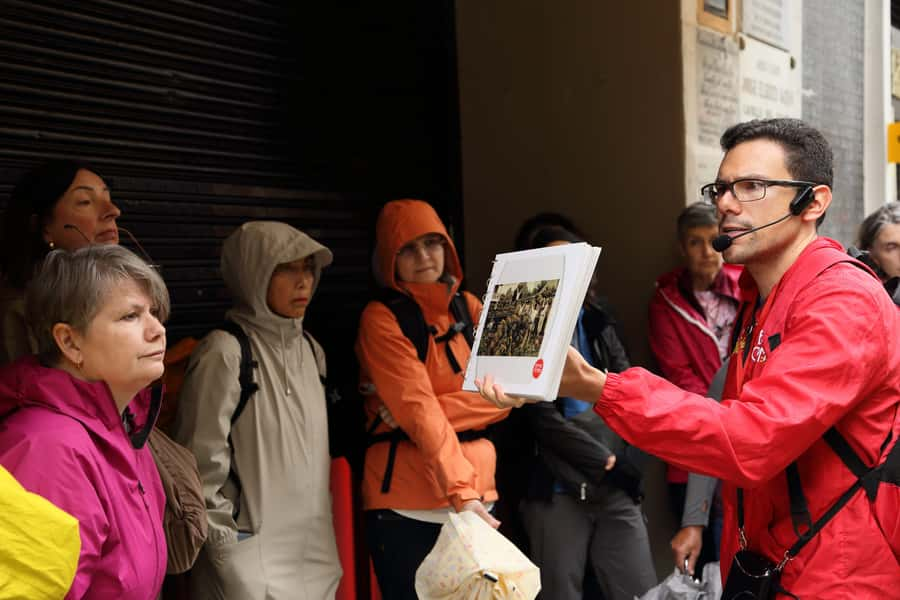
The final part moves toward the peace process and the agreement signed with FARC. You will learn what the agreement attempted to change and why peace did not make every armed group disappear.
The tour also addresses current political conditions and ongoing fighting involving guerrillas and paramilitary groups. This is the section where the quality of the guide matters most. Current events are complicated, and they can change faster than any standard tour script.
I would approach this part with realistic expectations. The walk gives you a foundation, but it cannot provide a full analysis of every present-day political dispute in one afternoon. One account found the current context unclear and wanted more depth. If present politics is your main reason for booking, ask direct questions and treat the tour as a starting point for further reading rather than a final word.
The promise of neutrality is useful here. A guide who explains the agreement, its supporters, its critics, and the remaining armed groups without pushing you toward one political view can help you form your own opinion. The experience also provides recommended material for continued study after the walk.
What the 150-minute route feels like
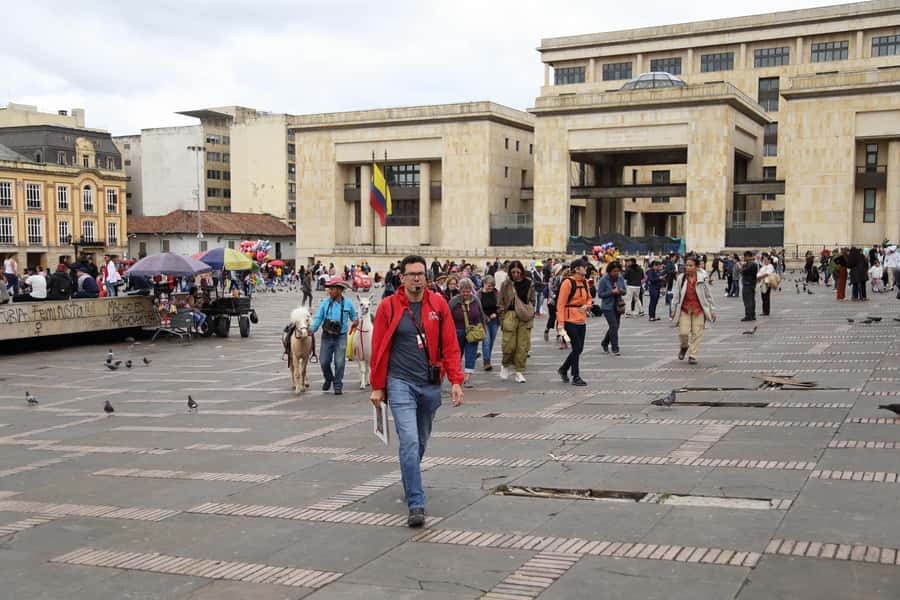
The tour is advertised at about 150 minutes, or roughly two and a half hours, while the wider description also calls it approximately three hours. Plan for a substantial morning or afternoon rather than a quick city-center stroll.
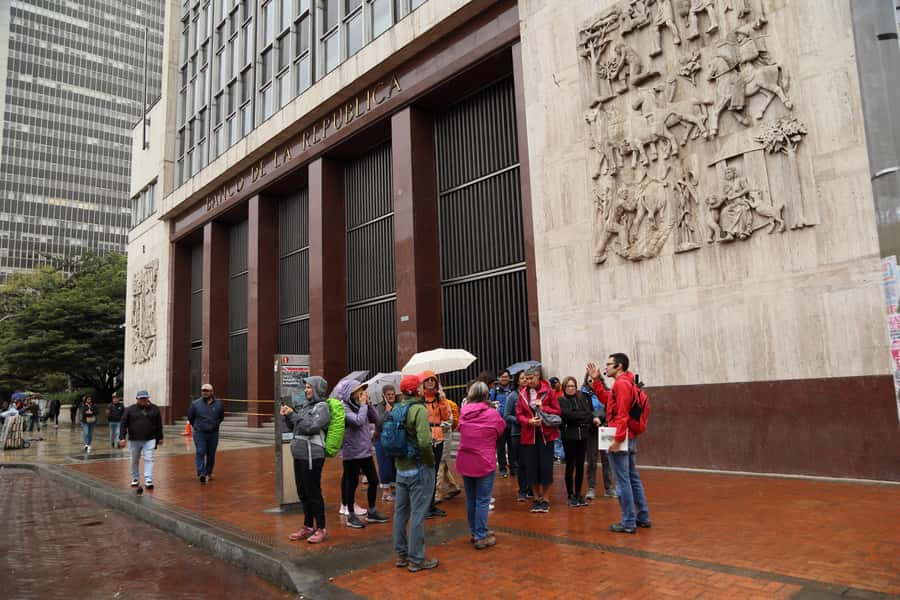
You will walk about 9 kilometers and stop along the way to hear explanations. That is a lot of ground for the time available, especially with a group moving through crowded central streets. Comfortable shoes are essential. Bring water, sunscreen, a hat, and rain protection, since Bogotá’s weather can change and the walk continues outdoors.
The route includes essential historic-center sights connected to the conflict story. You will not be charged sudden entrance fees because the experience does not take you to places requiring extra admission. That keeps the price simple, but it also means this is an outdoor walking lesson, not a series of museum visits.
The meeting point is easy to identify: stand in front of the Museo del Oro and look for the red Beyond Colombia umbrellas. Transportation to and from your hotel is not included, so you need to reach the starting point yourself.
Crowds are part of the setting. Keep your belongings close, especially in busy areas. The advice not to give papaya, a Colombian expression about avoiding needless opportunities for trouble, is practical here. Do not let the serious subject distract you from ordinary city awareness.
Is $13 good value?
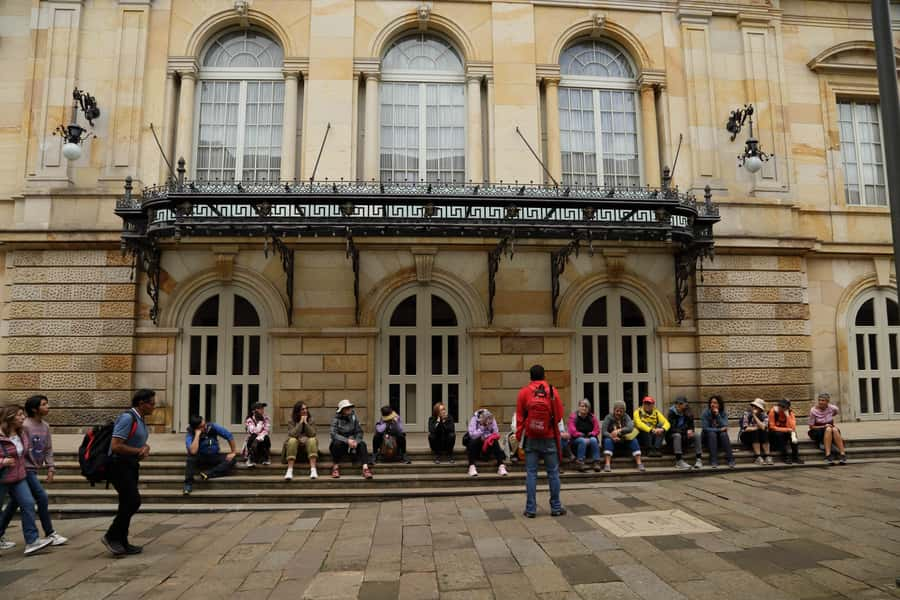
At $13 per person, this is a good buy if you want a guided introduction to Colombia’s modern political history. You receive an English-speaking guide, a structured route through the historic center, and a broad explanation covering independence, the Bogotazo, the dictatorship, guerrillas, drug trafficking, and the peace process.
The value is strongest for first-time visitors. You can leave with a usable framework for understanding news, conversations, museums, and later trips elsewhere in Colombia. The low cost also makes it easier to take a chance on a subject you may not yet know well.
The price does not include drinks, food, souvenirs, hotel transport, or admission to attractions. That is not a problem for me because the tour is built around walking and outdoor explanations. Just do not expect a private guide or a museum-heavy itinerary.
You also receive partner discounts with the tour wristband and suggestions for further reading. These are small extras, but they add value if you plan to continue exploring Bogotá after the walk.
Who should book this experience?
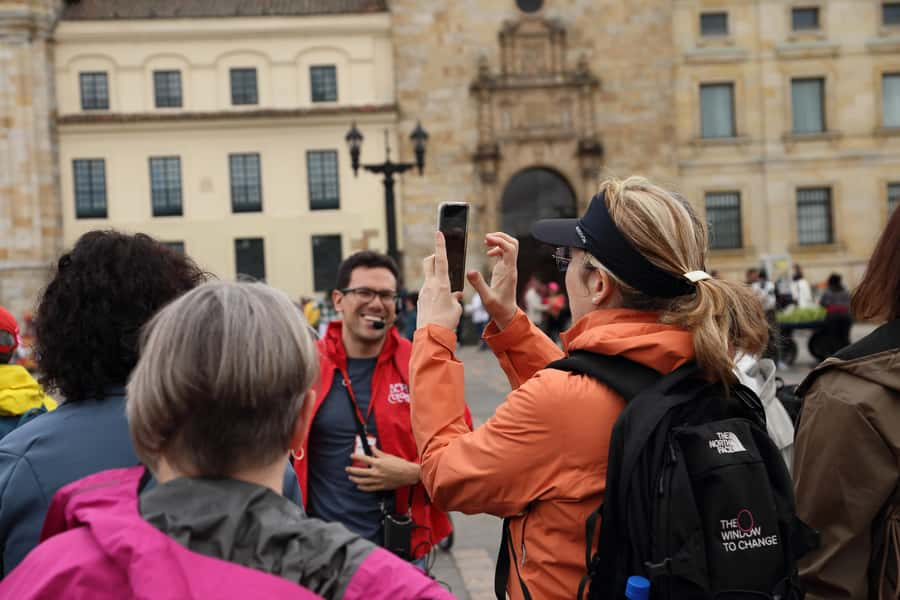
I would recommend it to adults and older children who want political context, not just postcard sights. It suits independent visitors who like asking questions and are willing to listen to a difficult story without reducing it to heroes and villains.
It is also a smart first-day or second-day activity if you plan to spend time in Bogotá’s historic center. The history will give later sightseeing more meaning, and you will have a better sense of how to discuss Colombia with care.
I would skip it if you want a relaxed, short walk with little serious content. I would also think twice if 9 kilometers is too much for you. The information gives conflicting signals about access: the activity details describe it as wheelchair accessible, while the important information says it is not suitable for wheelchair users or people with mobility impairments. Contact Beyond Colombia before booking if access is important to you.
Children under five are not suitable for the tour. Smoking, alcohol, and drugs are not allowed.
Should you book the Colombian Conflict tour?
Book it if you want a clear starting point for understanding Bogotá’s violence, the Liberal and Conservative struggle, guerrilla groups, drug trafficking, and the FARC peace agreement. The strongest guides make the subject human, orderly, and open to questions, and the $13 price is hard to fault for that amount of context.
Keep your expectations in check. The tour covers a huge period in about 150 minutes, so some topics may receive an overview rather than a full explanation. If you want current political analysis in particular, ask questions and plan to read more afterward.
For a serious, affordable walking lesson with a local guide, I would choose it. Wear good shoes, carry water and rain gear, and arrive ready to think.
FAQ
Where does the tour meet?
Meet in front of the Museo del Oro in Bogotá, where you will find Beyond Colombia guides with red umbrellas.
How long does the tour last?
The activity is listed as lasting 150 minutes. The description also says approximately three hours, so allow extra time around the stated duration.
How much walking is involved?
You will walk about 9 kilometers, with stops for explanations and rest.
What language is the tour in?
The tour is conducted in English by a live English-speaking guide.
What subjects does the tour cover?
It covers Colombia’s independence process, the Bogotazo, the period of violence, military rule, FARC, ELN, M-19, drug trafficking, the peace process, and current political conditions.
Is the tour private?
No. It is a shared tour, so you will join other participants rather than have an exclusive guide.
Are entry tickets included?
No entry tickets are needed or included. The tour focuses on sightseeing in the historic center and does not take you to places where sudden additional charges apply.
What should I bring?
Bring comfortable shoes, water, sunscreen, a hat, a camera, and an umbrella or rainproof coat.
Can I cancel or pay later?
You can cancel up to 24 hours before the tour for a full refund. You can also reserve now and pay later.
Just added around Bogota
- Tour of Zipaquirá: Visit the Salt Cathedral and the main squares★ 4.5 · 55 reviews
- Bogota Walking Tour Teusaquillo, a different part of the city★ 5.0 · 41 reviews
- La Candelaria Walking Private Tour (3 Hrs.)★ 5.0 · 51 reviews
- Private Zipaquira Salt Cathedral and Guatavita Lagoon Tour from Bogota★ 4.5 · 44 reviews
- Tejo and Beer Tour in Bogotá★ 5.0 · 35 reviews
- Hiking to the largest paramo on earth : Sumapaz★ 5.0 · 49 reviews
- MINA CATEDRAL DE SAL ZIPAQUIRA Tour Privado★ 4.5 · 38 reviews
- Descubre la Magia: Catedral de Sal & Bogotá en 1 Día★ 4.5 · 39 reviews
Bogotá Tours, compared.
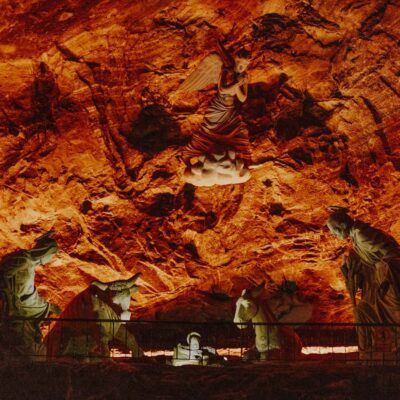
Zipaquirá: Salt Cathedral Group Tour with Pickup
Read our review →
Private City Tour, Monserrate, Emerald and Botero
Read our review →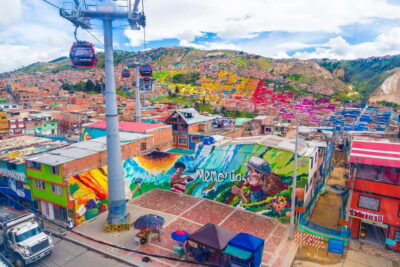
Bogotá´s Barrios: El Paraíso Favela Tour with Cable Car
Read our review →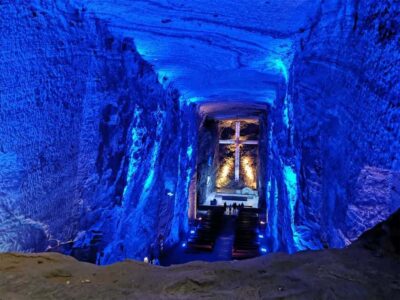
Bogotá City Tour with Monserrate, Gold and Botero Museums
Read our review →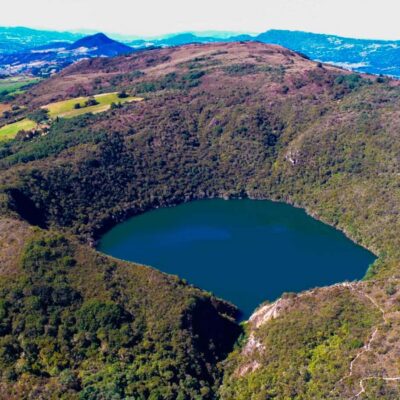
Zipaquirá Salt Cathedral and Lake Guatavita Day Tour
Read our review →Browse the lists this tour appears in