
Reviewed · CITY TOURS
Private Cusco City Tour with Sacsayhuaman & Inca Sites
Cusco’s best first lesson comes in a single half-day: begin with Inca stonework in the old center, then ride uphill to huge walls, water shrines, lookout posts, and a city view. I like the private format, which lets your guide adjust the pace, and the efficient route, which covers seven stops without making you wrestle with local buses.
I also like the practical care built into the tour. Guides such as Jennifer, Franklin, Freddy, Katia, and Filio have been praised for clear English, patience, local insight, and sensible pacing. The main drawback is time: about 30 minutes at most sites gives you an excellent survey, but not a slow, scholarly visit to every ruin.
Key points to know before booking
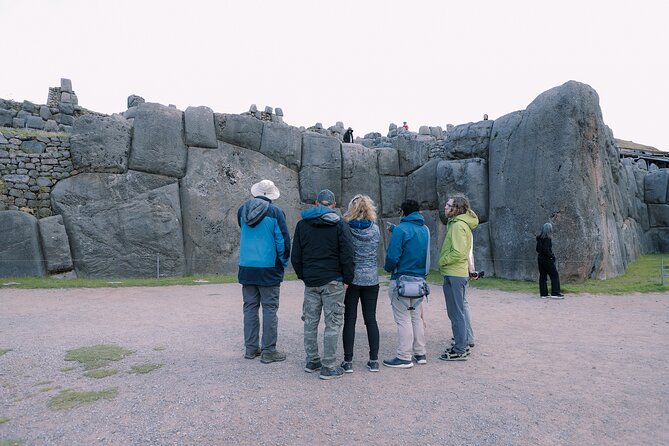
- Seven major stops in four to five hours: You cover the Plaza de Armas, Qorikancha, Sacsayhuaman, Qenqo, Puca Pucara, Tambomachay, and Cristo Blanco.
- Private transport saves your legs: A vehicle takes you up to the hilltop ruins and returns you to the city.
- Choose morning or afternoon: The usual starts are 9:00 am and 1:00 pm, with some flexibility for comfort.
- Your guide shapes the experience: Past guides praised by name include Franklin, Freddy, Jennifer, Katia, Katie, Miguel, and Filio.
- Altitude is part of the day: The tour reaches sites above Cusco, so a moderate fitness level and a gentle pace matter.
- The price favors convenience: At $180 per person, it makes the most sense for a small private group that values time, transport, and personal attention.
A smart first half-day in Cusco
This is a city tour with a useful split personality. The first part takes place on foot in central Cusco, where Spanish colonial buildings sit over Inca foundations. The second part uses private transport to reach the ruins scattered on the hills above town.
That combination is the reason to book it. You do not spend the whole afternoon walking between central sights, and you do not miss the city itself by racing straight to the ruins. In four to five hours, you get a broad introduction to Cusco’s layout, Inca engineering, sacred spaces, and mountain setting.
You can normally start at 9:00 am or 1:00 pm. The flexible timing helps you fit the tour around flights, meals, or other plans. The afternoon departure may also lead to softer light at Cristo Blanco, though the exact feel of the visit depends on the day and timing.
The tour is private, so only your group takes part. That matters more than it might on paper. You can ask questions without holding up a large group, pause when you need a breather, and ask the guide to explain a detail again. Families benefit from this most. One guide was specifically praised for keeping the pace comfortable for a ten-year-old child.
More City Tours in Cusco
- Cusco: Half-Day City Tour with Sacsayhuaman and Q’enco
★ 4.6 · 1,129 reviews - City Tour Cusco Qoricancha Sacsayhuaman y Tambomachay
★ 4.7 · 617 reviews - Cusco: Sightseeing Tour of the City on an Open-Top Bus
★ 4.0 · 481 reviews
Plaza de Armas and the old Inca center
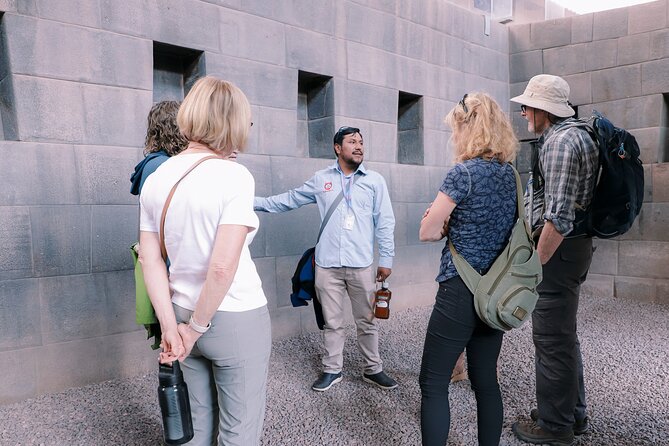
The tour begins in the Plaza de Armas, Cusco’s main square and the natural place to get your bearings. You spend about 30 minutes here, then continue through the nearby streets to see the famous Twelve Angled Stone and Loreto Street.
The stonework is the point. Look closely at how the blocks fit together without modern mortar. Your guide can connect these details to the larger story of Cusco, once the capital of the Inca Empire and now the Historical Capital of Peru.
Loreto Street gives you a particularly clear look at the meeting of Inca and colonial Cusco. The old stone walls form the base, while later buildings rise above them. The stop is brief, so do not expect a full walking tour of every church and side street. Instead, treat it as a sharp introduction to the city’s structure.
The Plaza de Armas is also where the tour begins or ends according to the meeting information, although hotel pickup and drop-off are included. Confirm the exact pickup arrangement when booking, especially if your hotel is outside the central area.
Qorikancha, the Inca temple beneath the convent
From the square, you walk with your guide to Qorikancha, also written Koricancha. Its Quechua name means Golden Courtyard, a reference to the gold that once decorated this major Inca temple.
The visit lasts about 30 minutes, with admission included. This is one of the most important stops for understanding the Inca religious world. Qorikancha was linked to ceremonies, astronomy, and worship of the Sun, and its stonework shows the careful cutting and fitting that you will see again at Sacsayhuaman.
I like that the tour puts Qorikancha before the hilltop ruins. You first see the Inca achievement in the middle of modern Cusco, then you recognize the same precision on a far larger scale outside the city. The sequence gives the day a clear thread instead of making the ruins feel like unrelated photo stops.
Allow yourself time to look at the stone joints rather than simply taking a quick picture. The guide’s explanation is especially valuable here because the site can otherwise feel like a pile of old walls surrounded by later construction.
Sacsayhuaman and the problem of moving giant stones
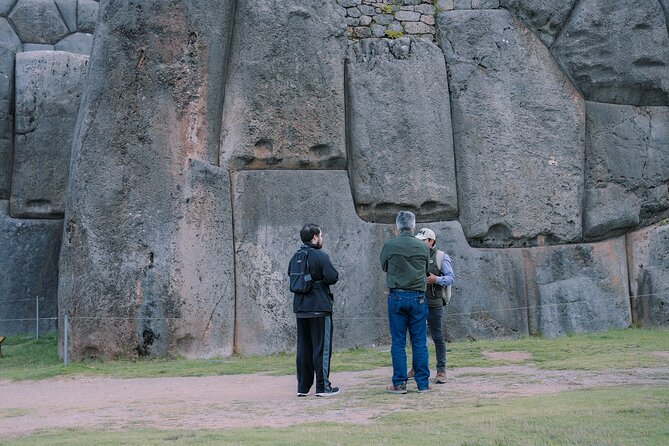
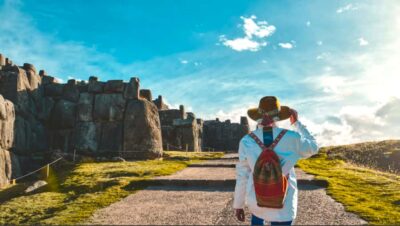
A private vehicle takes you uphill to Sacsayhuaman, the most dramatic ruin on the route. The site is known for massive zigzag walls built from enormous fitted stones, with some blocks weighing more than 100 tons.
You get about 30 minutes here. That is enough to walk among the walls, hear how the Incas approached construction, and take in the scale of the work. It is not enough for an unhurried exploration of every corner, so keep your expectations realistic.
Sacsayhuaman rewards a guide who can explain what you are seeing without burying it in dates and names. Franklin has been praised for balancing information with quiet time to absorb the views, a useful quality at a place this large. A good guide lets the stones make their own impression, then adds the detail that helps you notice why the construction is so remarkable.
The uphill setting also makes this an important physical point in the tour. You are not simply visiting a museum in town. Cusco sits at high altitude, and the route reaches still higher sites. If you have just arrived, walk slowly, drink water, and tell your guide if you need a pause.
More City Tours in Peru
- Open Bus Cusco City Tour
★ 4.5 · 219 reviews - Cusco: City Tour | Half-Day Tour to 4 Archaeological Sites
★ 4.6 · 206 reviews - City Tour in Cusco & visit Museum South American Camelid Private.
★ 5.0 · 147 reviews - Cusco City Sightseeing, San Pedro Market, Cathedral and Qorikancha Temple
★ 4.5 · 139 reviews
Qenqo, a small site with a mysterious purpose
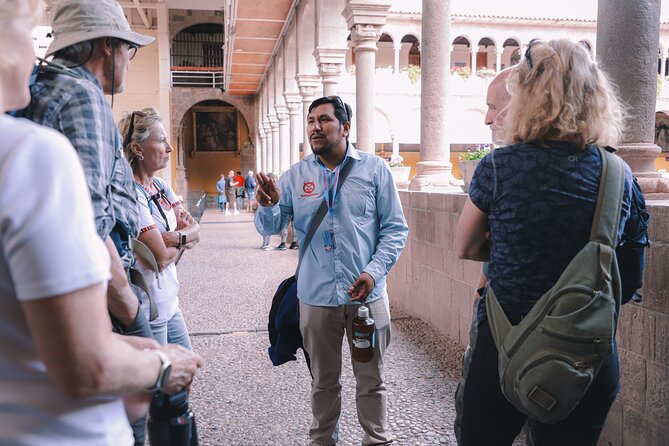
Qenqo, also spelled Q’enko or Kenko, is a shorter and more intimate stop. Its name refers to a zigzag shape, reflected in the carved channels and winding forms in the rock.
The site includes carved stones, altars, and tunnels linked to Inca rituals. Your guide explains its role as a sacred huaca and shares the stories connected with the place. Unlike Sacsayhuaman, Qenqo does not impress through sheer size. Its appeal comes from the unanswered questions around its use and the way ceremony was tied to natural rock.
The half-hour visit works well as a change of pace after the large fortress. Watch your footing and listen closely as your guide points out features that are easy to miss. This is one of the stops where the quality of the explanation matters more than the number of structures.
Puca Pucara and the road beyond Cusco
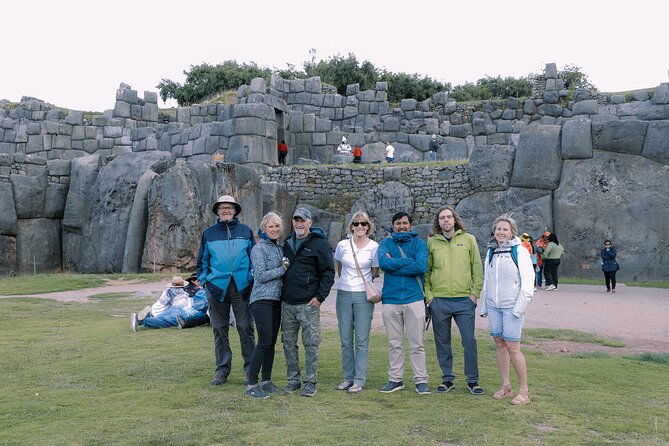
Puca Pucara means Red Fortress in Quechua. This smaller complex was likely used as a military post and checkpoint on the road toward the Sacred Valley and Machu Picchu.
The site is usually visited with nearby Qenqo and Tambomachay, making it part of a compact circuit around Cusco. You spend about 30 minutes here, with time to see the remaining structures and look over the surrounding hills and valleys.
Puca Pucara may feel less imposing than Sacsayhuaman, but it helps you understand the Inca road system. This was not an isolated city. Roads, checkpoints, ceremonial places, and water sites worked together across the region.
The stop also gives you another change in scale. After the giant walls of Sacsayhuaman and the carved ritual spaces at Qenqo, Puca Pucara shows a more practical side of Inca planning.
Tambomachay and the sound of running water
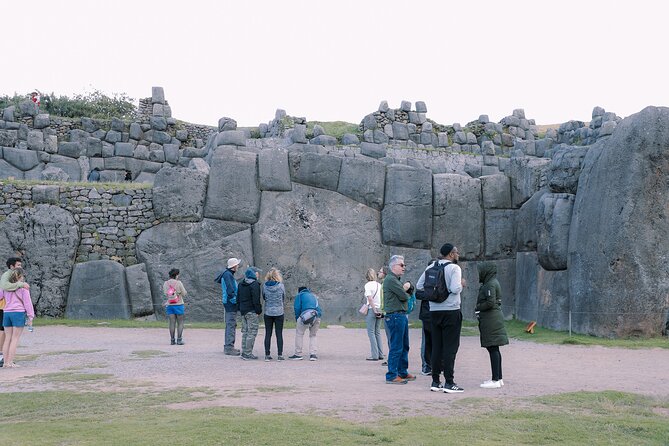
Tambomachay is a peaceful site known for its clear water fountains and finely cut stone. It is often called the Inca Baths and may have served as a place for water ceremonies and rest by Inca nobility.
You spend about 30 minutes here. The water gives the stop a calmer mood than the other ruins, and the fresh mountain air makes it a natural place to slow down. It is also a good moment to take photos without rushing from one large wall to another.
Your guide can explain how water held both practical and ceremonial importance. The site is not large, but its small channels and fountains show the care given to even a modest sacred place.
Because the tour reaches several high sites in a short time, Tambomachay is also useful for acclimatization. Do not treat it as a race. You will get more from the visit if you walk steadily and keep water close at hand. Meals are not included, so bring water and snacks.
Cristo Blanco and the best city view
The final stop is Cristo Blanco, a white statue of Christ on a hill above Cusco. You spend about 20 minutes at the viewpoint, looking over the city’s red roofs, plazas, and surrounding mountains.
This is the visual payoff. After seeing individual streets and ruins, you finally understand how Cusco spreads through the valley. The view also helps you place the hilltop sites in relation to the city center.
Late afternoon can be especially pleasant here, with city lights beginning to appear. Still, the exact light depends on the season and start time, so book the afternoon tour for flexibility and atmosphere, not as a guarantee of a sunset.
The stop is short, but that is probably right. Cristo Blanco works best as a final look rather than a long visit. Take your photos, breathe the mountain air, and let the day’s separate sites come together.
Why the private guide matters
The strongest part of this experience is not simply the number of ruins. It is the human pacing. The guides praised in connection with this tour include Freddy, Frank, Franklin, Miguel, Jennifer, Katia, Katie, and Filio.
The recurring strengths are clear English, friendly help, local knowledge, patience, and the ability to adjust the amount of explanation. One guide was praised for making sure a visitor with altitude sickness was comfortable and for offering useful acclimatization advice. Another was appreciated for giving a family a good lunch recommendation.
You cannot assume you will receive a particular guide, but you can ask if Franklin, Freddy, Jennifer, Katia, Katie, Miguel, or Filio is available. The most useful guide for you will be someone who can explain the sites clearly, watch the pace, and leave quiet moments for looking.
Is $180 per person good value?
At $180 per person, this is not the cheapest way to see Cusco. You are paying for a private experience, hotel pickup and drop-off, a professional local guide, private transportation, admission fees for the listed sites, and the convenience of fitting the major sights into one half-day.
The value improves with a small group. Split among two or three people, the price buys a lot of convenience and saves you from arranging separate taxis to the hilltop ruins. It also gives you a direct way to ask questions and adjust the pace.
For a solo visitor, the cost is harder to justify unless time is tight or you strongly prefer private guiding. A larger private group may find the price easier to accept, especially with children or family members who need a gentler schedule.
Meals are not included. Bring water and snacks, since the tour moves through several sites and has no stated meal stop.
Who should book this Cusco tour?
I would choose this tour for a first visit, a short stay, or a day when you want the main Inca sites explained in a logical order. It is also a good fit for families, since the private setup allows the guide to slow down and respond to different energy levels.
It suits you if you want:
- A broad introduction before visiting Machu Picchu
- Hotel pickup and private transportation
- A guide who can explain stonework, ritual sites, and local history
- Flexible morning or afternoon timing
- A half-day route with several major sights
- Help with altitude and acclimatization advice
You may prefer a longer specialist tour if you want extended walks at each ruin or detailed archaeological discussion. The 30-minute stops are efficient, but they naturally favor coverage over lingering.
The physical demand is moderate. You will walk in the city, move through archaeological sites, and visit high areas above Cusco. Children must be accompanied by an adult, and everyone should be ready for mountain altitude.
My recommendation
Book this tour if you want to make your first Cusco day count without handling transport on your own. The route gives you the city center, Qorikancha, four important Inca ruins, and a fine overlook in a single private half-day.
The best reason to choose it is the balance of coverage and personal attention. The main caution is the pace: this is an introduction, not a slow archaeological study. Bring water, wear comfortable shoes, and ask for a guide who matches your needs. Free cancellation is available up to 24 hours before the start time, which gives you some useful flexibility.
FAQ
How long does the Cusco city tour last?
The tour lasts approximately four to five hours.
What time can the tour start?
The usual start times are 9:00 am in the morning or 1:00 pm in the afternoon. The start time is flexible for comfort.
Which sites are included?
The route includes the Plaza de Armas, Qorikancha, Sacsayhuaman, Qenqo, Puca Pucara, Tambomachay, and Cristo Blanco.
Is transportation included?
Yes. Hotel pickup and drop-off, along with comfortable private transportation, are included. The activity information also lists Plaza de Armas as the meeting point and says the activity ends back at the meeting point, so confirm the exact arrangement for your hotel.
Are meals included?
No. Meals are not included. You should bring water and snacks.
Is this a private tour?
Yes. Only your group participates in the activity. Children must be accompanied by an adult, and a moderate level of physical fitness is recommended.
Just added around Cusco
- rainbow mountain full day★ 5.0 · 44 reviews
- Rainbown mountain cusco 1 Day★ 4.5 · 72 reviews
- Manu National Park Tour 4days/3night★ 5.0 · 69 reviews
- Tour to the HUMANTAY LAGOON from CUSCO★ 5.0 · 35 reviews
- Vegan Peruvian Cooking Class Cocktails and Local Market in Cusco★ 5.0 · 46 reviews
- Cusco Private Airport Transfer: Fast, Reliable Hotel Drop-Off★ 5.0 · 80 reviews
- 1 Day Tour to Palccoyo (Alternative Rainbow Mtn) from Cusco, Peru★ 5.0 · 53 reviews
- 5-Day: Salkantay Trek to Machupicchu and Humantay Lake★ 5.0 · 42 reviews
City Tours, compared.
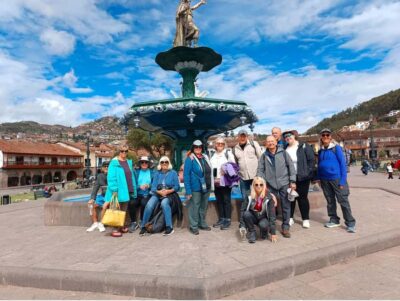
Cusco: Half-Day City Tour with Sacsayhuaman and Q’enco
Read our review →
Private City Tour, Monserrate, Emerald and Botero
Read our review →
City Sightseeing Hop-On Hop-Off Bus Tour & Extras
Read our review →
City Tour Cusco Qoricancha Sacsayhuaman y Tambomachay
Read our review →
Main City Sights in 7 Hours – Shared Group Tour
Read our review →Browse the lists this tour appears in