
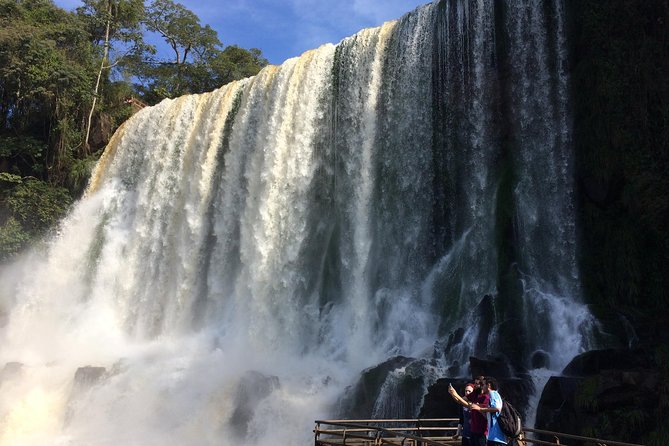
Reviewed · IGUAZU FALLS TOURS
Day Trip to the Argentinian Side of Iguassu Falls from Foz do Iguaçu
Iguassu Falls is not one viewpoint but a huge web of waterfalls spread across Brazil and Argentina. This tour gives you the Argentine side’s best close-up experience, from the Lower Circuit’s spray and jungle paths to the Upper Circuit’s broad views and the footbridges leading to Garganta del Diablo, or Devil’s Throat.
I like two things here: hotel pickup removes much of the stress of crossing an international border, and a good guide can help you handle park tickets, trains, crowds, and the day’s changing timetable. Guides including Roberto, Henrique, Bhrennon, and Antonio have been especially praised for their care and local insight. The main concern is time. If the vehicle also carries people visiting the Brazilian side, your Argentine visit can feel rushed.
Key points to know before booking
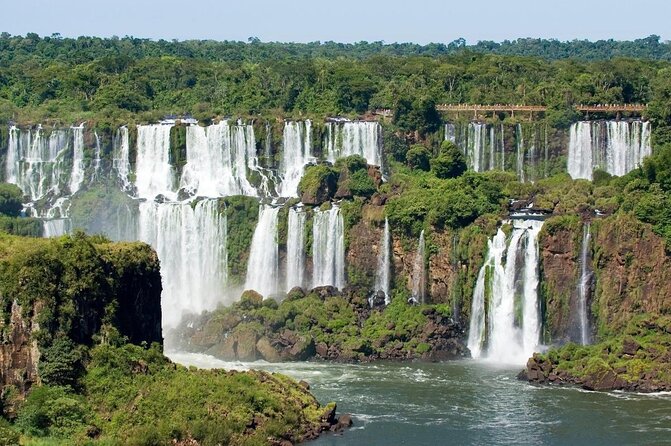
- The Argentine side gets you close to the water: The Lower Circuit brings you near smaller falls such as Carlos Bozzetti, while Devil’s Throat delivers the park’s biggest spectacle.
- Border help is a major benefit: You must carry a valid passport, and the guide handles much of the process between Brazil and Argentina.
- Expect plenty of walking: The Lower Circuit covers about 1.3 kilometers, and the Devil’s Throat footbridge is listed as 2,080 meters.
- Park entry costs extra: National park tickets, food, drinks, and certain taxes are not included in the tour price.
- The Brazilian-side add-on changes the day: The combined option lasts about 11 hours, so two separate days may be better if you want time to enjoy each park.
- Crowds and weather affect the plan: Trains, walkways, border controls, and heavy rain can all change how much you see.
Why the Argentine side feels so different
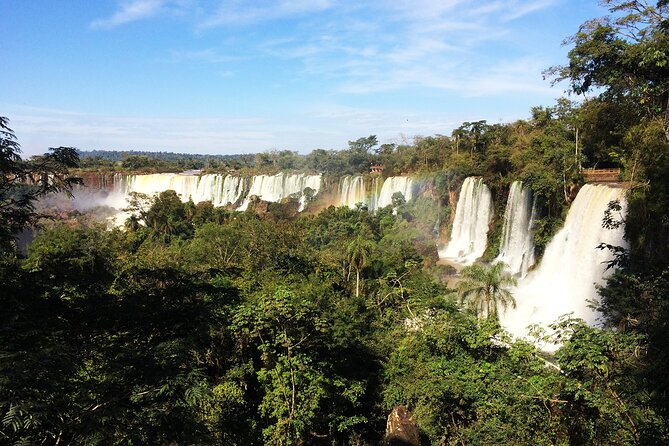
The Brazilian and Argentine parks show the same waterfall system in different ways. From Brazil, you get the broad picture, with long views across the gorge and a strong sense of the falls as one enormous wall of water.
Argentina puts you inside the action. Trails loop through forest and over channels, then bring you close to individual cascades. You hear water before you see it, and spray can drift across the walkways. The experience is less about one perfect photograph and more about moving through a series of changing views.
The park contains about 275 waterfalls along the border of Brazil and Argentina, close to Paraguay. That scale explains why a short visit can feel full. You are not simply walking to one lookout, taking a picture, and leaving. You are covering several sections of a large national park.
The advertised Argentine-only outing takes roughly four to six hours, but you should keep your whole day open. Hotel pickups, the border, park entry, train queues, walking speed, and group arrangements can stretch the schedule. A combined Brazil and Argentina option lasts about 11 hours.
More Day Trips in Brazil
- Iguassu Waterfalls: 1 Day Tour Brazil and Argentina’s sides
★ 4.9 · 353 reviews - Private Day trip: Both sides of Iguazu Falls
★ 5.0 · 102 reviews - Brazil & Argentina: Iguazu Falls Both Sides in One Day
★ 5.0 · 71 reviews
Hotel pickup and crossing from Brazil into Argentina
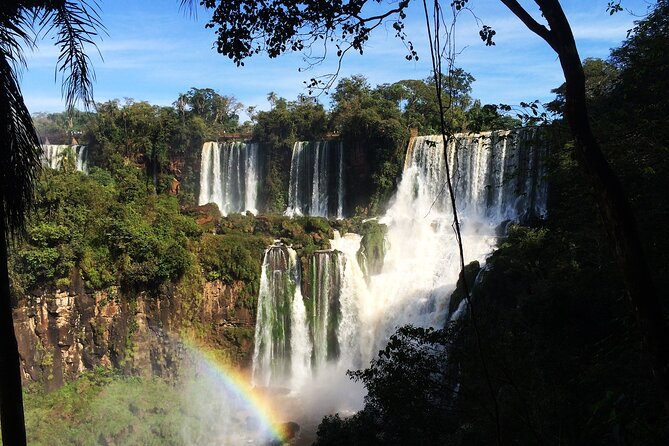
Pickup is offered from most central hotels in Foz do Iguaçu, and some departures also collect from Puerto Iguazú. The vehicle may pick up several people before heading to the border. Group size can reach 35 people, though some departures are smaller.
This is where the tour earns much of its $58 price. Crossing alone is possible, but the process is less simple when you have to manage transport, immigration, park tickets, and changing currency at the same time. A guide can tell you when to leave the vehicle, where to wait, and how to regroup.
Bring your current passport in your possession. Do not leave it at your hotel or assume a photograph will work. You are responsible for checking visa rules and entry documents for both Brazil and Argentina.
Allow extra time at the border. Some departures cross quickly, while others have spent around 30 minutes at one or both controls. The return crossing can also take time, especially when several vehicles arrive together.
There is an additional tax per person when entering Argentina, and an eco-tourism tax may apply in Puerto Iguazú. These charges are separate from the tour price. The exact amount can change, so confirm the current figure before departure.
The Lower Circuit: the best close-up walking
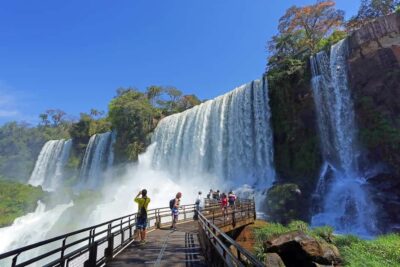
The Lower Circuit is the part I would protect most carefully if you have to choose. Its trail covers about 1.3 kilometers and passes a series of viewpoints near the base and sides of the falls.
You can expect steps and a fair amount of walking. This is not a difficult mountain hike, but heat, humidity, crowds, and wet paths can make it tiring. Wear shoes with a good grip and carry water.
The circuit includes views of smaller falls such as Carlos Bozzetti. These individual cascades help you understand the shape of the park. Some drop in narrow ribbons, while others spread across rock and forest before joining the larger river system.
The Lower Circuit also gives you a more intimate view than the Upper Circuit. You may feel spray on the walkways, and the sound of the falls becomes much stronger. If your goal is to feel close to the water, this is the section that delivers.
The tradeoff is time. A guide may have to choose between completing the Lower Circuit, catching a train, and keeping the group on schedule. On busy days, the lower trail can take longer than expected. Ask early whether the full circuit is planned, especially if the group includes people continuing to the Brazilian park.
Devil’s Throat and the long footbridge
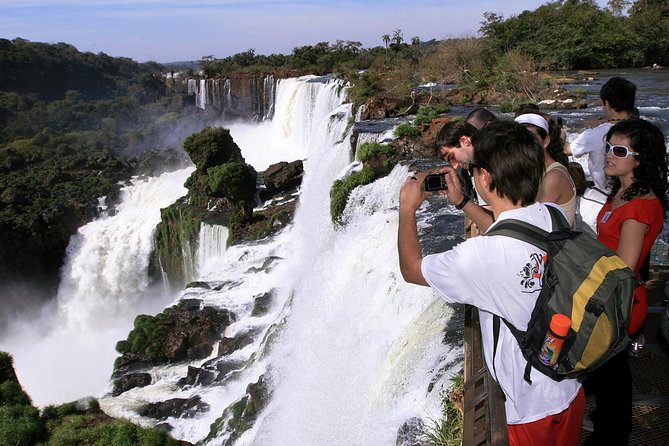
Garganta del Diablo is the great set piece of the Argentine park. It is the highest point of the falls, at about 80 meters, and carries an immense volume of water through a curved channel.
A park train leaves about every 30 minutes toward the upper section. The train can be crowded, and waiting for it takes time. From the station, the footbridge to Devil’s Throat is listed at 2,080 meters. The walkway carries you across the river and channels until the water begins to gather into the main drop.
At the end, the view is powerful because the water surrounds you. Mist rises from below, and the roar can make conversation difficult. On a sunny day, you might see a rainbow in the spray.
This is also the part most affected by rain and river conditions. One departure found the Devil’s Throat trail closed after excessive rain. The falls were still worth seeing, but the main viewpoint was unavailable. You should treat access as weather-dependent rather than guaranteed.
The train and footbridge also create bottlenecks. A large group can lose time waiting to board, walking together, or regrouping at the far end. Stay close to the guide and note the meeting point before you set off.
More ways to see the Iguazu Falls:
- Iguazu Falls: Full-Day Tour of Brazil & Argentina Sides
★ 4.9 · 1,542 reviews - From Foz do Iguazu: Brazil Iguazu Falls & Macuco Safari Boat
★ 4.7 · 358 reviews - From Foz do Iguaçu: Brazilian Side of the Falls with Ticket
★ 4.6 · 346 reviews - From Foz do Iguaçu: Iguazú Falls Boat Ride Argentina
★ 4.9 · 274 reviews
The Upper Circuit: wide views and easier walking
The Upper Circuit runs near the top of the falls. It is wheelchair accessible and offers a different kind of spectacle from the Lower Circuit.
Here, you see water rushing toward the edges before it drops. The viewpoints stretch toward San Martin Island, the Argentine falls, and parts of the Brazilian park. The view is wider and easier to read, especially if this is your first look at Iguassu.
The Upper Circuit has six observatories and places where you can stop to rest and take in the view. It is a useful counterpoint to the close, wet feeling of the Lower Circuit. You see how the separate cascades fit into one enormous system.
If you have limited mobility, ask the operator how much of the day will involve steps. The Upper Circuit itself is wheelchair accessible, but the entire outing also includes transfers, station areas, crowds, and other walking sections. The Lower Circuit is not described as fully accessible and includes steps in parts.
A guide can make the Upper Circuit more rewarding by pointing out islands, falls, plants, and animals you might pass without noticing. Roberto and Bhrennon have received particular praise for explaining the natural surroundings rather than simply leading the group from one meeting point to another.
What the guide adds, and where service can vary
The strongest part of this tour is often the individual guide. Roberto has been praised for enthusiasm, timing, and his ability to keep a group moving without losing the sense of occasion. Henrique has been noted for helping a group get ahead of a large crowd. Bhrennon has been praised for his attention to wildlife and plant life.
Antonio has also been praised for staying attentive during a day that included both parks. Other named guides include Meri, Fabio, Aline, and Jose. The quality of the day can depend heavily on who leads your departure and how well the group communicates.
A good guide may help with border formalities, park ticket lines, train timing, and meeting points. That is practical help, not just commentary. It matters most when the park is crowded or when the group has different plans.
The weak point is inconsistency. Some departures have included limited English explanation, unclear instructions, or long periods waiting for other passengers. One group was split between people visiting only Argentina and people continuing to Brazil, which forced the Argentine-only visitors to move faster.
If your priority is a relaxed visit, tell the operator clearly that you want the Argentine side only. Confirm that everyone in your vehicle has the same plan. A private car or a smaller departure may suit you better if you dislike waiting for other people.
The Brazilian-side option and the case for two days
You can add the Brazilian side to the same outing. That version lasts about 11 hours and gives you both national parks in one long day.
The Brazilian park is valuable because it provides the broad view. From its trails and walkways, you can see the scale of the Argentine falls from across the gorge. One section includes roughly 40 minutes to an hour of walking along paths facing the water.
The combined option makes sense if you have only one day in the area. You will see two different viewpoints without arranging a second border crossing or another hotel transfer.
Still, I would choose two separate days if you have the time. The Argentine side has enough walking, waiting, and viewpoints to fill a full day at a comfortable pace. Adding Brazil can turn a great visit into a race against the clock.
The combined plan has caused confusion for some people who booked the Argentine side expecting to return to their hotel in the afternoon. It can also create awkward waits if one passenger needs to reach an airport or another tour. Ask for the exact schedule and confirm which side your booking includes.
Price, park fees, food, and practical value
At $58 per person, the tour is priced mainly as transport, border support, and guided access. The price does not include the Iguazú National Park entrance fee, Brazilian park admission if selected, food, drinks, or the listed eco-tourism and border-related taxes.
That makes the final cost higher than the headline figure. Park tickets can also change in price. Payment systems at the Argentine entrance have been unreliable, and one group had trouble using several cards. The guide arranged a dollar-to-peso exchange, but at an unfavorable rate.
For that reason, check ticket instructions before you go and carry a backup payment method. Do not assume that a foreign card will work at the park gate. Buying tickets online may be suggested, but online payment can also fail, so confirm the current process before departure.
Food is not included. You may find places to buy food inside or near the park, but a packed snack can save time. The schedule may not provide a long meal stop, especially if people continue to Brazil.
The value is strongest for visitors who want help with transport and the border. It is weaker for independent visitors who already have a car, know the park, and are comfortable arranging tickets and crossings themselves.
Heat, crowds, rain, and the amount of walking
Iguassu can be hot, and one family faced temperatures around 93 degrees Fahrenheit. Children may tire quickly on the paths, especially after the train, the Devil’s Throat footbridge, and the circuits.
Bring water, sun protection, and clothing that can handle spray. The walkways can become wet near the falls. Your passport should stay secure and dry.
Crowds are part of the experience. Trains and narrow walkways can fill up, and the main attractions may require patience. A calm guide who knows when to move can help, but no tour can remove the crowd entirely.
The physical demands are easy to underestimate. The Lower Circuit covers 1.3 kilometers, the Devil’s Throat bridge is much longer, and the Upper Circuit adds more walking. If you have mobility concerns, explain them before booking and ask which trails the group will use.
Who should book this tour
I would recommend it to a first-time visitor staying in Foz do Iguaçu who wants a guide to manage the international border and the park’s basic logistics. It is also useful if you do not have a rental car or want to see Argentina without working out the crossing yourself.
Families can enjoy it, but you should judge your children’s tolerance for heat, crowds, and walking. The guide may help, but the day still requires patience.
Independent visitors may prefer going alone, especially if they want to spend several hours on one circuit, stop for a long meal, or avoid waiting for a mixed group. The tour is not a private experience by default, and the maximum group size is 35.
If you are choosing the combined Brazil and Argentina option, book it only when your schedule is tight. If you have two days, separate the parks. That gives you a better chance of completing the Argentine trails without rushing and lets you enjoy Brazil’s wide views at a calmer pace.
Should you book the Argentine-side Iguassu tour?
Yes, if border assistance and hotel transportation are worth $58 to you. The falls themselves are extraordinary, and the Argentine side gives you the close-up views, trails, and Devil’s Throat experience that many visitors consider the heart of the visit.
Book with clear expectations. Entry fees are extra, the day may run longer than the advertised four to six hours, and mixed itineraries can cut into your time. Confirm the language, the park side, the expected walking route, and whether anyone in the vehicle is continuing to Brazil.
My preferred plan is the Argentine side on its own, with the Lower Circuit, Upper Circuit, and Devil’s Throat given enough time. Add Brazil on a separate day if possible. That costs more in time and park admission, but it gives you the best chance to enjoy both views rather than merely checking both boxes.
FAQ
How much does the tour cost?
The listed price is $58 per person. Park entrance fees, food, drinks, and certain taxes are not included.
How long does the Argentine-side tour last?
The estimated duration is four to six hours, but border crossings, crowds, train waits, walking speed, and group arrangements can make the day longer.
Can I add the Brazilian side?
Yes. The Brazilian-side option is available, and the combined outing lasts about 11 hours.
Do I need a passport?
Yes. You must carry a current valid passport on the day of travel. You are also responsible for checking visa and entry requirements for Brazil and Argentina.
Does the guide help with the border crossing?
The tour includes a local guide, and the guide may assist with immigration formalities and the crossing between Brazil and Argentina.
Are park entrance tickets included?
No. The Argentine national park entrance fee is separate. Brazilian park admission is also separate if you choose the Brazilian-side option.
How much walking is involved?
The Lower Circuit is about 1.3 kilometers. The Devil’s Throat footbridge is listed as 2,080 meters, and the Upper Circuit adds more walking. Some areas include steps.
Is the Upper Circuit accessible by wheelchair?
The Upper Circuit is described as wheelchair accessible. The full outing includes other trails, transfers, and walking areas, so ask about your specific needs before booking.
Can the Devil’s Throat trail close?
Yes. Excessive rain has caused the trail to close. Weather and water conditions can affect access to this section of the park.
More Day Trips in Foz do Iguacu
- Machu Picchu Day Trip from Cusco
★ 4.5 · 1,644 reviews - From Salta: Full-Day Trip to Salinas Grandes and Purmamarca
★ 4.6 · 914 reviews - Day Trip to Uyuni Salt Flats
★ 4.0 · 602 reviews - Santiago: Portillo and Laguna del Inca Day Trip with Picnic
★ 4.5 · 572 reviews
Just added around Foz do Iguacu
- Private transport with guide to Brazil Falls + Bird Park★ 5.0 · 52 reviews
- Private transport with guide to the Falls on the Argentinean side.★ 5.0 · 35 reviews
- Private Tour Argentinean side of Iguazu Falls★ 5.0 · 50 reviews
- Private Tour: Brazilian side of Iguassu Falls★ 5.0 · 66 reviews
- Tour Tour, We take you to know the tour of the City tour Paraguay + shopping★ 5.0 · 40 reviews
- 2-Days PRIVATE Brasil & Argentina Experience Iguazu Falls★ 5.0 · 54 reviews
- Paraguay Experience★ 4.5 · 85 reviews
- Brazilian Side of the Falls and Boat Tour Macuco Safari – All Tickets Included★ 4.5 · 51 reviews
Iguazu Falls Tours, compared.
Iguazu Falls: Full-Day Tour of Brazil & Argentina Sides
Read our review →
Iguazu Falls: Gran Aventura Boat and Argentinian Falls Tour
Read our review →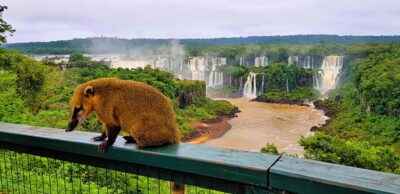
From Foz do Iguazu: Brazil Iguazu Falls & Macuco Safari Boat
Read our review →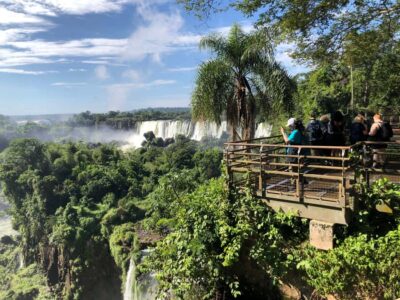
Iguassu Waterfalls: 1 Day Tour Brazil and Argentina’s sides
Read our review →
Browse the lists this tour appears in