
Reviewed · BOGOTá TOURS
Breaking Borders: Bogota Gansters Story
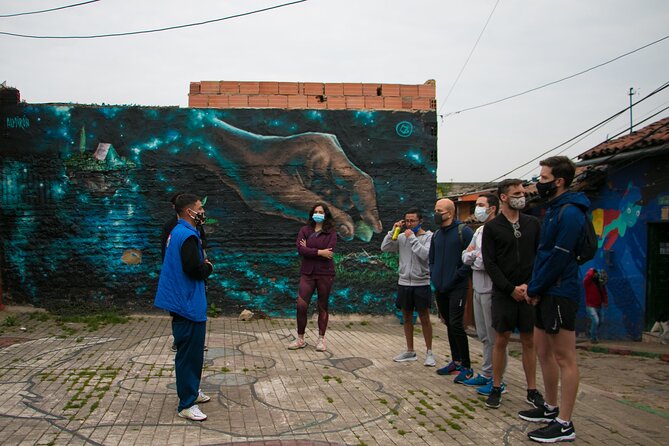
Bogotá’s Breaking Borders tour takes you beyond La Candelaria’s polished streets and into Barrio Egipto, where former gang members explain the violence, poverty, and hard choices that shaped their lives. Their stories give the neighborhood’s murals, church, football field, and steep streets a human face.
I like the way former gang leaders guide the visit themselves, rather than having an outsider speak for them. I also like the clear link between tourism and local change: your payment helps support people who are working to give young residents more choices. The main drawback is that this is an emotional, uphill walking tour, not a light sightseeing stroll.
The experience is usually led by a bilingual guide such as Gigio, Gildardo, or Raul, together with local guides including Harold, Monkey, or Mr. Pumpkin. Names can vary, but the format remains personal and direct. Bring cash if you want to tip or buy local goods, and wear shoes you trust on steep streets.
What makes this Bogotá experience different
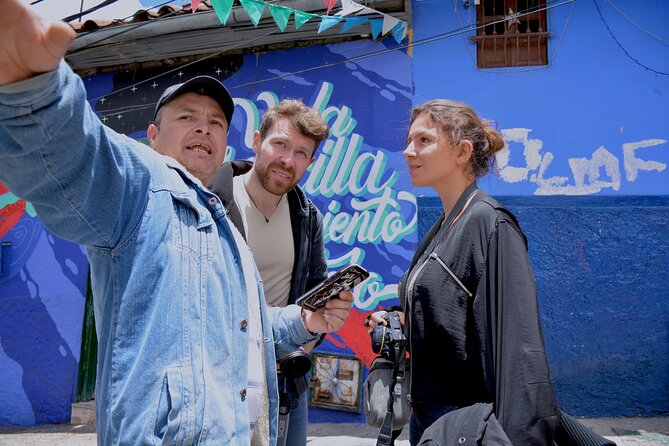
- Former gang members tell their own stories, including why they entered gang life and what helped them leave it.
- The walk begins at Chorro de Quevedo, the traditional founding place of Bogotá, then moves toward Iglesia de Egipto.
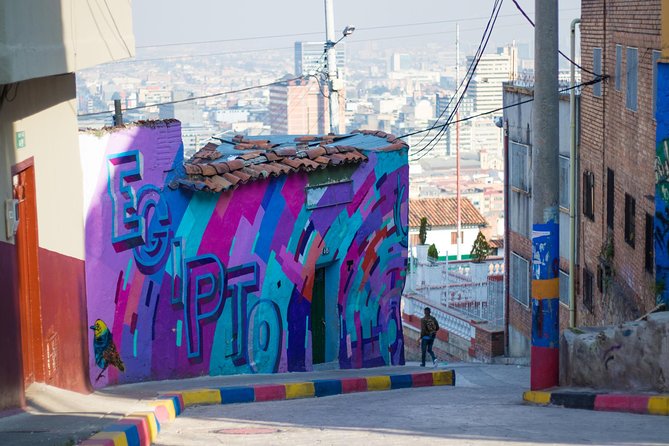
- Graffiti works like a neighborhood history book, with local guides explaining the people and events shown in the murals.
- A community football field represents a practical change, giving young people a safer place and a reason to gather.
- Chicha and a local snack are included, adding a small taste of local culture to the visit.
- Private transport is available, but only if you choose the transport option when booking.
From Chorro de Quevedo to Barrio Egipto
Your meeting point is Plazoleta Chorro de Quevedo in La Candelaria, at Cl. 12b #2-98. This lively square is a sensible starting place because it gives you a quick introduction to Bogotá before the walk turns toward a less familiar part of the city.
The guide first explains the Breaking Borders project and the purpose of the visit. That introduction matters. You are not simply entering a poor neighborhood to look at hardship. You are being asked to understand how local people are changing the story told about their home.
From the square, you walk toward Nuestra Señora de Egipto, the church at the entrance to Barrio Egipto. The church is tied to the neighborhood’s identity and to the January 6 festivities. It also marks the point where the tour shifts from central Bogotá sightseeing to a close look at community life on the hills.
One practical note: the walk from Chorro de Quevedo includes an uphill section. A taxi drop-off directly at the church might sound easier, but the meeting point is designed to give you context before entering Egipto. If steep walking is difficult, ask about the route before booking.
A few more Bogota days worth comparing
- Bogota: Bicycle City Tour
★ 4.9 · 2,156 reviews - Zipaquirá: Salt Cathedral Group Tour with Pickup
★ 4.8 · 1,606 reviews - Bogotá: Guided La Candelaria Walking Tour
★ 4.8 · 1,229 reviews
Reading the murals along Egipto’s streets
The graffiti is not background decoration. It is one of the main ways the community tells its story. As you walk, your guide explains the meanings behind the images and connects them to local people, violence, loss, and attempts to build a safer future.
This part works best when you take your time. The murals offer visual clues, but the local guide supplies the details you could not get by walking through the neighborhood alone. A bilingual guide such as Gigio or Raul can provide English explanations while the local guide adds personal context.
You may hear stories about how former gang members joined criminal groups, what life inside those groups involved, and why they chose a different path. The tone is frank. This is not a cleaned-up tale where one good program fixes everything. The community still faces serious social and economic problems, and the guides make clear that change takes work and outside support.
That honesty is one of the tour’s strengths. You are not being shown a finished success story. You are seeing a neighborhood in the middle of change, with progress alongside problems.
Meeting the people behind Breaking Borders
The most powerful part of the experience is the conversation with the local guides. Harold, Monkey, and Mr. Pumpkin are among the people connected with the tour, though the exact team can vary. Their role is not just to point out buildings. They explain their own pasts and the choices that brought them to the project.
The stories can be difficult. You might hear about drugs, weapons, violence, limited schooling, and the lack of options that pushed some young people toward gangs. At the same time, the guides talk about what life feels like after leaving that world behind. One especially striking example described Friday nights changing from drinking, drugs, and violence into movie nights for families in the neighborhood.
That detail says a lot. The project is not only about showing outsiders a different side of Bogotá. It is also about creating ordinary routines that make a community safer and give children something positive to anticipate.
You should approach these conversations with respect. Ask questions, but remember that the guides are sharing painful parts of their lives. The strength of the tour comes from listening carefully, not from treating personal trauma as entertainment.
Iglesia de Egipto and the uphill community walk
The church provides a useful landmark and a chance to understand how public spaces function in the neighborhood. From here, the route climbs through Egipto, giving you a closer look at homes, streets, and daily life away from the main tourist route.
The walking is manageable for most people, but it is not flat. Comfortable shoes are essential, and comfortable clothing will make the experience easier. Bogotá’s altitude can also make uphill walking feel harder than expected, so leave room in your pace for short pauses.
The guide’s presence is important here. You are visiting as part of an organized private group, not wandering through unfamiliar streets without local support. The supplied information describes the activity as suitable for most people and allows service animals. Children must be accompanied by an adult.
The tour is private, so only your group participates. That gives you more freedom to ask questions and spend longer on a mural or conversation if the schedule allows. It also means the value depends partly on the size of your group. A solo booking can cost more per person, while a small group can share the fixed cost.
Same trip, a completely different kind of day:
- Bogotá: Private City Tour, Monserrate, Emerald and Botero
★ 4.9 · 798 reviews - Bogotá´s Barrios: El Paraíso Favela Tour with Cable Car
★ 4.8 · 731 reviews - Bogota: Guatavita and Salt Cathedral Daily Group Tour
★ 4.7 · 615 reviews - Bogotá City Tour with Monserrate, Gold and Botero Museums
★ 4.9 · 584 reviews
The football field and a practical sign of change
The new community football field is one of the clearest symbols of the project’s goals. It is not merely a photo stop. The field represents an effort to give young people a useful place to spend time and a reason to connect outside the old cycle of gang control.
This is where the tour moves from personal stories to practical community work. You see how a physical space can support a wider social effort. The message is simple: change needs more than speeches. It needs places, programs, trust, and people willing to keep working.
If you are visiting Bogotá with older children or teenagers, this part can help them understand the social side of the city without reducing the neighborhood to a lesson about crime. The guides can show that young people are not defined by the place where they grow up.
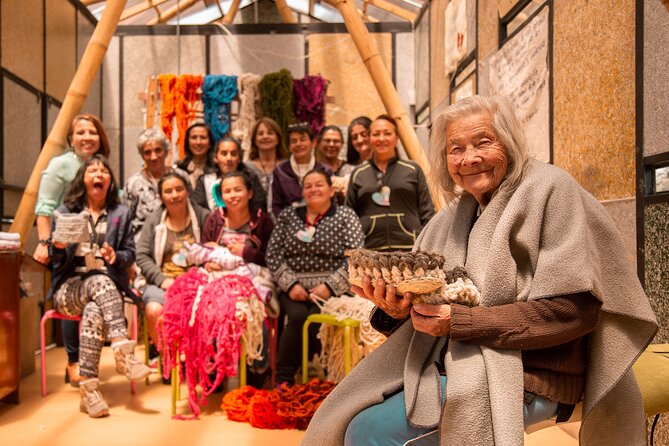
The experience may also include contact with local creative or economic projects. One account described a weaving workshop where handmade rugs were available for purchase, with the money going directly to the women making them. That workshop was reportedly rushed, so do not assume you will have a long shopping session. Still, it shows how local income can form part of the wider effort.
Chicha, a local snack, and the human scale
The tour includes a local snack and traditional chicha. These small details help keep the experience grounded in everyday culture rather than making it only about social problems.
Chicha is a traditional fermented drink, and alcoholic drinks beyond the included offering are not part of the price, though they may be available to buy. Bring cash for personal expenses, tips, or possible purchases from community members.
The food element is limited. Lunch is not included, and you should not book this activity expecting a food tour. Plan another meal before or after the three-hour experience.
The biggest value here is the chance to share a modest local moment with the people guiding you. A snack cannot explain a neighborhood, but it can make the exchange feel less formal and more personal.
How much value do you get for $91?
At $91 per person, this is more expensive than a standard walking tour of La Candelaria. The price makes more sense when you consider what is included: a private format, bilingual guidance, local community guides, the snack and chicha, and the social purpose behind the visit.
If you select the transport option, private hotel pick-up and drop-off are included. That can be useful in Bogotá, especially if you are unfamiliar with the city or prefer not to arrange a taxi before an early or late activity. Check the selected option carefully, since transport is not automatically included in every booking.
The price also supports a project that aims to create work and new opportunities for former gang members. That does not mean every dollar goes directly to a guide, and you should not treat the payment as a charitable donation with guaranteed results. It does mean you are paying for an experience that connects tourism with local employment and community work.
Solo visitors should check the final price closely. One solo booking cost far more than the advertised per-person starting figure, which may reflect private-tour pricing. If you want to tip the local guides, bring extra cash. Several people involved in the experience may deserve recognition, including the main guide, driver, and community guides.
Who should book this experience?
You should consider Breaking Borders if you want a serious look at Bogotá’s social problems and community efforts. It suits people who prefer conversations and local voices over a long list of monuments.
It is also a good choice if you have already seen the main sights in La Candelaria and want to understand how the city extends beyond the historic center. The visit offers a different view of Bogotá without pretending that poverty or violence can be solved by a single afternoon.
Families can take part, provided children are accompanied by an adult. The subject matter is mature, so parents should decide if their children are ready to hear direct accounts of gangs, drugs, and violence. Older children may find the football field and stories about young people especially meaningful.
This is less suitable if you want a relaxed, flat walk, a food-focused activity, or a quick overview of Bogotá’s major attractions. The pace is shaped by the hills and by the conversations, not by a checklist of sights.
Practical details before you go
The full experience lasts about three hours. The first portion at Chorro de Quevedo and on the route toward Egipto takes about an hour, followed by roughly two hours in Barrio Egipto.
Wear comfortable walking shoes. Take cash for personal expenses, tips, and possible local purchases. Service animals are allowed, and the activity is near public transportation, though hotel transport is available when that option is selected.
Confirmation is provided at booking. Free cancellation is available up to 24 hours before the start time. Changes or cancellations inside that window are not accepted for a refund, and the cut-off follows Bogotá local time.
The tour ends back at the Chorro de Quevedo meeting point unless your selected transport option includes hotel drop-off. Since the group is private, tell the operator ahead of time if you have concerns about walking, language, or timing.
Should you book Breaking Borders?
Book it if you want to hear directly from people who have lived through Barrio Egipto’s hardest years and are now helping change its future. The former gang members’ stories, the mural explanations, and the community football field give you a more personal view of Bogotá than a standard city walk can provide.
Skip it if you want only cheerful sightseeing or if steep streets and difficult subject matter are not a good fit. For the right visitor, the $91 cost buys more than transport and guiding. It buys time with local people, supports a working social project, and asks you to see Bogotá with patience and care.
FAQ
Where does the Breaking Borders tour start?
It starts at Plazoleta Chorro de Quevedo, Cl. 12b #2-98, in La Candelaria, Bogotá.
Where does the tour end?
The activity ends back at the Chorro de Quevedo meeting point. Hotel drop-off is available if you select the transportation option.
How long does the tour last?
The tour lasts approximately three hours. About one hour is spent walking from Chorro de Quevedo toward Egipto, followed by about two hours in Barrio Egipto.
Is transportation included?
Private transportation to and from your hotel is included only with the transportation option. Otherwise, you meet the guide at Chorro de Quevedo and return there at the end.
Is the tour offered in English?
Yes. A bilingual English and Spanish guide is included. Local guides from the Egipto neighborhood also take part.
What should I wear?
Wear comfortable clothing and comfortable walking shoes. The route includes an uphill walk through Barrio Egipto.
Is food included?
A local snack and traditional chicha are included. Lunch and other food or drinks are not included unless specifically stated.
Can children join the tour?
Yes, children can participate, but they must be accompanied by an adult. Service animals are also allowed.
Just added around Bogota
- Tour of Zipaquirá: Visit the Salt Cathedral and the main squares★ 4.5 · 55 reviews
- Bogota Walking Tour Teusaquillo, a different part of the city★ 5.0 · 41 reviews
- La Candelaria Walking Private Tour (3 Hrs.)★ 5.0 · 51 reviews
- Private Zipaquira Salt Cathedral and Guatavita Lagoon Tour from Bogota★ 4.5 · 44 reviews
- Tejo and Beer Tour in Bogotá★ 5.0 · 35 reviews
- Hiking to the largest paramo on earth : Sumapaz★ 5.0 · 49 reviews
- MINA CATEDRAL DE SAL ZIPAQUIRA Tour Privado★ 4.5 · 38 reviews
- Descubre la Magia: Catedral de Sal & Bogotá en 1 Día★ 4.5 · 39 reviews
Bogotá Tours, compared.
Zipaquirá: Salt Cathedral Group Tour with Pickup
Read our review →
Private City Tour, Monserrate, Emerald and Botero
Read our review →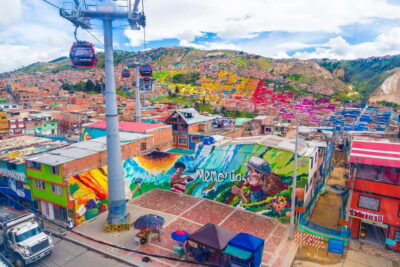
Bogotá´s Barrios: El Paraíso Favela Tour with Cable Car
Read our review →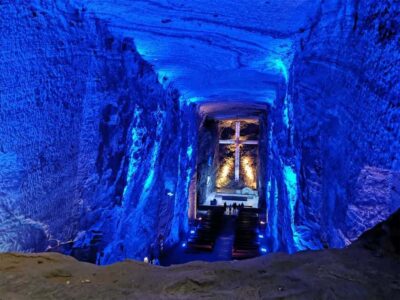
Bogotá City Tour with Monserrate, Gold and Botero Museums
Read our review →
Zipaquirá Salt Cathedral and Lake Guatavita Day Tour
Read our review →Browse the lists this tour appears in