
Reviewed · BOGOTá TOURS
Bogotá: La Candelaria Graffiti & Urban Art Guided Tour
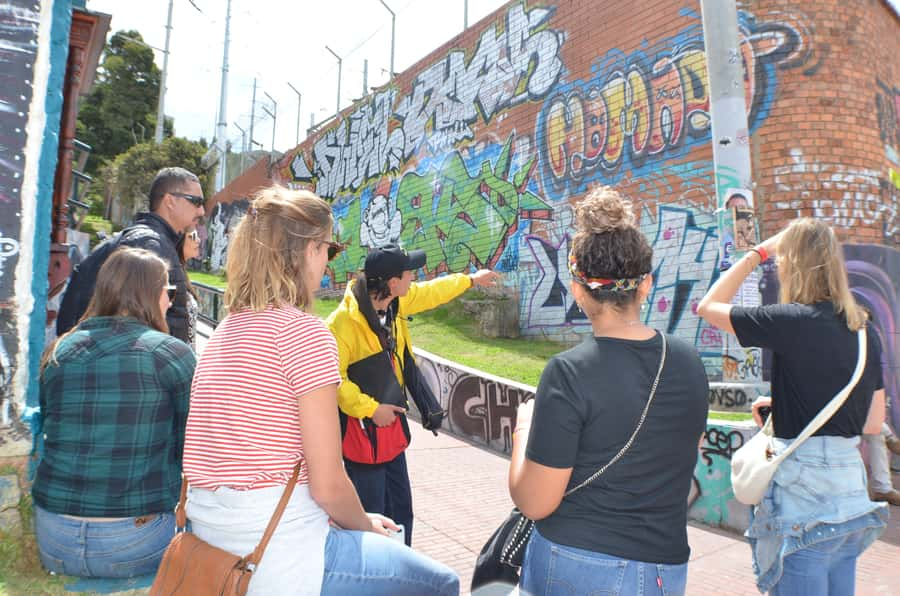
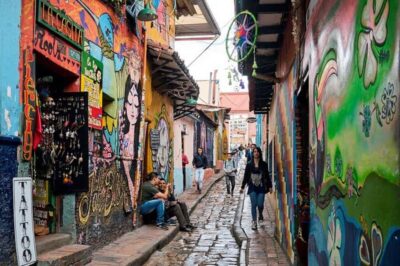
Bogotá’s street art is not just decoration. In La Candelaria, walls carry arguments about indigenous identity, politics, women’s voices, the environment, and life in Colombia’s capital. This walking tour helps you read those walls instead of simply photographing them. The work of artists such as 3 Manos, Ledania, Bastardilla, and Vera gives the walk plenty of visual power.
I like the tour’s local focus and its small groups, limited to 10 people. I also like the ending at Café Herencia, where a cup of coca leaf tea adds a real Colombian touch. The main consideration is pace: you walk for about 150 minutes, and the tour may run in English and Spanish at the same time if the group is mixed.
Key points to know
- Street art with a story: Learn how murals connect to indigenous ancestry, current issues, and Bogotá’s social and political life.
- A focused La Candelaria route: Begin at Chorro de Quevedo, then walk through La Candelaria, La Concordia Market, and Journalist’s Park.
- Artists worth remembering: Look for work by 3 Manos, Ledania, Carlos Trilleras, Wosnan, Ocio 4, Bastardilla, and Vera.
- Small-group format: Groups are capped at 10, which makes it easier to ask questions and discuss the murals.
- A local drink at the finish: Try coca leaf tea at Café Herencia, a café that supports local artists.
- Good value at $16: The price includes the guide, tea tasting, insurance, and an umbrella if rain arrives.
Why La Candelaria is the right place for a graffiti tour
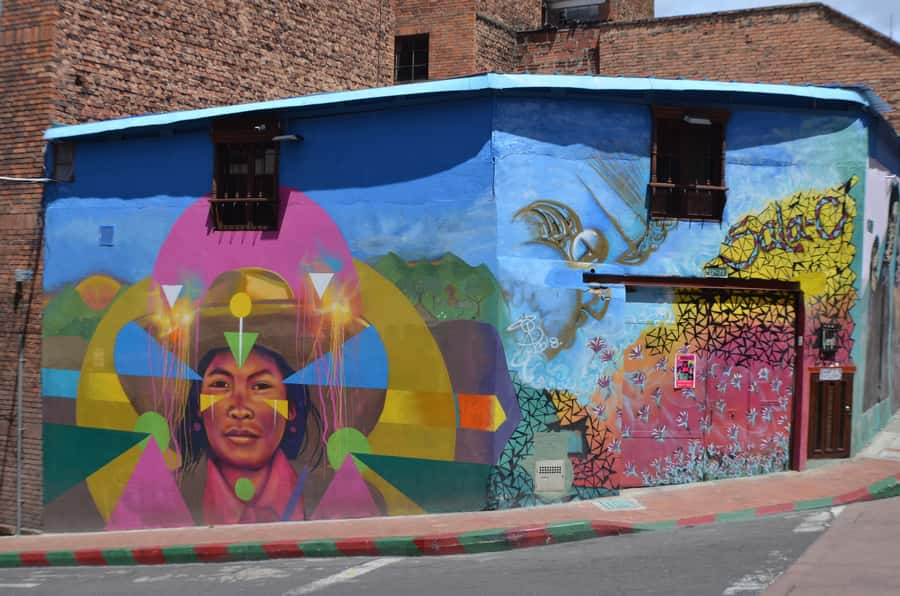
La Candelaria is Bogotá’s old central district, but this tour shows it as more than a collection of colonial streets and historic buildings. Its walls form a changing public gallery. Every few steps, you may find a tag, stencil, portrait, or full-wall mural competing for your attention.
The guide gives you a short introduction to how Bogotá became well known for spray-painted art. That context matters. Without it, you might see only bold colors and dramatic figures. With it, you begin to notice the difference between a personal tag, a planned mural, and a work making a social point.
I particularly like the focus on indigenous ancestry and its connection to the city. The art is not presented as a detached style imported from elsewhere. It is tied to Colombian identity, memory, and arguments about who has a voice in public space.
The tour does not ask you to agree with every message. Instead, it gives you tools for looking. You hear about the artists, their methods, their subjects, and the ideas behind the images. That makes the walk useful even if you know very little about street art before arriving.
A few more Bogota days worth comparing
- Bogota: Bicycle City Tour
★ 4.9 · 2,156 reviews - Zipaquirá: Salt Cathedral Group Tour with Pickup
★ 4.8 · 1,606 reviews - Bogotá: Guided La Candelaria Walking Tour
★ 4.8 · 1,229 reviews
Starting at Chorro de Quevedo
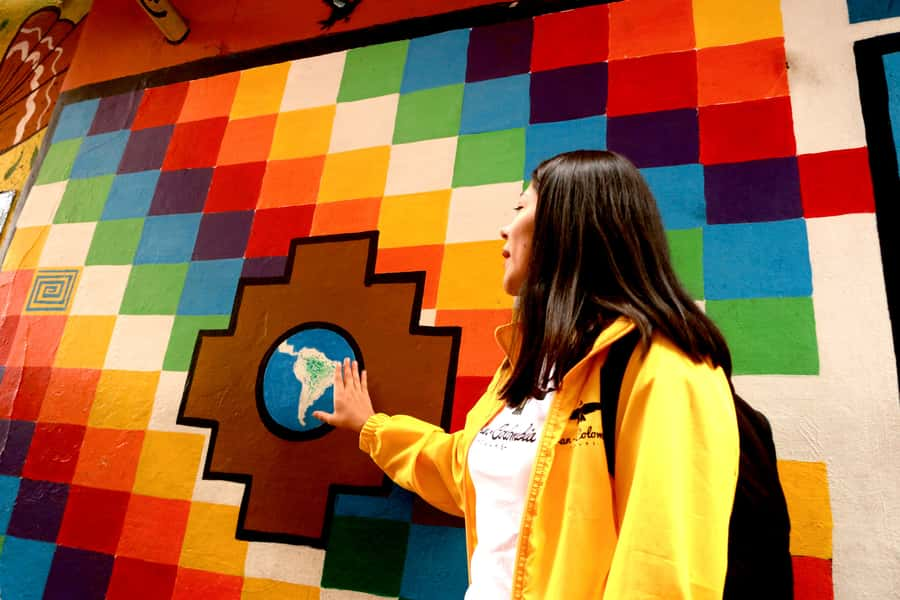
The meeting point is by the fountain under the yellow umbrella in Plazoleta del Chorro de Quevedo. Tours leave daily at 10 a.m. and 2 p.m. Arrive with comfortable shoes, water, sunscreen, and clothing suited to Bogotá’s changeable weather.
Chorro de Quevedo is a sensible starting point because it places you in the middle of La Candelaria from the first minute. It is also a busy meeting area, so look for the yellow umbrella rather than relying on a vague meeting description.
From here, the guide leads you on foot through the district. No transportation is included, and none is needed during the route. The tour is built around seeing details at street level, so walking is the point, not simply the way to get from one stop to another.
Bring a camera, but keep your eyes up as well. Some murals are large and easy to spot. Others reward a slower look at small symbols, lettering, faces, or figures tucked into a wider composition.
One hour among La Candelaria’s murals
The first major portion of the walk lasts about an hour. This is where you get the broadest look at Bogotá’s urban art scene and meet several of the artists named in the tour, including Carlos Trilleras, Wosnan, Ocio 4, and 3 Manos.
The guide explains how artists retell stories about ancestry and the city. You may also hear about different approaches to graffiti, from quick tags to carefully planned murals. That distinction adds useful depth. A wall is not simply painted or unpainted. It can carry an artist’s name, claim space, share a political message, or create a large public image that may take serious planning.
The strongest part of this section is the conversation. Several guides, including Juana, Luis, Christian, Lorena, and Bernardo, have been praised for explaining symbolism, artist backgrounds, and the political setting in clear English. Guides have also used short videos or other visual material to explain how a mural came together.
That can be especially helpful when a wall is partly faded or difficult to interpret. Street art changes. Paint wears away, buildings change hands, and new work covers old work. A guide can point out what is no longer obvious to someone seeing the wall for the first time.
The route also gives you a look at the role of women in Bogotá’s street art. Bastardilla, Vera, and Ledania are highlighted, helping correct the common idea that graffiti is mainly a male scene. Their work adds different subjects and visual approaches to the walk.
La Concordia Market and the city’s meeting points
The stop at La Concordia Market lasts about 15 minutes. It is short, but it breaks up the art walk with a look at one of the district’s everyday gathering places.
The market is described as a meeting point and a place where ideas and influences mix. That makes it important to the tour’s larger theme. Public art does not appear in a vacuum. It grows around streets, markets, cafés, schools, plazas, and other places where people cross paths.
You should not expect a long market visit. This is a sightseeing stop within a walking tour, not a separate food or shopping excursion. Still, it gives you a chance to see the neighborhood as a lived-in part of Bogotá rather than only as an outdoor art gallery.
It is also a practical moment to pause, look around, and take photographs. Keep the group in sight, as the tour specifically asks you not to walk away from the guide.
Same trip, a completely different kind of day:
- Bogotá: Private City Tour, Monserrate, Emerald and Botero
★ 4.9 · 798 reviews - Bogotá´s Barrios: El Paraíso Favela Tour with Cable Car
★ 4.8 · 731 reviews - Bogota: Guatavita and Salt Cathedral Daily Group Tour
★ 4.7 · 615 reviews - Bogotá City Tour with Monserrate, Gold and Botero Museums
★ 4.9 · 584 reviews
Journalist’s Park and the ideas behind the walls
The route continues to Journalist’s Park, with about an hour devoted to guided walking and sightseeing in this part of the city. Like La Concordia, the park is presented as a meeting point where different influences helped shape downtown Bogotá.
Here the guide continues linking public places to the ideas found in the murals. The art may touch on politics, indigenous identity, environmental concerns, and social life. You get more from the images when you understand that each subject belongs to a wider conversation in Colombia.
I like this part of the tour because it moves beyond the standard photo stop. You are not simply told that a mural is colorful or impressive. You hear why it was made, what it may represent, and how the artist fits into Bogotá’s wider scene.
The guides appear to bring different strengths. Juana is described as especially familiar with the local art scene. Luis has been praised for clear English and for explaining technical differences between graffiti, murals, and tags. Christian has been noted for keeping the discussion engaging, while Bernardo has been praised for explaining the meaning and importance of the work in detail.
Because Gran Colombia Tours uses different guides, your exact style of commentary will depend on who leads your group. That is normal for a guided experience, but the consistent theme is clear explanation paired with time for questions.
A final look before returning to Chorro de Quevedo
The last La Candelaria section takes about 30 minutes and includes a photo stop. By this stage, you should have a better sense of how to read the district’s walls for yourself.
A good guide will encourage questions here, and that seems to be a strong feature of this tour. Several guides have been praised for being patient and for turning the walk into a discussion about art and Colombian culture rather than delivering a nonstop speech.
The route returns to Plazoleta del Chorro de Quevedo. Since the tour starts and ends in the same area, you can easily continue exploring La Candelaria afterward, provided you have made your own plans for the rest of the day. The tour itself does not include transportation.
Coca leaf tea at Café Herencia
The tour ends with a Colombian tea tasting at Café Herencia. You receive a cup of coca leaf tea, and the café supports local artists. This is a small detail, but it gives the ending more purpose than a simple goodbye on the street.
Coca leaf tea is part of the local experience presented here, and the drink offers a calm pause after the walk. The café’s connection with artists also echoes the tour’s main theme: art is linked to community spaces, not sealed away in museums.
Do not book this expecting a full café meal or a long café session. The included item is a tea tasting. If you want additional food or drinks, those are not listed as part of the tour.
Is $16 a fair price?
At $16 per person, this is strong value if you want more than a self-guided mural walk. You receive roughly two and a half hours with a guide, a small-group setting, a tea tasting, all-risk insurance, and an umbrella in case of rain.
The guide is the main reason to pay rather than simply walk La Candelaria with a map. Bogotá has enough street art to fill your camera quickly, but a photograph does not explain who made the piece, what its symbols mean, or how it connects to Colombian society.
The 10-person limit is another useful part of the price. A smaller group makes it easier to hear on busy streets and ask questions about specific works. In some cases, only two people have booked and the tour has still gone ahead, creating a more private experience.
The value is lower if you mainly want to wander at your own speed. The route has a fixed meeting time, and you need to stay with the group. You also spend much of the 150 minutes on foot, so anyone looking for a seated city tour should choose something else.
How to prepare for the walk
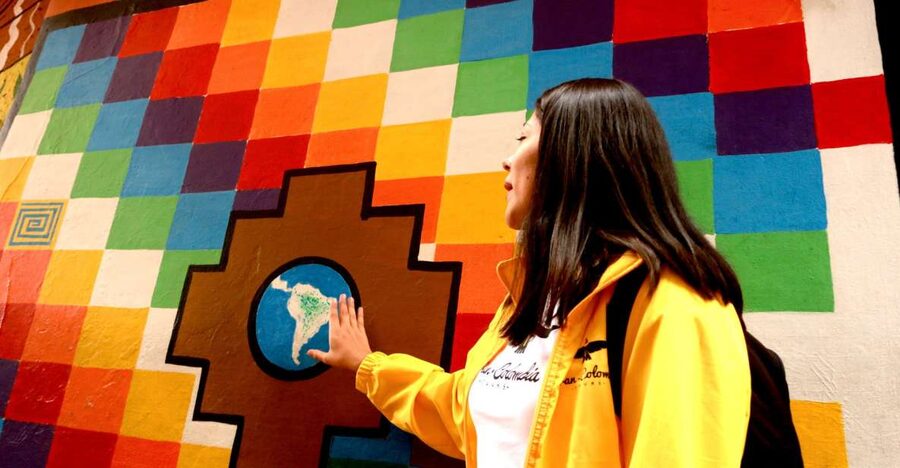
Wear shoes you can comfortably use for several hours. The tour includes one hour in La Candelaria, 15 minutes at La Concordia Market, another hour around Journalist’s Park, and a final 30-minute section before returning to the starting point.
Bogotá’s weather can shift, so bring weather-appropriate clothing. The operator provides an umbrella if rain begins, but I would still carry a light layer and protect your camera or phone.
Sunscreen and water are listed as essentials. A camera is obvious, but do not spend the whole tour looking through a screen. Some of the smaller details, especially lettering and symbolic figures, are easier to understand when you first look at them directly.
The tour is offered in Spanish and English. If the group includes both languages, the guide may use both during the same walk. That could make the commentary slower, so English-only speakers who want the most focused delivery should ask about the language mix when booking.
Who will enjoy this tour most?
I would choose this tour if you are visiting Bogotá for a short time and want a clear introduction to La Candelaria. It works especially well early in your stay, since the route helps you understand the district and gives you ideas for where to return with your camera.
It also suits anyone interested in modern Colombian culture, political art, indigenous themes, or the role of women in public art. You do not need an art background. The guide explains the basics and gives you enough context to look more closely.
Photographers will appreciate the range of murals and the time spent walking between major sights. The tour is also a good fit for people who prefer conversation to a large coach group.
I would hesitate only if you dislike extended walking, want a private tour guaranteed in advance, or prefer to explore at a completely independent pace. The bilingual format may also require patience when the group has mixed language needs.
Booking details and timing
Choose the 10 a.m. departure for a morning look at the district, or the 2 p.m. departure if you prefer to combine the tour with other morning plans. Check the available start time when booking, since departure options can vary by date.
Cancellation is free up to 24 hours in advance, and you can reserve now and pay later. That is useful when your Bogotá schedule is still changing.
Gran Colombia Tours provides the guide, tea tasting, insurance, and rain umbrella. Transportation is not included, so plan your own way to Chorro de Quevedo and onward travel after the tour.
Should you book the La Candelaria graffiti tour?
Yes, if you want Bogotá’s street art explained rather than simply photographed. At $16, the mix of skilled local guides, a 10-person limit, a thoughtfully chosen route, and coca leaf tea at Café Herencia makes this an easy recommendation for first-time visitors and art-minded visitors alike.
Book it early in your Bogotá stay if you can. You will leave with a better eye for the city’s walls and a clearer understanding of how art, public space, identity, and politics meet in La Candelaria. Just wear good shoes, allow for a possible bilingual presentation, and stay with the group.
FAQ
Where does the Bogotá graffiti tour begin?
It begins next to the fountain by the yellow umbrella in Plazoleta del Chorro de Quevedo.
What time does the tour start?
Tours are scheduled every day at 10 a.m. and 2 p.m. Check availability for the date you want.
How long does the tour last?
The walking tour lasts 150 minutes, or about two and a half hours.
What languages are available?
The live guide can conduct the tour in English or Spanish. If the group includes both languages, the tour may use English and Spanish together.
How large is the group?
The tour is limited to 10 participants.
Is transportation included?
No. Transportation is not included. The experience is a walking tour that begins and ends at Plazoleta del Chorro de Quevedo.
Is the coca leaf tea included?
Yes. The tour includes a Colombian tea tasting at Café Herencia, where you can try coca leaf tea.
What should I bring?
Bring comfortable shoes, a camera, sunscreen, water, and clothing suited to the weather. An umbrella is provided if rain arrives.
Just added around Bogota
- Tour of Zipaquirá: Visit the Salt Cathedral and the main squares★ 4.5 · 55 reviews
- Bogota Walking Tour Teusaquillo, a different part of the city★ 5.0 · 41 reviews
- La Candelaria Walking Private Tour (3 Hrs.)★ 5.0 · 51 reviews
- Private Zipaquira Salt Cathedral and Guatavita Lagoon Tour from Bogota★ 4.5 · 44 reviews
- Tejo and Beer Tour in Bogotá★ 5.0 · 35 reviews
- Hiking to the largest paramo on earth : Sumapaz★ 5.0 · 49 reviews
- MINA CATEDRAL DE SAL ZIPAQUIRA Tour Privado★ 4.5 · 38 reviews
- Descubre la Magia: Catedral de Sal & Bogotá en 1 Día★ 4.5 · 39 reviews
Bogotá Tours, compared.
Zipaquirá: Salt Cathedral Group Tour with Pickup
Read our review →
Private City Tour, Monserrate, Emerald and Botero
Read our review →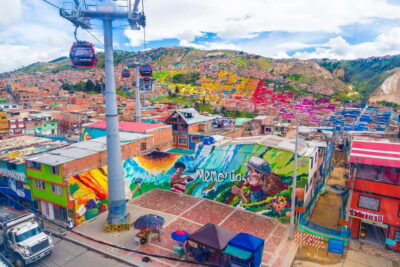
Bogotá´s Barrios: El Paraíso Favela Tour with Cable Car
Read our review →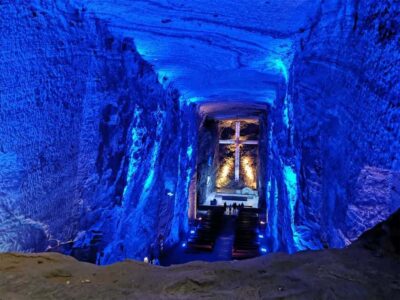
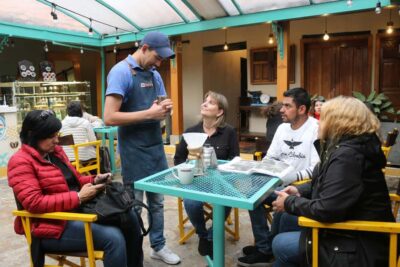
Bogotá City Tour with Monserrate, Gold and Botero Museums
Read our review →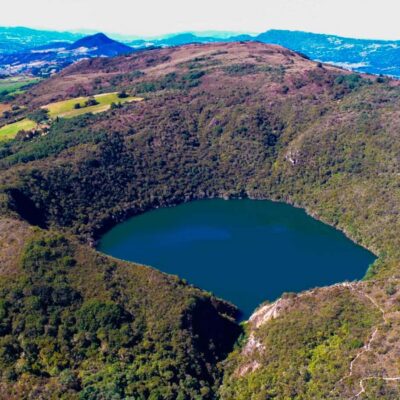
Zipaquirá Salt Cathedral and Lake Guatavita Day Tour
Read our review →Browse the lists this tour appears in