
Reviewed · BOGOTá TOURS
Bogotá: Graffiti Tour el mejor recorrido de arte urbano
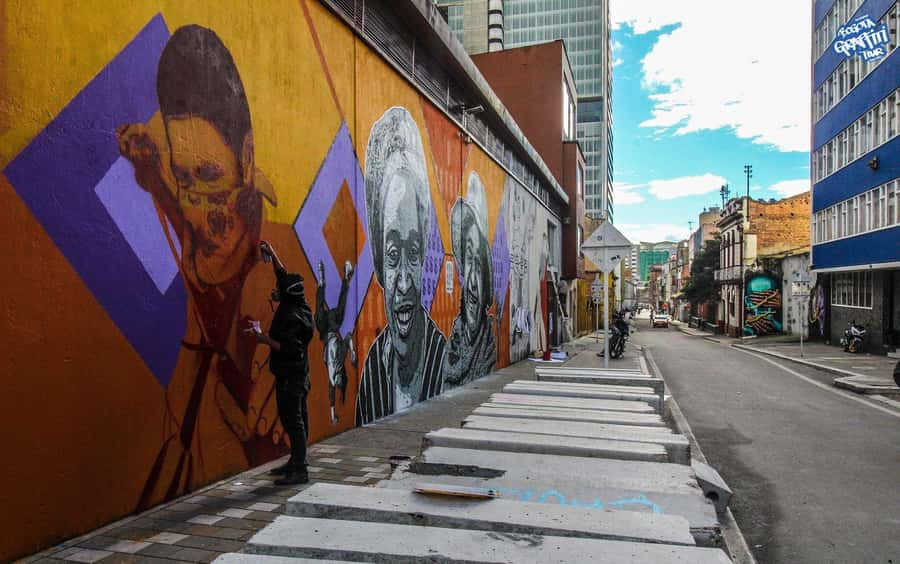
Bogotá’s walls tell stories that a standard city walk can miss. This two-hour tour follows the city’s graffiti movement through major murals, small details, artist techniques, political messages, and the changing relationship between artists, property owners, and public space. You meet at Parque de los Periodistas, near Jiménez Avenue and Carrera 4, then explore central Bogotá on foot.
I like two things right away. First, the guides do more than point at colorful walls: Ivonne, Lifred, Giovanni, Luis, Christian, and Fabian have explained street-art basics, Colombian history, protest art, and the stories behind individual works. Second, the tour connects art with real community work, including projects involving artists, cultural centers, schools, foundations, and neighborhood groups. The main consideration is that the advertised price and wording are a little confusing: the tour is listed at $13, while the details also call it a free graffiti tour and mention private tours, so confirm the exact booking arrangement before paying.
Key points at a glance

- Meet at Parque de los Periodistas: The starting point is central and easy to identify, at Jiménez Avenue with Carrera 4.
- See Bogotá through its walls: The route explains how graffiti relates to Colombian politics, culture, artists, and public life.
- Learn how street art works: Guides cover basic graffiti ideas as well as the meaning and background of major murals.
- Expect a strong guide-led experience: Past guides named Lifred, Ivonne, Giovanni, Luis, Christian, and Fabian have been praised for clear explanations and patient answers.
- Plan around a two-hour walk: Daily times are listed around 10:00 a.m. and 2:00 p.m., though you should check availability when booking.
Why Bogotá graffiti deserves a place on your schedule
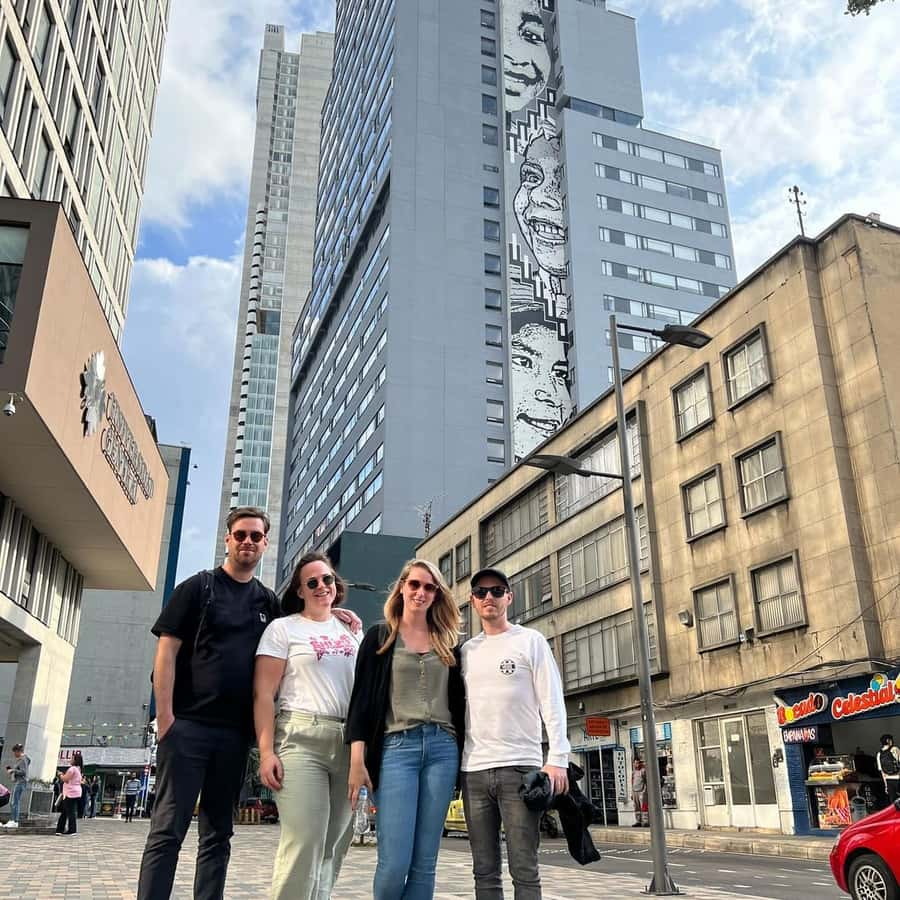
Bogotá is a city where public art is not simply decoration. Murals and tags can carry political ideas, social criticism, local identity, and personal expression. A painted wall may refer to Colombia’s difficult past, the rights of a community, a particular artist, or the way a neighborhood understands itself.
That makes this tour useful even if you do not normally seek out street art. You are not expected to arrive with an eye for spray-paint technique. The guide helps you notice scale, color, symbols, lettering, characters, and the setting around each piece. You also get the basic vocabulary needed to tell a quick tag from a carefully planned mural.
I especially like the way the experience links art to the city’s wider story. The route is not just a collection of photo stops. It explains the Bogotá graffiti movement, its artists, and its relationship with Colombian history. That connection gives the walls more weight than they would have if you simply passed them on your own.
A few more Bogota days worth comparing
- Bogota: Bicycle City Tour
★ 4.9 · 2,156 reviews - Zipaquirá: Salt Cathedral Group Tour with Pickup
★ 4.8 · 1,606 reviews - Bogotá: Guided La Candelaria Walking Tour
★ 4.8 · 1,229 reviews
Starting at Parque de los Periodistas
The meeting point is Parque de los Periodistas, at Jiménez Avenue and Carrera 4. This gives you a clear central location rather than an obscure street corner, and the area is useful for combining the tour with other sightseeing in Bogotá.
From there, expect to begin with an explanation of the local graffiti scene before moving through the streets. The exact sequence of walls can change, and the supplied information does not name every stop, so I would not book this expecting a fixed museum-style route. The value comes from seeing the art in its real setting and hearing how each work fits into the city.
Your guide may ask you to look closely at details that are easy to miss from a taxi or bus. A large mural can attract attention from half a block away, but a smaller mark, layered signature, or unexpected symbol may explain more about the relationship between artists and the city. This is where a walking tour earns its keep.
From colorful walls to Colombian stories
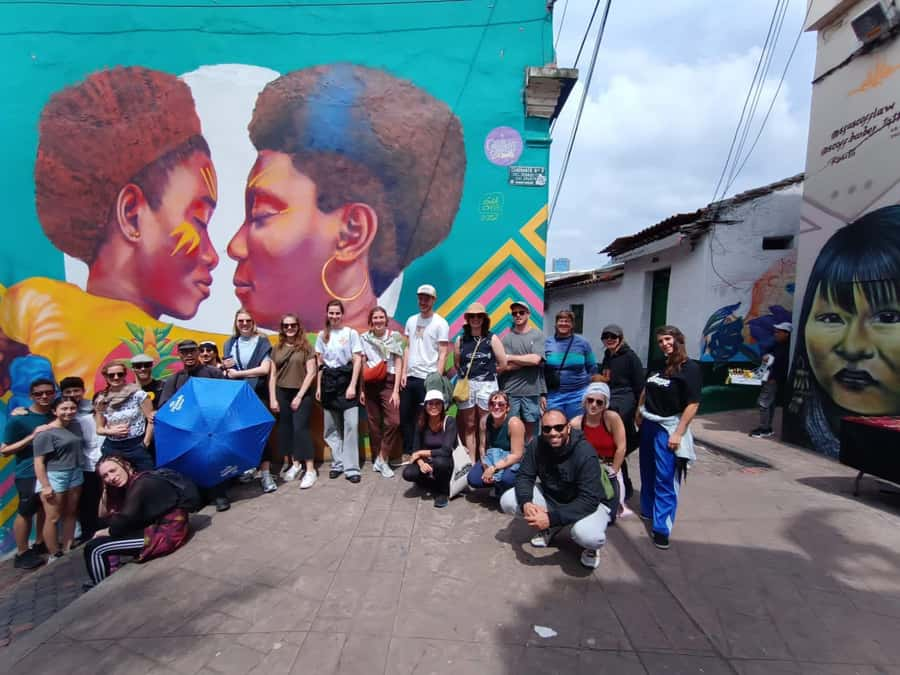
The strongest part of the route is the shift from art appreciation to social context. You hear about graffiti as protest, a subject specifically highlighted by the guide experience, and about collaborative work between artists and building owners.
That distinction matters. Not every painted wall has the same legal, political, or social background. Some work may be commissioned or welcomed by a property owner. Other work may carry a sharper message about power, inequality, or public space. A good guide helps you read those differences instead of treating every mural as a bright backdrop for photographs.
The tour also gives you a way to understand Colombia beyond the usual sightseeing stops. You may hear stories about the artists, the country, the city, and the communities connected to the work. The information is delivered while you are standing in front of the art, so the history stays tied to something visible and specific.
Guide quality matters a great deal here. Ivonne has been noted for explaining both street-art basics and the stories connected with Bogotá and Colombia. Giovanni has focused on artists, protest graffiti, and cooperation between artists and building owners. Lifred has been praised for warmth and clear explanations, while Luis, Christian, and Fabian have also led highly regarded walks. Since guides can vary by departure, the tone may differ, but the experience clearly depends on having someone who can answer questions rather than simply lead you from wall to wall.
Learning the basics without taking a class
You do not need to know the difference between a tag, throw-up, stencil, paste-up, or large-scale mural before arriving. The tour introduces the basics in a practical way, using the streets as the classroom.
That approach suits me better than a long lecture. You can ask why an artist used a certain form, how a work was made, or what a symbol means, then look directly at the answer. One guide has been praised for patiently answering questions, and that is important because street art can seem confusing when you are seeing many styles close together.
The experience is educational without needing to feel formal. You learn enough to look at later murals with more confidence, but the focus remains on the city and its artists. If you already follow graffiti closely, you may want to ask specific questions about artists and techniques. If you are new to it, the guide’s explanations should help you get your bearings fast.
Photography is an obvious reason to bring a phone or camera, but try not to reduce the walk to a series of portraits in front of walls. The more useful photographs are often the ones that include the surrounding street, neighboring buildings, or smaller details. Those elements help you remember how the art interacts with Bogotá’s public spaces.
Same trip, a completely different kind of day:
- Bogotá: Private City Tour, Monserrate, Emerald and Botero
★ 4.9 · 798 reviews - Bogotá´s Barrios: El Paraíso Favela Tour with Cable Car
★ 4.8 · 731 reviews - Bogota: Guatavita and Salt Cathedral Daily Group Tour
★ 4.7 · 615 reviews - Bogotá City Tour with Monserrate, Gold and Botero Museums
★ 4.9 · 584 reviews
The social side of the project
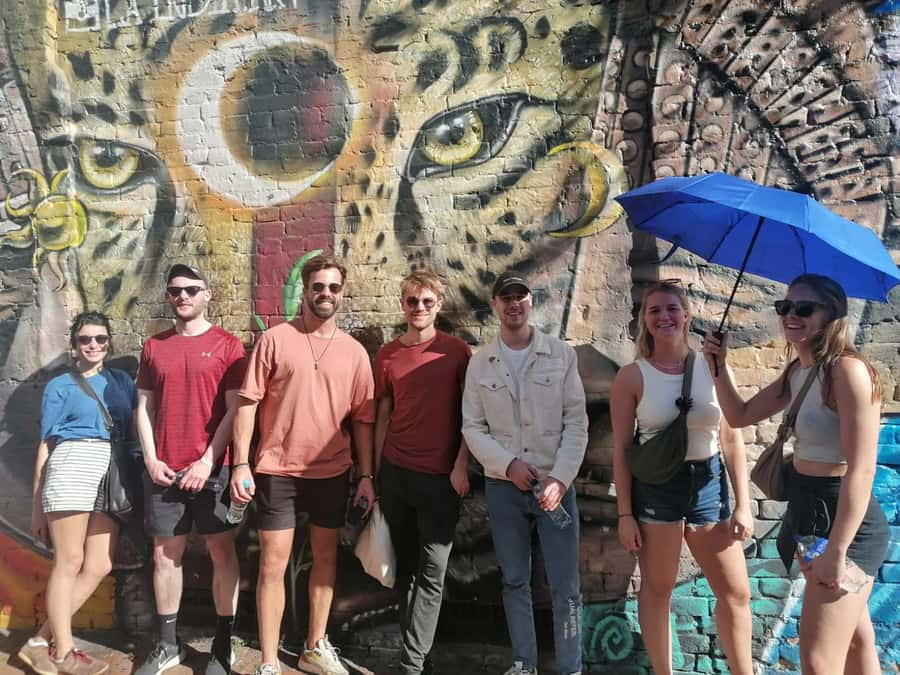
The operator describes the work as more than a sightseeing walk. It supports and creates social projects with local, national, and international artists, communities at risk, community houses, cultural centers, foundations, district schools, and graffiti groups in different locations.
You should treat this as an important part of the tour’s purpose. The walk presents graffiti as a tool for community identity and change, not simply as a tourist attraction. That gives the experience a practical edge: you are learning how urban art can help people claim attention, tell stories, or reshape the way a neighborhood is seen.
The description does not specify which community projects you will visit during the two-hour route, so do not assume that every listed initiative is a stop on your particular departure. Instead, understand them as part of the wider work behind the tour. The central walk focuses on Bogotá’s walls and the stories attached to them.
This social focus also helps explain why the experience can feel different from a standard art tour. You are looking at art outside galleries, where ownership, permission, politics, and public reaction all matter. That setting creates useful questions, and the guide is there to provide context.
Timing, walking, and daily planning
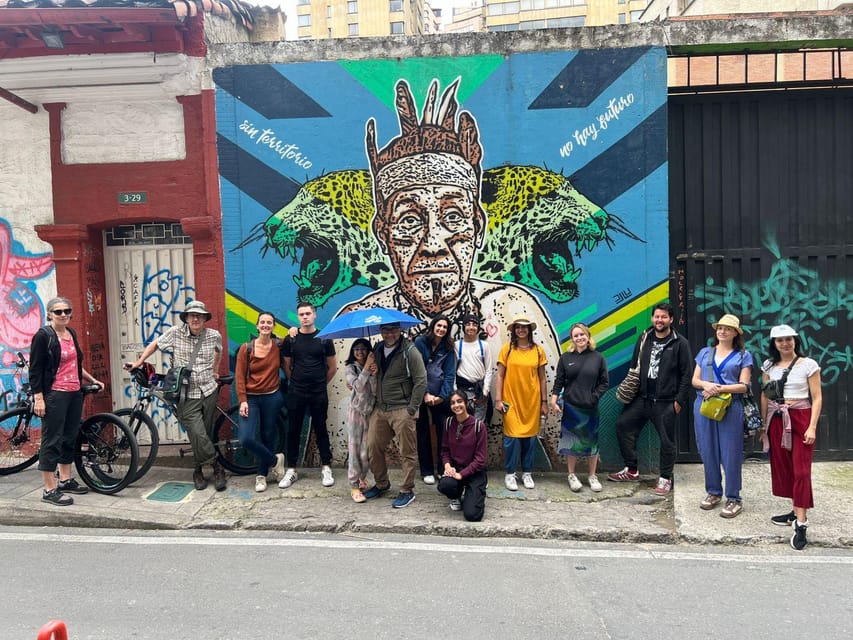
The listed duration is two hours. Daily departures are shown around 10:00 a.m. and 2:00 p.m., with the morning listing extending to about 12:30 p.m. and the afternoon listing to about 4:30 p.m. Check the exact start time when you reserve, since availability controls the final schedule.
A two-hour format is a sensible length for this subject. It gives you enough time to see a range of work and ask questions without turning the walk into a half-day commitment. It also leaves room to visit another Bogotá attraction, eat lunch, or return to a neighborhood you want to explore at your own pace.
This is a walking experience, so wear shoes you can use comfortably on city streets. The supplied information does not state the exact distance, number of stops, group size, or restroom arrangements, so ask the operator if any of those details affect your plans.
The tour is listed as wheelchair accessible, which is useful information for many visitors. Still, because street routes can include varied pavement and changing urban conditions, you may want to confirm the specific route and meeting arrangements directly with the operator if access needs are important.
What $13 gets you
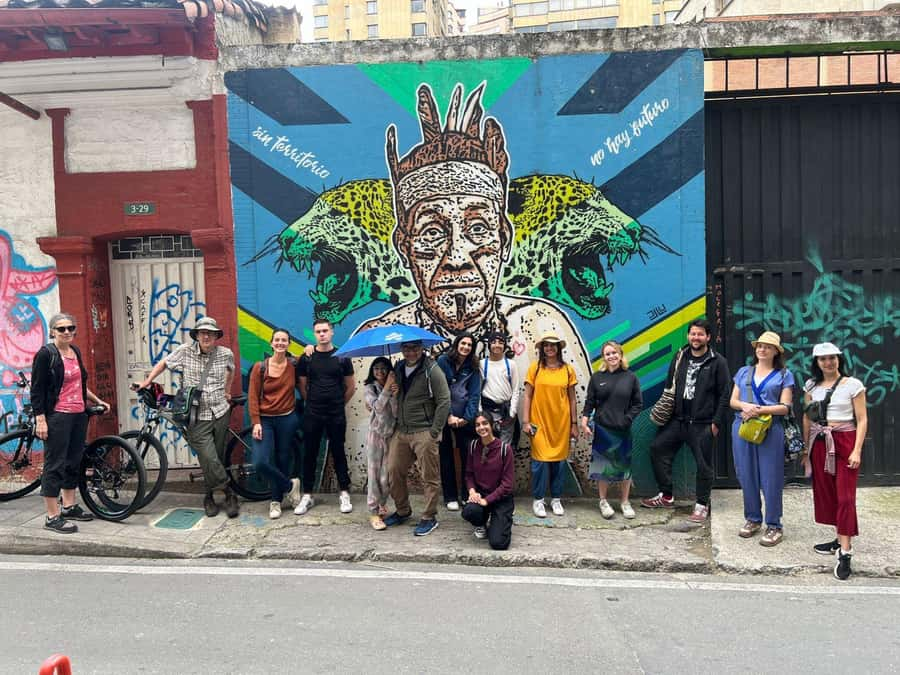
At $13 per person, this is a low-cost way to add local interpretation to your Bogotá visit. You are paying for a two-hour guided walk, not admission to a gallery or a vehicle-based city tour. The real value is the guide’s ability to explain what you are seeing and connect it to Colombia’s culture and history.
I would consider the price particularly good if you are curious about Bogotá but have limited time. A self-guided walk can show you plenty of painted walls, yet it may not explain which artists created them, why certain subjects appear, or how public art relates to protest and community life.
There is one point to clear up before booking. The information lists a $13 price, while the inclusions use the phrase free graffiti tour and also mention private tours. Those terms may refer to different booking formats, but the details provided do not explain the difference. Contact the operator at [email protected] and confirm whether your selected departure is the $13 shared experience, a free model based on gratuity, or a private tour with a separate price.
The booking terms are flexible: you can reserve now and pay later, and cancellation is allowed up to 24 hours before the activity for a full refund. Those policies are helpful if your Bogotá schedule is still shifting.
Language choices and guide style
English is the listed live-guide language. The operator also asks visitors to inquire about Spanish, German, and French tours, so those options may be possible, but you should confirm availability rather than assume every departure offers all four languages.
The guide style appears to be one of the main strengths. The strongest descriptions point to people who are warm, articulate, funny, patient, and able to answer questions. That combination matters because the subject can easily become either too academic or too shallow.
Expect the experience to work best when you participate. Ask about an artist, a political message, a technique, or the difference between collaborative and independent work. One of the pleasures of this tour is seeing the streets differently afterward, and questions help you make that shift.
Who should book this Bogotá walk?
I would recommend it to first-time visitors who want a quick introduction to the city beyond major landmarks. It suits anyone interested in art, photography, politics, Colombian culture, or the way cities use public space.
It is also a good choice for families with older children and teenagers, provided they are comfortable walking and listening. The visual subject gives younger visitors something immediate to focus on, while the stories add substance for adults.
You should think twice if you want a quiet indoor art experience, a fixed museum collection, or a private route with guaranteed stops. The walls are in the city, and the exact experience depends on the guide, the available artwork, and the route used that day.
The tour also suits repeat visitors. If you have already seen Bogotá’s main sights, two hours of street art can reveal another side of the city. You may recognize streets you passed earlier, but the guide’s explanations can give them a different meaning.
Should you book the Original Bogotá Graffiti Tour?
Book it if you want an affordable, focused introduction to Bogotá’s urban art and the stories connected with it. The best reasons are the strong guide-led explanations, the attention to protest and community work, and the chance to see art where it actually lives rather than behind a gallery wall.
Before booking, confirm the price format, language, start time, and whether you are joining a shared or private tour. Once those points are clear, this is an easy addition to a Bogotá itinerary, especially for visitors who want more than photographs and prefer to understand what they are looking at.
FAQ
Where does the Bogotá graffiti tour meet?
The meeting point is Parque de los Periodistas in Bogotá, at Jiménez Avenue with Carrera 4.
How long does the tour last?
The tour lasts two hours.
How much does the tour cost?
The listed price is $13 per person. The information also describes it as a free graffiti tour and mentions private tours, so contact the operator to confirm the exact format and price for your booking.
What time does the tour start?
Daily times are listed around 10:00 a.m. and 2:00 p.m. Check availability for the exact starting time.
What language is the live tour guide?
English is the listed live-guide language. Spanish, German, and French tours are also mentioned as options to ask about.
Is the tour wheelchair accessible?
Yes, the activity is listed as wheelchair accessible.
Can I cancel the booking?
Yes. You can cancel up to 24 hours in advance for a full refund.
Can I reserve now and pay later?
Yes. Reserve now and pay later is available, so you do not have to pay at the time of booking.
How can I contact the tour operator?
You can contact the operator at [email protected].
Just added around Bogota
- Tour of Zipaquirá: Visit the Salt Cathedral and the main squares★ 4.5 · 55 reviews
- Bogota Walking Tour Teusaquillo, a different part of the city★ 5.0 · 41 reviews
- La Candelaria Walking Private Tour (3 Hrs.)★ 5.0 · 51 reviews
- Private Zipaquira Salt Cathedral and Guatavita Lagoon Tour from Bogota★ 4.5 · 44 reviews
- Tejo and Beer Tour in Bogotá★ 5.0 · 35 reviews
- Hiking to the largest paramo on earth : Sumapaz★ 5.0 · 49 reviews
- MINA CATEDRAL DE SAL ZIPAQUIRA Tour Privado★ 4.5 · 38 reviews
- Descubre la Magia: Catedral de Sal & Bogotá en 1 Día★ 4.5 · 39 reviews
Bogotá Tours, compared.
Zipaquirá: Salt Cathedral Group Tour with Pickup
Read our review →
Private City Tour, Monserrate, Emerald and Botero
Read our review →
Bogotá´s Barrios: El Paraíso Favela Tour with Cable Car
Read our review →
Bogotá City Tour with Monserrate, Gold and Botero Museums
Read our review →
Zipaquirá Salt Cathedral and Lake Guatavita Day Tour
Read our review →Browse the lists this tour appears in