
Reviewed · LAKE TITICACA TOURS
From Puno: Floating Islands of the Uros Half-Day Tour
The strangest part of Lake Titicaca is not its size or altitude. It is the feeling of stepping onto land that gently gives under your feet. The Uros islands are built from layers of totora reeds, an aquatic plant that also becomes houses, boats, cooking fuel, and food. That practical use of one plant makes this short tour far more than a quick boat ride.
I like the three-hour length, which fits neatly into a busy day in Puno, and I like that the best guides, including Freddy, Roly, and Franky, explain the islands from personal experience. The main drawback is the sales element: local crafts are presented for purchase, and the traditional reed boat costs an additional 15 soles. This is a cultural visit with a commercial side, so it helps to know that before you go.
Key points at a glance
- Totora becomes the island itself: You’ll see how reed layers are cut, woven, and replaced to keep the floating surface usable.
- A short trip from Puno: Allow about 10 minutes by van, 30 minutes by boat each way, and roughly 105 minutes on the islands.
- Local guides can add real depth: Freddy and other guides who grew up on the islands have explained daily life, Aymara phrases, and family traditions particularly well.
- The reed boat costs extra: The traditional Balsa de Totora is listed at 15 soles per person and is paid locally.
- Expect crafts and shopping: You’ll have time to see handmade goods, but some people find the sales pitch too strong.
- Good value for a spare half-day: At $10 per person, the basic tour includes transport, island admission, and a bilingual English and Spanish guide.
Why these floating islands are worth seeing
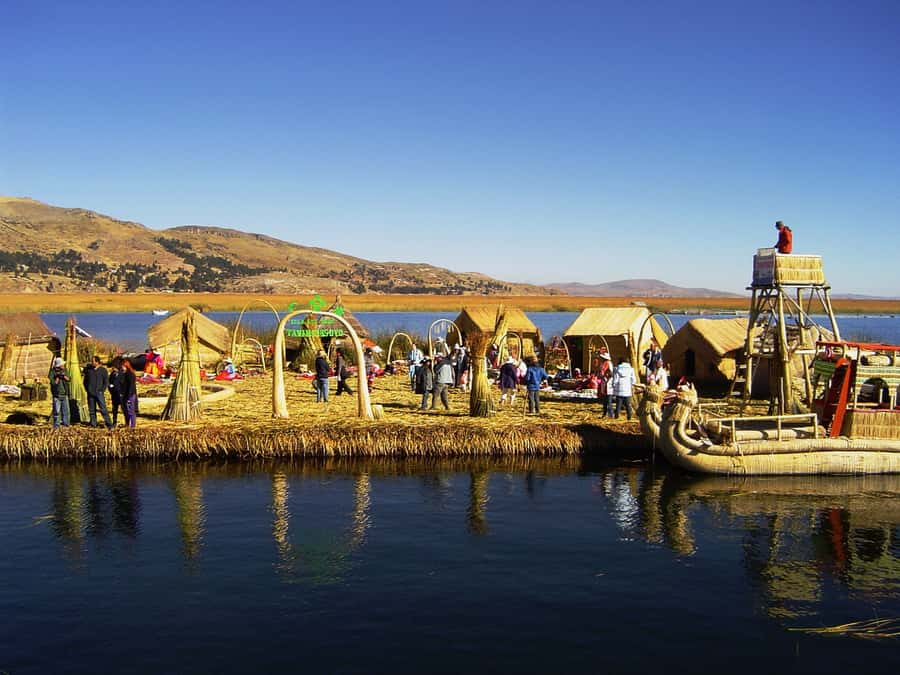
The Uros islands are among Lake Titicaca’s most unusual sights because they are not simply islands covered with reeds. The surface itself is made from reeds. Totora grows in the lake, and the Uros use it in layers to create ground, paths, homes, boats, and other useful objects.
The culture reaches back to pre-Inca times, with a history of more than 3,000 years. Today, about 2,000 people live among roughly 80 floating islands, though the visit gives you only a small look at that wider community.
I find the construction lesson the heart of the trip. You are not just told that the island floats. You are shown how reed blocks and loose layers are placed and renewed. That demonstration helps you understand the amount of work behind what first looks like a simple patch of grass on the lake.
The experience also gives you a new view of Lake Titicaca. From Puno, the lake can feel like a broad sheet of water beside the city. From the boat and the islands, it becomes the setting for an entire way of life. The open views are especially appealing on a clear day, though the tour runs in both sunshine and rain.
More Lake Titicaca days:
- From Puno: Uros, Amantaní & Taquile Islands 2-Day Tour
★ 4.5 · 452 reviews - Lake Titicaca 2-Day Tour to Uros, Amantani and Taquile
★ 4.4 · 199 reviews - Puno: Full-Day Tour of Lake Titicaca and Uros & Taquile
★ 4.4 · 178 reviews
From Puno’s port to the open water
If you choose hotel pickup, a van collects you from a hotel in central Puno. The drive to the port takes about 10 minutes. Pickup and drop-off are available only for hotels in the city center, so you should check your location before booking.
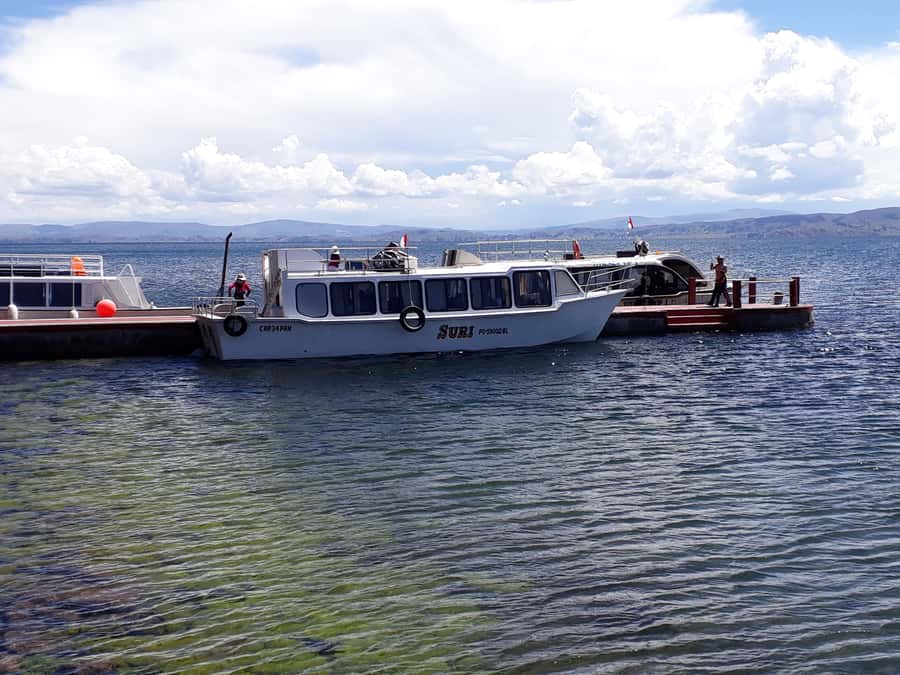
At the port, you board the tour boat for a ride of about 30 minutes. The boat transfer is included in the base price, along with island admission. Several departures have used clean, comfortable boats, and captains such as Bryan, Brian, Christian, or Christopher have received strong praise for careful handling.
The crossing is not a sightseeing cruise with a long commentary program. It is mainly transport, but it gives you time to watch Puno recede and the broad surface of Lake Titicaca open around you. Bring your passport or identity card, as this is listed among the items you need for the activity.
The altitude matters. Lake Titicaca is the highest navigable lake in the world, and Puno is already high above sea level. The supplied information does not promise special support for altitude problems, so I would keep the morning or afternoon easy and avoid treating this as a strenuous outing.
Landing on a surface made from reeds
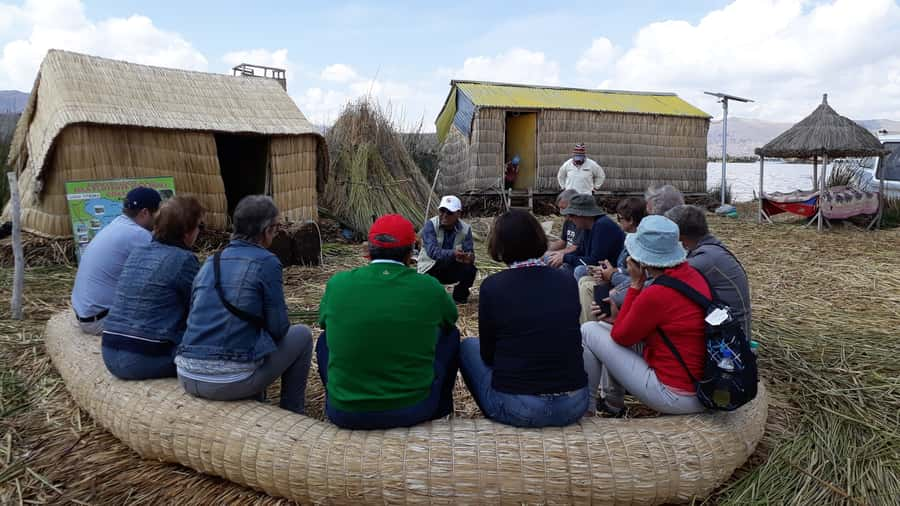
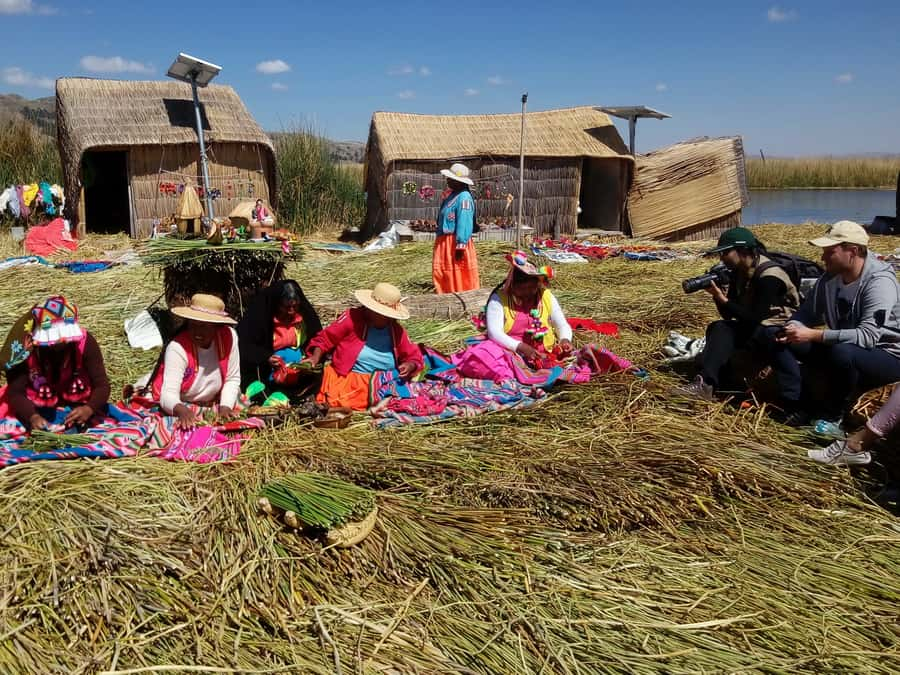
The main visit lasts about 105 minutes. Once you step onto an island, a local host or guide explains how the floating platform is made and maintained. You can expect a walking tour, free time, photographs, and an explanation of how totora is used in daily life.
The surface can feel unusual underfoot. It is not a paved dock or firm earth, and you may notice a slight springiness as you walk. That sensation is part of the point. The island is a working construction made from plant material, not a permanent piece of land in the usual sense.
The explanation normally covers the reed layers, houses, boats, cooking, and food. The Uros use totora in many ways, and seeing the same plant serve as building material and a household resource makes the visit memorable. You may also have the chance to wear local clothing for photographs.
Guides who grew up on the islands can make the difference here. Freddy has been praised for speaking English, Spanish, and Aymara and for explaining island life from first-hand experience. Roly, Robbie, Franky, and other guides have also been singled out for clear English and friendly presentations. Guide assignments can change, so book this for the subject and structure rather than for one guaranteed person.
The local welcome, crafts, and the sales pitch
The island community is welcoming, but this is also a visit where local families sell handmade products. You will have a chance to look at textiles, carpets, souvenirs, and other goods. Buying something can support the community, and several people found the crafts a meaningful reminder of the visit.
Still, you should know what kind of stop this is. Some people felt the selling was persistent or that prices were higher than elsewhere in Peru. Others found the approach friendly and did not feel pressured. Your experience may depend on the island host, the size of the group, and your own comfort with shopping.
I recommend deciding in advance how you want to handle this. You can look, ask questions, and buy only if something genuinely interests you. If you do want a souvenir, compare prices when possible and keep some small cash available. Food and drinks are not included, though some visits provide an opportunity to purchase them locally.
The sales portion does not erase the value of the visit, but it does shape it. You are seeing a living community that earns money from fishing, crafts, tourism, and other work. The result is less like an untouched village visit and more like a carefully organized introduction to Uros life.
A few more Puno days worth comparing
- Puno: Full-Day Route of the Sun Tour to Cusco with Lunch
★ 4.7 · 131 reviews - Cusco: Scenic Route of the Sun to Puno with Buffet Lunch
★ 4.8 · 101 reviews - Floating Islands of the Uros
★ 4.2 · 101 reviews - From Puno: full day tour to Uros and Taquile with Lunch
★ 4.6 · 95 reviews
The extra reed boat ride
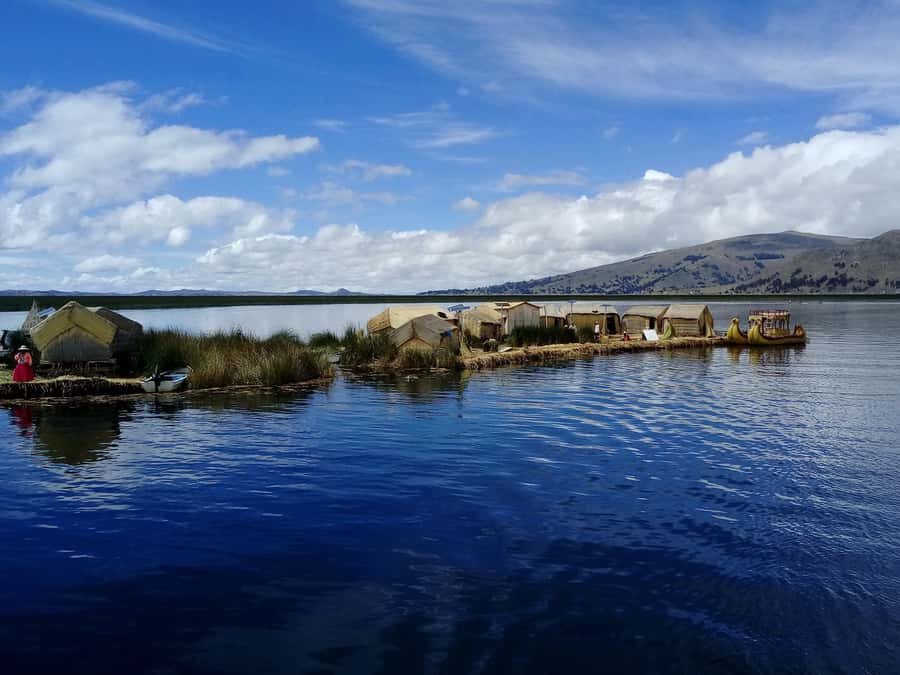
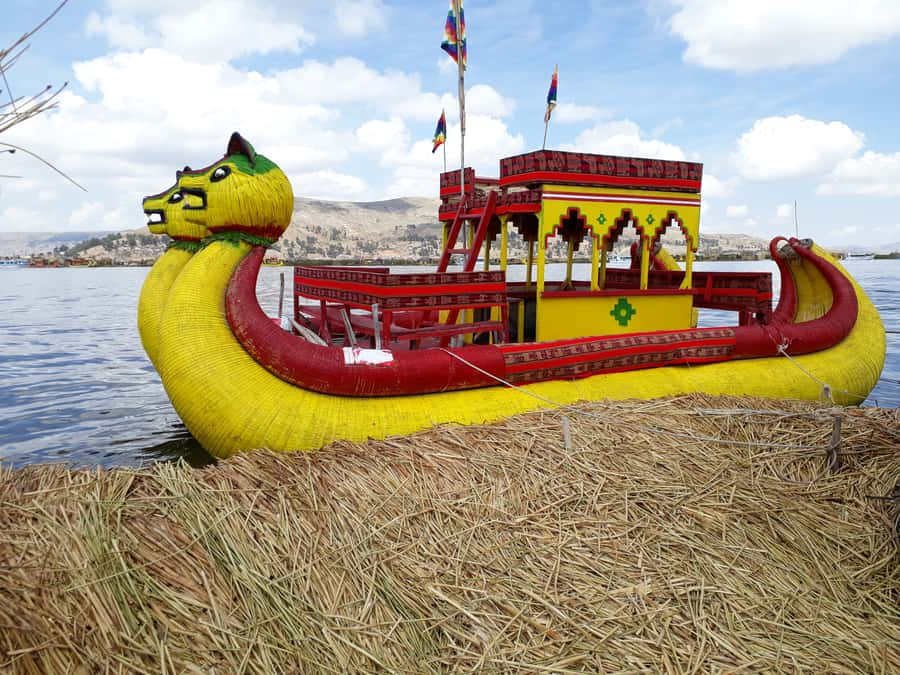
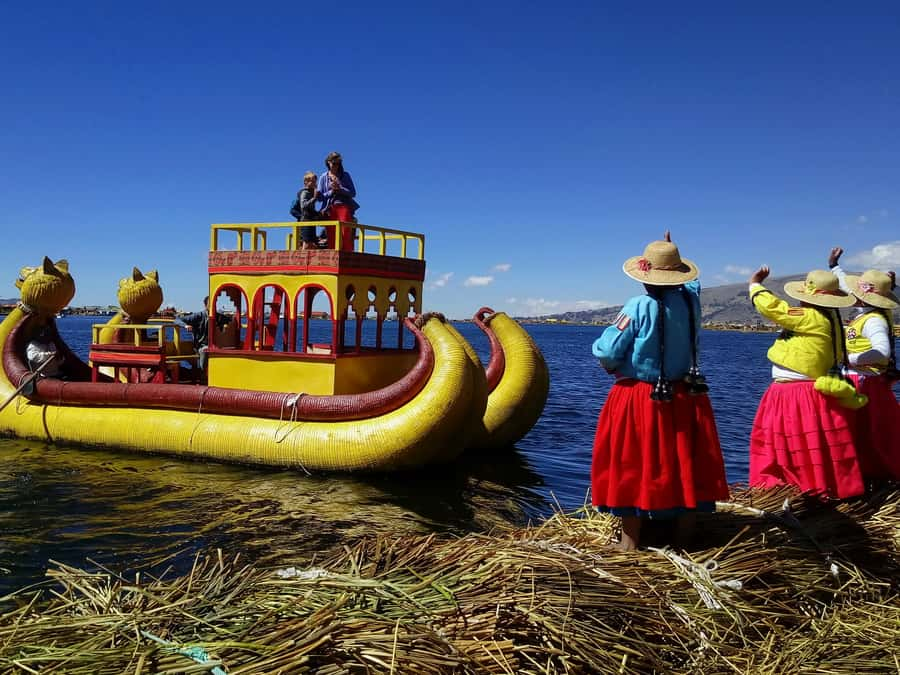
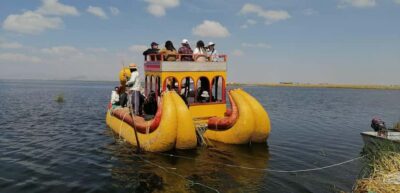
The Balsa de Totora is a traditional boat made from totora reeds. It is a striking part of the visual experience, and many people enjoy taking it from one island to another. The ride is not included in the $10 tour price and costs 15 soles per person, paid directly to the Uros.
The booking information describes this ride as optional. In practice, some people found that it was treated as an expected part of the visit, so I would budget for it if you want to avoid surprises. One important point: several people felt the second island stop offered little beyond a chair, toilet, restaurant, and view. Others thought the boat ride itself was fun and worthwhile.
If your priority is learning about the islands, the main demonstration and walking tour are more important than the extra crossing. If you enjoy traditional transport and want photographs from the water, the 15 soles may be money well spent. If you have only a short window in Puno, you can ask how much time the boat ride will take before paying.
Returning to Puno, and choosing your departure
After the island visit, the main boat returns to Puno in about 30 minutes. A final van ride of around 15 minutes takes you back to the city or to your central hotel, depending on the option selected.
Departure time can affect the mood of the return. A 3 p.m. departure has been especially appealing for people who caught sunset colors over the lake on the way back. A morning or early afternoon departure is better if you have a train, bus, or another fixed appointment later in the day.
The total duration is about three hours, though pickup and return timing can add a little flexibility. I would not schedule a tight connection immediately afterward. The route is simple, but boats and group movements do not always match a railway timetable down to the minute.
What you get for $10
At $10 per person, this is one of the easier Lake Titicaca outings to recommend on value. The price includes the boat transfer, entrance to the Uros island, and a bilingual English and Spanish guide. Central hotel pickup and drop-off are included when that option is selected.
The base price does not include food, drinks, or the traditional reed boat. Adding 15 soles for the Balsa de Totora still keeps the outing inexpensive, but you should count it as part of your likely budget rather than assuming the advertised price covers every activity.
The real value comes from fitting a distinctive cultural visit into half a day. A full-day Lake Titicaca outing may suit you if you want more time on the water, but this trip works well when you have only a morning or afternoon in Puno. It is also a useful first look before deciding if you want a longer lake experience.
The price is less attractive if you expect a quiet, private visit with no commercial stops. Some departures have been small, even private, while others bring you into a larger group on the island. Group size can change the pace and the amount of time you get for questions.
Who will enjoy this three-hour outing
I would choose this tour if you want a clear introduction to the Uros islands without giving up an entire day. It suits first-time visitors to Puno, people with a spare afternoon, and anyone interested in how materials from the natural world can shape a community’s homes and transport.
It is also a good choice if you value a guide who can explain the culture in English or Spanish. Freddy and Roly have been particularly effective names to hope for, though the assigned guide is not fixed. A guide who speaks Aymara or grew up on the islands can add useful context that a basic boat transfer would not provide.
You may want a different plan if you dislike shopping stops, do not want to pay for add-ons, or prefer a less structured encounter. The island visit is organized around a demonstration, guided explanations, shopping time, and transport. It is not a free-roaming visit where you simply wander among many islands.
The tour is not suitable for people with mobility impairments. You also cannot bring pets, luggage, or large bags. For clothing, I would prepare for changing conditions and remember that the tour runs in both sun and rain. Lake views can be dazzling, but weather on the water can change the feel of the trip quickly.
Should you book it?
I would book this Uros tour if you have three hours in Puno and want to see the floating islands without committing to a full-day program. The reed construction lesson, the wide lake views, and the chance to hear from a local guide make it a strong short excursion.
Go in with the right expectations. You will see a real community, but the visit is arranged for tourism and includes craft sales. Bring identification, leave large bags behind, budget 15 soles for the reed boat if you want to ride it, and allow a little flexibility after the tour.
For the price, this is a practical way to experience one of Lake Titicaca’s most unusual cultural sights. It is best for curious, flexible visitors who can appreciate both the ingenuity of the islands and the commercial side of meeting a community that depends partly on visitors.
FAQ
How long does the Uros floating-islands tour last?
The activity lasts about three hours, including transport from Puno, the boat ride to the islands, time on the islands, the return boat ride, and the final van transfer.
How much does the tour cost?
The listed price is $10 per person. The price includes the boat transfer, entrance to the Uros island, and a bilingual English and Spanish guide.
Is hotel pickup included?
Pickup and drop-off are available for hotels located in Puno city center when that option is selected.
Is the traditional reed boat included?
No. The Balsa de Totora ride is listed separately and costs 15 soles per person, paid directly to the Uros.
What languages does the guide speak?
The tour is offered with a live guide in English and Spanish. Some guides also speak Aymara.
What should I bring?
Bring your passport or identity card. You should also prepare for both sunshine and rain during the boat ride and island visit.
Can I bring luggage or a pet?
No. Pets, luggage, and large bags are not allowed on the activity.
Is food included?
No. Food and drinks are not included. You may have opportunities to buy food or drinks during the visit.
Is the tour suitable for people with mobility impairments?
No. The activity is listed as unsuitable for people with mobility impairments.
Just added around Puno
- From Cusco to Lake Titicaca: 2-Day Homestay Tour★ 4.5 · 56 reviews
- From Cusco: 2-Night Lake Titicaca Excursion★ 3.7 · 62 reviews
- From Puno: 3-Hour Uros Floating Islands Tour★ 4.4 · 67 reviews
- Lake Titicaca, Uros and Taquile Full-Day Tour★ 4.3 · 69 reviews
- Full Day Lake Titicaca Tour from Cusco★ 4.5 · 91 reviews
- From Cusco: 2-Day Lake Titicaca Tour★ 4.4 · 74 reviews
- Cusco: Scenic Route of the Sun to Puno with Buffet Lunch★ 4.8 · 101 reviews
- Floating Islands of the Uros★ 4.2 · 101 reviews
Lake Titicaca Tours, compared.
From Puno: Uros, Amantaní & Taquile Islands 2-Day Tour
Read our review →
La Paz: Full Day Trip to Copacabana and Isla del Sol
Read our review →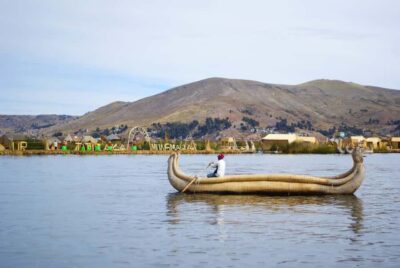
Lake Titicaca 2-Day Tour to Uros, Amantani and Taquile
Read our review →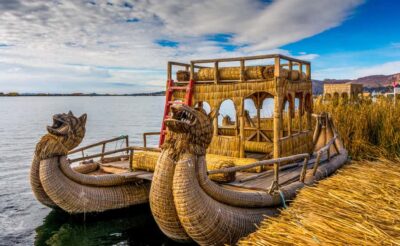
Puno: Full-Day Tour of Lake Titicaca and Uros & Taquile
Read our review →
From La Paz: Titicaca, Copacabana, and Isla del Sol Day-Trip
Read our review →
From Puno: full day tour to Uros and Taquile with Lunch
Read our review →
Browse the lists this tour appears in