

Reviewed · LAKE TITICACA TOURS
Floating Islands of the Uros
The Uros Islands are a remarkable answer to a simple question: What if a village could be built from reeds and set afloat on a lake? Here, totora reeds form the ground beneath your feet, the boats beside you, and much of the daily life around you. I like the close look at Aymara traditions, and I like that the tour fits neatly into a three-hour morning or afternoon.
The main caution is that the visit is short, and the experience includes a clear tourist element. A totora reed raft ride costs extra, and the island stop can feel brief if you want a long, quiet look at village life. Still, at $7 per person, with transfers, entrance, boat transport, and an official guide included, this is an easy-value introduction to Lake Titicaca.
Key points about the Uros Islands visit

- Reed-built communities: Walk on floating islands made from layers of totora reeds.
- Aymara culture: Learn about an Aymara-speaking community that continues traditions connected to fishing, bird hunting, egg collecting, reed construction, and embroidery.
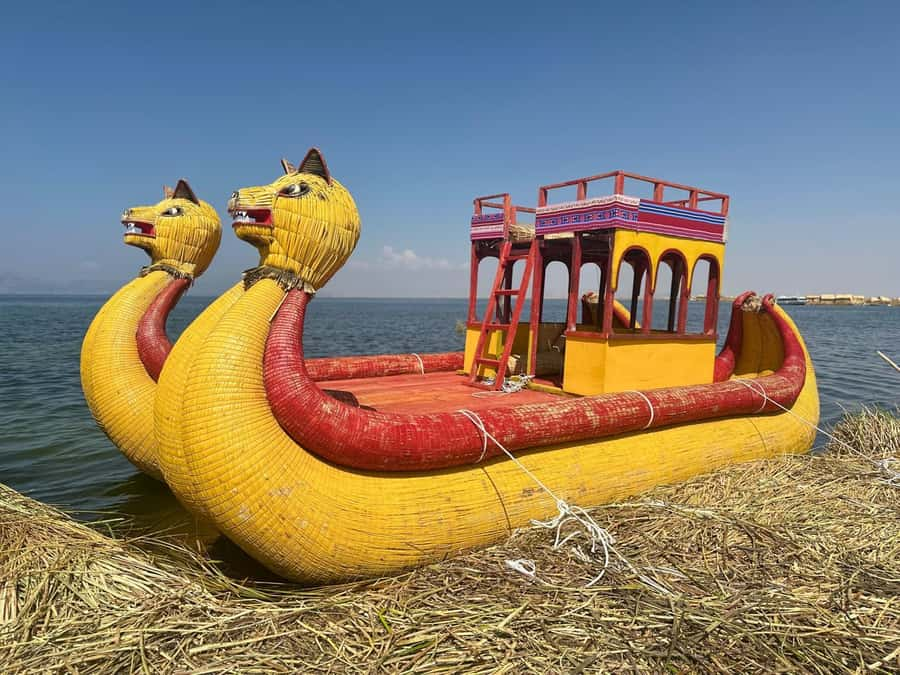
- Short boat ride: Take a totora reed raft ride for an additional fee, with local men explaining their boat-building skills.
- Three-hour format: Reach the islands from Puno and return in half a day, leaving time for other plans.
- Helpful guides: Guides such as Roly and Freddy have been praised for clear explanations and smooth English and Spanish.
- Simple value: The $7 cost includes hotel transfer in downtown Puno, entrance, a normal boat, life jackets, first aid equipment, and an official guide.
Why the Uros Islands matter on Lake Titicaca
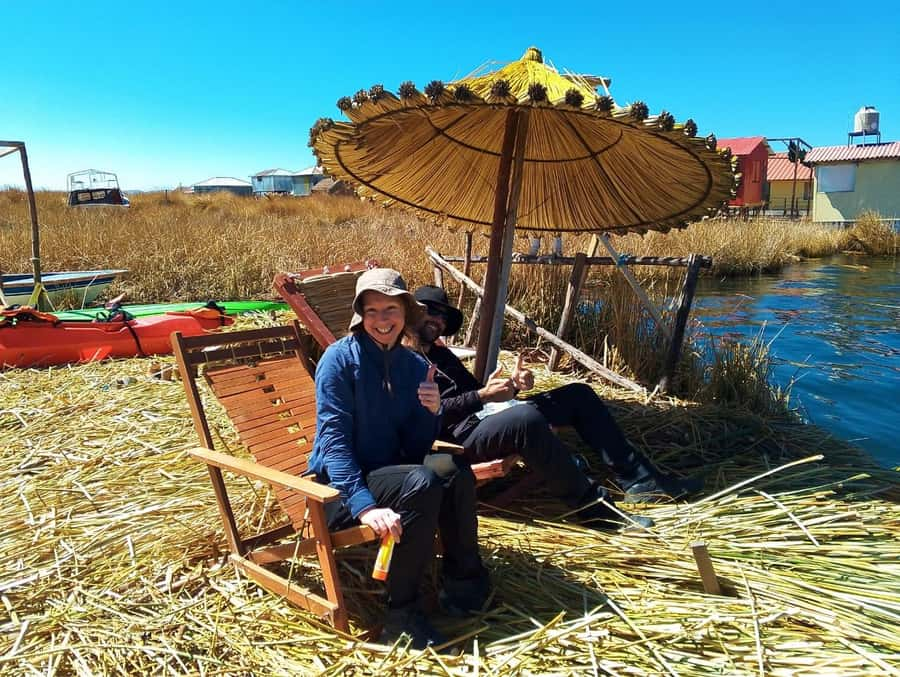
The Uros Islands are one of the main attractions in Puno Bay, but they are more than a scenic stop. The community’s way of life is tied to totora, a reed that grows around the lake. The islands, homes, boats, and many objects used by the Uros depend on this plant.
You will see how the reeds create a surface sturdy enough to walk on, though the sensation is different from walking on solid ground. The island itself is part of the lesson. Your guide explains how the community lives in this unusual setting, while residents demonstrate skills linked to the lake and the reeds.
The Uros are an Aymara language community. On the visit, you can learn a few Aymara greetings and use them when meeting island residents. Guide Roly has been particularly good at helping visitors switch between languages and understand the setting without turning the presentation into a long lecture.
I appreciate that the tour gives you direct contact with local residents. You may meet the person responsible for a small island and see embroidered rugs made by the women. The men are described as skilled builders and drivers of totora reed boats. These details help turn a pretty boat trip into a lesson about work, family roles, and survival on the lake.
More Lake Titicaca days:
- From Puno: Uros, Amantaní & Taquile Islands 2-Day Tour
★ 4.5 · 452 reviews - From Puno: Floating Islands of the Uros Half-Day Tour
★ 4.4 · 394 reviews - Lake Titicaca 2-Day Tour to Uros, Amantani and Taquile
★ 4.4 · 199 reviews
From Puno to the reed islands
Pickup is provided from hotels in downtown Puno. The first van transfer to the port takes about 10 minutes, so the start is simple and quick. After that, you board a normal boat with comfortable seats, life jackets, and a first aid kit.
The boat portion takes about 30 minutes. This is your first proper look at Puno Bay and the broad waters of Lake Titicaca. The ride is not the main event, but it gives you time to settle in and watch the shore recede.
The route also includes another 15-minute van transfer before the island visit. The transport sequence can feel less direct than you expect, with van, boat, and van segments listed on the way out. That is worth knowing if you prefer a single uninterrupted boat trip. The benefit is a straightforward connection from downtown Puno to the Uros community without arranging separate transport yourself.
The operator provides an official guide in English or Spanish. Names that have appeared on recent departures include Roly and Freddy, with boat staff such as Henry, Christian, and Brian. Guide quality matters here because the island itself is easy to see, but the meaning behind it is easier to miss without explanations.
Walking on a floating island
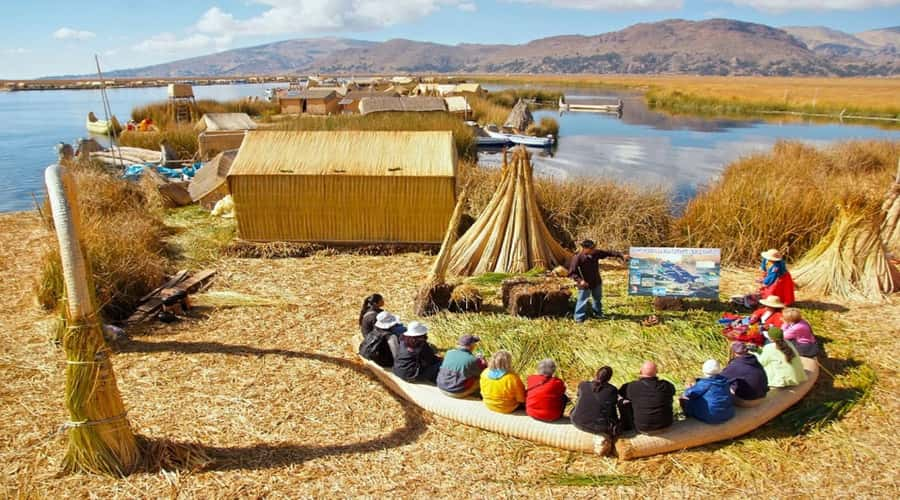
You have about two hours at the Uros Islands for a guided visit, photographs, sightseeing, and free time. This is the heart of the experience, so use the opening explanation to understand what you are seeing before reaching for your camera.
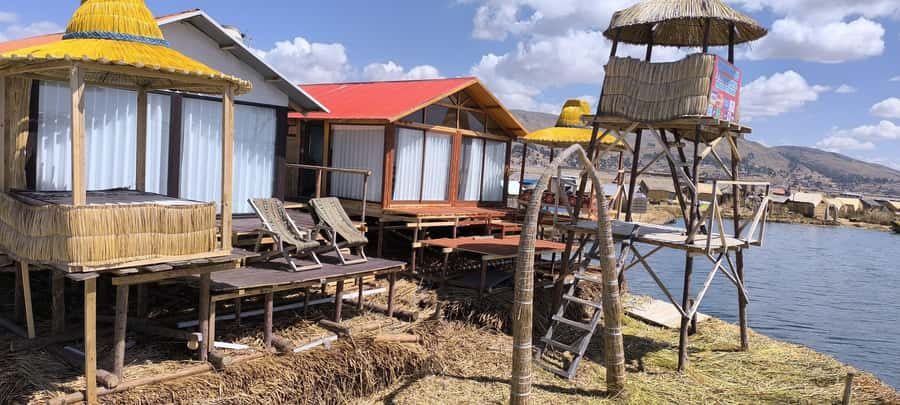
The unusual part comes immediately: the island is made from totora reeds rather than rock or soil. You can look closely at the layered material and see why constant maintenance is part of life here. The reed surface is also the setting for homes, paths, meeting areas, and boats.
Your guide explains how the Uros use the lake for fishing and how they collect eggs and hunt birds. The tour also covers reed construction and embroidery. The women’s rugs add color and detail to the visit, while the men’s work with reed rafts shows the practical side of the material.
The community is welcoming, but you should treat the island as someone’s home rather than a stage set. Ask before taking close portraits, listen during demonstrations, and avoid treating the reeds or household areas as props. The supplied guidance specifically asks you to respect the Uros community and its environment.
A visit like this works best when you stay curious about ordinary details. How does a reed island feel underfoot? What does a boat made from the same plant look like? Which activities depend on the lake? Those small questions will give you more than a quick collection of photographs.
The totora raft ride costs extra
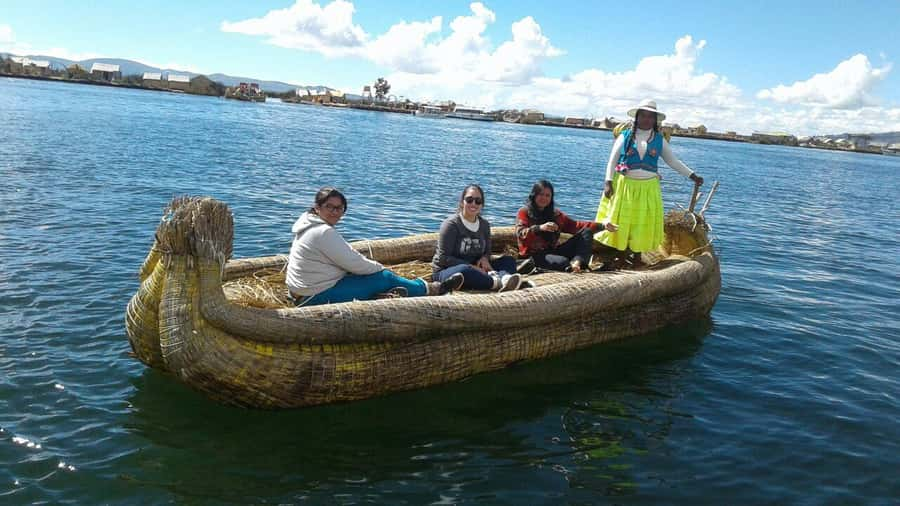
A short ride on a totora reed raft is one of the most memorable additions, but it is not included in the $7 price. You pay separately if you choose to take it, so check the additional cost before boarding.
The raft gives you a closer look at the Uros’ boat-building tradition. The men are skilled builders and drivers of these craft, and the ride helps show why totora is central to the community. It also gives you a different view of the floating islands from the water.
I would treat the raft ride as optional rather than essential. The included boat already takes you to the islands, and the main value of the visit comes from the guided explanation and time on the reed surface. If you enjoy hands-on cultural experiences and want the full Uros presentation, the extra ride may be worth it. If you are keeping costs tight, you can still have a worthwhile visit without it.
A few more Puno days worth comparing
- Puno: Full-Day Tour of Lake Titicaca and Uros & Taquile
★ 4.4 · 178 reviews - Puno: Full-Day Route of the Sun Tour to Cusco with Lunch
★ 4.7 · 131 reviews - Cusco: Scenic Route of the Sun to Puno with Buffet Lunch
★ 4.8 · 101 reviews - From Puno: full day tour to Uros and Taquile with Lunch
★ 4.6 · 95 reviews
What the two-hour island stop feels like
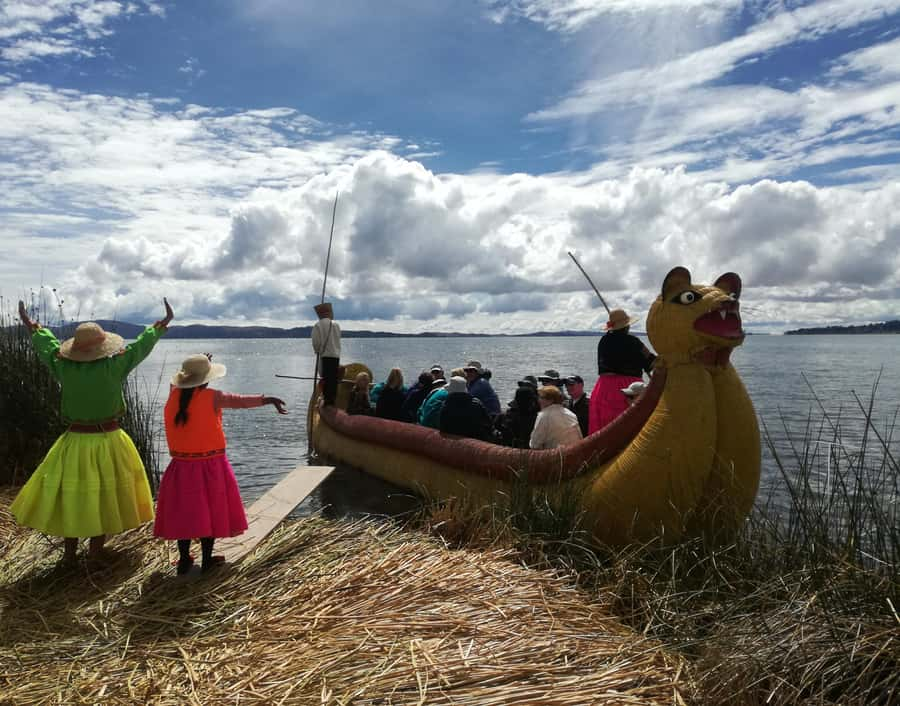
Two hours is enough for an introduction, but not enough for an unhurried study of every aspect of Uros life. You should expect a focused visit with an explanation, time to meet residents, photographs, and some free time.
That short format is a strength if you are spending only a short time in Puno. One recent booking was praised as a good fit for a limited schedule, and that is exactly how I would use it. The tour can fill a morning or afternoon without taking over your day.
It can also feel rushed. A four-star assessment described the visit as fairly good but very short, with more room needed to cover different parts of Uros life. If your main goal is a detailed study of Aymara culture, you may want more time than this half-day outing provides.
Timing can affect the mood. Morning departures are common, and an afternoon or sunset departure may offer softer light and a calmer feel. One booking was especially pleased with the sunset timing. The exact start time depends on availability, so check it before booking.
Guide quality can shape the whole visit
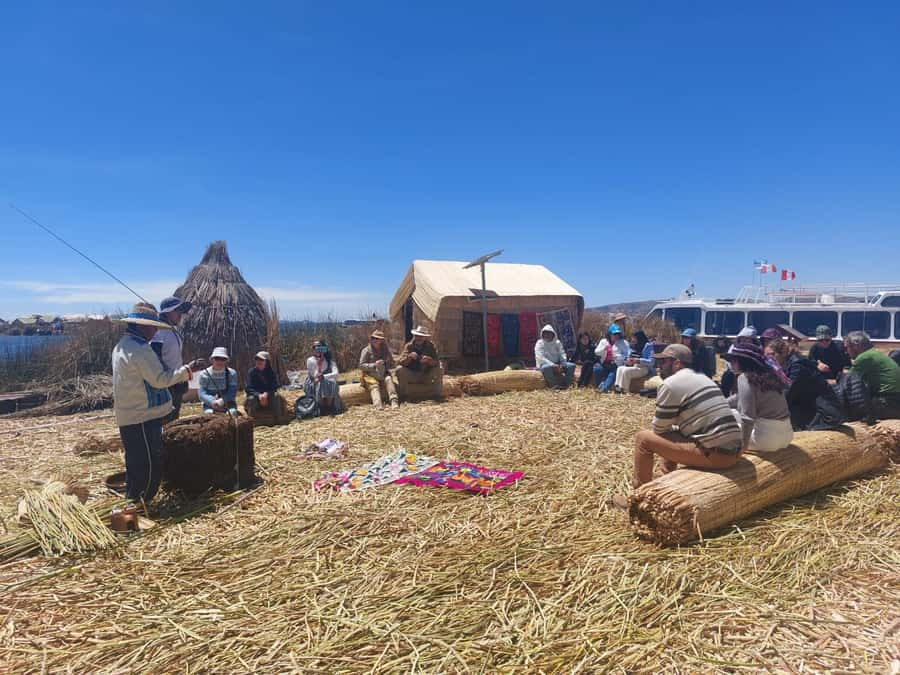
The guide is important because the Uros Islands are visually striking but culturally complex. A good guide connects what you see to daily work, language, and tradition.
Roly has received strong praise for explaining the area and switching smoothly between languages. He also helped visitors greet island residents in Aymara. Freddy has been praised for an enjoyable visit and clear support throughout the trip. These names do not guarantee who will lead your departure, but they show the kind of guide service you should expect from a strong outing.
Boat crews also matter. Henry, Christian, and Brian have handled boat duties on praised departures. The normal boat includes comfortable seats, life jackets, and a first aid kit, which is reassuring on a lake excursion.
The best approach is to listen actively and ask questions. One useful improvement would be a wider explanation of Uros life beyond the main facts about reeds and boats. If you want more detail, ask about language, fishing, hunting birds, collecting eggs, embroidery, and how the floating islands are maintained.
Price and practical value at $7
At $7 per person, this is an inexpensive way to see one of Puno’s most famous attractions. The price includes pickup and return transfer from a downtown Puno hotel, the entrance ticket, a normal boat, an official English or Spanish guide, life jackets, and first aid equipment.
That package makes the tour particularly useful if you do not want to arrange transport to the port. You are paying for access and explanation as much as for the boat ride. The guide helps you notice the difference between a simple lake excursion and a visit with cultural context.
The price does not include meals, the totora raft ride, or anything not specifically listed. Since the activity lasts only three hours, food is not a major concern, but bring water. Budget a little extra if you want the reed raft.
The value is strongest for first-time visitors to Puno, people with limited time, and anyone who wants a simple introduction without committing to a full-day Lake Titicaca program. The value is less obvious if you want privacy, a very small group, or a long and quiet cultural visit. The group size is not specified, so do not book expecting a private tour.
Sun, altitude, and what to bring
Lake Titicaca sits high, and the sun can feel strong even when the air is cool. Bring a hat, sunscreen, water, and comfortable clothes. You will also want walking shoes with a secure sole for the reed surface and paths.
A camera is useful, but protect it from the sun and keep your attention on the guide and residents. The islands offer unusual photographs, especially the reeds, boats, and open water, but respectful behavior matters more than getting the closest image.
Smoking is not allowed. The activity is listed as wheelchair accessible, though the surface of a floating reed island can be different from a standard paved walkway. If access is important for you, confirm the practical details with the operator before departure.
The tour offers free cancellation up to 24 hours in advance and a reserve-now, pay-later option. Those policies are useful if your Puno schedule is still shifting, but the main planning point is simpler: check the starting time and leave room for the full three-hour round trip.
Who should book this Puno excursion?
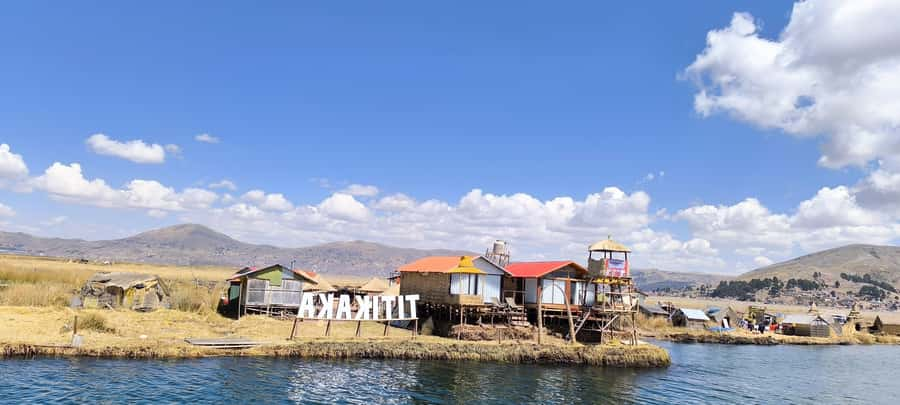
I would choose this tour if you want to see the Uros Islands without giving up an entire day. It suits first-time visitors, families, budget-conscious travelers, and anyone staying in Puno for a short time.
It is also a good pick if you value a guide who can explain what you are seeing. The reed islands are memorable on their own, but the Aymara language, fishing traditions, embroidery, and raft building add the substance.
You may want another option if you dislike organized stops or commercial presentations. The visit includes interaction with residents, free time, and an optional raft ride, but it is still a scheduled tour. The short time on the islands may also disappoint you if you want a slow, detailed look at community life.
Should you book the Floating Islands of the Uros?
For $7, I would book this tour if your schedule in Puno is tight and you want a practical introduction to Lake Titicaca’s reed communities. The included transfers, entrance, boat, and guide make it unusually easy to arrange.
Go with realistic expectations. This is a compact cultural visit, not an extended stay in an Uros village. You will see the floating islands, learn about Aymara traditions, meet residents, and have the option of a separate totora raft ride. If that sounds like enough, it is a strong half-day choice.
FAQ
How long does the Floating Islands of the Uros tour last?
The activity lasts about three hours, including transportation from Puno, the boat journey, the island visit, and the return trip.
How far are the Uros Islands from Puno?
The islands are located about 8 kilometers from Puno.
What languages are available for the guided tour?
The live guide is available in English or Spanish.
Is the totora reed raft ride included?
No. The totora reed raft ride is an optional extra and is not included in the tour price.
What does the $7 price include?
The price includes transfer from a downtown Puno hotel to the port and back, the entrance ticket to Uros, a normal boat with comfortable seats, life jackets and a first aid kit, and an official guide.
What should I bring?
Bring a sun hat, sunscreen, water, a camera, comfortable clothing, and shoes suitable for walking. Smoking is not allowed.
Just added around Puno
- From Cusco to Lake Titicaca: 2-Day Homestay Tour★ 4.5 · 56 reviews
- From Cusco: 2-Night Lake Titicaca Excursion★ 3.7 · 62 reviews
- Lake Titicaca, Uros and Taquile Full-Day Tour★ 4.3 · 69 reviews
- From Puno: 3-Hour Uros Floating Islands Tour★ 4.4 · 67 reviews
- Full Day Lake Titicaca Tour from Cusco★ 4.5 · 91 reviews
- From Cusco: 2-Day Lake Titicaca Tour★ 4.4 · 74 reviews
- Cusco: Scenic Route of the Sun to Puno with Buffet Lunch★ 4.8 · 101 reviews
- From Cusco: Titicaca Lake – Full day tour with sleeper bus★ 3.9 · 72 reviews
Lake Titicaca Tours, compared.
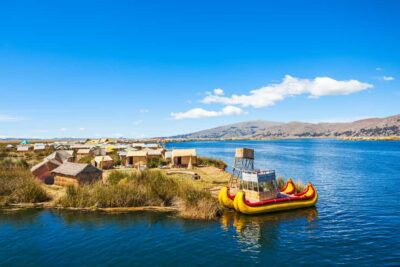
From Puno: Uros, Amantaní & Taquile Islands 2-Day Tour
Read our review →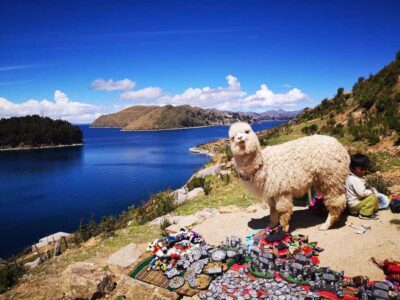
La Paz: Full Day Trip to Copacabana and Isla del Sol
Read our review →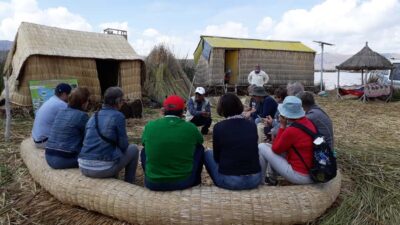
From Puno: Floating Islands of the Uros Half-Day Tour
Read our review →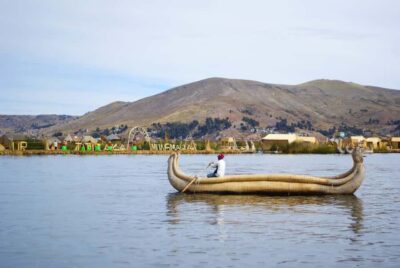
Lake Titicaca 2-Day Tour to Uros, Amantani and Taquile
Read our review →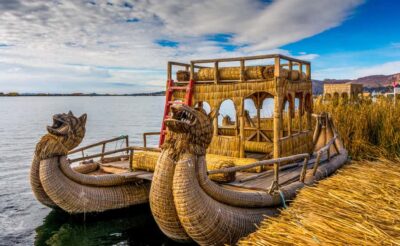
Puno: Full-Day Tour of Lake Titicaca and Uros & Taquile
Read our review →
From La Paz: Titicaca, Copacabana, and Isla del Sol Day-Trip
Read our review →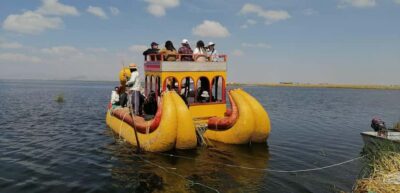
From Puno: full day tour to Uros and Taquile with Lunch
Read our review →
Browse the lists this tour appears in