
Reviewed · CITY TOURS
Cusco City Sightseeing and Sacsayhuaman Archeological Park Tour
Sacsayhuaman is the star here: huge Inca stones fit together so tightly that you may wonder how anyone moved them, let alone shaped them. I like that this tour combines the ruins above Cusco with Qorikancha and Cusco Cathedral, giving you both Inca and Spanish colonial history in one outing. I also like the small group, capped at 15 people, and the air-conditioned vehicle that saves your legs on the steep roads outside town.
The main catch is the fine print on entrance tickets. The $79 price applies to the selected option, but some bookings do not include admission, and extra charges can be substantial. Pickup and bilingual guiding can also be uneven, so confirm the ticket package, language balance, and return arrangements before you set out.
Key points at a glance
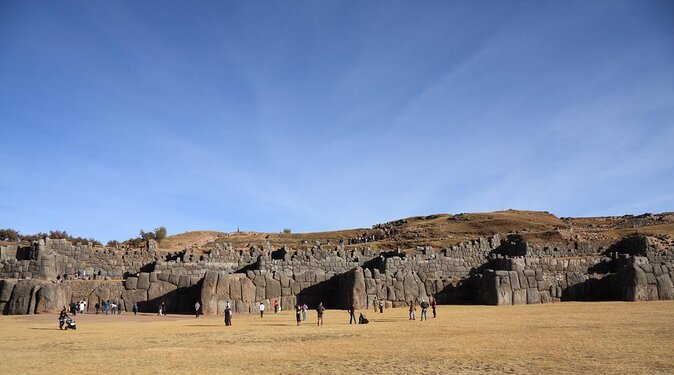
- Sacsayhuaman’s giant stones are the clear highlight, with broad views over Cusco.
- Four archaeological sites are covered above the city: Sacsayhuaman, Qenqo, Puca Pucara, and Tambomachay.
- Qorikancha and Cusco Cathedral add Inca religious history and Spanish colonial art.
- Small groups of up to 15 make it easier to hear the guide than on a large coach tour.
- The bilingual format may slow the commentary if Spanish and English groups share one vehicle.
- Allow extra time and money if your package excludes admission or pickup takes longer than planned.
Sacsayhuaman gives the tour its real force
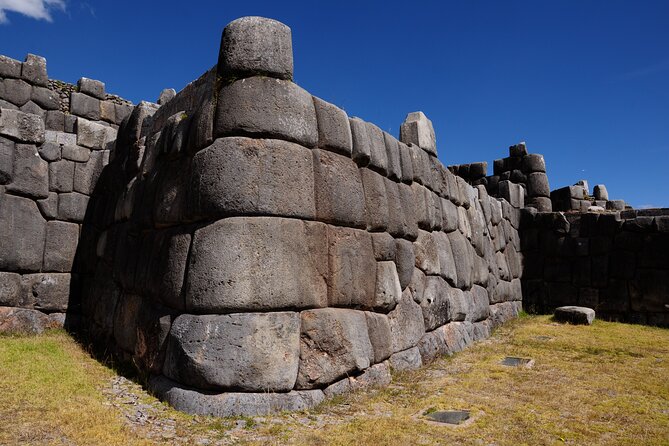
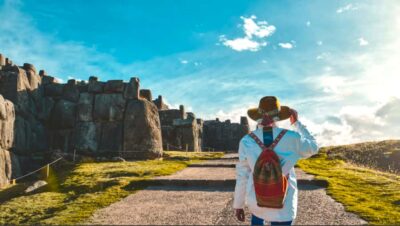
I would begin this tour for Sacsayhuaman alone. The archaeological complex sits above Cusco, where the open setting gives you a fine look back at the city. The first sight is not a delicate ruin. It is a wall built from enormous blocks, some reaching about 13 feet, or 4 meters, in height.
The stones are cut into irregular shapes and fitted together with striking precision. Your guide explains how the site worked and points out carvings linked to the condor, puma, and snake, symbols tied to the three Inca worlds. The best guides also help you separate established facts from the theories and legends that surround the site.
This is where guide quality matters most. Guides such as Alvaro Jimenez, Yuber, Niko, Abraham, Adrial, Rommel, Clara, and Aracely have been singled out for lively explanations, humor, and strong command of Cusco’s past. You are not guaranteed a particular guide, but the experience can change greatly depending on who leads it. Niko, described as a former history professor, was especially praised for bringing the civilization and the centuries around it to life. One guide even adapted the discussion to a visitor’s special research interests.
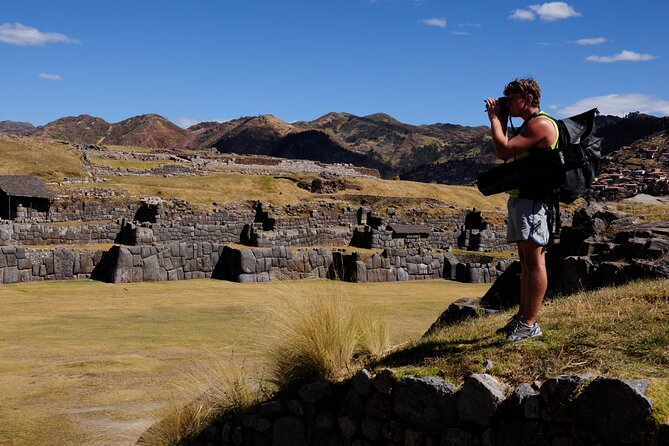
Give yourself room to look closely. The value here is not just the view or the photo. You are seeing masonry that still provokes serious questions about engineering, labor, religion, and Spanish descriptions of the site. If you want a technical answer to exactly how the walls resisted earthquakes, make that request clearly. Some guides explain the subject well, while others may offer broad answers rather than engineering detail.
More City Tours in Cusco
- Cusco: Half-Day City Tour with Sacsayhuaman and Q’enco
★ 4.6 · 1,129 reviews - City Tour Cusco Qoricancha Sacsayhuaman y Tambomachay
★ 4.7 · 617 reviews - Cusco: Sightseeing Tour of the City on an Open-Top Bus
★ 4.0 · 481 reviews
Qenqo, Puca Pucara, and Tambomachay fill out the picture
After Sacsayhuaman, the vehicle continues to three smaller sites. They do not match the scale of the first stop, but together they show that the area around Cusco was more than a single fortress.
At Qenqo, you see a ceremonial site associated with a temple of the puma and a stone altar. The spaces are more enclosed and atmospheric than Sacsayhuaman. Your guide will connect the carved surfaces and ritual areas to Inca religious practice. This stop may feel brief, especially if you are most interested in architecture rather than ceremony.
Puca Pucara is a military outpost. Its remains sit along the old approach to Cusco and help explain how the Inca watched and controlled movement through the region. The ruins are less dramatic than Sacsayhuaman, but they make more sense after you have heard how the sites worked together.
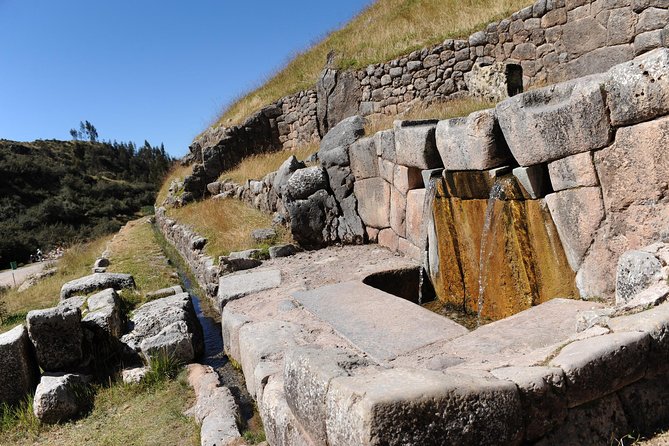
Tambomachay shifts the focus to water. Channels, aqueducts, and small waterfalls run through the stonework. It may have served a ceremonial role connected with water worship, and it has also been described as a retreat or spa for elite Inca society. Do not expect a large complex. The interest is in the careful movement of water and the way ritual and practical design meet.
The complete circuit takes about two hours according to the planned schedule, including the archaeological park stops. You will get more from it if you listen for connections rather than treating each ruin as a separate photo stop. Sacsayhuaman shows scale, Qenqo shows ceremony, Puca Pucara suggests defense, and Tambomachay brings in water and ritual.
Qorikancha reveals the collision of two cultures
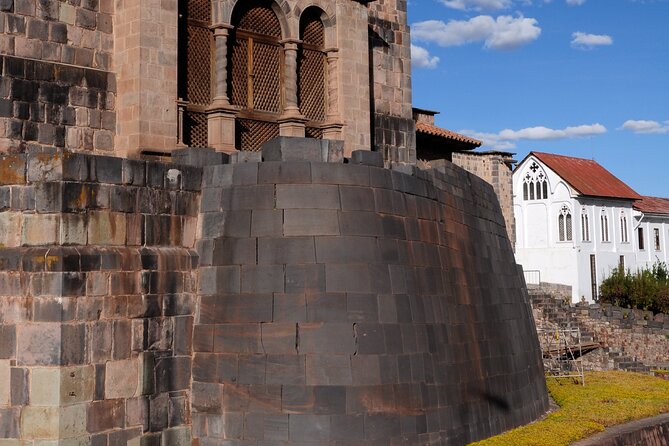
Back in Cusco, the tour visits Qorikancha, the Temple of the Sun. The Santo Domingo Convent was built over the Inca temple, making this one of the clearest places to see how Spanish colonial construction was placed directly on top of an earlier sacred center.
The old description of Qorikancha as gold-plated is part of the site’s enduring story, and your guide will explain why the temple astonished the Spanish when they arrived. The real value of the visit is not simply the gold legend. It is the contrast between Inca stonework and the later convent, which puts conquest, conversion, and changing power in the same frame.
The stop is listed at about one hour. That sounds generous, but the full tour includes transport, several ruins, the Cathedral, and walking in central Cusco. The actual pace can vary. Some groups finish close to the advertised three and a half hours, while others have reported four to five hours. If you have dinner plans or a timed train connection, leave a buffer.
Plaza de Armas and Cusco Cathedral complete the city visit
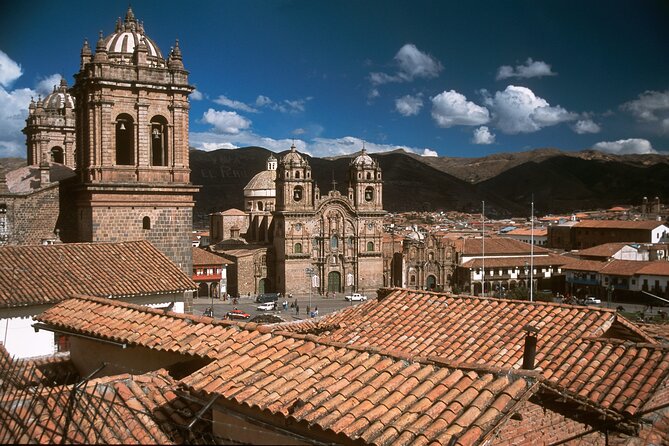
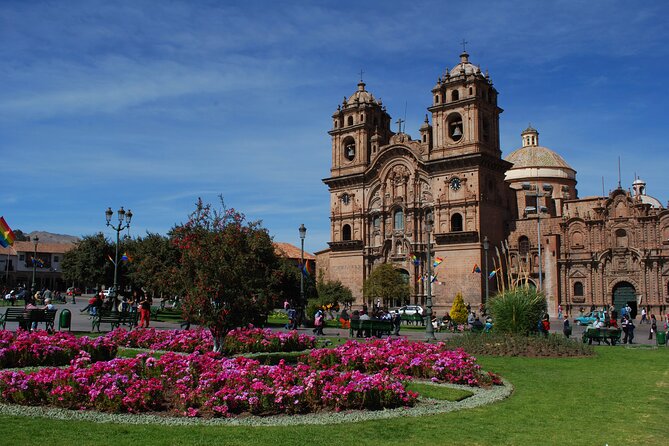
The return to central Cusco includes a walk through Plaza de Armas. From the square, you can see Cusco Cathedral and the Church of the Society of Jesus, two large colonial churches that frame the center.
The Cathedral visit focuses on late-Gothic and Baroque architecture, stained glass, colonial paintings, and religious objects. The most notable work named for the tour is the Señor de los Temblores, described as the oldest surviving painting in Cusco. The interior gives you a different kind of history from the ruins above town. Here, Spanish Catholic power, local artistic traditions, and older Andean beliefs meet in one building.
You cannot wear shorts inside the religious sites. Photography is forbidden in the Cathedral, so do not count on taking pictures of the paintings or interior details. These rules are simple, but they matter if you are packing for a sunny afternoon and want to document every stop.
One limitation is that the phrase city tour may set the wrong expectation. This is not mainly a walking tour of Cusco’s streets, markets, and neighborhoods. Much of the city portion centers on Qorikancha and the Cathedral, with the main transport circuit taking you to the archaeological sites above town. That focus suits you if you want major historic sites in a short period. It may disappoint you if you hoped for a broad introduction to everyday city life.
More City Tours in Peru
- Open Bus Cusco City Tour
★ 4.5 · 219 reviews - Cusco: City Tour | Half-Day Tour to 4 Archaeological Sites
★ 4.6 · 206 reviews - City Tour in Cusco & visit Museum South American Camelid Private.
★ 5.0 · 147 reviews - Cusco City Sightseeing, San Pedro Market, Cathedral and Qorikancha Temple
★ 4.5 · 139 reviews
The guide can make or break the experience
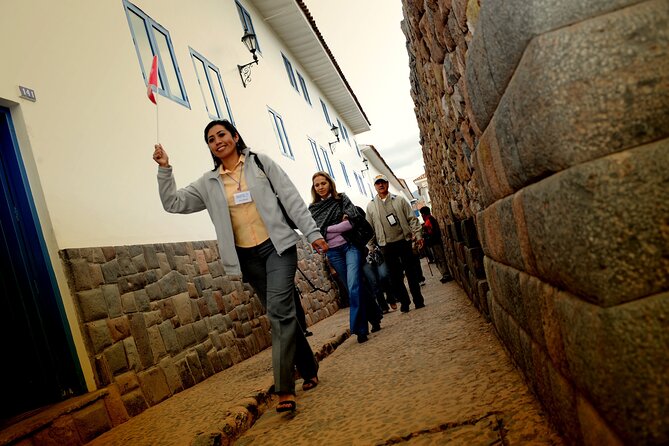
The strongest feature across this tour is the guiding. A good guide does more than name a building. They explain why the site mattered, connect Inca beliefs with architecture, and make room for questions. Several guides have been praised for warmth, humor, energy, and the ability to involve families and children.
The tour is bilingual in Spanish and English. That is useful for mixed groups, but it can also be a problem. If most of the van speaks Spanish, the English explanations may be shorter or delivered in sections. One English-speaking couple received only limited commentary in English and felt they missed much of the cultural information.
I would contact the operator before booking if detailed English commentary is important to you. Ask whether the departure will combine languages and how the guide handles both. Separate English and Spanish departures would make the timing cleaner, but that arrangement is not guaranteed here.
The small-group limit of 15 is a real benefit. You are less likely to lose the guide in a crowd, and questions are easier than on a large bus. Some outings may feel closer to a private experience, but you should not assume that every departure will be private. The advertised format is small group, not private tour.
Transport saves time, but pickup needs attention
The air-conditioned vehicle is practical in Cusco’s strong sun and changing weather. It lets you cover the sites above the city without arranging separate taxis or working out a route on your own. For a first day of sightseeing, that can be worth a great deal.
Hotel pickup and drop-off are included in principle, but some hotels sit in streets where vehicles cannot enter. In those cases, you may need to walk to a nearby pickup point. Individual hotel pickups can also make the start less exact, and several departures have taken longer than planned.
I would confirm your pickup location in writing and ask where the vehicle will leave you at the end. Most of the time, the transport plan works as intended, but there have been cases involving missed pickups, unanswered messages, or no return ride to the hotel. Those failures are serious, particularly if you have an appointment afterward.
The route itself is efficient. You see four sites outside the center, then return for Qorikancha and the Cathedral. Doing this independently would require more planning and separate rides, and you might skip Puca Pucara or Tambomachay. The tradeoff is less control over how long you spend at each place.
The $79 price depends on the ticket option
At $79 per person, the tour can be good value if admission to Sacsayhuaman, Qorikancha, and the Cathedral is included. You are paying for transport, a guide, and a compact route that would take more work to arrange alone.
But there are two purchase options, with and without tickets. The difference is easy to overlook. If you choose the non-ticket option, admission is not included, and extra costs have been reported at roughly 140 to 290 Peruvian soles, depending on what is required. That can erase the apparent savings.
Read the booking selection carefully before paying. If the price seems unusually low, check each entrance fee rather than assuming the main tour price covers everything. The ticket-included option is the safer choice for simple budgeting.
The overall rating is 4.3 from 101 ratings, which fits the experience: strong guiding and excellent sites, mixed execution on tickets, timing, language balance, and pickup. I would not treat the $79 figure as the full cost until you know exactly which admission package you selected.
Weather, clothing, and altitude planning
Cusco weather can shift quickly. One outing continued in pouring rain, while another visitor was advised to dress for changing conditions. Bring a light waterproof layer, sun protection, and shoes that work on uneven stone surfaces.
You will be walking at high altitude, including at Sacsayhuaman above the city. The tour is not presented as strenuous, and most people can participate, but the combination of hills, stone paths, sun, and stops can feel tiring. An air-conditioned vehicle helps between sites, but it does not remove the need to pace yourself.
This makes the tour a sensible choice during an acclimatization day if you already plan to spend time in Cusco. You see important sites without organizing a full-day excursion into the Sacred Valley. Still, listen to your body and tell the guide if you need a slower pace.
Who should book this Cusco tour?
I would choose it if you want a well-organized first look at Inca sites around Cusco and prefer a guide to explain what you are seeing. Families can benefit from the short sequence of stops, and the small group gives children more chance to stay engaged. It also suits solo visitors who want transport and company without booking a private outing.
It is less suitable if you want a slow, specialist visit focused on Inca engineering. You may not get enough time for every technical question, and the bilingual format can reduce the English commentary. Independent visitors who dislike fixed schedules may also prefer taxis and separate site visits.
Book it early if your dates are fixed. The average booking point is about 44 days ahead, though last-minute space has sometimes been available. You can cancel for a full refund up to 24 hours before the start time, but changes or cancellations inside that window are not accepted.
Should you book it?
Book this tour if the ticket-included price works for your budget, you want Sacsayhuaman plus the main nearby ruins, and you value a guide who can connect Inca and colonial Cusco. The stones at Sacsayhuaman, the water channels at Tambomachay, Qorikancha, and the Cathedral create a useful first chapter for later visits to Machu Picchu and the Sacred Valley.
Before you commit, verify three things: which entrances are included, how the English and Spanish commentary will be handled, and where pickup and return will take place. If those details are clear, this is a practical half-day introduction with a strong core route. If they are vague, the same $79 can become a much more expensive and less predictable outing.
FAQ
How long does the tour last?
The advertised duration is approximately three hours and 30 minutes. Some departures have taken four to five hours, so leave extra time after the tour.
What sites are included?
The route includes Sacsayhuaman, Qenqo, Puca Pucara, Tambomachay, Qorikancha, Plaza de Armas, and Cusco Cathedral.
Is transportation included?
An air-conditioned vehicle and hotel pickup and drop-off are included. Some hotels are on streets where vehicles cannot enter, so you may need to meet the vehicle at a nearby point.
Are entrance tickets included?
This depends on the option you choose. Some bookings include admission to the Cathedral, Qorikancha, and Sacsayhuaman Archaeological Park, while the non-ticket option does not include entrance fees.
Is the tour offered in English?
The guide service is bilingual in Spanish and English. The amount of English commentary may vary if both language groups share the same vehicle.
How many people can join the tour?
The maximum group size is 15 people.
Can I wear shorts inside the religious sites?
No. Shorts are not allowed inside the religious sites included on the tour.
Can I take photos inside Cusco Cathedral?
No. Photography is forbidden inside the Cathedral.
What is the cancellation policy?
You can cancel up to 24 hours before the start time for a full refund. Cancellations and changes made less than 24 hours before the start time are not accepted.
Just added around Cusco
- Rainbown mountain cusco 1 Day★ 4.5 · 72 reviews
- rainbow mountain full day★ 5.0 · 44 reviews
- Manu National Park Tour 4days/3night★ 5.0 · 69 reviews
- Tour to the HUMANTAY LAGOON from CUSCO★ 5.0 · 35 reviews
- Vegan Peruvian Cooking Class Cocktails and Local Market in Cusco★ 5.0 · 46 reviews
- Cusco Private Airport Transfer: Fast, Reliable Hotel Drop-Off★ 5.0 · 80 reviews
- 1 Day Tour to Palccoyo (Alternative Rainbow Mtn) from Cusco, Peru★ 5.0 · 53 reviews
- 5-Day: Salkantay Trek to Machupicchu and Humantay Lake★ 5.0 · 42 reviews
City Tours, compared.
Cusco: Half-Day City Tour with Sacsayhuaman and Q’enco
Read our review →
Private City Tour, Monserrate, Emerald and Botero
Read our review →
City Sightseeing Hop-On Hop-Off Bus Tour & Extras
Read our review →
City Tour Cusco Qoricancha Sacsayhuaman y Tambomachay
Read our review →
Main City Sights in 7 Hours – Shared Group Tour
Read our review →Browse the lists this tour appears in