
Reviewed · BUENOS AIRES TOURS
Electric Scooter Tour: North Buenos Aires
Buenos Aires reveals itself quickly from an electric scooter. In about 10 kilometers, you glide from Plaza San Martín through grand avenues, political landmarks, Recoleta, and the University of Buenos Aires, with stories about soccer, barbecue, religion, and Argentine character along the way. The mate and alfajor break adds a welcome taste of everyday life.
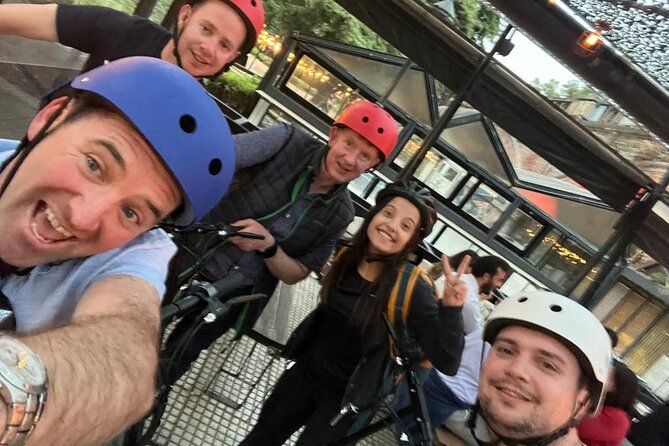
I like the small maximum of eight people, which gives guides such as Miguel and Rita room to talk with you instead of broadcasting a lecture. I also like the route’s range: you get major sights, local customs, and enough riding time to cover ground without spending the day on foot.
The main catch is timing. The advertised duration is about two and a half hours, but one family’s outing ran to four and a half hours, possibly because of weekend traffic and the route near Recoleta’s artisan fair. If you have a fixed evening plan, leave plenty of space after the scheduled 2 p.m. start.
Key points to know before booking
- A 10km ride covers a lot of Buenos Aires: You reach landmarks that would take much longer to connect on foot.
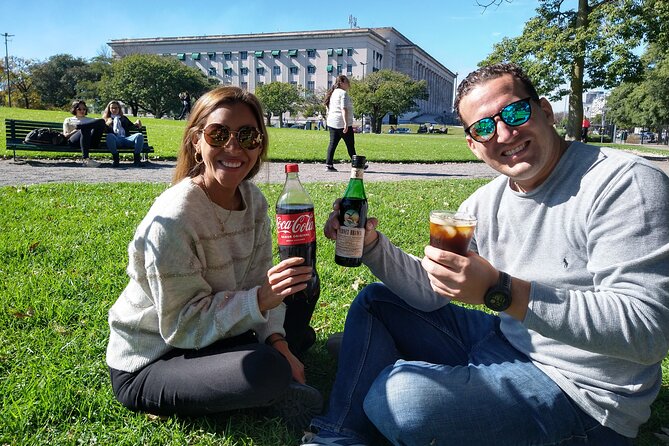
- Mate is part of the experience: At Floralis Genérica, you learn how to prepare yerba mate and taste a traditional alfajor filled with dulce de leche.
- The conversation goes beyond monuments: Expect stories about soccer, politics, migration, religion, food, and Argentine habits.
- The group is capped at eight: That makes it easier to ask questions and keep the ride personal.
- You need bicycle balance: The activity is not recommended if you do not know how to ride a bicycle.
- Weather and minimum numbers matter: Poor weather or too few bookings can lead to a new date, another experience, or a refund.
Why a scooter is a smart way to see northern Buenos Aires
Buenos Aires is broad, grand, and tiring if you try to connect every sight on foot. This ride gives you a practical middle ground. You cover about 10 kilometers, but you still stop often enough to hear the story behind each place and take photographs.
I like this format for a first or second day in the city. You get a useful orientation to several neighborhoods and can mark places for a later visit. The ride also gives you a feel for the city’s scale. Plaza San Martín, Recoleta, the Law Faculty, and the Obelisco are not just isolated photo stops. Together, they show how Buenos Aires mixes European-style public spaces, political power, education, faith, sports, and popular culture.
The equipment is described as an electric scooter, with Segway use listed among the inclusions. You receive a helmet and reflective belt. Since balance is part of the activity, this is not a sightseeing ride for someone who has never handled a bicycle or similar vehicle.
The group limit of eight is a real advantage. A guide can adjust the pace, answer questions, and keep the explanations conversational. Miguel has been praised for discussing Argentine politics, the economy, the university system, and local attitudes toward Americans. Rita has been singled out for her humor and enthusiasm. Guide assignments can vary, but the experience clearly depends on a strong personality at the front.
More scooter rentals in Buenos Aires:
- Bogota scooter tour
★ 5.0 · 46 reviews
Plaza San Martín and the city’s European character

The tour begins at 2 p.m. from Tres Sargentos 463, near public transportation, and first heads to Plaza General San Martín. Allow about 20 minutes here.
This is a good opening stop because it raises a basic question: why can Buenos Aires feel so European? The answer is not just the architecture. Public squares, avenues, monuments, and the city’s historic ties to Europe all shape the impression. Your guide uses the plaza to explain how Buenos Aires developed its distinctive visual character.
This stop also eases you into the equipment. You are not thrown straight into a long ride. You have time to settle into the scooter, listen, and get comfortable with the group.
Torre Monumental, migration, and football
The next stop is Torre Monumental, sometimes known as Little Ben, for about 15 minutes. Here the focus shifts toward migration, football, and the way different influences took root in Buenos Aires.
That combination is useful because soccer is not treated as a side note. It is part of how Argentina talks about identity, neighborhood loyalty, pride, and rivalry. If you enjoy sports, this may be one of the liveliest parts of the ride. If you do not follow football, the guide’s cultural explanation still helps you understand why the subject appears so often in Argentine conversation.
The stop is brief, so expect an introduction rather than a full historical visit. The value is in the connection between a landmark, the city’s immigrant past, and the passions that shape daily life.
The Obelisco, a quick look at Buenos Aires iconography
The Obelisco receives about 10 minutes. This is the shortest scheduled stop, and that tells you what to expect: a quick look, a few photographs, and a story about the monument as a great witness to Buenos Aires.
The Obelisco is closely tied to public celebrations, national events, and the city’s self-image. It is a useful contrast to the quieter spaces later in the route. Here, the guide can connect the monument to the public energy of the capital without asking you to spend much time standing around.
The stop also shows the practical strength of a scooter tour. You can reach a central landmark, pause, and move on without losing half an hour to walking between locations.
A few more Buenos Aires days worth comparing
- Buenos Aires Hop-On Hop-Off Bus, Free Walking Tours & Discounts
★ 4.5 · 2,218 reviews - Buenos Aires: City Highlights Guided Tour with Transfer
★ 4.7 · 1,946 reviews - Buenos Aires: Hop-On Hop-Off City Bus Tour
★ 4.2 · 1,855 reviews - Buenos Aires Hop-On Hop-Off Bus and Exclusive Benefits
★ 4.4 · 1,714 reviews
France, Argentine pride, and the local sense of self
At the French Embassy, the discussion turns to why Argentinians sometimes have a reputation for being conceited. This is not a dry diplomatic stop. It is a chance to discuss how Argentines see themselves, how outsiders view them, and how Buenos Aires developed such a strong connection with France and wider Europe.
I appreciate this kind of question because it moves beyond pretty buildings. A guide can explain local attitudes with humor and nuance, rather than simply assigning a label to an entire country. Miguel’s discussion of Argentine political life and attitudes toward Americans fits naturally with this part of the route.
You should expect conversation, not a formal embassy tour. The stop lasts about 10 minutes, and the building serves as a prompt for cultural context.
The Law Faculty and Argentina’s public life
The Faculty of Law at the University of Buenos Aires gets about 15 minutes. The stop presents the institution as a training ground for many of Argentina’s social and political leaders. It was inaugurated by Domingo and Evita Perón, adding a clear political connection to the visit.
This is one of the more useful stops if you want to understand the country beyond its monuments. Universities can tell you a great deal about how a society produces lawyers, public figures, and political leaders. The guide’s explanation of the university system gives the stop more weight than a simple architectural photo opportunity.
The building also provides a change of mood. After the Obelisco and embassy, you get a closer look at education and civic life. Fifteen minutes is enough for an explanation and photographs, though not enough for a full campus visit.
Floralis Genérica and the best pause of the ride
At Floralis Genérica, the group takes about 20 minutes for a break. This is where you have mate and an alfajor filled with dulce de leche.
The mate lesson is one of the tour’s most appealing details. You learn how to prepare the infusion made from yerba mate, then taste it in the company of the group. This is more personal than simply ordering an Argentine drink in a café. Mate is tied to sharing, conversation, and habit, so the stop gives you a small window into ordinary social life.
The alfajor balances the bitter, herbal drink with something sweet and familiar. It is a chocolate alfajor filled with traditional dulce de leche. If you want to understand Argentine food culture, this compact pairing tells you more than a long list of dishes.
The break also matters physically. Two and a half hours on a scooter is not strenuous in the same way as walking, but you still appreciate a pause. Floralis Genérica gives you a chance to rest, take photographs, and ask the guide questions before continuing.
Recoleta Cemetery and the route’s most layered stop
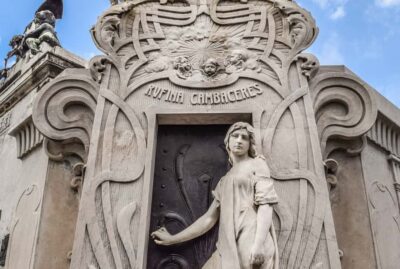
The tour allows about 15 minutes at Recoleta Cemetery, including roughly 10 minutes inside for photographs. The cemetery is the resting place of several important figures from Argentina and the wider continent, including national heroes.
You should keep your expectations realistic. Ten minutes inside is enough for a quick look, not a full exploration of the cemetery’s many passages, tombs, and stories. If Recoleta is a major priority for you, plan to return independently with more time.
The timing may also shift. On weekends, reaching the cemetery can require passing an artisan fair, and that can slow the group. One family reported a much longer outing, with the full experience taking four and a half hours. That may not happen on your day, but it is a useful warning: the published schedule should be treated as an estimate, not a guarantee.
Still, the stop earns its place. It connects national memory, religion, politics, and family history in one setting. The guide can give you a starting point, then you can come back later if you want a closer look.
The Basilica and the religious side of Argentina
The Basilica de Nuestra Señora del Pilar receives about 10 minutes. The subject here is religion and its place in Argentine life, including the fact that the Catholic Church chose a pope from what was once described as the End of the World.
This stop is brief, but it adds balance. Buenos Aires is often introduced through architecture, politics, and soccer. The basilica reminds you that Catholic tradition remains an important part of the country’s identity, even when daily life is more varied than a simple religious label suggests.
You will likely hear interpretation rather than receive a long architectural tour. That suits the pace. The basilica works as a short cultural stop before the final museum area.
MALBA and what the schedule does not include
The final listed stop is the Museo de Arte Latinoamericano de Buenos Aires, or MALBA, with about 15 minutes planned. Admission is not included.
That distinction matters. The tour can introduce you to the museum and its role in Latin American art, but you should not assume you will have time for a full visit or that entry is covered in the $39 price. If modern and Latin American art is high on your list, you may want to return separately.
The short stop also shows the tour’s overall purpose. This is a broad city sampler, not a series of long indoor visits. You move through several themes and places, then decide which ones deserve more of your time later.
What the $39 price gives you
At $39 per person, the value rests on coverage and guidance rather than admission tickets. You get the electric scooter or Segway, helmet, reflective belt, mate or another yerba mate infusion, and a chocolate alfajor with dulce de leche.
None of the listed stops includes an entry fee, and MALBA admission is specifically not included. That keeps the price relatively clear, but you should budget separately if you want to spend time inside the museum or return to Recoleta for a longer visit.
I see the price as fair if you want a compact orientation with cultural explanation. You are paying to connect distant parts of the city, hear local interpretation, and sample mate in a small group. It is less compelling if you prefer slow museum visits, long time at each monument, or an entirely self-guided outing.
The strongest value comes from the guides. A good guide can turn questions about soccer, barbecue, politics, authority, and local speech into a memorable introduction to Argentina. The experience is not only about moving efficiently. It is about giving the places a human frame.
Timing, weather, and who should book
The scheduled start is 2 p.m., and the activity returns to the meeting point. The ride lasts about two and a half hours, but I would avoid booking a tight dinner reservation or another fixed activity immediately afterward. Weekend conditions can stretch the outing, especially around Recoleta.
The experience requires good weather. If rain or poor conditions force a cancellation, you are offered another date or a full refund. It also requires a minimum number of participants. If that minimum is not reached, you are offered another date or experience, or a full refund.
You can cancel for a full refund up to 24 hours before the start time. Changes or cancellations inside that window are not accepted for a refund.
I would choose this tour if you:
- Want to see many central sights without walking between all of them
- Enjoy cultural stories as much as photographs
- Are comfortable riding a bicycle and trying an electric scooter
- Like small groups and informal conversation
- Want an easy introduction to mate and alfajores
- Have flexible plans after 4:30 p.m.
I would choose another format if you need a strict finish time, dislike riding in city conditions, or want extended visits inside Recoleta Cemetery and MALBA.
Should you book the North Buenos Aires scooter tour?
I would book it for a first look at Buenos Aires, especially if I had limited time and wanted more than a monument checklist. The route covers a lot, the group is small, and the mate stop gives the afternoon a genuine local touch.
Book with realistic expectations. You are not getting a long museum tour or a leisurely visit at every landmark. You are getting a fast-moving, story-led introduction to northern Buenos Aires, with guides such as Miguel or Rita bringing personality to subjects that range from football to political life.
The best practical choice is to keep your evening open. If the weather is good, you can ride, listen, taste mate, and finish with a much clearer sense of how the city fits together.
FAQ
How long does the electric scooter tour last?
The scheduled duration is approximately 2 hours and 30 minutes. The actual outing can take longer, particularly on weekends or when reaching Recoleta involves passing an artisan fair.
What time does the tour start?
The tour starts at 2 p.m. from Tres Sargentos 463 in Buenos Aires.
Where does the tour finish?
The activity ends back at the meeting point.
How many people can join the tour?
The tour has a maximum of eight participants.
Do I need to know how to ride a bicycle?
Yes. The activity is not recommended if you do not know how to ride a bicycle.
Is food or drink included?
Yes. You receive a chocolate alfajor filled with dulce de leche and a coffee, tea, or yerba mate infusion. The mate portion includes a chance to learn how to prepare it.
Are museum or attraction admission fees included?
The listed stops do not include admission fees. MALBA admission is specifically not included, and the tour only allows about 15 minutes at that stop.
Just added around Buenos Aires
- Private Airport Transfer In or Out: Aeroparque (AEP)–Buenos Aires★ 5.0 · 73 reviews
- Sailing with Wine Tasting in Buenos Aires★ 5.0 · 50 reviews
- Traditional Argentine FoodTour with optional Michelin Experience★ 4.5 · 56 reviews
- Unique Tailored Tours – The Hummingbird Trip★ 5.0 · 69 reviews
- Experience The Essence of Buenos Aires in San Telmo★ 5.0 · 51 reviews
- Tigre Speedboat – The Delta s Captain – CITYSAILING TIGRE★ 5.0 · 75 reviews
- La Ventana Tango Show & Dinner with Optional Classic Bus Ride★ 4.5 · 77 reviews
- Private Airport Transfer in or out with english speaking driver.★ 4.5 · 69 reviews
Buenos Aires Tours, compared.
Buenos Aires Hop-On Hop-Off Bus and Exclusive Benefits
Read our review →

Browse the lists this tour appears in