
Reviewed · BUENOS AIRES TOURS
Buenos Aires for curious people
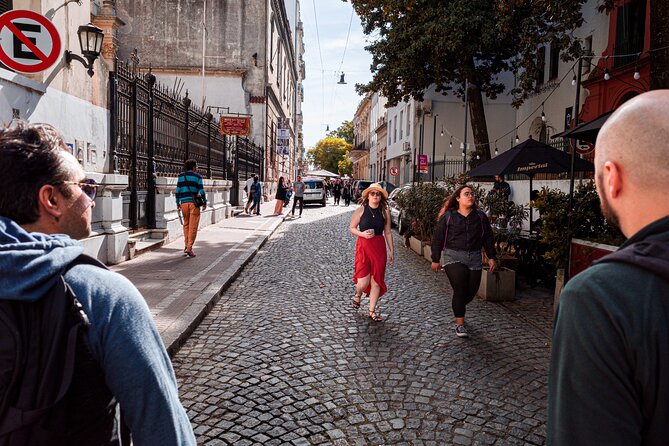
Buenos Aires for Curious People is not a quick photo stop tour. It uses San Telmo, Parque Lezama, and Plaza de Mayo as a classroom for Argentine politics, immigration, architecture, and everyday life. Guides such as Nicolás and Ignacio explain both famous places and sites many visitors walk past.
I like the eight-person limit, which keeps the walk conversational, and I like the way the route includes difficult subjects, including a former clandestine detention center. The price is also fair for two to three hours with a strong local guide. The main consideration is pace: this is a real walking tour, and one person described the route as needing a little more structure.
Key points at a glance
- History beyond the postcard: Expect politics, social change, architecture, food, and personal stories, not just landmark names.
- A small route with a broad scope: Walk from Bar Britanico and Parque Lezama through San Telmo to Casa Rosada.
- Small-group conversation: A maximum of eight people gives you room to ask questions and hear the guide clearly.
- Guides with different strengths: Nicolás, Nico, Ignacio, Sophia, and Santiago are named in the feedback, with particular praise for history, politics, and local culture.
- Serious subjects included: The Memory Walk covers Argentina’s 1976 to 1979 period of clandestine detention, torture, and extermination.
- Good value at $33: The tour gives you a useful first framework for understanding Buenos Aires, especially if you are curious about how the city became what it is.
Why this Buenos Aires walk feels different
Many city walks give you a list of buildings and a few dates. This one aims for a larger picture. You move through old Buenos Aires while discussing how the city was founded, how Italian immigration shaped San Telmo, how political power works, and how Argentina continues to deal with painful parts of its past.
That approach suits me because Buenos Aires can seem easy to read at first glance. You see grand avenues, European-style buildings, cafés, markets, and the pink Casa Rosada. But the city makes more sense when you connect those sights to immigration, class, military rule, democracy, food, and the lives of porteños, the people of Buenos Aires.
The guides also appear to adapt to the group. Nicolás is described as a history professor and museum employee, while other sessions were led by Ignacio, Sophia, Santiago, or Nico. One guide even brought along another guide so a Spanish-speaking participant and a partner with limited Spanish could both take part comfortably. That is a useful sign for a small tour built around questions.
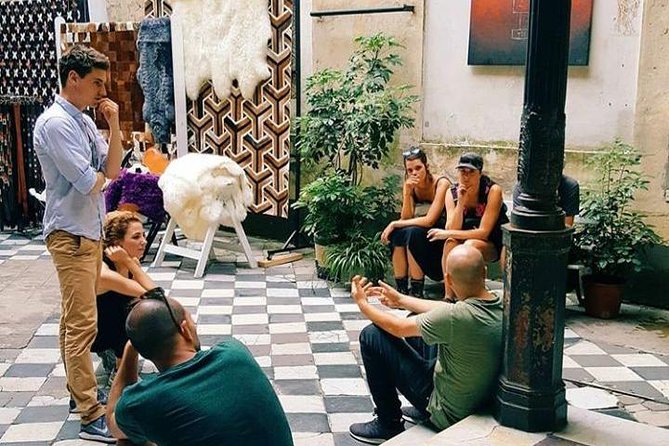
The tone is academic without needing to be stiff. You can expect maps, old photographs, political context, and stories about local life. At the same time, the guides make room for humor and casual conversation. If you want only quick facts for photographs, this may feel too serious. If you want to understand Argentina, it is a strong fit.
A few more Buenos Aires days worth comparing
- Buenos Aires Hop-On Hop-Off Bus, Free Walking Tours & Discounts
★ 4.5 · 2,218 reviews - Buenos Aires: City Highlights Guided Tour with Transfer
★ 4.7 · 1,946 reviews - Buenos Aires: Hop-On Hop-Off City Bus Tour
★ 4.2 · 1,855 reviews
Starting at Bar Britanico and Parque Lezama
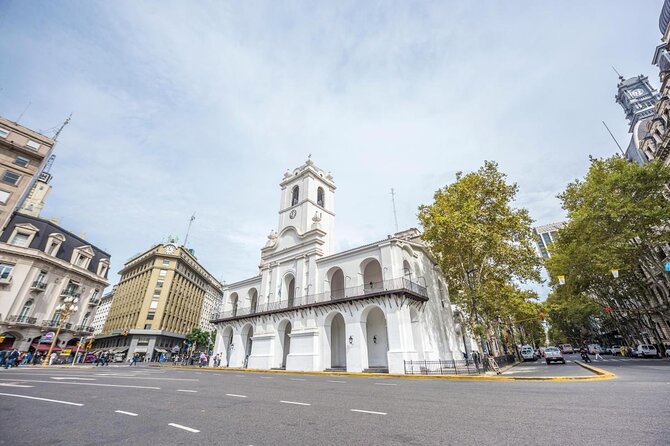
The walk begins at Bar Britanico on Brasil Street, close to the old southern part of Buenos Aires. The bar itself serves as a practical meeting point, while Parque Lezama provides the first major setting for the story.
Parque Lezama is linked with the site where the first fort was established in 1536. That gives the opening section real weight. You are not beginning with a random plaza. You are starting at a place tied to the early Spanish presence and the formation of the city.
Allow about 30 minutes here. The guide can use the park to establish the broad timeline before moving into the tighter streets of San Telmo. This early context matters because later stops make more sense when you know how the city developed and why its southern districts became so important.
Bar Britanico is listed as a five-minute stop, with no admission charge. Parque Lezama also has no separate entrance fee. Still, the value is not the cost of entering a park. It is the way the guide uses an ordinary public space to explain the city’s beginnings.
The Swedish church and overlooked San Telmo details
Club Sueco Restaurante and the Swedish church offer a change of angle. The church dates to 1944, and this brief ten-minute stop points to the foreign communities that helped shape Buenos Aires.
It is easy to think of San Telmo only as a colonial quarter with antiques and tango associations. A stop tied to a Swedish institution reminds you that the neighborhood and the wider city were shaped by many immigrant groups. The route does not treat Buenos Aires as a single Spanish story.
This is one of the tour’s useful habits: it gives attention to places that may not appear on a first-time sightseeing list. You may not spend long at every stop, but the less obvious locations help explain how the city’s identity was built.
The walk also includes food and local culture. One participant specifically appreciated that the guide discussed food as part of Argentine life, not as a separate tourist subject. You can ask questions along the way, and the small group makes it easier to steer part of the conversation toward your own interests.
A serious pause at the Memory Walk
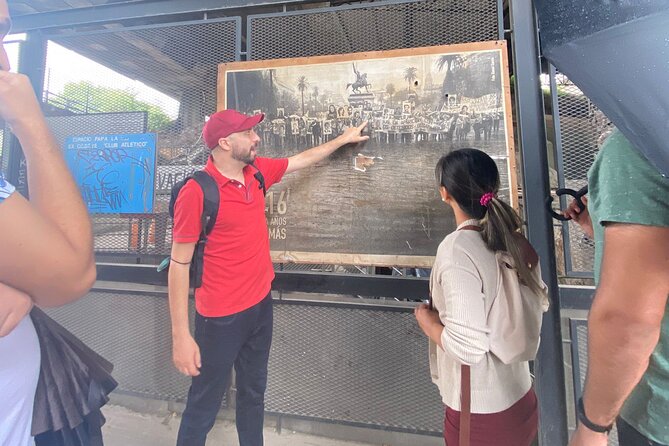
The 20-minute Memory Walk is the most sobering section. It marks a former clandestine center for detention, torture, and extermination that operated from 1976 to 1979.
This is not a light sightseeing stop, and you should know that before booking. The subject is difficult, but it is important for understanding Argentina’s modern political life. A tour that discusses only colonial churches, markets, and presidential buildings would leave out a major part of the country’s story.
The guide’s role here is especially important. The strongest sessions appear to place political events in clear context without turning the walk into a lecture. You should expect facts, questions, and discussion rather than a simple photograph and a quick explanation.
For some people, this will be the most valuable part of the route. For others, it may feel emotionally heavy in the middle of an afternoon walk. I see that as a consideration rather than a flaw. The experience is designed for curious people who want an honest account of the city, not a polished version with the hard parts removed.
Same trip, a completely different kind of day:
- Buenos Aires Hop-On Hop-Off Bus and Exclusive Benefits
★ 4.4 · 1,714 reviews - Buenos Aires: La Boca Guided Walking Tour in English
★ 4.8 · 1,587 reviews - Buenos Aires: La Recoleta Cemetery Guided Tour in English
★ 4.8 · 1,359 reviews - Buenos Aires: Tango Show at Tango Porteño & Optional Dinner
★ 4.6 · 981 reviews
San Pedro González Telmo and colonial Buenos Aires
At Parroquia de San Pedro González Telmo, the route turns to a colonial Catholic church. The stop lasts about 15 minutes and gives the guide a chance to discuss religion, architecture, and the older structure of San Telmo.
The church works well as a counterpoint to the Memory Walk. Within a short stretch of the city, you move from colonial institutions to modern political trauma. That contrast shows how much Argentine history is layered into the same neighborhood.
This stop is not presented as a long interior visit with a separate ticket. It is part of the walking explanation, so the guide’s interpretation matters more than the time spent inside. If you are especially interested in church art or architectural details, you may want to ask questions while you are there.
Plaza Dorrego and the character of San Telmo
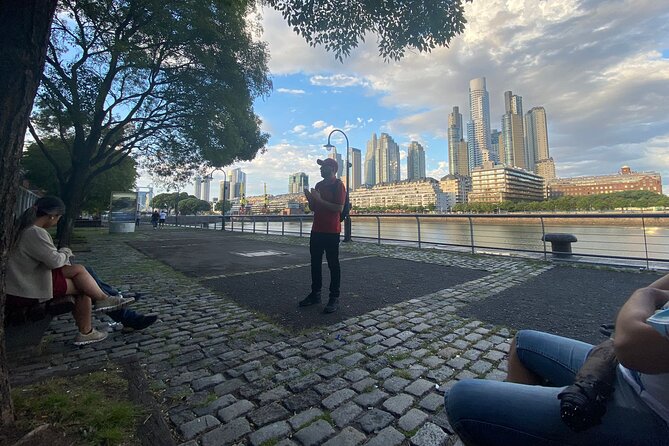
Plaza Dorrego is San Telmo’s main old-town square, and the tour allows about 15 minutes here. It is a natural place to explain how the district functions as more than a collection of old façades.
The plaza connects the neighborhood’s public life, street commerce, architecture, and tourist appeal. The guide can help you separate the real district from the version designed only for visitors. That is useful in San Telmo, where a market, a historic square, and ordinary city life sit close together.
I would pay attention to the guide’s local recommendations here. Several sessions included suggestions for what to do with the rest of your time in Buenos Aires. Since the tour ends near Casa Rosada rather than returning to the starting point, Plaza Dorrego is also a good moment to ask how the neighborhoods connect and where you might go next.
Mercado San Telmo and the Italian influence
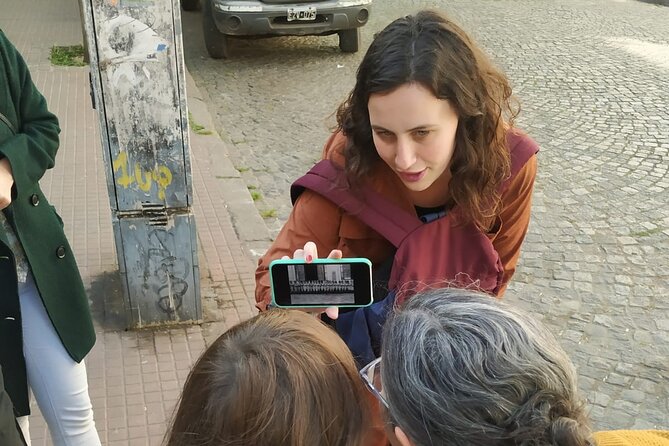
The 30-minute stop at Mercado San Telmo gives the walk its most everyday flavor. The market was built by Italian immigrants, and its history helps explain the cultural mix behind the city’s food and neighborhood traditions.
A market can be a better teaching site than a monument. You can connect migration to what people eat, how shops operate, and how a district changes over time. The guide may also point out how the market fits into the wider identity of San Telmo.
The market stop is long enough to make the route feel less like a continuous lecture. One useful detail from previous sessions is that guides have built in breaks for snacks and bathrooms, sometimes twice during the walk. That makes a difference over two or three hours, especially when the group wants to keep talking.
Do not assume the market stop means a full meal or included food. The tour price covers the walking experience, and admission is listed as free. You should budget separately if you want to buy something.
Puente de la Mujer and the route toward power
Puente de la Mujer, or Women’s Bridge, shifts the setting again. The bridge was designed by Spanish architect and structural engineer Santiago Calatrava, and the stop lasts about 15 minutes.
Its modern design gives the guide a way to discuss contemporary Buenos Aires and the city’s changing relationship with architecture and public space. After older San Telmo streets and historic market buildings, the bridge feels like a visual reset.
The route’s sequence is interesting because it does not stay in one historic pocket. You begin with the city’s early foundations, move through San Telmo, and then reach a modern landmark before finishing at the seat of national government. That broad movement helps you see Buenos Aires as a city that keeps adding new layers rather than preserving one fixed identity.
The route may also feel more demanding than a short neighborhood stroll. The advertised duration is two to three hours, and you should be ready to walk between several stops. Comfortable shoes are a sensible choice, though the supplied details do not give a precise distance or accessibility assessment.
Finishing at Casa Rosada and Plaza de Mayo
Casa Rosada is the final stop and the president’s office. The listed visit lasts about 25 minutes, and admission is not included.
Ending here gives the walk a clear destination. By this point, the earlier conversations about Argentina’s politics and social changes have a place to land. Casa Rosada is not merely a pink building for photographs. It represents national power, public protest, and the continuing political story that runs through the whole experience.
Because the tour finishes at Balcarce 78 rather than at Bar Britanico, you can continue exploring central Buenos Aires afterward. The experience does not include admission to Casa Rosada, so treat this as an outside explanation unless your booking details say otherwise.
The ending also makes the tour useful as an orientation walk. You finish in a major central area with a better sense of how San Telmo relates to Plaza de Mayo and the political center. The tour does not try to cover every famous Buenos Aires sight. Its aim is to give you a framework you can use for the rest of your visit.
The guides and the small-group advantage
The maximum group size is eight people. That is one of the strongest practical features because the subject matter invites questions. You are not trying to catch a guide’s voice from the back of a large crowd, and the guide can adjust the explanation when someone wants more detail about politics, food, architecture, or culture.
Nicolás and Nico receive particularly warm attention for clear English, local experience, history, and political insight. Ignacio is described as a history professor who explains difficult material clearly. Sophia is praised for patience and engagement, while Santiago is noted for an easygoing attitude and strong command of the subject.
The specific guide matters because this is an interpretation-led walk. The buildings are fixed, but the amount of context, humor, and discussion can vary. Several guides are associated with the experience, so you should not assume you will receive one particular person unless your booking confirms it.
The English is described as excellent in the feedback, and one session included support for different language needs. Still, if you want a tightly scripted tour with identical wording at every stop, this may not be the right style. The conversational format is part of its appeal, but it can also make the structure feel looser.
Is $33 a fair price?
At $33 per person, this is good value if you use the tour as a serious introduction to Buenos Aires. You receive two to three hours of guiding, a small group, several neighborhoods, and a broad discussion of Argentine history and politics. The listed stops do not require admission fees, but the cost is paying for the guide’s interpretation, not entry tickets.
That distinction matters. You can walk around Plaza Dorrego, Mercado San Telmo, and Casa Rosada on your own for little or no money. What you cannot easily reproduce is the sequence connecting the first fort, immigrant communities, colonial religion, state violence, modern architecture, and presidential power.
The value is highest early in your visit. You can use the guide’s suggestions and historical framework during later independent sightseeing. It is also a strong choice if you prefer conversation over a large bus tour or a rapid checklist of monuments.
Practical details before you book
The experience lasts approximately two to three hours and requires good weather. If poor weather cancels the walk, you are offered another date or a full refund.
You receive confirmation when booking. Service animals are allowed, and the route is near public transportation. Most people can participate, but the walking format deserves attention. One session was slowed by participants who found the pace difficult, so anyone with mobility concerns should consider the length and number of stops before booking.
Free cancellation is available up to 24 hours before the start time for a full refund. Cancellations or changes made less than 24 hours ahead are not accepted, and the cut-off follows local Buenos Aires time.
Who should book Buenos Aires for Curious People?
I would choose this walk if you want the city explained through history, politics, migration, and local life. It is especially useful for first-time visitors who want a sensible starting framework, and for repeat visitors who feel they have seen the main sights but still do not understand the forces behind them.
It suits solo visitors, couples, families with an interest in history, and small groups that enjoy asking questions. The group size also helps people who want a more personal conversation with a local guide.
I would think twice if you want a relaxed stroll with little walking, a tour focused mainly on photographs, or a cheerful overview that avoids painful political subjects. The route is not designed as a simple entertainment package. It asks you to pay attention.
Final verdict
Book this tour if you want San Telmo and central Buenos Aires to make more sense, not just look attractive. The strongest reasons are the small group, the local guides, the unusual stops, and the willingness to discuss Argentina’s difficult recent past alongside its food, churches, markets, and architecture.
At $33, it offers more than a list of landmarks. You get a working explanation of the city. Just allow enough time for walking, expect serious material, and remember that the Casa Rosada admission is separate.
FAQ
How long does Buenos Aires for Curious People last?
The experience lasts approximately two to three hours.
Where does the tour start?
It starts at Bar Britanico, Brasil 399, Buenos Aires.
Where does the tour end?
The tour ends at Casa Rosada, Balcarce 78, Buenos Aires.
What places are included on the route?
The route includes Bar Britanico, Parque Lezama, Club Sueco Restaurante and the Swedish church, the Memory Walk, Parroquia de San Pedro González Telmo, Plaza Dorrego, Mercado San Telmo, Puente de la Mujer, and Casa Rosada.
Is admission to Casa Rosada included?
No. Admission to Casa Rosada is not included. The other listed stops have no separate admission ticket.
How many people can join the tour?
The tour has a maximum of eight participants.
Can I cancel for a full refund?
Yes. You can cancel at least 24 hours before the experience starts for a full refund. If poor weather cancels the tour, you are offered another date or a full refund.
Just added around Buenos Aires
- Private Airport Transfer In or Out: Aeroparque (AEP)–Buenos Aires★ 5.0 · 73 reviews
- Sailing with Wine Tasting in Buenos Aires★ 5.0 · 50 reviews
- Traditional Argentine FoodTour with optional Michelin Experience★ 4.5 · 56 reviews
- Unique Tailored Tours – The Hummingbird Trip★ 5.0 · 69 reviews
- Experience The Essence of Buenos Aires in San Telmo★ 5.0 · 51 reviews
- Tigre Speedboat – The Delta s Captain – CITYSAILING TIGRE★ 5.0 · 75 reviews
- Private Airport Transfer in or out with english speaking driver.★ 4.5 · 69 reviews
- Tango Porteño Show with Optional Dinner in Buenos Aires★ 4.5 · 58 reviews
Buenos Aires Tours, compared.
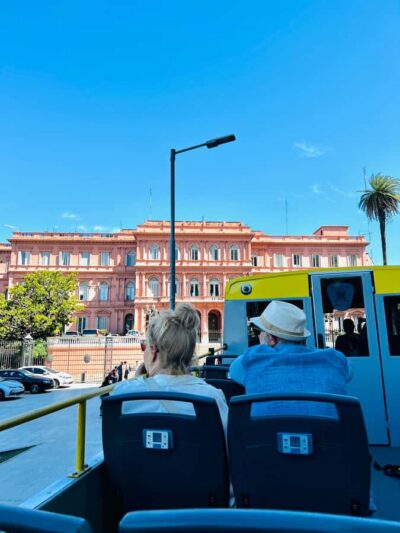
Buenos Aires Hop-On Hop-Off Bus and Exclusive Benefits
Read our review →
Browse the lists this tour appears in