
Reviewed · CITY TOURS
Bogota Walking Tour Teusaquillo, a different part of the city
Teusaquillo gives you a different Bogotá: broad streets, fine old houses, political memories, industrial traces, street art, and the bohemian Parkway zone. This 2.5-hour walking tour connects those pieces instead of treating the neighborhood as a quick photo stop.
I like the mix of serious national history and everyday city life, from the museum and a house tied to Colombia’s political conflict to cafés, artists, and independent projects. I also like the practical finish: coffee and craft beer are included, and the walk ends where you can keep exploring over lunch or a drink.
The main drawback is the pace. You cover several subjects in a short time, and lunch is not included. If you want long museum visits or a slow architectural study, this tour may feel brisk.
Key points at a glance
- A five-part walk through Teusaquillo: The route links a national museum, former brewery buildings, a politically important house, street art, and Parkway.
- Daniel may lead the experience: A review specifically praises Daniel for explaining the neighborhood’s political and social meaning in an engaging way.
- Coffee and craft beer are included: These small tastings add a local pause without making the tour revolve around food.
- The group is capped at 20 people: That is a reasonable size for a city walk, though the experience may still feel less personal when full.
- You finish in Parkway: The route ends near restaurants, coffee shops, and bars, so you can easily make a meal or evening of it.
- The route is more than architecture: You get links between industrial growth, urban expansion, politics, art, and Bogotá’s 1950s city life.
Why Teusaquillo makes a smart change of scene
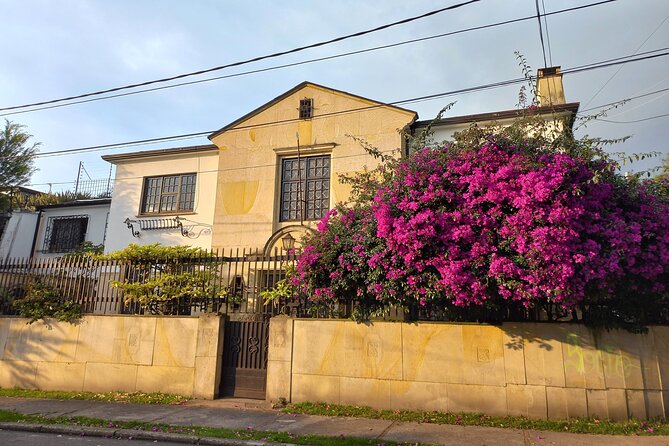
Many first visits to Bogotá focus on La Candelaria, the historic center, and the major museums there. Teusaquillo gives you another way to understand the capital. Its streets bring together older residential architecture, political memory, former industry, creative projects, and the social life around Parkway.
That variety is the main reason I would choose this walk. You are not simply moving from one attractive building to another. The route asks how Bogotá grew, how Colombia’s political conflict began, and how neighborhoods changed as the city expanded into modern urban areas.
The tour also suits you if you want context without spending a full day indoors. The museum is part of the route, but the experience keeps moving through the streets. That balance matters in Bogotá, where the city itself often explains as much as the formal exhibits.
The walk is priced at $28 per person. I consider that fair if you value interpretation and a well-planned route rather than just a guide who points out façades. Coffee tasting and craft beer are included, which adds modest value. You are paying mainly for the guide’s explanations and the connection between stops.
More City Tours in Bogotá
- Bogota: Bicycle City Tour
★ 4.9 · 2,156 reviews - Bogotá: Private City Tour, Monserrate, Emerald and Botero
★ 4.9 · 798 reviews - Bogotá City Tour with Monserrate, Gold and Botero Museums
★ 4.9 · 584 reviews
Starting at Museo Nacional Santa Fe
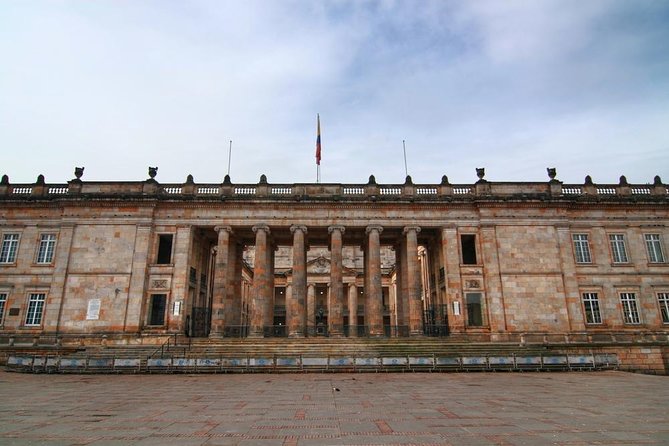
The meeting point is Museo Nacional Santa Fe in Bogotá. The first stop covers Colombia’s story from independence to recent times, along with major works by leading Colombian artists. The building itself also carries political meaning in its architecture and walls.
This is a strong opening because it gives you a national frame before the walk narrows to Teusaquillo. You can expect discussion of Colombia’s political changes, its artists, and the way the museum building holds memories of public life. The stop appears designed to orient you rather than offer a long, independent museum visit.
That distinction is important. The tour lasts about two and a half hours, and several stops follow. You should not plan on studying every gallery in detail. Instead, listen for the links between the museum’s national story and the neighborhood’s local buildings.
If Daniel leads your group, his role is likely especially useful here. His explanation has been praised for going beyond sights and addressing the political and social meaning of Teusaquillo. That is exactly the sort of interpretation this opening needs.
Cavas and Falcas, where industry changed the city
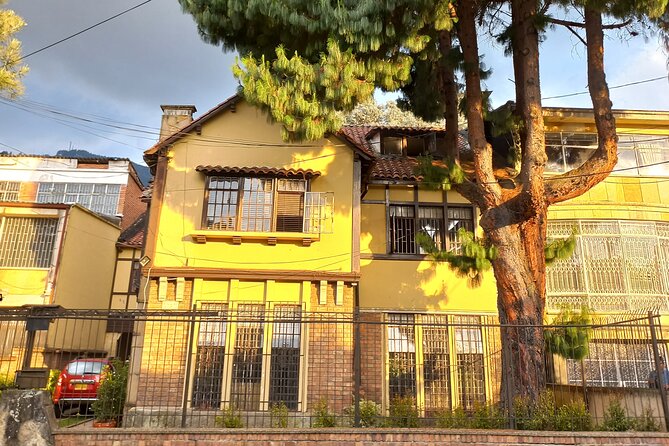
The next stop turns toward Cavas and Falcas, buildings once connected with the country’s first beer company. Here the subject shifts from national politics and art to industrialization, brewing, and Bogotá’s physical expansion.
This is one of the route’s most unusual details. Many city walks focus on churches, government buildings, and famous residents. A former beer company offers a more grounded way to discuss growth. Industry creates jobs, changes transportation needs, and pushes a city toward new urban areas. The tour uses these buildings to explain how Bogotá moved into its modern neighborhoods.
You may find this stop particularly useful if you like urban history. It shows that architecture is not only about style. A building can also reveal what a city made, who worked there, and how commerce helped reshape its boundaries.
The description does not provide a full interior visit or say that the buildings are open to the public. Plan to see them as part of the walking route and hear their story from outside or along the street. That keeps expectations clear and avoids treating this as a brewery tour.
The craft beer tasting fits nicely with the subject, though it should not be mistaken for a large food stop. It is an included beverage and a small connection to Bogotá’s brewing tradition.
A house linked to Colombia’s political conflict
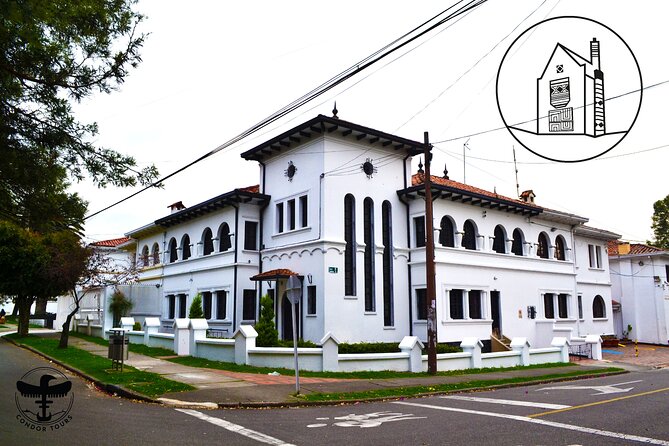
Another stop brings you to the house of a figure who changed Colombia’s history and marked the beginning of the country’s political conflict. The house is surrounded by some of Bogotá’s most attractive architecture.
This is the most politically charged point on the route. The supplied information does not identify the person, so I would not book this expecting a detailed biographical tour of a named historical figure. What you can expect is a discussion of the house, its former resident, and the way one person’s story connects to a wider national conflict.
That setting matters. Political history can feel remote when it is presented only through dates and official buildings. A residence makes it more immediate. You can stand in a neighborhood of elegant architecture and consider how events at one house affected a whole country.
This stop may also give you the best sense of Teusaquillo as a place where architecture and politics sit close together. The surrounding buildings are not just a backdrop. They help show the kind of urban district that developed as Bogotá grew and its civic life changed.
Because the subject may be difficult, this part will appeal most to people who want more than light sightseeing. The tour promises interpretation, not a simple architecture stroll.
More City Tours in Colombia
- 3-in-1 Panoramic city tour Bogotá-beyond the traditional
★ 4.4 · 248 reviews - Bogotá: City Tour, Monserrate, Gold Museum, Plaza de Bolivar
★ 4.7 · 168 reviews - BOGOTA: City Tour, Monserrate, Gold Museum, Botero Museum, Plaza Bolívar
★ 4.8 · 146 reviews - VIP Bogota City Tour: Farmers Market, Monserrate, Candelaria, 9hr
★ 5.0 · 66 reviews
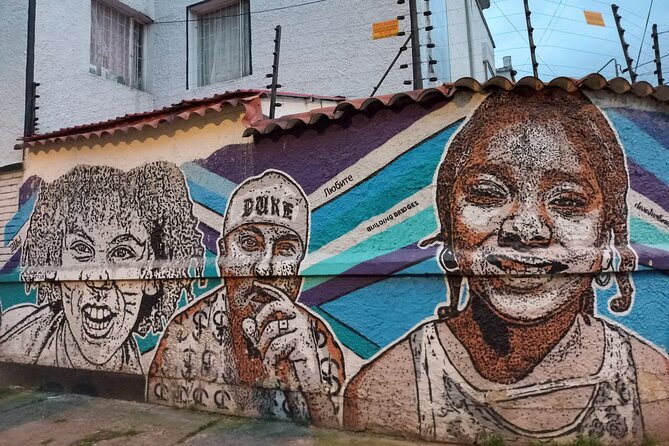
Street art with a local focus
The route then reaches a street art gallery featuring some of Colombia’s leading artists. This changes the tone again. You move from museum collections and historical residences to public work made for the city streets.
I like this contrast. It keeps the walk from becoming a single long lesson in the past. Street art shows how Bogotá’s creative life continues in public spaces, where art is part of the daily setting rather than separated behind museum doors.
The phrase street art gallery suggests a concentrated area or route with multiple works, but the available information does not specify the artists, walls, or exact number of pieces. You should expect a guide-led look at notable work, not a guaranteed list of named murals.
This is also where a guide’s local knowledge matters most. Art can be easy to photograph and easy to misunderstand. The useful questions concern the artists, the subjects, the neighborhood, and the role of independent projects in Bogotá. Daniel’s reported attention to social and political meaning should serve this part of the walk well.
Bring a phone or camera if you like street photography, but keep the focus on the explanation. The art is one piece of the neighborhood story, not the entire purpose of the tour.
Parkway, Bogotá in a 1950s frame
The walk ends in the Parkway zone at Cl. 39a. This is described as one of Bogotá’s iconic meeting places, with artists, restaurants, cafés, and independent projects. Its architecture reflects Bogotá in the 1950s, while its atmosphere carries a bohemian spirit.
That ending is well chosen. After the museum, industry, politics, and street art, Parkway gives you a place to see how people use the city now. You can continue with coffee, a meal, or a drink without arranging another transfer.
The route does not end at an isolated landmark. It leaves you in a useful part of Bogotá with choices. If you are hungry, lunch is not included, but restaurants are nearby. If you want to process the tour over a drink, bars are also available.
Pay attention to the change in mood. The early stops deal with institutions and political events. Parkway is more social and open-ended. Its 1950s architecture and independent projects help connect the neighborhood’s past to its present use.
I would plan to stay in the area after the formal tour. The ending gives you flexibility, and it is one of the better practical features of the experience.
What the guide adds to the walk
A route like this depends heavily on the guide. The stops are interesting, but their value comes from the links between them. The guide needs to explain why a former beer company belongs in the same story as a national museum, a politically important house, and street art.
Daniel is the only guide named in the available material. His explanations are specifically praised for covering not only sights but also the political and social meaning of Teusaquillo. If he leads your departure, you can expect a guide-led interpretation rather than a simple list of dates and building names.
Condor Tours provides the guide, but no fixed guide assignment is stated. I would treat Daniel as a possible guide, not a guarantee. The experience has a maximum of 20 people, which keeps the group within a manageable range, though a full group can still make questions and street movement less personal.
This is a tour for curious walkers. You will get more from it if you ask how the city changed, why particular buildings matter, and how art and public spaces reflect Colombia today.
Timing, walking, and practical comfort
The tour lasts approximately two hours and 30 minutes and is entirely a walking experience. The route starts at Museo Nacional Santa Fe and ends at Parkway, so you should be ready for a point-to-point walk rather than a return to the starting place.
The meeting point is near public transportation, which makes the start easier to reach. The end also gives you good onward options because Parkway has restaurants, cafés, and bars. The tour is not presented as a food tour, and lunch is specifically excluded.
Coffee tasting and craft beer are included. Alcoholic beverages form part of the experience, so keep that in mind if you do not drink. Service animals are allowed, and most people can participate, but the available information does not describe the exact walking distance, surfaces, or seating at each stop.
I would wear comfortable shoes and plan for an outdoor city walk. A 2.5-hour route with several stops can feel easy for regular walkers but tiring if you need frequent rests. The information does not promise extensive seating or a slow pace, so ask the operator in advance if mobility is a concern.
Who gets the most from this experience
I would recommend this walk to you if you have already seen Bogotá’s best-known central sights and want a neighborhood with a different feel. It also works well as an early tour if you like to build a city visit around politics, architecture, art, and local urban life.
You are a good match if you enjoy:
- Architecture with social and political context
- Walking between varied city sights
- Colombian history from independence to recent times
- Street art and independent creative projects
- A small coffee and beer tasting
- Ending near cafés, restaurants, and bars
I would choose another activity if your main goal is a long museum visit, a full meal, or a brewery tasting with detailed production information. The beer connection is historical, and the included craft beer is a tasting, not the main event.
The 100 percent recommendation rate and 5 rating from 41 ratings suggest a strong response to the experience, especially its local focus. Still, your enjoyment will depend on how much you like walking and listening to political and social context. This is not a passive sightseeing loop.
Booking, cancellation, and final value
At $28, the tour offers good value for a guided neighborhood walk if the route and interpretation matter to you. You receive a Condor Tours guide, coffee tasting, and craft beer, while lunch remains your own expense. The strongest value is the range of subjects covered in a short time.
The tour is often booked 18 days ahead on average, so advance planning makes sense if your dates are fixed. Confirmation is provided at booking, and you can cancel for a full refund up to 24 hours before the start time. Cancellations or changes inside that 24-hour window are not refunded or accepted.
Should you book the Teusaquillo walk?
Book it if you want Bogotá beyond the standard historic-center route. The combination of national art, former industry, political memory, street art, and Parkway’s 1950s architecture gives you a more complete sense of how the city works.
I would especially choose it for a second day in Bogotá, or for a first day if you prefer neighborhood life to a checklist of famous landmarks. Go in ready to walk, listen, and buy your own lunch afterward. If you want an intimate, detailed museum tour or a full culinary experience, spend your $28 elsewhere. If you want a thoughtful look at a less familiar part of the capital, this is a strong choice.
FAQ
Where does the Bogotá Teusaquillo walking tour start?
It starts at Museo Nacional Santa Fe in Bogotá, Colombia.
Where does the tour finish?
The tour ends in the Parkway zone at Cl. 39a, Bogotá. Restaurants, coffee shops, and bars are available nearby.
How long does the tour last?
The walking tour lasts approximately two hours and 30 minutes.
How much does the experience cost?
The listed price is $28 per person.
What is included in the tour?
A Condor Tours guide, a coffee tasting, and craft beer are included.
Is lunch included?
No. Lunch is not included, though the tour ends near restaurants in Parkway.
Is this a walking tour?
Yes. The experience is conducted on foot between the listed stops.
How large can the group be?
The tour has a maximum of 20 people.
Is public transportation available near the meeting point?
Yes. The meeting point is near public transportation.
Can I cancel for a full refund?
Yes, if you cancel at least 24 hours before the experience start time. Cancellations or changes made less than 24 hours before the start time are not refunded or accepted.
More Walking Tours in Bogota
- Rio de Janeiro: Rocinha Favela Walking Tour with Local Guide
★ 4.8 · 3,052 reviews - Rio De Janeiro: Half-Day Rocinha Favela Walking Tour
★ 4.7 · 2,272 reviews - Buenos Aires Hop-On Hop-Off Bus, Free Walking Tours & Discounts
★ 4.5 · 2,218 reviews - Buenos Aires: La Boca Guided Walking Tour in English
★ 4.8 · 1,587 reviews
More Walking Tours in Colombia
- Bogotá: Guided La Candelaria Walking Tour
★ 4.8 · 1,229 reviews - Zipaquirá Salt Cathedral Private Tour + Walking Tour
★ 5.0 · 66 reviews - La Candelaria Walking Private Tour (3 Hrs.)
★ 5.0 · 51 reviews - Cartagena: Historic Center and Getsemaní Shared Walking Tour
★ 4.9 · 2,716 reviews
Just added around Bogota
- Tour of Zipaquirá: Visit the Salt Cathedral and the main squares★ 4.5 · 55 reviews
- La Candelaria Walking Private Tour (3 Hrs.)★ 5.0 · 51 reviews
- Private Zipaquira Salt Cathedral and Guatavita Lagoon Tour from Bogota★ 4.5 · 44 reviews
- Hiking to the largest paramo on earth : Sumapaz★ 5.0 · 49 reviews
- MINA CATEDRAL DE SAL ZIPAQUIRA Tour Privado★ 4.5 · 38 reviews
- Tejo and Beer Tour in Bogotá★ 5.0 · 35 reviews
- Descubre la Magia: Catedral de Sal & Bogotá en 1 Día★ 4.5 · 39 reviews
- Private Salt Cathedral of Zipaquira Tour from Bogota with Lunch★ 5.0 · 88 reviews
City Tours, compared.
Cusco: Half-Day City Tour with Sacsayhuaman and Q’enco
Read our review →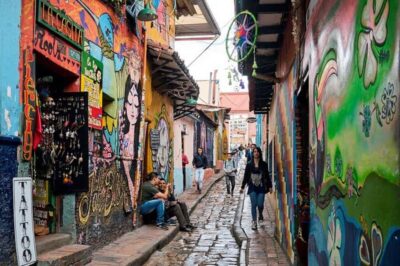
Private City Tour, Monserrate, Emerald and Botero
Read our review →
City Sightseeing Hop-On Hop-Off Bus Tour & Extras
Read our review →
City Tour Cusco Qoricancha Sacsayhuaman y Tambomachay
Read our review →
Main City Sights in 7 Hours – Shared Group Tour
Read our review →Browse the lists this tour appears in