
Reviewed · CABLE CAR RIDES
Cable car to el Paraiso, the city slum
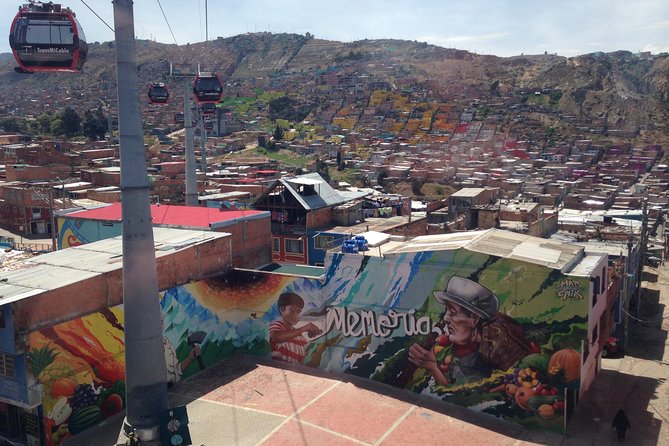
The best part of this Bogotá outing happens above the rooftops. You ride the TransMiCable with local residents to El Paraiso, a hilltop neighborhood in Ciudad Bolívar, then walk through streets brightened by murals and community art. I like the cable car ride because it turns ordinary public transport into a memorable city view, and I like that the tour introduces you to local people who can explain the neighborhood in human terms.
I also appreciate the small-group format, capped at 15 people, and the chance to hear from a resident of El Paraiso rather than only from an outside guide. The main drawback is time: four hours is enough for an introduction, not a full understanding of a large and complex part of Bogotá. You’ll also spend time reaching the cable car from the Teusaquillo meeting point.
Key points to know before you book
- The TransMiCable is the main attraction: You ride Bogotá’s modern cable car system toward the highest point of the hill, with broad views over the city.
- El Paraiso is presented through local voices: Guides such as Juan, Melissa, Yacky, Brian, and Andrea have led different departures, and a local resident may join you in the neighborhood.
- Street art is part of the story: Murals are used to explain local identity, social projects, and the way residents are working to improve their community.
- Public transport is part of the experience: The journey may include a city bus before the cable car, giving you a look at daily life beyond central Bogotá.
- Food adds a local touch: Past departures have included empanadas, traditional juices, and other snacks.
- The views rival Bogotá’s better-known lookout points: The hilltop panorama is one of the strongest reasons to choose this tour instead of staying around the historic center.
Why El Paraiso changes your view of Bogotá
Many first visits to Bogotá center on La Candelaria, the Gold Museum, Monserrate, and the restaurant districts around Chapinero. Those places matter, but they show only one part of the capital. El Paraiso gives you a chance to see a southern hillside community and hear how residents describe their own home.
The neighborhood is part of Ciudad Bolívar, a large district with more than one million residents. That number matters because this is not a tiny artistic quarter arranged for sightseeing. It is a working residential area, and the tour’s value comes from entering it with context and a local connection.
I like the way the outing combines transport, history, art, and conversation. You are not simply driven to a lookout, shown a mural, and returned to the center. The route itself helps explain how people move through Bogotá and why a cable car can matter to a hillside community.
You should approach the experience with respect. El Paraiso is a real neighborhood, not a stage set. The best attitude is to listen, ask sensible questions, and take photographs thoughtfully. Your guide can help you understand when photography is appropriate.
More City Tours in Bogotá
- Bogota: Bicycle City Tour
★ 4.9 · 2,156 reviews - Bogotá: Private City Tour, Monserrate, Emerald and Botero
★ 4.9 · 798 reviews - Bogotá City Tour with Monserrate, Gold and Botero Museums
★ 4.9 · 584 reviews
From Teusaquillo to the southern hills
The meeting point is El Empanadazo de la 39Dg at 40a #14-03 in Teusaquillo. The tour starts at 9:00 am and returns to this same point at the end of roughly four hours.
The trip to the cable car may include a ride on Bogotá’s public bus system. One departure used about 40 minutes of bus travel to explain the city, the district, and the background of the community. That is useful time, not dead time, provided you enjoy learning while moving through the city.
The bus portion also sets the tone. You are not being whisked from a hotel straight to a viewpoint. You are using the same sort of public transport that residents use, which makes the outing feel tied to daily Bogotá rather than separated from it.
This part can be less comfortable for anyone hoping for a private vehicle or a quick transfer. The meeting point is in Teusaquillo, while El Paraiso is far to the south, so you should allow energy for transport before the walking begins. The tradeoff is a more grounded view of the city.
Guides have included Juan, Melissa, Yacky, and others, with different local hosts joining at El Paraiso. Since guide assignments can change, book this for the format and subject rather than expecting one particular person unless the operator confirms that person for your date.
Riding TransMiCable to the high point
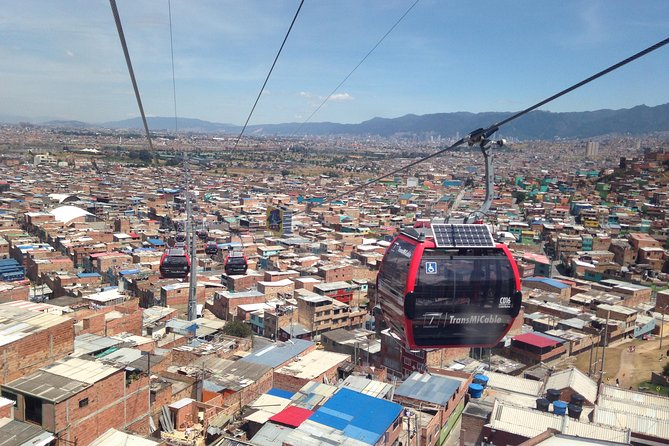
At Tunal Station, you board the TransMiCable, Bogotá’s modern urban cable car system. The ride takes you toward the highest part of the hill and includes a striking view of the city below.
The cable car ride lasts about 15 minutes according to the planned schedule, but its effect is bigger than that number suggests. From above, the city’s scale becomes easier to grasp. The hills, dense neighborhoods, and distant urban spread come together in a single view.
I find this more revealing than a lookout that shows only the postcard side of Bogotá. You see how the city climbs into the hills and how transportation connects areas that are far apart in elevation and distance. Several people who have compared this view with Monserrate found the El Paraiso panorama just as impressive, and some preferred it.
The car itself is public transport, so conditions can vary. You may share the ride with local residents, and it is not designed as a private sightseeing cabin. That is part of the appeal, but it also means you should not expect unlimited time at every window or a completely controlled photo stop.
The experience includes admission to the cable car. Your guide handles the route and provides explanation as you go, leaving you free to watch the view instead of trying to manage every connection yourself.
Walking through El Paraiso’s murals
Once you reach the neighborhood, the tour shifts from transport to walking. Street art is one of the central features, but the murals are not treated as simple decoration. Your guide explains the ideas behind the artwork and points to projects intended to support local residents.
The art gives the walk color, but the stronger subject is community action. You hear about how residents and local groups use public space, creative work, and neighborhood projects to improve daily life. That makes the murals easier to understand. They are connected to people and place, not just a backdrop for photographs.
You might find some streets more visually polished than others. That is normal in a lived-in neighborhood. The value lies in seeing how a community presents itself and how public art can help change the way an area is viewed.
The walk is also where the local host becomes important. Brian, who has guided visitors through his home neighborhood, is one example of the resident perspective built into some departures. A local host can explain ordinary details that a guide who only studies the area might miss.
You should expect a mixture of storytelling, photographs, and short walks rather than a formal museum-style presentation. Wear shoes you can walk in and keep your belongings secure, as you would anywhere in a busy city. The tour information says most people can participate, and service animals are allowed.
More City Tours in Colombia
- 3-in-1 Panoramic city tour Bogotá-beyond the traditional
★ 4.4 · 248 reviews - Bogotá: City Tour, Monserrate, Gold Museum, Plaza de Bolivar
★ 4.7 · 168 reviews - BOGOTA: City Tour, Monserrate, Gold Museum, Botero Museum, Plaza Bolívar
★ 4.8 · 146 reviews - VIP Bogota City Tour: Farmers Market, Monserrate, Candelaria, 9hr
★ 5.0 · 66 reviews
Meeting local hosts and hearing the human story
The strongest feature of this experience is the combination of an organized guide and a person connected to El Paraiso. Guides such as Juan Sebastian Marin, Melissa, Yacky, and Juan have led departures, while Andrea and Brian have helped explain the neighborhood from a local point of view.
That combination gives you two useful angles. The main guide can explain Bogotá’s transport, geography, and wider urban story. The resident host can talk about the neighborhood as a place where people live, work, raise families, and try to create better opportunities.
This also makes the tour feel less like a quick visit to a so-called dangerous area. Safety concerns are understandable, especially for first-time visitors, but the experience is structured around local guidance and a planned route. Past participants described feeling safe and welcomed, with ordinary scenes such as children playing and shops serving customers.
Still, you should not treat those positive experiences as a promise that every moment will feel identical. Conditions can change, and good city manners remain important. Stay with the group, follow the guide’s instructions, and avoid turning residents into unplanned subjects for photographs.
The tour is private in the sense that it provides personal attention from your guide, while the published capacity allows up to 15 people. Ask the operator how your date is being handled if you want to know whether your departure will be fully private or simply limited in size.
Snacks, empanadas, and a taste of the neighborhood
Food is a small part of the tour, but it helps break up the walking and conversation. Past outings have included empanadas, traditional juices, and other snacks. One of the practical pleasures of the experience is trying something simple in the neighborhood rather than eating only in central Bogotá.
Do not book this as a food tour. The snacks are an extra touch, not the main reason to go, and the exact selection may vary. If you have allergies or dietary restrictions, ask before departure because no detailed menu is provided.
I like this part because it adds an everyday note to a tour that could otherwise feel heavy with history and social issues. Sharing a snack gives the outing a more relaxed rhythm and lets you talk with your guide in a less formal setting.
Is $67 a fair price?
The cost is $67 per person for about four hours. That is not the cheapest way to ride a cable car, since you could use Bogotá’s public transport independently for much less. But the ticket price covers more than the ride.
You are paying for a guide, route planning, local interpretation, the neighborhood walk, the cable car admission, and snacks. You also avoid having to work out the connection from Teusaquillo to Tunal Station and then arrange your way through El Paraiso alone.
For me, the value depends on what you want from Bogotá. If you only want a panoramic ride, the price is hard to justify. If you want context about Ciudad Bolívar, a guided introduction to the art, and contact with local hosts, the cost is more reasonable.
The four-hour length is well judged for a first visit. It gives you enough time to travel, walk, talk, and stop for views without turning the outing into a full-day commitment. Since the tour is often booked about 21 days ahead, plan early if your dates are fixed.
Who should take this tour?
I would choose this outing if you have already seen some of Bogotá’s central sights and want a different side of the city. It suits solo visitors, couples, families, and friends who enjoy public transport, local stories, photography, and social history.
It is especially useful for anyone who wants to understand Bogotá as a city of many districts rather than a short list of attractions. The cable car appeals to children and transport fans, while the art and community discussion give adults more to think about.
You may want to skip it if you dislike group movement, city buses, neighborhood walking, or discussions about inequality and urban change. It is also not ideal if your schedule is so tight that a four-hour morning leaves no room for delays.
The activity is near public transportation, and most people can participate. Service animals are allowed. The maximum group size is 15, which should help keep the walk manageable, though it is still worth asking about your specific departure if mobility is a concern.
Booking, weather, and cancellation details
You receive confirmation at booking. Free cancellation is available up to 24 hours before the 9:00 am start time. Changes or cancellations made less than 24 hours ahead are not accepted for a refund.
The outing depends on good weather. If poor weather forces a cancellation, you can receive a different date or a full refund. The tour also requires a minimum number of participants, so an operator cancellation for that reason comes with the choice of another date or experience, or a full refund.
Those rules make early booking practical, but they also mean you should check the forecast before the deadline. The hilltop portion is the most weather-sensitive part of the day.
Should you book the El Paraiso cable car tour?
I would book it if you want Bogotá beyond La Candelaria and the usual museum circuit. The cable car delivers the views, but the real value comes from pairing those views with local voices, murals, public transport, and a clearer picture of how a large hillside community works.
The best reasons to go are the panorama, the resident connection, and the chance to see art tied to neighborhood projects. The main caution is that this is an introductory visit, not a complete account of Ciudad Bolívar, and the route takes time to reach.
At $67, it makes sense for you if independent navigation and interpretation would be difficult, or if you want a thoughtful, guided morning with personal attention. If you prefer to travel entirely on your own and only want the cable car, spend less on public transport and explore independently. For most visitors seeking a more grounded view of Bogotá, this is a worthwhile addition to a central-city itinerary.
FAQ
Where does the tour start?
It starts at El Empanadazo de la 39Dg. 40a #14-03 in Teusaquillo, Bogotá.
What time does the tour begin?
The scheduled start time is 9:00 am.
Where does the tour finish?
The activity ends back at the original meeting point in Teusaquillo.
How long does the experience last?
The tour lasts approximately four hours.
How much does the tour cost?
The price is $67 per person.
How many people can join?
The activity has a maximum of 15 participants.
Is the cable car ticket included?
Yes. Admission for the TransMiCable portion is included.
What happens if bad weather cancels the tour?
You will be offered a different date or a full refund if poor weather causes the activity to be canceled.
More Cable Car Rides in Bogota
- Bogotá´s Barrios: El Paraíso Favela Tour with Cable Car
★ 4.8 · 731 reviews - Medellin: Comuna 13 Graffiti Tour, Cable Car & Street Food
★ 4.8 · 9,046 reviews - Rio de Janeiro: Sugarloaf Cable Car Official Ticket
★ 4.6 · 2,873 reviews - Medellín: Comuna 13 District Tour with Cable Car Ride
★ 4.8 · 1,467 reviews
Just added around Bogota
- Tour of Zipaquirá: Visit the Salt Cathedral and the main squares★ 4.5 · 55 reviews
- Bogota Walking Tour Teusaquillo, a different part of the city★ 5.0 · 41 reviews
- La Candelaria Walking Private Tour (3 Hrs.)★ 5.0 · 51 reviews
- Private Zipaquira Salt Cathedral and Guatavita Lagoon Tour from Bogota★ 4.5 · 44 reviews
- MINA CATEDRAL DE SAL ZIPAQUIRA Tour Privado★ 4.5 · 38 reviews
- Tejo and Beer Tour in Bogotá★ 5.0 · 35 reviews
- Hiking to the largest paramo on earth : Sumapaz★ 5.0 · 49 reviews
- Descubre la Magia: Catedral de Sal & Bogotá en 1 Día★ 4.5 · 39 reviews
Cable Car Rides, compared.

Comuna 13 Graffiti Tour, Cable Car & Street Food
Read our review →
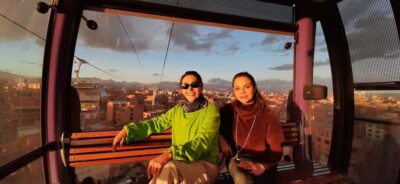
La Paz and El Alto: Cable Car Rides and Walking Tour
Read our review →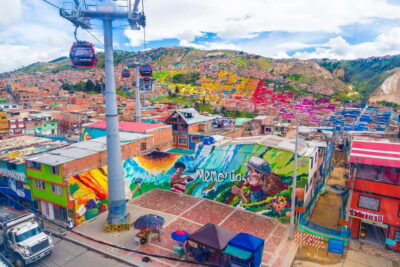
Bogotá´s Barrios: El Paraíso Favela Tour with Cable Car
Read our review →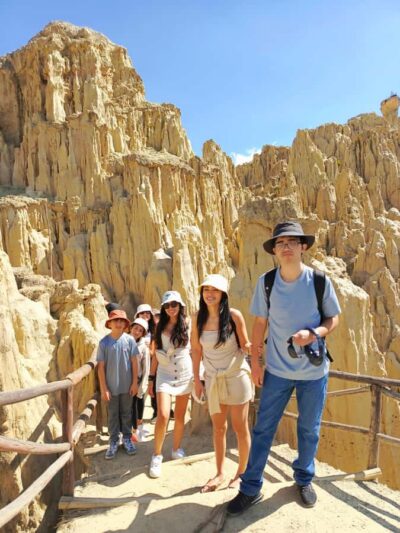
La Paz: Private City Tour with Cable Car & Moon Valley Visit
Read our review →
Browse the lists this tour appears in