
Reviewed · SAN PEDRO DE ATACAMA TOURS
San Pedro de Atacama: 3 D. Tour Uyuni and Back to San Pedro
Uyuni is not simply a salt flat. Reaching it from San Pedro means crossing Bolivia’s high Altiplano, where volcanic peaks, wind-carved rocks, flamingo-filled lagoons, hot springs, and wide-open desert arrive one after another. The final reward is Salar de Uyuni, a white plain stretching across roughly 10,000 square kilometers.
I like the small-car format, limited to no more than four people per vehicle, and the care built into the trip. Guides such as Freddy have been praised for explaining Bolivia’s history, wildlife, geology, and culture, while drivers including Christian, Isaac, Rolly, and Javier are noted for handling rough roads with care. I also like that the trip includes warm rooms, heating, hot water, meals, park fees, and the return to San Pedro.
The tradeoff is simple: this is a long, high-altitude road trip, not a soft-edged holiday. Day one begins before sunrise, roads can be rough, temperatures change quickly, and altitude sickness is a real concern. If you need comfort, leisurely mornings, or polished hotels, this is not your tour.
Key points to know before booking
- The first day is the hardest: Expect an early start, long hours in the vehicle, and altitudes reaching about 4,500 meters.
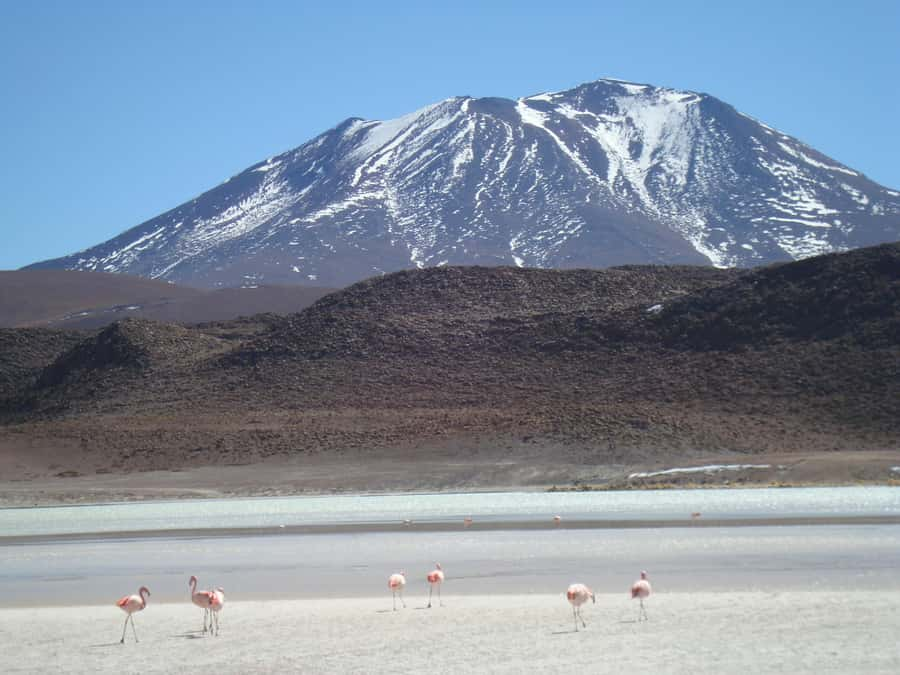
- The wildlife is a major part of the trip: Laguna Colorada and the surrounding Altiplano may bring flamingos, vicuñas, llamas, viscachas, foxes, hawks, and other animals into view.
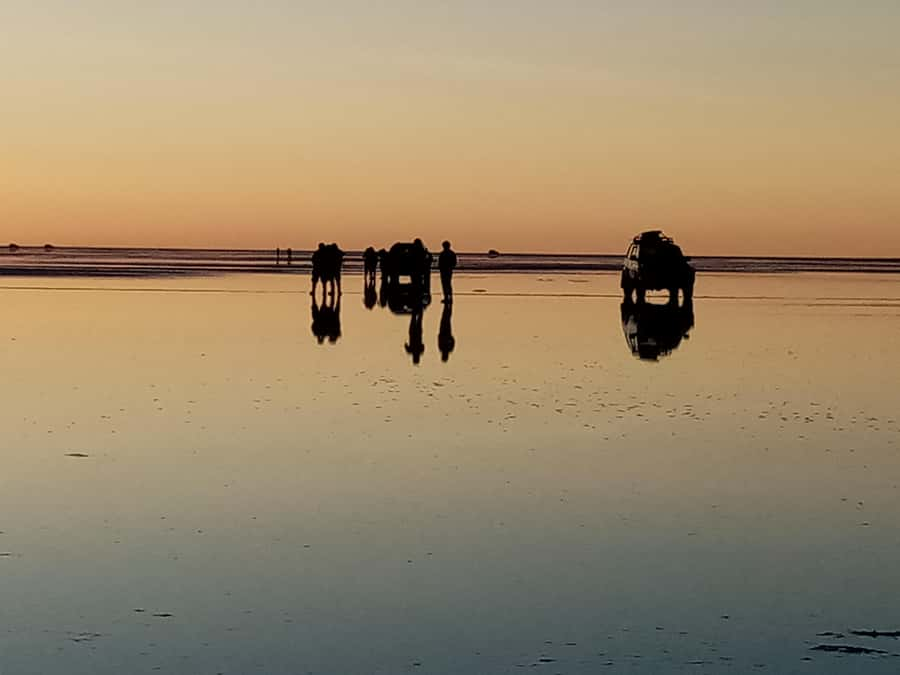
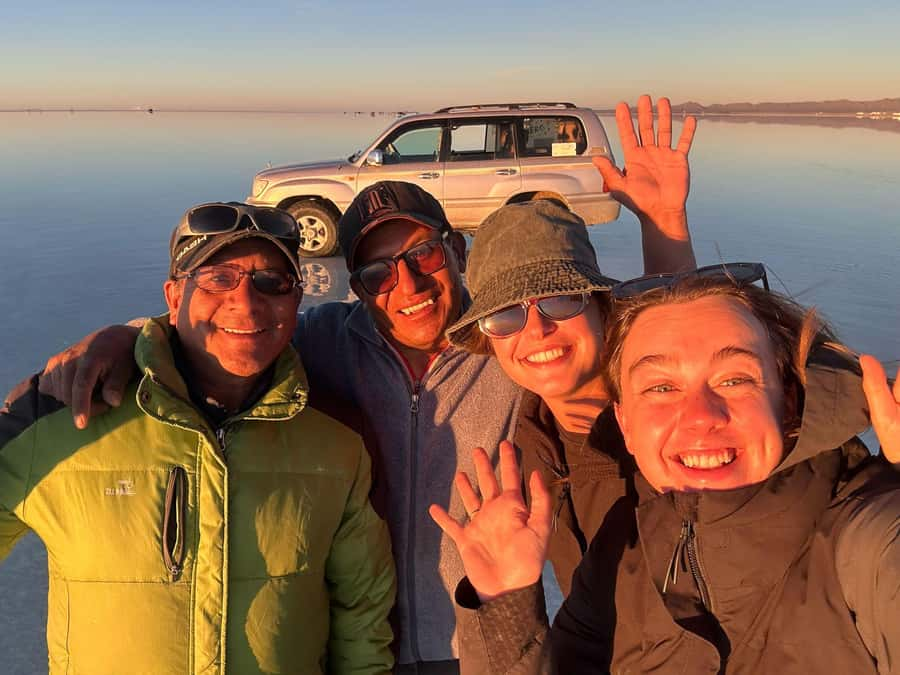
- The salt-flat sunset is the signature moment: The huge white plain gives you space for unusual perspective photos and broad, colorful evening skies.
- You stay warm, but not in luxury: Kachi Wasi and Hotel Toñito offer heating and hot water, yet the trip remains basic and demanding.
- The small group matters: The car holds no more than four people, although the wider departure may include up to 12 participants.
- The price pays for speed and care: At $750 per person, this costs more than a bare-bones crossing, but it combines a three-day return route, private 4WD travel in Bolivia, meals, entry fees, and an English-speaking guide.
Crossing from San Pedro into Bolivia at 6:00
Your day starts with pickup at your hotel in San Pedro de Atacama at 6:00. A shared van takes you to Hito Cajones, the Chilean-Bolivian border, in about an hour. Immigration marks the practical end of your Chilean desert trip and the start of a much wilder road journey.
The route climbs toward the Bolivian Altiplano, with views from around 4,500 meters. The air is thin, the sun is strong, and the temperature can shift sharply. You should have a jacket close at hand, even if San Pedro feels warm when you leave.
From the border, a 4WD vehicle carries you across broad desert valleys and rough tracks. This is where the quality of the driver matters. The route is not a smooth highway, and a skilled driver can make a rough day feel far more secure. Isaac, Christian, Rolly, and Javier have all been singled out for careful driving and good judgment on difficult roads.
Your guide also makes a difference here. Freddy has been praised for explaining geology, plants, animals, Bolivian history, politics, and daily life in a way that gives the scenery meaning. The trip is much more rewarding when you understand why a lagoon is red or how wildlife survives in such a spare place.
A few more San Pedro De Atacama days worth comparing
- San Pedro de Atacama: El Tatio Geysers Tour
★ 4.7 · 943 reviews - San Pedro de Atacama: Etno-Stargazing Tour with Transfer
★ 4.8 · 629 reviews - Piedras Rojas, Altiplanics Lagoons & Salar Full-Day Tour
★ 4.7 · 592 reviews
Green Lagoon, Red Lagoon, and the Siloli Desert
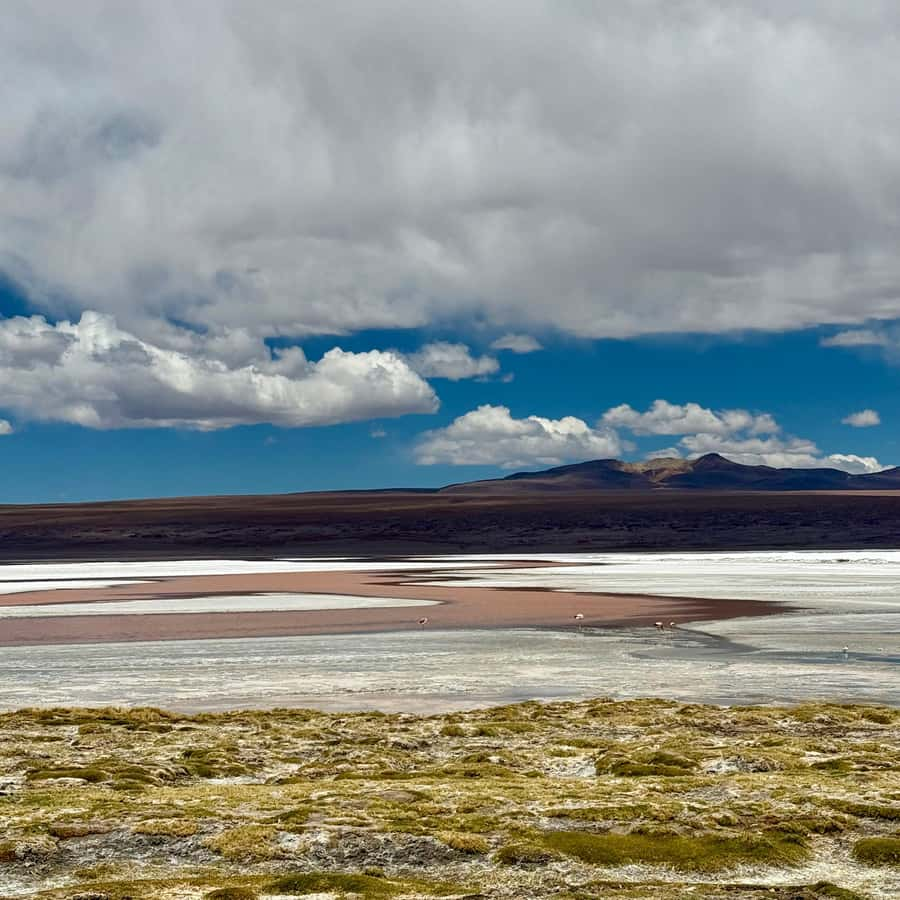
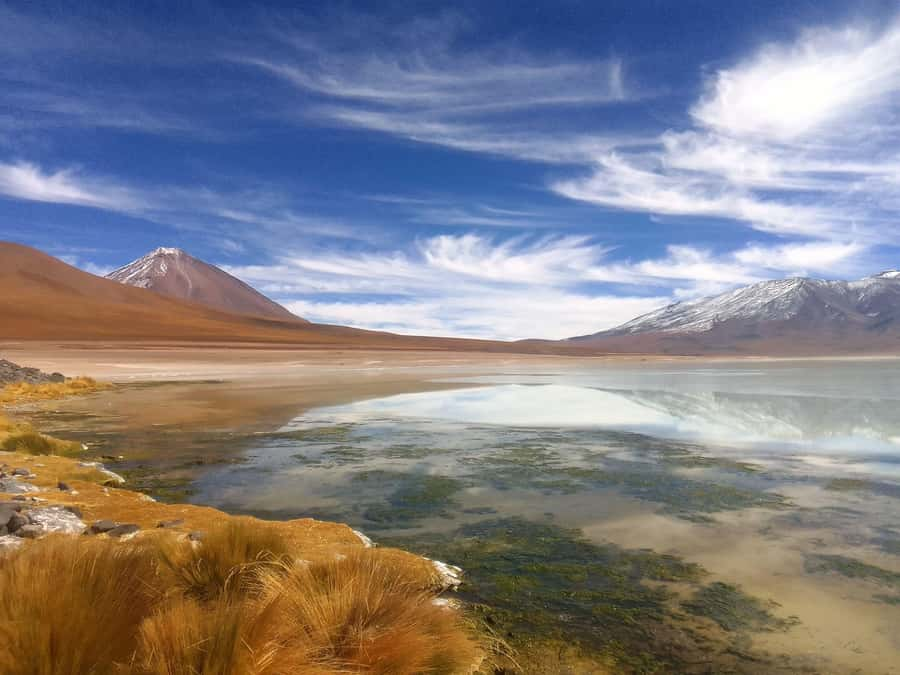
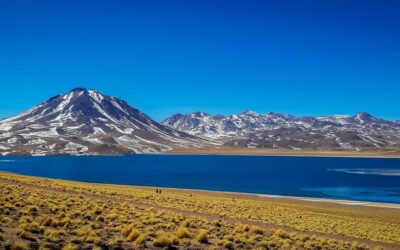
The first day focuses on the colored lagoons and volcanic desert of southern Bolivia. Laguna Verde, or Green Lagoon, is set beneath huge volcanoes, and its color changes with mineral content, light, and wind. It is a striking introduction to the Altiplano, though you may find the cold and altitude more memorable than the first photograph.
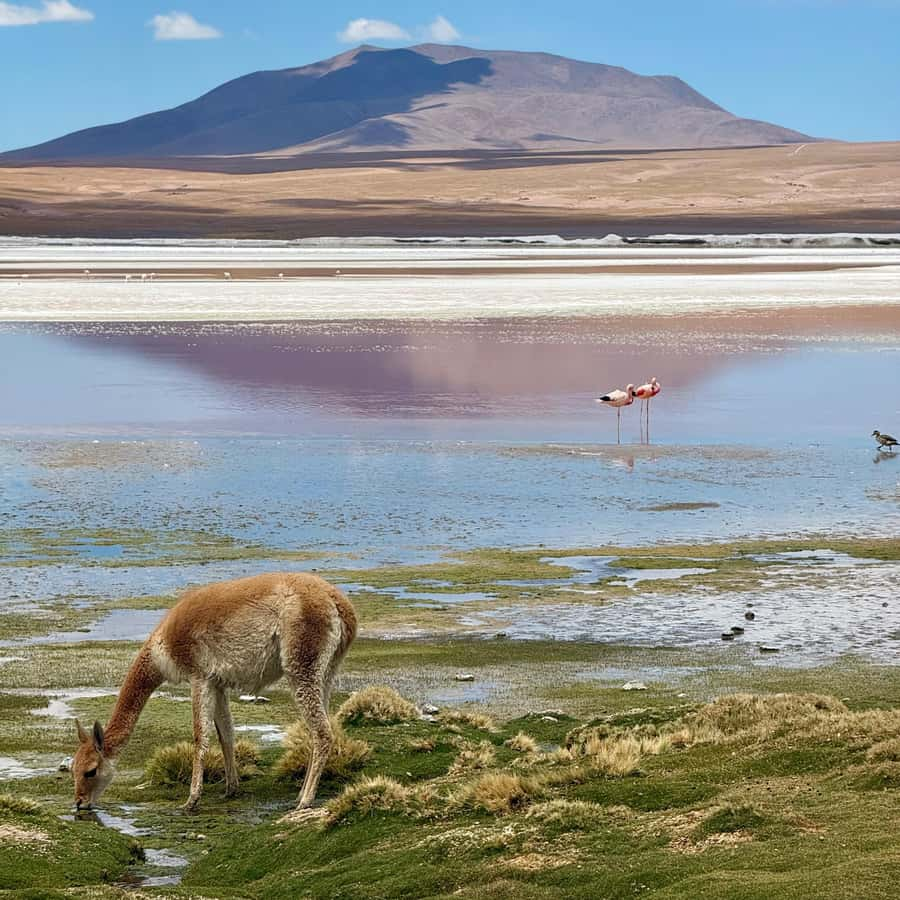
The route then reaches the famous Laguna Colorada. Its red water comes from algae, including Dunaliella salina, combined with mineral-rich sediment. Hundreds of flamingos gather here, feeding and breeding in a setting that looks almost unreal. Their pink bodies against the red water and pale desert make this one of the strongest wildlife stops of the journey.
You may also see other Andean birds and animals along the route. Vicuñas, llamas, foxes, viscachas, hawks, chinchillas, armadillos, and even larger animals have been spotted during the drive. Wildlife is never guaranteed, but the open terrain makes it easier to scan the area. Bring binoculars if you have them, and keep your camera ready between scheduled stops.
The Siloli Desert adds another mood. Wind has shaped the rock formations for millions of years, leaving isolated pillars and strange silhouettes. The Rocks of Dali are named for their resemblance to the surreal forms associated with the Spanish painter Salvador Dalí. The comparison is easy to understand once you see the rocks scattered across the empty plain.
This first day is also the most demanding. You spend many hours in the vehicle, walk at high altitude, and have limited control over the pace. Some people experience altitude sickness, so take the day slowly, drink water, and tell your guide at once if you feel unwell. The group is not suitable for children under 10, people with altitude sickness, or people over 70.
You spend the night at Kachi Wasi, where heating and hot water provide welcome relief. It is a simple stop, not a luxury retreat. That distinction matters after a long day in the cold. You are paying for a warm, practical base in a remote area, not spa service or polished city-hotel standards.
Incahuasi Island and the great white plain
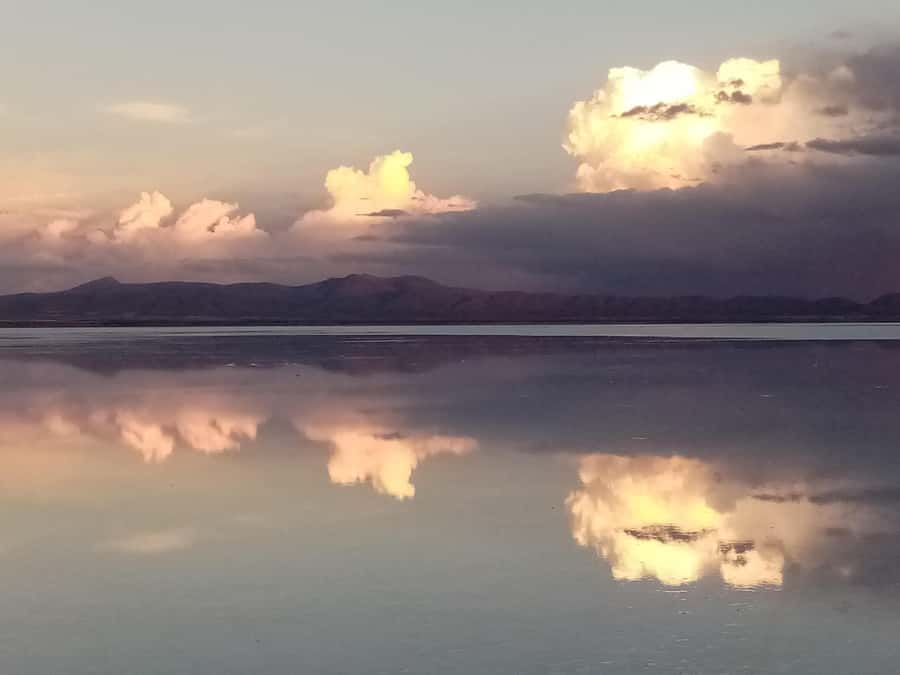
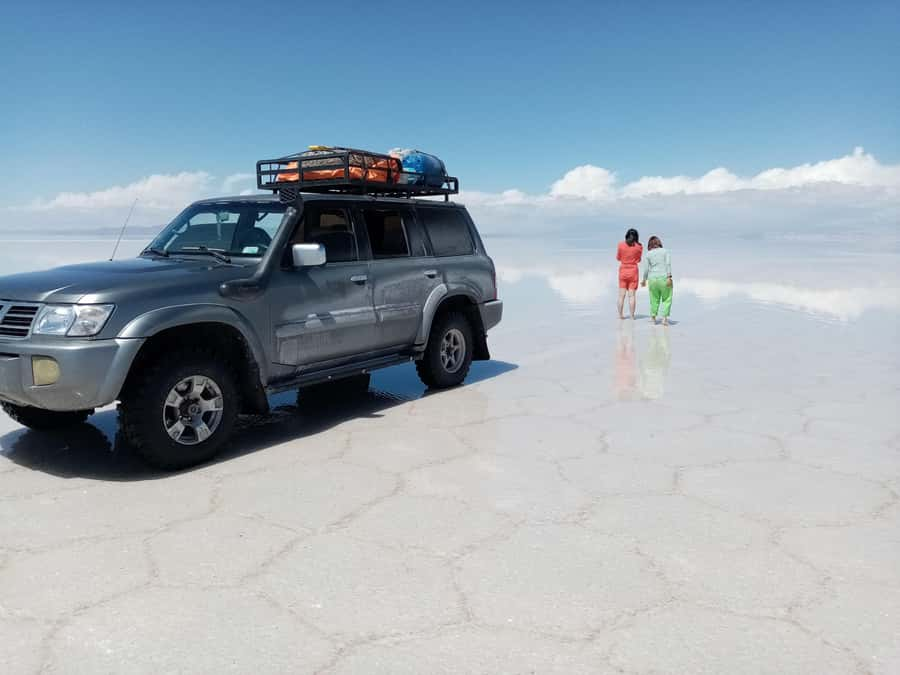
Day two brings the main event: Salar de Uyuni. At around 3,600 meters above sea level, the salt flat is immense, bright, and difficult to judge by distance. The flat surface can make nearby objects look far away, which is why the area is so good for playful perspective photographs.
The salt crust covers an ancient body of water that once spread across the Altiplano. At its center, Incahuasi Island rises from the white expanse. The island contains coral fossils from that former sea, a useful reminder that this dry, elevated place has not always looked this way.
Incahuasi is also famous for giant cacti. Some reach seven or eight meters, growing slowly in the thin, dry air. You may see viscachas, lizards, insects, and small hummingbirds among the rocks and cactus. The walk is not long in the usual sense, but the altitude can make even modest movement feel strenuous.
You should bring comfortable shoes, sun protection, and water. The white surface reflects sunlight intensely, while the wind can make the air feel cold. Swimwear and a towel are useful for the hot springs on the wider route, even though the timing of each stop can vary.
The best photographs often come from slowing down rather than rushing through a checklist. Your driver may help with perspective images on the salt, and the huge open space gives you room to experiment with scale. Use a person, bottle, shoe, or other small object in the foreground, then let the flat stretch behind it.
In the afternoon, the 4WD crosses the salt toward the shore. Sunset here is the emotional high point of the tour. The white surface catches changing colors, and the horizon feels unusually broad. You will want a jacket for the evening, along with a spare layer for the ride afterward.
The night is spent at Hotel Toñito in Uyuni. Hot water and heating are included, but the standard is still basic. Food is included for most of the journey, with two breakfasts, three box lunches, and one dinner listed in the package. Dinner on the second night in Uyuni City is not included, so budget for that separately.
The train cemetery and the return through Villa Mar
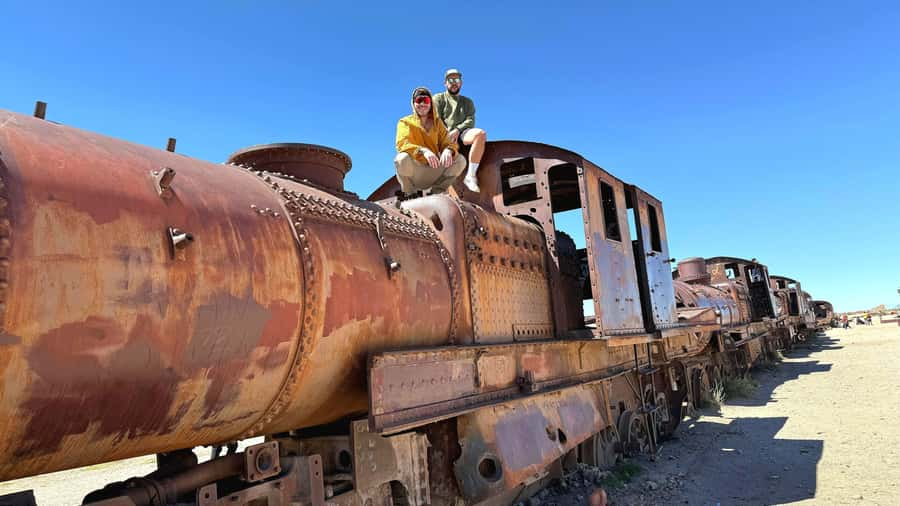
Day three starts early again. The first stop is the train cemetery near Uyuni, where old locomotives sit in the open desert. Rust and empty sky give the site a stark, industrial feel, a sharp contrast to the natural scenery of the previous two days.
From there, the route continues toward Villa Mar and Lake Catal. The drive is long, but the changing views help break it up. At Lake Catal, you hike through a broad area surrounded by volcanoes and hundreds of llamas. This stop gives you a closer sense of how pastoral life fits into the Altiplano.
The final route follows the high plateau and the main volcanic range back toward Hito Cajones. You then return to San Pedro in a private 4WD transfer, reaching your hotel at about 15:30. That private final transfer is valuable because you do not need to arrange a separate border connection after three full days on the road.
Keep your border documents in order. You are crossing between Chile and Bolivia, and the practical success of the trip depends on having the required visa and immigration papers ready. The operator keeps in touch by email and WhatsApp, which is useful for confirming pickup details and checking that your plans are in place.
Same trip, a completely different kind of day:
- San Pedro de Atacama: Stargazing Experience
★ 4.7 · 489 reviews - San Pedro Atacama: Baltinache Lagoons
★ 4.6 · 359 reviews - San Pedro de Atacama: Valle de la Luna Guided Tour
★ 4.4 · 312 reviews - San Pedro de Atacama: 3-Day Activity Combo with 4 Tours
★ 4.6 · 247 reviews
What the $750 price really covers
At $750 per person, this is not the cheapest way to see Uyuni. It is also not a simple sightseeing shuttle. The price includes the shared transfer from San Pedro to the border, private transport back to San Pedro, a 4WD car with driver, two nights of accommodation, meals during the trip, National Park and Incahuasi Island fees, and an English-speaking guide.
The small vehicle is the strongest part of the value. A car limited to four people gives you more space than a packed vehicle and makes it easier to stop for wildlife, photographs, water, or a quick break. The wider group limit is 12, but the actual car arrangement is the detail that affects your comfort most.
You are also paying for a compressed itinerary. Many Uyuni routes take four days for a return from San Pedro. This version completes the circuit in three, which suits you if time is limited. The cost is harder to justify if you have plenty of time and are willing to accept more basic transport or a longer route.
The accommodation and food are practical rather than refined. Warm rooms and hot showers can feel luxurious after a cold day at altitude, but you should not expect five-star service. One person found the hotel merely adequate, while others found the warmth, bedding, and hot water entirely suitable for the setting.
Who should take this three-day route
I would choose this trip if you want the greatest range of scenery in a short window. In three days, you see volcanic desert, hot springs, colored lakes, flamingos, rock formations, giant cacti, salt flats, a train cemetery, and llama country. That variety is the main reason to accept the long drives.
It is a good fit for nature lovers, photographers, active couples, friends, and solo visitors who want a guided route through a remote region. It also works well if you want background on Bolivia rather than only a series of photo stops. Freddy and the other guides are valued for connecting the scenery with local culture, science, and history.
I would think twice if you dislike rough roads, early starts, cold nights, or simple hotels. The tour is not designed for pampering, and altitude can affect even fit people. You should also be comfortable spending much of the day in a 4WD vehicle.
Bring comfortable shoes, swimwear, a towel, warm layers, spare clothes, and a jacket. Snacks, water, electrolyte drinks, and any personal medicine may also be useful. One useful tip from the trip experience is to carry Gatorade and ibuprofen, though you should use medication only if it is appropriate for you.
The tour offers free cancellation up to 24 hours before departure and allows you to reserve before paying. The guide meets you at your hotel reception about 10 minutes before pickup, usually asking for your first and last name. Hotel pickup is recommended, especially for a 6:00 start.
Should you book the Uyuni trip from San Pedro?
Book it if your priority is scenery, wildlife, and access to Bolivia in a tight three-day schedule. The most praised parts are the guides’ strong local knowledge, the drivers’ careful handling of rough roads, the small vehicle, the comfortable warmth at night, and the salt-flat sunset.
Skip it if you want a relaxed holiday or a luxury hotel experience. You will work for the views, especially on day one, but the reward is a rare run of places that feel far removed from ordinary city life. At $750, it is expensive, yet the included transport, guide, entries, meals, accommodation, and return to Chile make it a fair choice for a well-managed express route.
FAQ
How long is the tour?
The tour lasts three days, beginning with a 6:00 pickup in San Pedro de Atacama and returning to your San Pedro hotel at about 15:30 on day three.
How high does the route go?
The journey reaches views and roads around 4,500 meters on the border route, while Uyuni sits at about 3,600 meters above sea level.
Is the tour suitable for children?
No. The tour is not suitable for children under 10, people with altitude sickness, or people over 70.
What accommodation is included?
The package includes two nights, at Kachi Wasi and Hotel Toñito. Both are listed with hot water and heating.
What meals are included?
The package includes two breakfasts, three box lunches, and one dinner. Dinner on the second night in Uyuni City is not included.
What should I bring?
Bring comfortable shoes, swimwear, a towel, a change of clothes, a jacket, and comfortable clothing. You should also keep your visa and border documents in order for the Bolivia crossing.
Just added around San Pedro De Atacama
- San Pedro de Atacama: Guided Atacama Desert Stargazing Tour★ 3.9 · 93 reviews
- Sandboarding Tour in San Pedro de Atacama, Chile★ 4.9 · 77 reviews
- San Pedro de Atacama: Red Rocks & Altiplano Lagoons Day Trip★ 4.9 · 108 reviews
- San Pedro de Atacama: Rainbow Valley & Hierbas Buenas Tour★ 4.7 · 40 reviews
- San Pedro de Atacama: Guided Buggy Tour Through the Desert★ 5.0 · 99 reviews
- Caracoles: Red Stones of Atacama and Chaxa Guided Day Trip★ 4.8 · 56 reviews
- From San Pedro de Atacama: Rainbow Valley Tour★ 4.9 · 48 reviews
- Purilibre Trekking★ 4.2 · 40 reviews
San Pedro de Atacama Tours, compared.
Piedras Rojas, Altiplanics Lagoons & Salar Full-Day Tour
Read our review →
Triple tour: Red stones, highland lagoons and Chaxa Lagoon
Read our review →Browse the lists this tour appears in