
Reviewed · FOOD & DRINK
Medellín: E-bike and Foodie Tour
Medellín’s best introduction may be found away from its postcard sights, on a bike lane beside an ordinary neighborhood bakery. This three-hour ride carries you from Turibike through Belén, Laureles, Conquistadores, and the river parks, with local snacks along the way and stories about how the city changed.
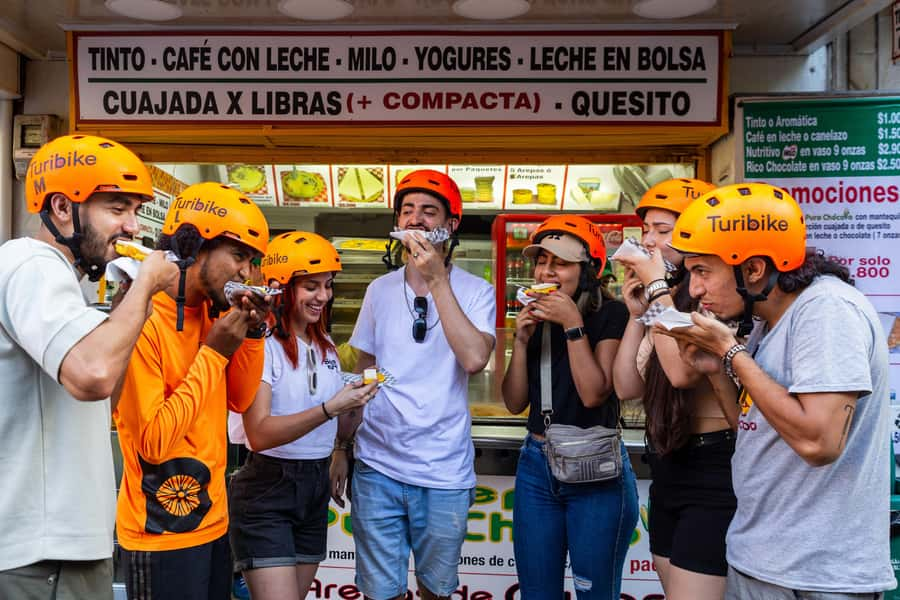
I like the small groups of eight or fewer, which leave room for questions and make street crossings less stressful. I also like the food stops: coffee, fruit salad, pandebono, buñuelos, arepas, empanadas, and guarapo give you more than a quick taste of Colombia. The main drawback is that you need to ride a bike confidently, and the food can be substantial enough that you should arrive hungry but not ravenous.
Key points to know before you book
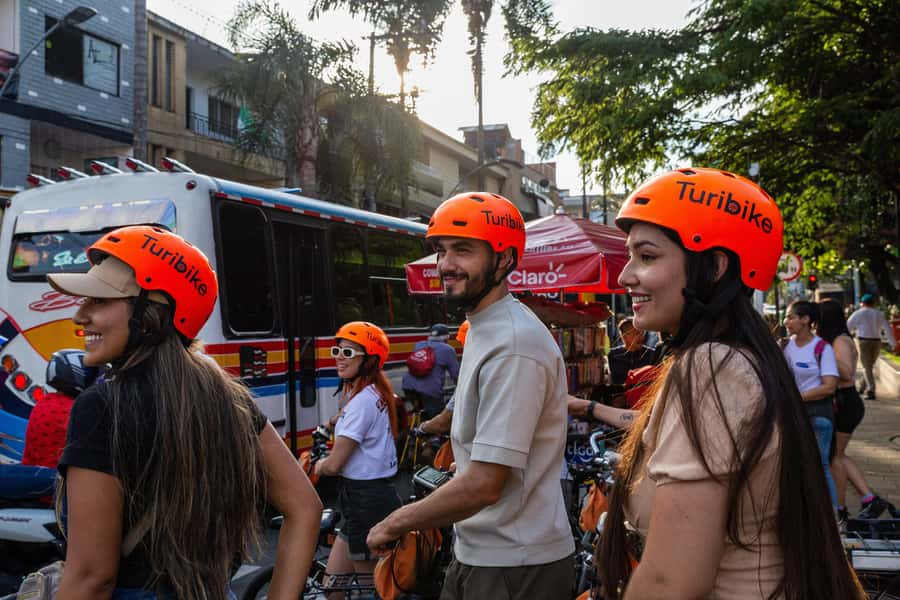
- Ride beyond the usual tourist circuit: Leave the most visited areas quickly and see plazas, quiet streets, local businesses, and everyday neighborhoods.
- Taste food with a story: Regional bites can include arepas, pandebono, empanadas, buñuelos, salpicón de frutas, coffee, and guarapo.
- A useful first-day activity: The route helps you learn the city’s layout and identify foods and places to revisit later.
- E-bikes do the hard work: The motor assistance makes it possible to cover a lot of ground without turning the tour into an athletic test.
- Personal guides shape the experience: Guides including David, Daniela, Dany, Toto, Diana, Esteban, and Juan have been praised for history, food knowledge, humor, and safety.
- Know the extra costs: Drinks at the first three stops and food at the last stop are not included.
A fast, flavorful way to get your bearings in Medellín
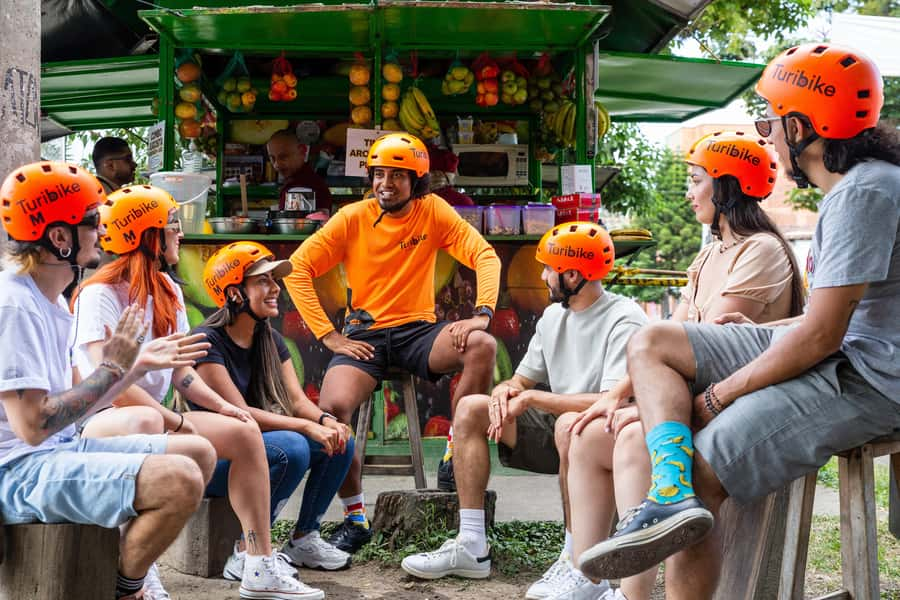
At $48 per person, this tour offers a useful mix of transportation, sightseeing, food, and local explanation. You are not paying simply for a rental bike and a snack. You are paying for a guide who connects several parts of Medellín in a short span, then gets you back to the starting point without making you plan every turn.
The route is particularly useful at the start of a stay. You cover enough ground to see how Belén, Laureles, Conquistadores, and the river corridor fit together. Along the way, you get clues about where daily life happens, what people eat, and how the city’s public spaces have changed.
The experience is active, but the electric motor matters. You still pedal, yet the bike handles much of the effort. One participant described it as a good introduction to e-bikes, while another noted that the motor made it possible to see a lot of Medellín without exhausting yourself.
You should still be comfortable riding in an urban setting. This is not a gentle park circuit with no traffic. The guides focus on safety and use bike paths where possible, but you will need to follow instructions, watch your surroundings, and stay with the group.
More Bike Tours in Colombia
- Medellín: History & Local Life Essentials Tour on an E-Bike
★ 4.9 · 130 reviews - E-Bike City Tour Medellin with Local beer and Snacks
★ 4.9 · 55 reviews - Bogota: Bicycle City Tour
★ 4.9 · 2,156 reviews
Starting at Turibike on an industrial street
The meeting point is not presented as a grand storefront. Turibike operates from a coworking space on an industrial street. Look for a brick building with a large black metal door. If the door is closed, knock, and the guard should let you in.
That detail matters because the location may be easy to miss if you expect a bright tour office with a large sign. Arrive with enough time to find the building without rushing. You will receive your electric bike there before setting out.
The tour includes the bike, a guide, medical insurance, and food and drinks, with two limits: beverages at the first three stops and food at the final stop are not included. Ask about those exclusions at the start so you know when you may need your wallet.
The group is limited to eight people. That is a practical size for city riding. A guide can keep the group together more easily than on a large coach-style outing, and you have a better chance to ask about a dish, a neighborhood, or a part of Medellín’s past.
Tours are offered in Spanish and English. The guide roster has included David, Juan León, Dayana, Daniela, Dany, Esteban, Diana, Toto, Camilo, Jhon, and others. The strongest pattern across the experience is that guides do more than point out landmarks. They explain food, local customs, history, and the city’s transformation in a personal way.
Belén: the first taste and a change of pace
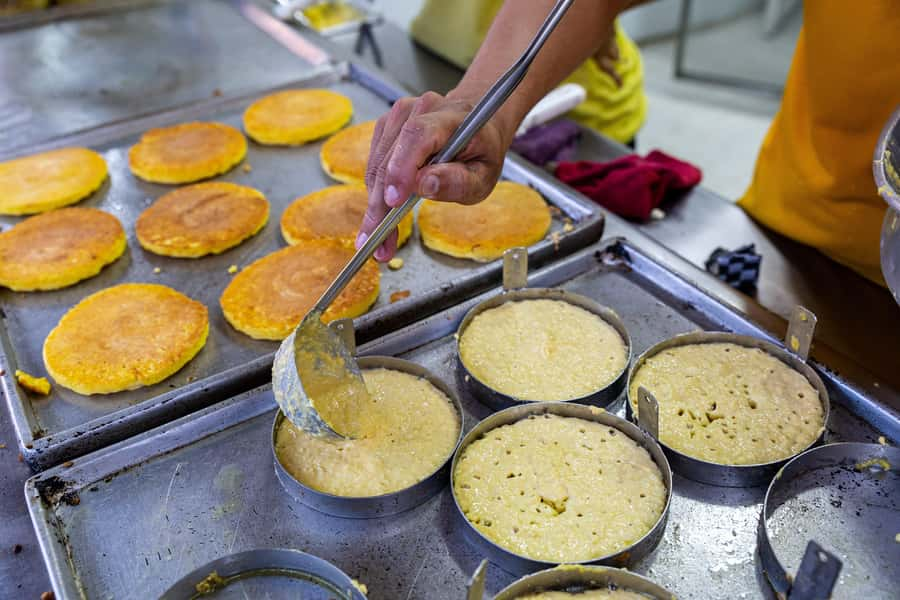
The first main area is Unidad Deportiva de Belén, where the tour begins to move away from the most obvious visitor route. Food tasting starts here, giving you an early sample of Colombian flavors before the ride settles into its longer city loop.
The exact menu can vary, but the foods associated with this experience include coffee, salpicón de frutas, pandebono, buñuelos, arepas, empanadas, and guarapo. Salpicón is a sweet fruit mixture, while pandebono is a soft, cheesy baked bread. Buñuelos are fried cheese breads, and guarapo is a traditional sugarcane drink.
This is a good point to ask your guide what you are eating and how it fits into daily life. The value is not only in trying several snacks. You begin to understand the difference between a food eaten as a quick bite, a bakery staple, a breakfast item, or a treat shared with friends.
Belén also gives the ride a local feel early on. You may see ordinary public spaces rather than a carefully staged attraction. The image of older men playing cards in a plaza captures the kind of small, human detail that can disappear if you move through the city only by taxi or metro.
Parque Belén: food, stories, and ordinary public life
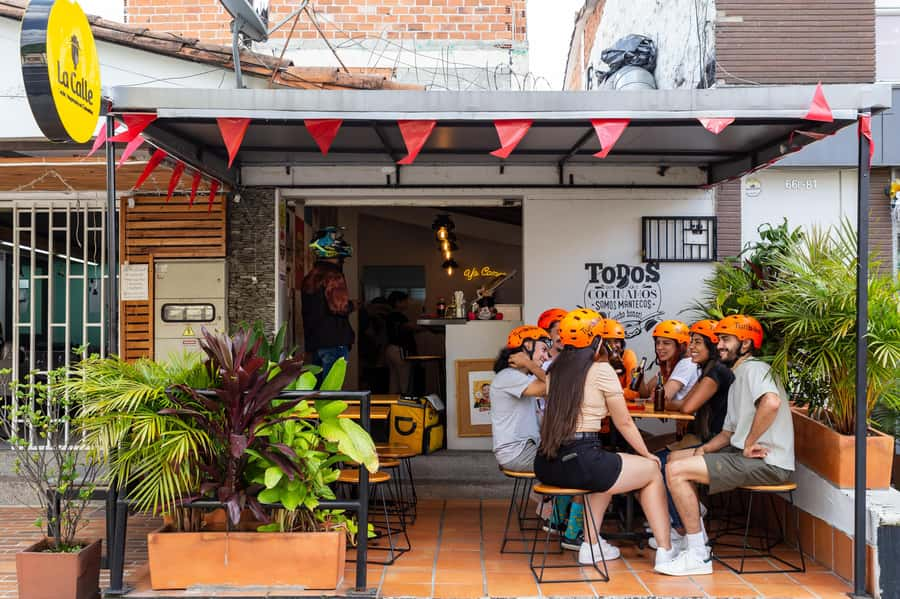
The route continues to Parque Belén for more riding and another food stop. A neighborhood plaza is a useful place to pause because it shows how Medellín functions between major sights. You get a chance to watch people use the space, rather than simply photograph it and move on.
Your guide may connect the park and surrounding streets to Medellín’s past and present. The focus is on change: how the city developed, how communities use their neighborhoods, and how daily routines continue alongside that change.
The food also becomes a way to read the city. An arepa made from a long-used recipe may tell you more about local habits than a formal restaurant meal. Arepas differ across Colombia, so use this stop to ask about ingredients, preparation, and regional identity.
Do not expect each stop to be a long sit-down meal. The food is spread through the route, and some stops are quick. That keeps the tour moving, but it also means you may want to slow down and pay attention to the explanation before rushing to the next bite.
More Food Tours in Colombia
- Medellin: Comuna 13 Graffiti Tour, Cable Car & Street Food
★ 4.8 · 9,046 reviews - Medellín: Comuna 13 True Story and Street Food Tour
★ 4.9 · 1,779 reviews - Medellin: Street Food and Poblado Rooftop Tour with a Local
★ 4.8 · 317 reviews - Medellin: Party Bus with DJ & Street Food Tastings
★ 4.5 · 112 reviews
Laureles: leafy streets and regional food
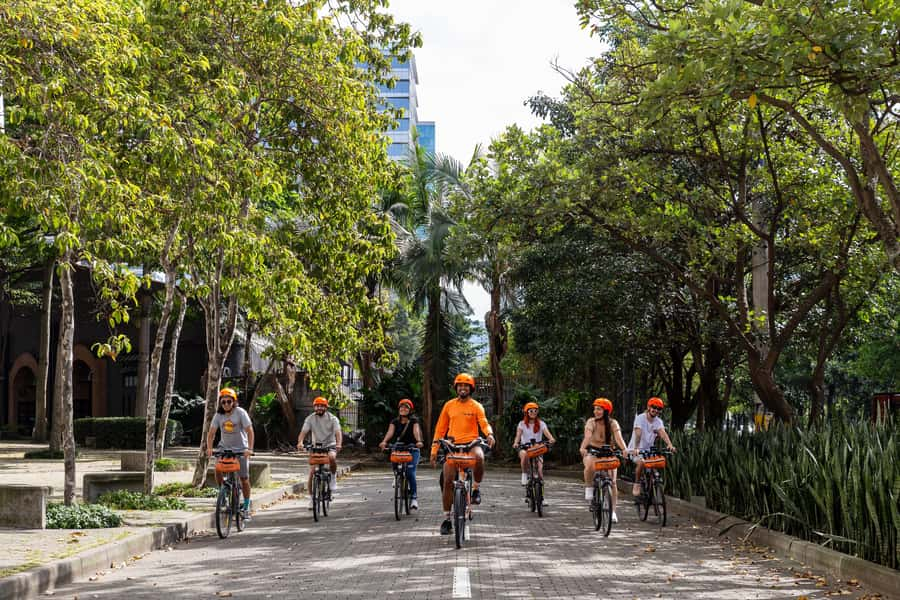
Laureles brings a different feel to the ride, with tree-lined streets and a more open rhythm than the denser parts of the city. You continue by e-bike and stop for regional food, which creates a good balance between movement and sitting down.
This section is one reason the tour works well for a first visit. You see more than one version of Medellín in a single outing. Instead of treating the city as one uniform place, the route shows how neighborhoods can differ in pace, design, public space, and local businesses.
The guides are central here. Dany has been praised for answering detailed questions about Colombian history, while Daniela has been described as engaging and passionate about Medellín and its people. Toto has been singled out for mixing humor with explanations of history, culture, and society. Those qualities matter on a bike tour, where a friendly guide can make safety instructions feel natural rather than restrictive.
Food examples from the route have included crispy empanadas, soft pandebono, arepas de huevo, and other regional snacks. An arepa de huevo is filled with egg and is heavier than a small nibble. Pace yourself, since several stops can add up quickly.
Conquistadores and the local snack stops
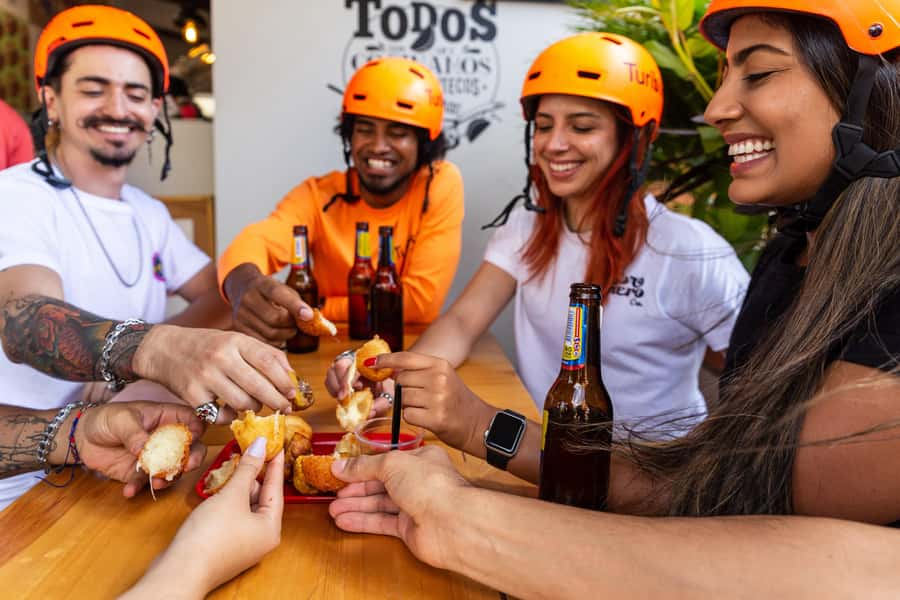
The ride reaches Conquistadores for more neighborhood cycling and local snacks. This part of the outing helps connect the built-up city with the food culture you have been sampling.
A good guide will tell you where a snack fits into local life, not just name it. The difference is important. A bakery item, a fried bite, a fruit drink, and an arepa each carry a different sense of time and place. The tour’s strength is the link between the plate and the street outside it.
One participant had a flat tire during a ride, and the guide repaired it quickly. That is not something you should expect to happen, but it does show why a small guided group can be useful. You are not left to solve every mechanical or route problem alone.
The ride also gives you a closer look at Medellín’s public infrastructure. One participant was surprised by the city’s bike lanes and felt secure riding with the group. Conditions can vary, and no city ride is entirely free of traffic or uneven surfaces, but the route is designed to make practical use of Medellín’s cycling network.
The river parks and the return to Turibike
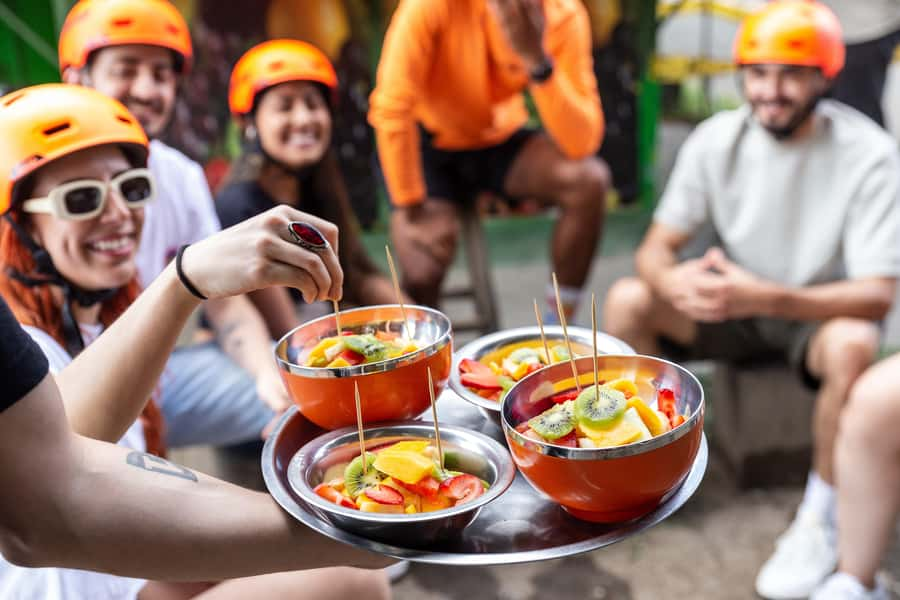
The Medellín River Parks provide a broader public-space stop before the ride returns to Turibike. This section brings the tour’s themes together: city planning, movement, open space, and the visible changes Medellín has made over time.
The river corridor is also a useful contrast to the smaller plazas and neighborhood streets. You have moved from bakeries and local tables to a large urban space, yet the bike keeps the experience connected. You are not looking at the city from behind a window. You are moving through it at street level.
The itinerary includes another food tasting before the return, though the final food is not included in the price. That is worth clarifying when you book or at the beginning of the tour. The included tastings are enough to make this a food-focused outing, but the last stop may require an additional purchase.
By the time you arrive back at Turibike, you have had a compact overview of several western and central parts of Medellín. You will not see every major sight, and that is not the point. The route is about neighborhoods, food, bike paths, and the city’s everyday character.
What the $48 price really covers
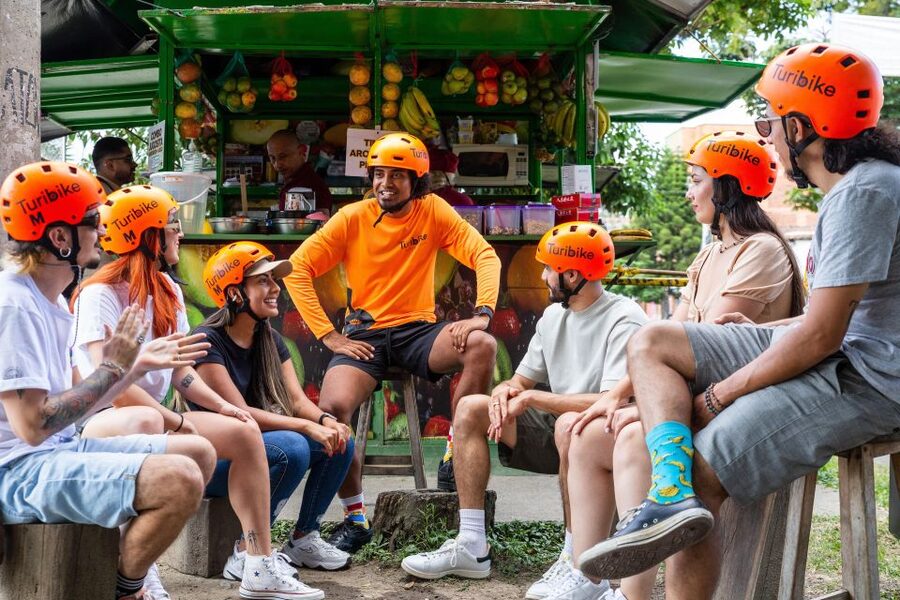
The price is reasonable if you value a guide-led introduction rather than a bare bike rental. You receive an electric bike, medical insurance, food and drinks within the stated limits, and three hours of guiding in a small group.
The strongest value comes from the time saved. Planning a similar route on your own would mean finding a bike, mapping safe connections, choosing food stops, ordering in unfamiliar places, and working out how to return. Here, the route and the food sequence are already arranged.
The price is less attractive if you want a full restaurant meal or a long cultural lecture at each stop. This is a moving tour with several tastings, not a sit-down culinary class. The food may be enough to replace part of a meal, but the experience is better understood as a substantial snack tour.
Also budget for drinks at the first three stops and food at the final stop. That is a small but important detail when comparing the total cost with other food tours.
Who should book this ride
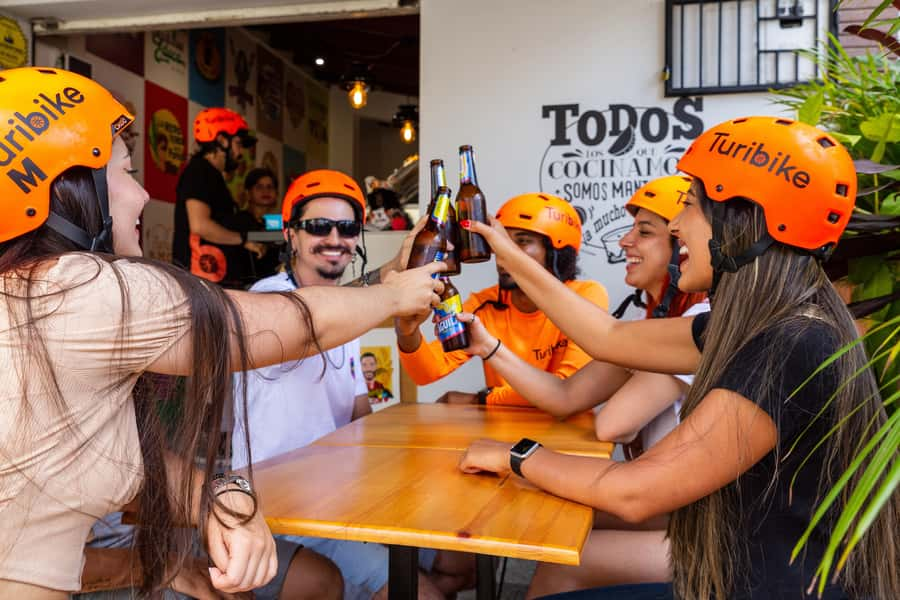
I would choose this tour for a first or second day in Medellín, especially if you want a quick sense of the city before deciding where to spend more time. It is also a good fit if you like to combine sightseeing with food and prefer local streets to a list of major landmarks.
You should book it if you:
- Can ride a bicycle and want electric assistance for city distances
- Enjoy trying several small Colombian foods rather than eating one large meal
- Want history and neighborhood context from a Spanish or English-speaking guide
- Prefer a group of no more than eight people
- Like seeing how a city functions beyond its main tourist areas
It is not suitable for people who cannot ride a bike, have mobility impairments, are pregnant, or are shorter than 4 feet 6 inches, or 140 centimeters. Sandals and flip-flops are not allowed, so wear comfortable closed shoes.
The activity also excludes alcohol and drugs. That is obvious, but the practical point is simple: come ready for a supervised bike ride, not a pub crawl.
Should you book the Medellín E-bike and Foodie Tour?
Book it if you want a useful city orientation with real food attached. The combination works because the e-bike lets you cover ground, while the stops slow you down long enough to notice how people eat and use their neighborhoods.
Skip it if you want a landmark-heavy tour, a quiet museum-style experience, or a single large meal. The route is active, the food comes in several portions, and the city ride requires attention.
For most visitors who are comfortable on a bike, $48 is a fair price for three hours of transport, guiding, tastings, and local context. Arrive in closed shoes, leave room in your appetite for several snacks, and ask about the final food stop and extra drinks before you set off.
FAQ
How long does the Medellín E-bike and Foodie Tour last?
The tour lasts three hours, including the ride through several Medellín neighborhoods, food tastings, the Medellín River Parks visit, and the return to Turibike.
How much does the tour cost?
The listed price is $48 per person.
What is included in the tour?
The price includes an electric bike, medical insurance, a guide, and food and drinks subject to the stated exclusions.
Are drinks and food included at every stop?
No. Beverages at the first three stops are not included, and food at the last stop is not included. Other planned tastings and drinks are included as specified for the tour.
What languages are available?
The live tour guide is available in Spanish and English.
How large is the group?
The tour is limited to eight participants.
Who cannot take this tour?
The activity is not suitable for pregnant women, people with mobility impairments, people who cannot ride a bike, or people under 4 feet 6 inches, or 140 centimeters. Sandals and flip-flops are not allowed.
More Bike Tours in Medellin
- Buenos Aires: North or South Buenos Aires Bike Tour
★ 4.7 · 719 reviews - La Paz: Mountain Bike Down the World’s Most Dangerous Road
★ 4.9 · 386 reviews - São Paulo: Downtown Historical Bike Tour
★ 4.9 · 191 reviews - Montevideo Electric Bicycle Tour
★ 5.0 · 169 reviews
More Food Tours in Medellín
- Medellin: tasting Street Food with Rooftops of El Poblado
★ 4.4 · 61 reviews
Just added around Medellin
- Private Coffee Tour in Jardín Antioquia★ 5.0 · 41 reviews
- Private transfer service from or to Medellín Airport★ 4.0 · 93 reviews
- Medellín: Pablo Escobar Tour with Guide and Transportation★ 4.1 · 71 reviews
- Medellin: Private 3-Hour Pablo Escobar Tour★ 4.8 · 37 reviews
- Medellin: Party Bus with DJ & Street Food Tastings★ 4.5 · 112 reviews
- Pablo and the drug trafficking world★ 5.0 · 129 reviews
- Medellin: tasting Street Food with Rooftops of El Poblado★ 4.4 · 61 reviews
- Medellín: Private Comuna 13 Street Art Tour★ 4.8 · 88 reviews
Food & Drink, compared.

Comuna 13 Graffiti Tour, Cable Car & Street Food
Read our review →
Jolimont Winery Tour – Visitation and Tasting – Canela RS
Read our review →
Browse the lists this tour appears in