
Reviewed · MEDELLíN TOURS
Shared Medellín Downtown Tour with Wireless Audio
Medellín’s downtown is more than a collection of plazas and statues. It is where the city’s industrial ambitions, Paisa culture, railroad growth, public art, social programs, and painful recent past all meet. This walking tour uses those streets to explain how Medellín changed, without brushing aside the violence of the 1980s and 1990s.
I like the way the tour connects Botero’s art with the city around it, then moves into the railroad story at La Alpujarra and the Park of Lights. I also like the wireless receivers, which let you hear guides such as Santiago, Miguel, Carolina, or Daniel while taking photos or keeping an eye on the group.
The main drawback is the length and physical demand. You may walk about 8 kilometers over as much as three hours, often through crowded streets. Downtown can feel intense, and the tour is not suitable for people with mobility impairments.
Key points to know before you book
- Medellín’s past is treated directly: The tour covers drug trafficking, violence, and the 1980s and 1990s without making those years the whole story.
- Botero Plaza is the visual starting point: You see Fernando Botero’s sculptures while learning why his work matters to Medellín and Colombia.
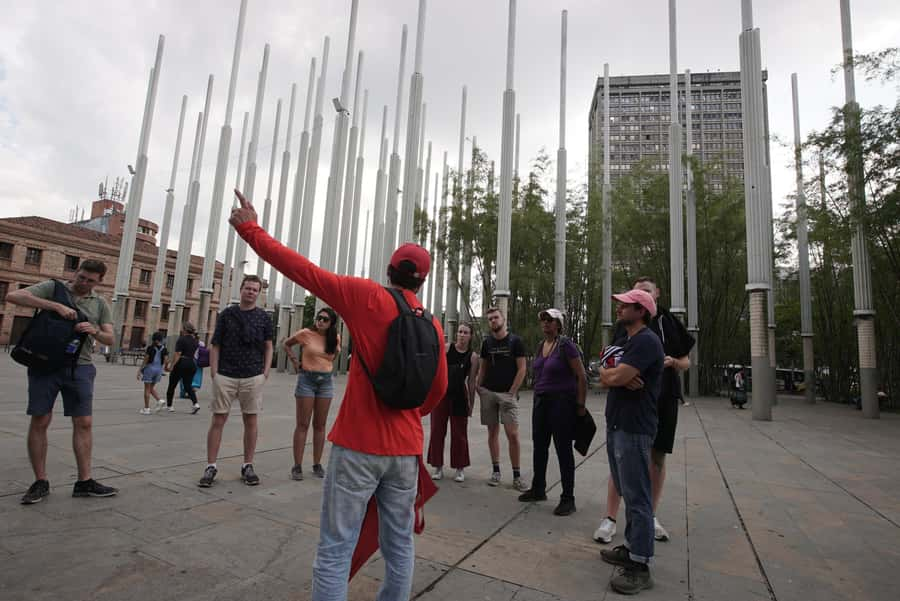
- The railroad story gives the city a wider frame: La Alpujarra and the Park of Lights show how transport and industry helped shape Medellín.
- Wireless audio makes a real difference: You can hear the guide clearly on busy streets and during photo stops.
- The tour is a useful first-day orientation: Guides give suggestions for coffee, lunch, souvenirs, and other places to see.
- The walk is long and exposed to weather: Bring water, comfortable shoes, and rain protection.
Starting at Botero Plaza with Medellín in full view
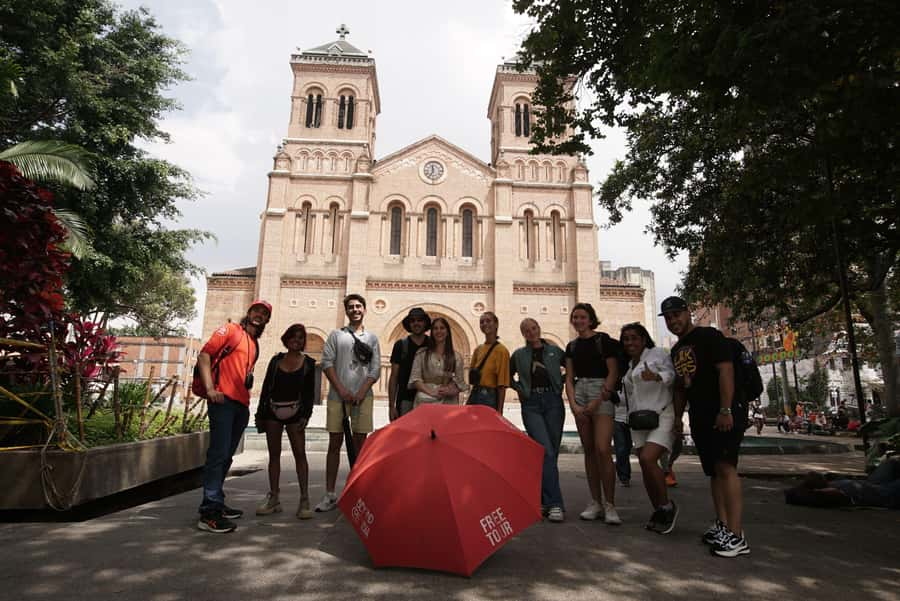
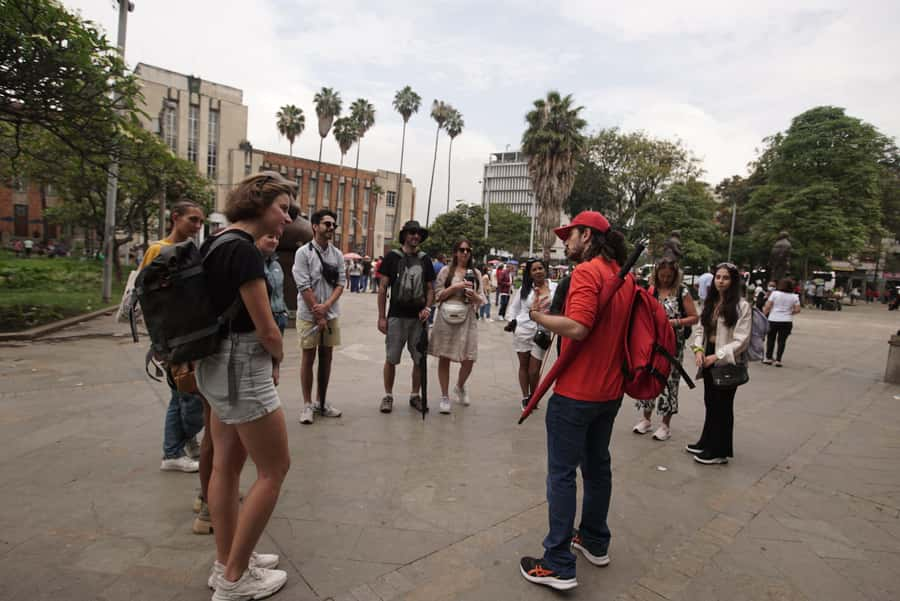
You meet the group in front of the Museo de Antioquia at Botero Plaza, looking for the red umbrellas of Beyond Colombia. This is a sensible place to begin. The plaza is easy to recognize, packed with Fernando Botero’s large bronze figures, and close to many of the city center’s main streets.
The opening stop gives you an immediate lesson in how Medellín presents itself. Botero’s rounded figures are playful and familiar, but the guide also explains the artist’s connection to the city, his place in Colombian culture, and his contribution to the public life of Medellín.
The square can be busy, so the wireless audio system matters from the start. Instead of standing shoulder to shoulder around a guide, you can step aside for a photo and still follow the explanation. You will receive a device and earpiece, but the equipment is not waterproof and cannot be used by children under 15.
From here, the tour moves through the center on foot. Your guide may be Santiago, Miguel, Carolina, Daniel, Sebastian, Deisy, Alejandro, or another member of the local team. The strong point of this format is that the guide can adjust the emphasis to the group. Questions about politics, social change, food, or future plans for the city can add more color than a fixed script.
More audio-guided walks in Medellin:
- Santiago: Hop-on Hop-off Bus Day Ticket with Audio Guide
★ 4.3 · 137 reviews - Chiva Private Cultural Tour with Audio Guide in Buga
★ 5.0 · 49 reviews
Botero, murals, and the public face of the city
Botero Plaza is not simply a photo stop. It is a chance to consider how public art changes the way people use a city. You will see the sculptures in an open urban setting rather than behind glass, with daily life continuing around them.
The tour also points out murals and other pieces of public art in the center. These details help you see Medellín as a place that uses art to shape public spaces and talk about identity. The focus is not only on famous names. It is also on how the city’s streets are used, repaired, and presented to residents and visitors.
You should expect interruptions. Downtown has traffic, vendors, pedestrians, and crowded corners. That can make listening harder without the audio system, but it also keeps the walk connected to real city life. This is not a quiet museum tour where every object waits politely for your attention.
The guide’s job is especially important here. Several guides, including Santiago, Miguel, and Alex, are praised for explaining history in an easy, engaging way and answering questions instead of rushing from one stop to the next. If you want only a quick set of photographs, the pace may feel slow. If you want context, the extra explanation is the point.
Junín Street and the everyday center
The walk crosses the famous Junín street and passes through smaller passages in the downtown area. This is where the city’s daily rhythm becomes part of the experience. You are not viewing Medellín from a bus window. You are walking through its commercial center, sharing sidewalks and public spaces with the people who use them every day.
The guide explains the Paisa character and the role of industry in the region. Paisa culture is presented as one of the keys to understanding Medellín’s importance in Colombia, rather than as a collection of easy stereotypes.
This part can feel crowded and untidy. You may encounter persistent requests for money, and the center has areas where drug use and homelessness are visible. That is not a reason to avoid the tour, but you should know what kind of city walk this is. The experience does not hide difficult urban problems behind a polished visitor route.
Keep your phone and wallet secure in crowded areas. The practical advice is simple: stay with the group, keep your belongings close, and avoid displaying valuables. The phrase don’t give papaya is useful local advice, meaning do not make yourself an easy target.
The 1980s and 1990s without a single storyline
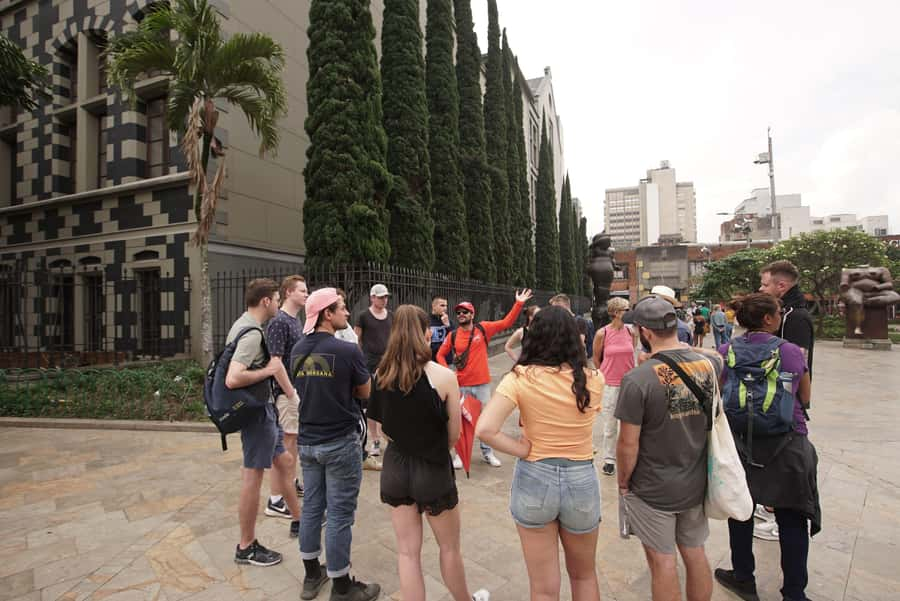
One of the strongest reasons to choose this tour is its treatment of Medellín’s recent past. The discussion includes drug trafficking, conflict, and violence during the 1980s and 1990s, but the city is not reduced to a Narcos-style story.
That balance matters. Medellín’s painful years are part of its identity, and ignoring them would leave you with a false picture. At the same time, the city’s development cannot be explained only through crime. The tour links the hard years to later efforts in public investment, social programs, inclusion, and urban change.
The guides approach the subject from a local point of view. Daniel has been praised for presenting the city’s transformation while also acknowledging its current challenges. Sebastian has been especially effective at discussing Medellín’s past without making drug trafficking the central attraction.
You should expect the subject to be serious. An open mind helps, especially if you have learned about Medellín mainly through television and want a less simplified account. The tour aims to explain rather than sensationalize, although no historical presentation is perfectly neutral. One traveler found the guide informative but not entirely unbiased, so listen critically and ask questions when you want another angle.
A few more Medellin days worth comparing
- Medellin: Comuna 13 Graffiti Tour, Cable Car & Street Food
★ 4.8 · 9,046 reviews - Medellín: The Real Pablo Escobar Tour
★ 4.8 · 3,205 reviews - Medellín: Comuna 13 True Story and Street Food Tour
★ 4.9 · 1,779 reviews - Medellín: Comuna 13 District Tour with Cable Car Ride
★ 4.8 · 1,467 reviews
La Alpujarra and the railroad that built momentum
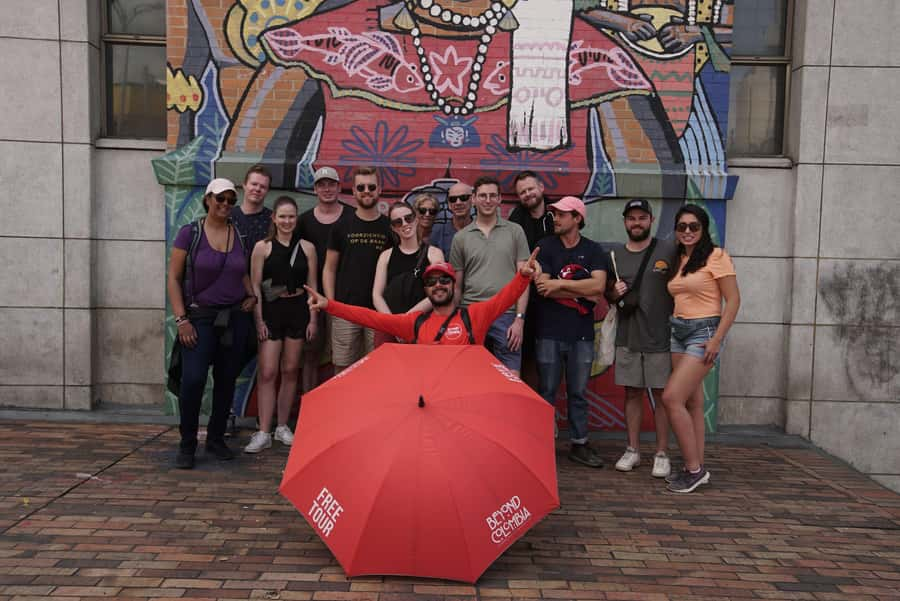
The railroad and La Alpujarra provide a useful change of focus. Instead of looking only at violence and recovery, the tour explains the older foundations of Medellín’s growth.
The railroad represents more than old transport infrastructure. It points to the city’s industrial ambitions and its connection to wider economic development. La Alpujarra becomes a place where architecture, government, transport, and civic identity come together.
This section helps explain why Medellín matters within Colombia. The city’s growth was tied to business, manufacturing, trade, and the work ethic associated with the Paisa region. The guide places those themes in physical surroundings, which makes the information easier to remember than a list of dates.
The tour does not include transportation. You walk between the stops, with rest breaks along the way. That makes the route more personal, but it also means you need to pace yourself. Three hours on city pavement can feel longer than three hours inside a museum.
Park of Lights and a city looking forward
The Park of Lights is described as a tribute to the father of Medellín’s railroads. It also offers a visual sign of the city’s effort to renew public space.
At this point, the tour’s larger idea becomes clear. Medellín’s progress is not presented as magic or as a clean break from the past. It is tied to public investment, collective work, transport, education, art, and attempts to make central areas more usable.
The Park of Lights works well near the end because it brings the railroad story and the transformation theme together. You are encouraged to look at what the city is trying to become, while remembering what came before.
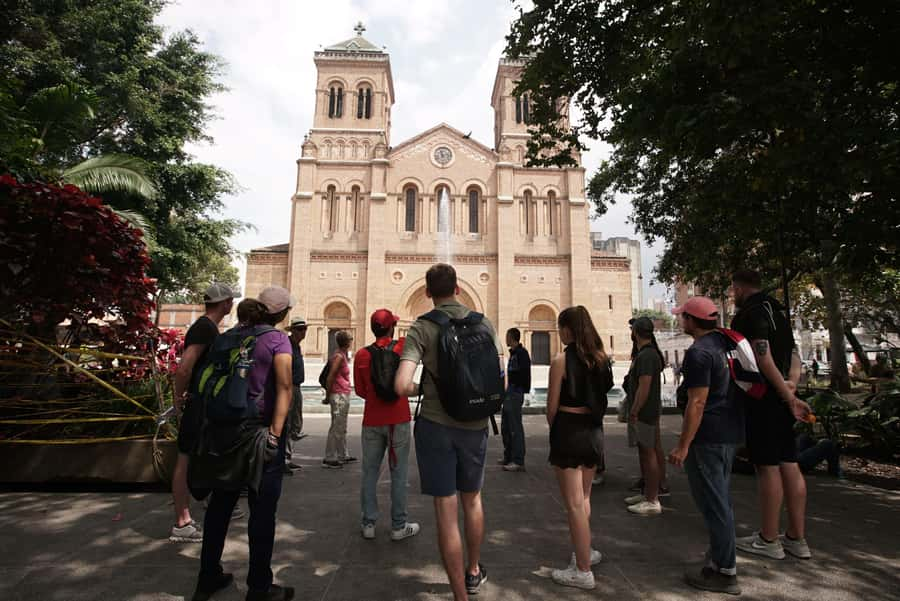
Do not expect every building or landmark to be open for entry. The experience is mainly an outdoor walking tour, and there are no sudden entrance fees because the group is not taken into places that require an unexpected ticket. A national holiday or local closure can also prevent access to a church or interior site, so the route may sometimes be viewed from outside.
What the wireless audio adds
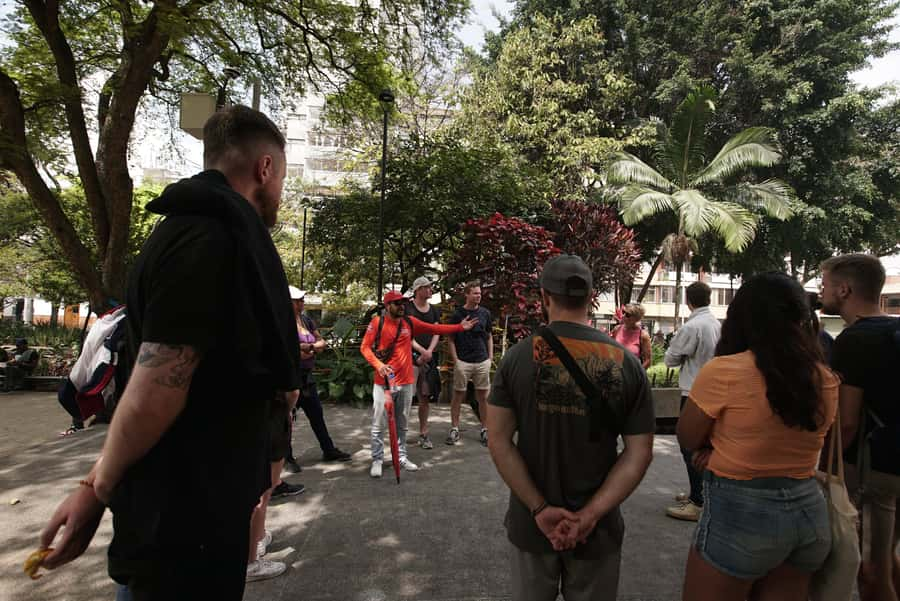
A wireless audio system may sound like a small feature, but it changes the walk. Medellín’s center is noisy, and a group can spread out at crossings, plazas, and photo stops. Clear audio means you do not need to stand directly beside the guide at every moment.
I like that the system allows you to take pictures while still listening. You can frame Botero’s sculptures, record a mural, or look around a busy street without losing the thread of the story.
There are limits. The equipment cannot get wet, so the group must collect it if rain begins. Medellín can have sudden showers, and the tour asks you to bring an umbrella or rain cape. If the audio devices are removed, the guide will need to gather the group more tightly.
The system is also not designed for children under 15. Families with younger children should consider that before booking.
Guide quality and the value of local perspective
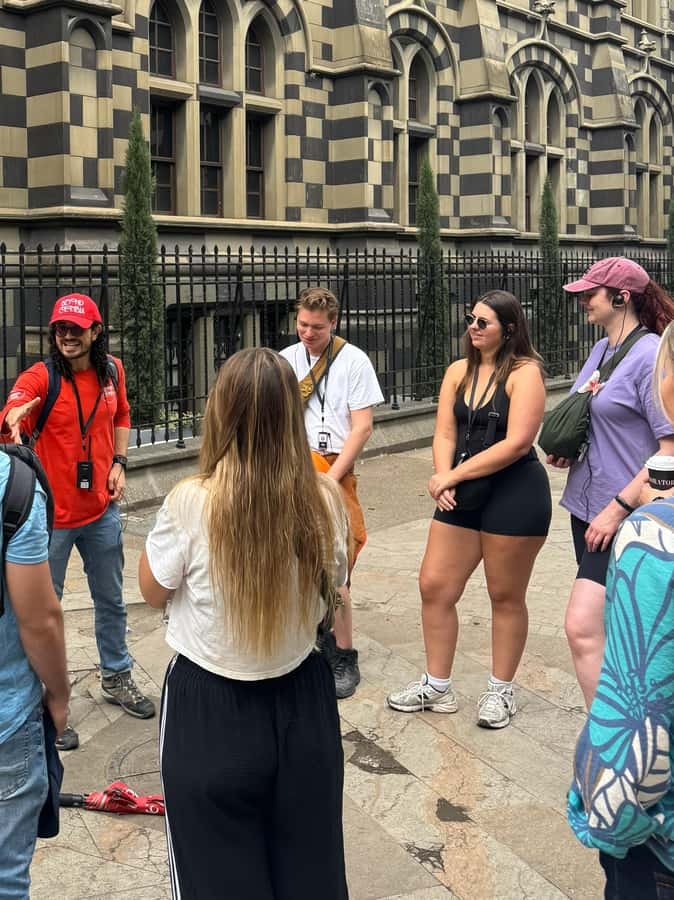
The guide can make or break a history walk, and this experience depends heavily on who leads your departure. The strongest guide descriptions focus on clear English, energy, local knowledge, and a willingness to answer questions.
Santiago is repeatedly singled out for making complex subjects entertaining and for giving useful suggestions about coffee, souvenirs, and other Colombian cities. Miguel is described as passionate about Medellín and strong on both history and current affairs. Carolina has been attentive with Spanish learners and careful to check that people understand.
Other guides, including Daniel, Sebastian, Alex, Deisy, Alejandro, Manuel, Jhon, and Luis Miguel, are also noted for clear explanations and local insight. You cannot choose a particular guide from the information provided, so book this for the structure and subject matter rather than expecting one named person.
The English and Spanish options are useful for mixed groups. If your Spanish is limited, ask questions early and let the guide know what level works for you. One guide has been especially attentive to visitors whose Spanish was not strong, but the quality of interpretation can still vary from one departure to another.
Is the $13 price good value?
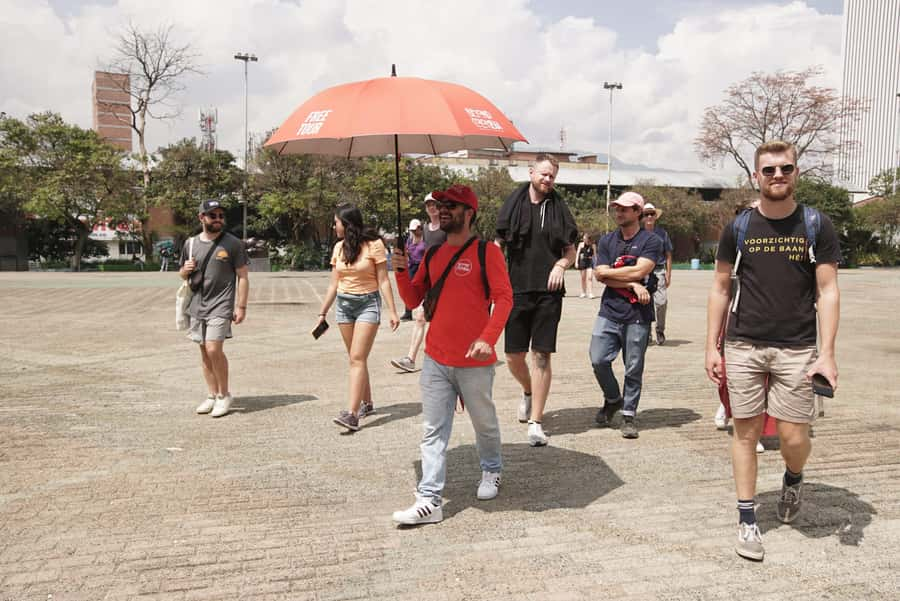
At $13 per person, the tour offers strong value if you want a serious introduction to Medellín rather than a short photo walk. You get a live guide, an organized route through the center, wireless audio, and practical suggestions for places to eat, drink coffee, shop, and continue sightseeing.
The price does not include food, drinks, souvenirs, transport to the meeting point, or transport during the walk. That is easy to understand because the tour is designed around walking. Plan to reach Botero Plaza on your own and carry money for anything you want to buy afterward.
The listed duration ranges from 150 minutes to three hours. The longer end is possible because the walk covers about 8 kilometers and includes stops for explanations and rest. I would leave the rest of your day flexible, especially if you walk slowly or want time for photographs.
Free cancellation up to 24 hours before the start and the option to reserve without paying immediately make the booking less risky. Still, check the available start time and weather before you commit to a long outdoor walk.
Who should take this downtown walk?
This tour suits you if you are visiting Medellín for the first time and want the city’s major themes explained in one outing. It is especially useful early in your stay because the guide can orient you to the center and suggest what to do next.
It also suits you if you want a frank discussion of the 1980s and 1990s without spending the whole tour on drug trafficking. Art fans will enjoy the Botero focus, while history-minded visitors will get more from the railroad, industry, and public investment sections.
You should think twice if you have limited mobility, dislike long walks, or want a quiet sightseeing experience. The center can be crowded, uneven, noisy, and confronting. Bring water, weatherproof clothing, comfortable clothes, and shoes that can handle a full morning or afternoon on foot.
Should you book it?
Book this tour if you want Medellín explained through its streets, public art, industry, railroad story, and difficult recent past. The strongest value comes from the combination of local guides, wireless audio, and a route that connects famous sights with questions about how the city changed.
Skip it if you want a short, polished introduction with little walking or if you prefer to avoid crowded downtown areas. For most first-time visitors who can manage 8 kilometers, the $13 price is a sensible investment in understanding Medellín before exploring the city on your own.
FAQ
Where does the tour meet?
The meeting point is in front of Museo de Antioquia at Botero Plaza. Look for the red umbrellas marked Beyond Colombia.
How long does the tour last?
The tour lasts about 150 minutes to three hours. The stated approximate duration is three hours.
What languages are available?
You can take the tour in English or Spanish with a live guide.
How much walking is involved?
You will walk about 8 kilometers, with stops to rest and listen to the guide.
Is transportation included?
No. You must arrange transportation to and from the meeting point, and the tour itself is done on foot.
What places does the tour visit?
The route includes Botero Plaza, parts of the historic center, Junín Street, La Alpujarra, the railroad-related sites, and the Park of Lights. It may also include passages, murals, churches, and other central landmarks.
Does the tour discuss Medellín’s violent past?
Yes. The guide discusses the 1980s and 1990s, including drug trafficking, conflict, and the city’s later efforts toward social investment and change.
Are food and drinks included?
No. Food, drinks, and souvenirs are not included. The guide can recommend local places for lunch, coffee, and shopping.
Can children use the wireless audio system?
The wireless audio system is not suitable for children under 15 years old.
What should I bring?
Bring comfortable shoes, water or another drink, weather-appropriate clothing, and an umbrella or rain cape. Keep your belongings close in crowded areas.
Just added around Medellin
- Private Coffee Tour in Jardín Antioquia★ 5.0 · 41 reviews
- Private transfer service from or to Medellín Airport★ 4.0 · 93 reviews
- Medellín: Pablo Escobar Tour with Guide and Transportation★ 4.1 · 71 reviews
- Medellin: Private 3-Hour Pablo Escobar Tour★ 4.8 · 37 reviews
- Medellin: Party Bus with DJ & Street Food Tastings★ 4.5 · 112 reviews
- Pablo and the drug trafficking world★ 5.0 · 129 reviews
- Medellin: tasting Street Food with Rooftops of El Poblado★ 4.4 · 61 reviews
- Medellín: Private Comuna 13 Street Art Tour★ 4.8 · 88 reviews
Medellín Tours, compared.
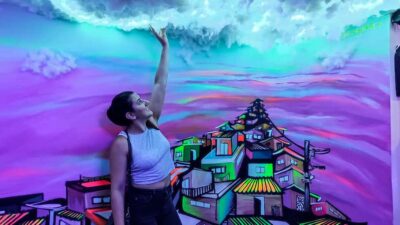
Comuna 13 Graffiti Tour, Cable Car & Street Food
Read our review →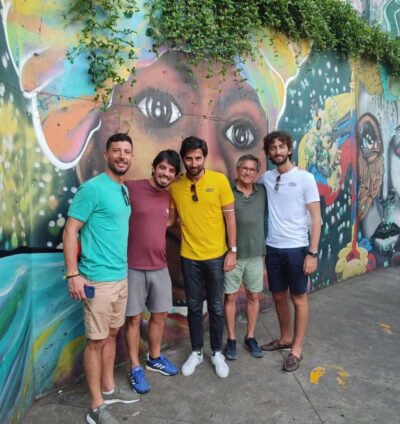
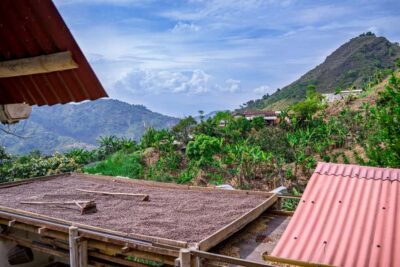
Coffee Tour with Transport, Snacks and Tastings
Read our review →

Guatapé Day Trip & Boat to Pablo Escobar’s Estate
Read our review →
Private City Tour with Metrocable and Comuna 13
Read our review →
Street Food and Poblado Rooftop Tour with a Local
Read our review →Browse the lists this tour appears in