
Reviewed · HORSES
Horseback Riding Plus Tour to Sacsayhuaman, Quenqo, Puka Pucara and Tambomachay
Cusco’s best short horseback outing combines four major Inca sites with a ride through open mountain country, so you get culture and fresh air in one half-day. The horses are matched to your experience, beginners are welcome, and guides such as Benny, Jenny, and Hogler are praised for making the history clear without turning the visit into a lecture.
I like the easy hotel pickup and the chance to see Cusco’s highland scenery from the saddle. I also like that the guide rides with a muleteer who looks after the horses, while the group moves at the pace of its least experienced rider. The main drawback is simple: horseback riding takes about an hour, or sometimes a little longer, not most of the four-hour tour. You also pay the archaeological-site ticket separately.
Key points to know before you book
- Four Inca sites in one half-day: Visit Sacsayhuaman, Q’enqo, Puka Pukara, and Tambomachay by private car and on foot.
- Beginner-friendly riding: The horses are matched to confidence and experience, with helmets and a guide provided.
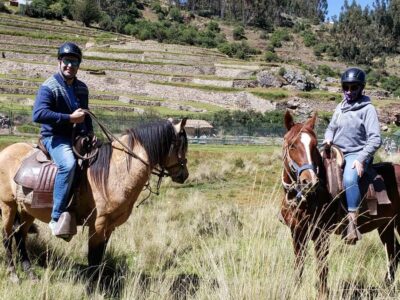
- Ride through open highland scenery: The trail offers broad views, sheep fields, mountain air, and small ruins near the route.
- Strong guiding is central: Benny, Jenny, and Hogler are specifically praised for clear explanations of Inca history and archaeology.
- Budget for the site ticket: The Cusco Tourist Ticket is not included and must be purchased separately.
- Practical limits matter: The minimum age is six, the maximum weight is 200 pounds or 90 kilos, and poor weather can cancel the outing.
Why this tour works well in Cusco
Cusco can be tiring. The altitude, stone streets, museums, and long days on foot add up quickly. This tour gives you a useful change of pace without taking a full day away from the city.
The four archaeological sites sit close to Cusco, in the hills above and around the old Inca capital. You travel between the larger sites by private car, then spend part of the outing at the ranch and on horseback. That arrangement matters. You see a good amount of history, but you are not expected to walk between every stop.
I would think of this as a cultural sightseeing tour with a horseback-riding section, not as a long riding expedition. That distinction prevents disappointment. The riding is the memorable activity, but the main structure of the day is still a guided visit to important archaeological places.
The tour lasts about four hours. Group size can reach 15 people, though transport is by private car. The guide leads the site visits and riding portion, while a muleteer helps care for the horses. Water is included, and snacks are advertised, though one participant did not receive them, so I would bring a small extra snack of your own.
More Horse Riding in Cusco:
- Cusco: 3-Hour Horse Riding Tour to the Temple of the Moon
★ 5.0 · 105 reviews - Cusco: Half-Day Horseback Riding at Devil’s Balcony
★ 4.9 · 89 reviews - Horse Riding Chacan Mountain And Temple Of The Moon
★ 5.0 · 78 reviews
Sacsayhuaman: massive stones above Cusco
Sacsayhuaman is usually the most dramatic archaeological stop. Its huge fitted stones show the scale and skill of Inca construction, and its position above Cusco gives you wide views across the city and surrounding mountains.
Your guide explains the site’s role, architecture, and place in Inca religious and civic life. This is where a good guide makes a real difference. Names such as Benny and Hogler come up for their ability to answer questions and explain difficult ideas in clear English. You are not simply left to look at walls and guess what they mean.
Allow yourself time to look closely at the stonework. The scale can distract you from the small details, such as the careful joins and changes in the wall’s shape. The open setting also means sun protection matters, even on a cloudy day. One couple regretted skipping sunscreen because the high-altitude light remained strong.
Sacsayhuaman is not part of the horseback route. Horses are kept away from the archaeological sites to help protect the ground and ruins. That is sensible conservation, but it also explains why the day alternates between car travel, walking, and riding.
Q’enqo and the ceremonial side of Inca culture
Q’enqo is a different sort of stop. Instead of the vast walls at Sacsayhuaman, you encounter carved stone and spaces connected with ceremony and religious practice.
This is a place where an explanation helps you notice what you might otherwise walk past. The guide discusses Inca customs and the meaning assigned to the site, giving context to the carved surfaces and enclosed areas.
Q’enqo is typically a shorter visit than Sacsayhuaman. That is a benefit on a four-hour tour because it keeps the day moving. You get several different types of archaeological site rather than spending the entire outing at one large complex.
The uneven ground means closed shoes are important. Wear shoes with rubber soles or sturdy walking shoes, and do not count on soft fashion sneakers for every part of the route.
Puka Pukara: an open hilltop stop
Puka Pukara sits in an exposed position near Cusco, with mountain views and a strong sense of the old road network around the city. Its name is often translated as Red Fortress, though the site’s exact role is more nuanced than that simple label suggests.
Here, the setting is part of the experience. You can see why control of routes and movement mattered in the highlands. The remains are less massive than Sacsayhuaman, but the open position helps you picture how the area related to other sites.
Bring a rain jacket if the forecast shows a real chance of showers. Weather can change quickly around Cusco, and the tour operates outdoors for much of the day. The same jacket that helps in a sudden shower can also add comfort in cool wind.
Puka Pukara is visited by car, not on horseback. The riding trail may pass smaller ruins or historic remains, but the main archaeological sites are explored on foot with the guide.
A few more Cusco days worth comparing
- Cusco: Humantay Lake Tour with Breakfast and Buffet Lunch
★ 4.9 · 2,976 reviews - Cusco: Half-Day City Tour with Sacsayhuaman and Q’enco
★ 4.6 · 1,129 reviews - From Cusco: Vinicunca Rainbow Mountain ATV Tour with Meals
★ 4.6 · 1,060 reviews - City Tour Cusco Qoricancha Sacsayhuaman y Tambomachay
★ 4.7 · 617 reviews
Tambomachay: water, ritual, and mountain air
Tambomachay is known for its water channels and ceremonial character. Flowing water had an important place in Inca belief and daily life, and this stop gives your guide a chance to explain that connection.
The site is smaller than Sacsayhuaman, but it has a different mood. The stonework, water, and mountain setting make it feel more intimate. I like this contrast because the tour does not present the Inca world as only walls and military power. You also hear about ritual, water, and sacred places.
The exact order of the stops may vary. The provided route lists Sacsayhuaman, Puka Pukara, Tambomachay, the ranch, and Q’enqo, while some descriptions place the final large site on the return drive. The practical point is that all four sites are included, but you should not expect a rigid order.
The Vieja Estancia Ranch ride
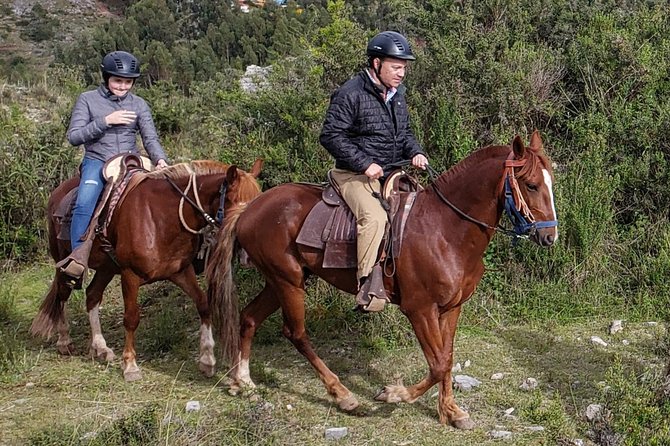
The riding section takes place at Vieja Estancia Ranch. You are given a horse, saddle, and safety helmet, then matched with an animal suited to your experience and confidence.
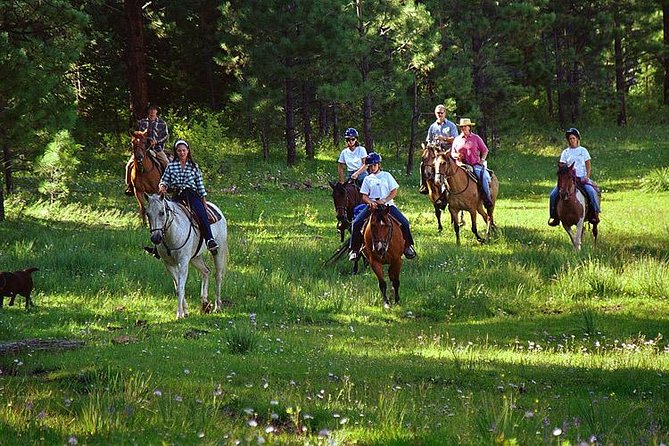
This is designed for beginners. Several participants had little or no riding experience and felt safe, while experienced riders were allowed to move at a faster pace when conditions and the group made that possible. The guide keeps the group together, so you should not expect a private gallop or a highly athletic ride.
The horses are described as calm and well cared for. The Peruvian horses are also noted for a comfortable gait, which matters when you are new to riding or already feeling the effects of altitude.
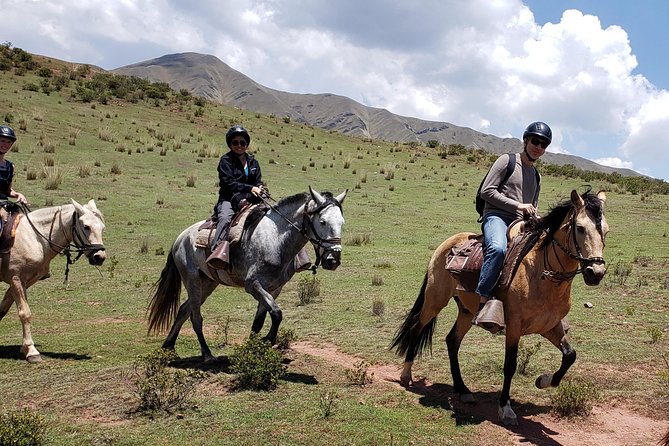
The route passes through open countryside, including sheep fields, with broad mountain views. Some small ruins can be seen along the riding route, but the main four archaeological sites are not reached on horseback. The reason is practical and worthwhile: horse hooves can damage the soil around protected ruins.
The riding time is generally about one hour. Some outings have lasted closer to an hour and a half, but you should plan around the shorter figure. If your main goal is a long horseback adventure, choose a dedicated riding tour instead. If you want a scenic ride added to a history outing, this format makes good sense.
How the guides shape the experience
The strongest part of this tour is the guide’s explanation of the sites. The experience depends less on a printed script than on whether the person leading you can connect architecture, religion, and daily life.
Benny is praised for answering questions carefully and using clear wording, even when questions are awkwardly phrased. Jenny is described as friendly and helpful, while Hogler is noted for explaining Inca archaeology and history in an accessible way. Guide quality can vary by departure, but these names give you a useful sense of the standard the company aims for.
A good guide also handles the transitions. You need clear instructions when leaving the car, entering a site, mounting the horses, and moving with the group. The muleteer adds another layer of support by focusing on the horses and their care.
The tour is conducted in English according to the supplied descriptions and participant experiences. If your interests are specific, such as Inca engineering, religion, or architecture, ask questions as you go. The guides appear to welcome them.
What the $95 price really covers
At $95 per person, this is not the cheapest way to see the four sites. The price includes hotel transport, a professional guide, saddle, helmet, muleteer, and mineral or natural water. Those services have real value, especially if you would otherwise arrange separate taxis, site visits, and a riding outing.
The main extra cost is the Cusco Tourist Ticket. It is not included because the archaeological sites are managed by the Peruvian government. The supplied information puts the ticket at around $20, while one participant reported paying 70 soles. Check the current price before departure and carry enough local currency or an accepted payment method.
Snacks are described as included, but one person reported not receiving them. I would not make the booking decision based on the snack. Bring a small item you know you will eat, especially if you need regular food at altitude.
The price is easier to justify if you value convenience and a private transfer. It is less attractive if you only want a brief ride or if you already have transport and a separate plan for the ruins. For a first day of sightseeing around Cusco, the combination can be efficient.
What to wear and bring for the ride
Wear long pants, preferably jeans, and closed shoes with rubber soles or walking shoes. Shorts can leave your legs exposed to saddle friction, and open footwear is unsuitable around horses and uneven ruins.
Bring a rain jacket when the forecast shows a significant chance of rain. Use sunscreen even if the sky is cloudy, and consider a hat that fits securely. Do not wear jewelry or valuables during the ride.
The maximum weight is 200 pounds or 90 kilos. The minimum age is six. Most people can participate, including those with little or no riding experience, but you should be comfortable sitting on a horse and following the guide’s instructions.
The guide carries a first-aid kit for emergencies. The guide is not authorized to provide medication outside the limits of basic first aid, so bring any personal medication you may need.
Who should book this half-day outing?
I would recommend it to families with older children and teenagers, couples who want activity with their sightseeing, and first-time visitors who want a guided introduction to the major sites near Cusco.
It also suits solo visitors who prefer a planned outing rather than arranging several short rides and taxis. The mix of ruins and riding keeps the day varied. You get history, views, and a manageable amount of physical activity.
It is a weaker choice for a serious rider seeking several hours in the saddle. It is also not ideal if you want to explore every site at your own pace, since the schedule covers four stops in roughly four hours.
The high altitude is another consideration. The activity is not described as strenuous, but Cusco’s elevation can affect how you feel. Keep your pace easy, drink water, and tell the guide if you need a break.
Booking, weather, and cancellation details
Confirmation is provided when you book, and the tour can be reserved up to about 28 days ahead on average. Round-trip hotel transport is included, and the tour is near public transportation if you need another way to reach the area.
The outing requires good weather. If poor weather causes cancellation, you are offered another date or a full refund. You can cancel for a full refund up to 24 hours before the start time. Cancellations or changes made inside 24 hours are not refunded or accepted.
Should you book it?
Book this tour if you want a well-balanced Cusco half-day with four archaeological sites and a short, scenic ride. The best reasons are the clear guiding, the carefully matched horses, the private transport, and the chance to see the highland countryside without committing to a full riding day.
Skip it if you expect to ride between the ruins or spend most of the day on horseback. Also factor in the separate archaeological ticket and bring your own snack, just in case.
For families, first-time riders, and anyone who wants history with a bit of fresh-air adventure, the $95 price can be fair. You are paying for the guide, horse care, transport, equipment, and a tidy route through several important places, not simply for an hour in a saddle.
FAQ
How long does the tour last?
The tour lasts approximately four hours.
How long is the horseback-riding portion?
The ride is generally about one hour. Some participants experienced a ride closer to an hour and a half, but you should plan on roughly one hour.
Which archaeological sites are included?
The tour visits Sacsayhuaman, Q’enqo, Puka Pukara, and Tambomachay.
Are the archaeological-site entrance fees included?
No. The Cusco Tourist Ticket is not included and must be paid separately.
Is hotel transportation included?
Yes. Round-trip transport from hotels by private car is included.
Is horseback riding suitable for beginners?
Yes. The activity is suitable for people with little or no riding experience. Horses are matched to the rider’s experience and confidence.
What is the minimum age?
The minimum age is six years old.
Is there a weight limit?
Yes. The maximum weight is 200 pounds or 90 kilos.
What should I wear?
Wear long pants, preferably jeans, and closed shoes with rubber soles or walking shoes. Bring a rain jacket if rain is possible.
What happens if bad weather cancels the tour?
You can choose another date or receive a full refund if the tour is canceled because of poor weather.
Just added around Cusco
- rainbow mountain full day★ 5.0 · 44 reviews
- Rainbown mountain cusco 1 Day★ 4.5 · 72 reviews
- Manu National Park Tour 4days/3night★ 5.0 · 69 reviews
- Tour to the HUMANTAY LAGOON from CUSCO★ 5.0 · 35 reviews
- Vegan Peruvian Cooking Class Cocktails and Local Market in Cusco★ 5.0 · 46 reviews
- Cusco Private Airport Transfer: Fast, Reliable Hotel Drop-Off★ 5.0 · 80 reviews
- 1 Day Tour to Palccoyo (Alternative Rainbow Mtn) from Cusco, Peru★ 5.0 · 53 reviews
- 5-Day: Salkantay Trek to Machupicchu and Humantay Lake★ 5.0 · 42 reviews
Horses, compared.
Sunset Horse Back Riding in the Mountains and BBQ
Read our review →
Horseback Riding Coffee Farm Tour with Coffee Spa
Read our review →
Cusco: 3-Hour Horse Riding Tour to the Temple of the Moon
Read our review →
Scenic Horseback Riding in the Medellín Mountains
Read our review →Browse the lists this tour appears in