
Reviewed · SACRED VALLEY TOURS
From Cusco: Moray, Maras Salt Mines & Chinchero Weavers Half-Day
The most memorable part of this Cusco outing is the sharp change between Moray’s giant agricultural terraces and the bright salt pools at Maras. In a single morning, you see how the Incas tested crops at high altitude and how local families still work saltwater pools first used before Inca times.
I like the live dyeing lesson at Chinchero, where you see natural plants turned into wool colors, and I like the guides’ strong storytelling. Felipe, Julio, Eddie, and Manuel are all praised for clear English and Spanish explanations, with Felipe even sharing coca leaves during one tour. The main catch is the long day in a small vehicle, with no planned lunch stop.
Key points to know before booking
- Three very different stops: Chinchero focuses on Quechua textiles, Moray on Inca farming, and Maras on salt production.
- High-altitude sightseeing: Chinchero reaches 3,762 meters, while Moray sits at about 3,450 meters.
- Strong guiding: Felipe, Julio, Eddie, and Manuel are singled out for clear explanations and friendly help with photos.
- Low advertised price, extra entrance fees: The tour costs $15.20, but Moray and Maras admissions add $25, or about 90 soles.
- Lunch is not included: Bring water and snacks, since the return to Cusco is around 3:15 pm.
- Small-group format: The stated maximum is 16 people, though the minibus can feel cramped when full.
Why this half-day route works so well
This is a smart introduction to the Sacred Valley area if you have only one free day around Cusco. You get highland villages, working craft traditions, Inca engineering, colonial-era architecture, and an active salt operation without committing to a full-day Sacred Valley circuit.
The tour begins with hotel pickup between 8:20 and 8:40 am. That start is useful if you want a little extra sleep after arriving in Cusco, and the return near Plaza de Armas is scheduled for about 3:15 pm. One traveler used the timing to catch an evening flight, though you should allow plenty of extra time before any airport commitment.
The route covers a lot. That is its strength and its weakness. You will see several major sights in one outing, but the schedule depends on everyone returning to the minibus on time. At seven hours, it can feel longer than the phrase half-day suggests.
A few more Sacred Valley days worth comparing
- From Cusco: Sacred Valley & Maras Salt Mines Tour with Lunch
★ 4.8 · 2,227 reviews - From Cusco: Moray, Maras Salt Mines & Chinchero Weavers Tour
★ 4.8 · 1,925 reviews - Cusco: Sacred Valley, Pisac, Ollantaytambo, Salt Mines Moray
★ 4.6 · 1,058 reviews
Chinchero and the living Quechua textile tradition
Chinchero is the first substantial stop, at roughly 3,762 meters. The visit includes part of the town and an Andean textile center rather than a full tour of every street or market stall.
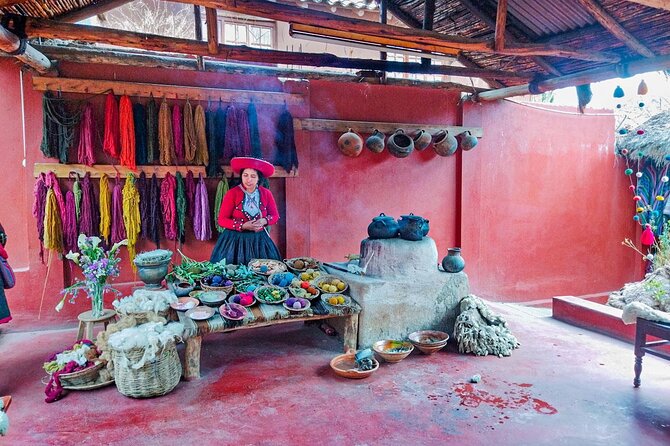
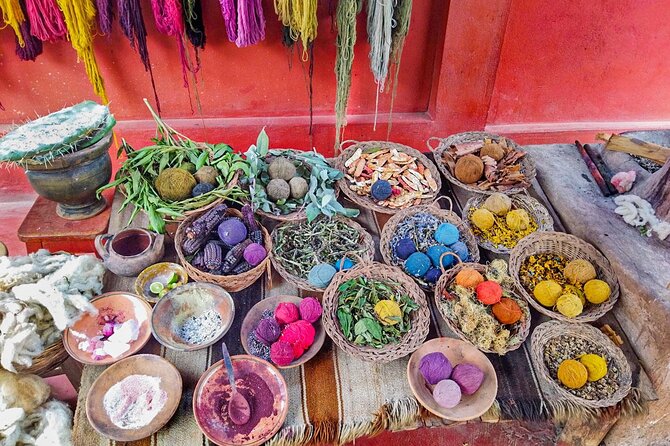
The best part is the weaving presentation. Local textile workers explain how they produce colors from natural plants, prepare wool, and create traditional patterns. You may also see llamas and alpacas, try on Andean clothing for photographs, and sample a traditional drink. The demonstration gives you a useful look at a working Quechua tradition rather than only a museum display.
I especially value the explanation of natural dyes. It turns a beautiful textile into something understandable: color is not just decoration, but a process tied to local plants and inherited skill. You also have a chance to ask about the difference between alpaca and acrylic goods. The sellers are described as open about mixed materials, which helps you shop with better judgment.
There is a clear commercial side. After the short demonstration, the visit shifts toward selling scarves, blankets, hats, and other handmade items. One hour is enough for the presentation and browsing, but if you dislike sales-oriented stops, this may be the least comfortable part of the day.
Chinchero also includes a traditional market where bartering is practiced. The wording of the tour makes clear that you see only part of the town, so set your expectations accordingly. This is a focused introduction to weaving, not a long market exploration.
Take time to look beyond the merchandise. The value here is the contact with a continuing local craft, the use of Quechua methods, and the chance to understand what you are buying.
Moray’s Inca farming experiment at 3,450 meters
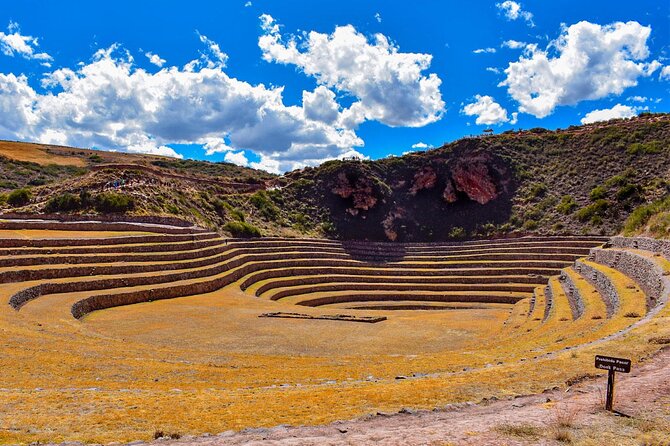
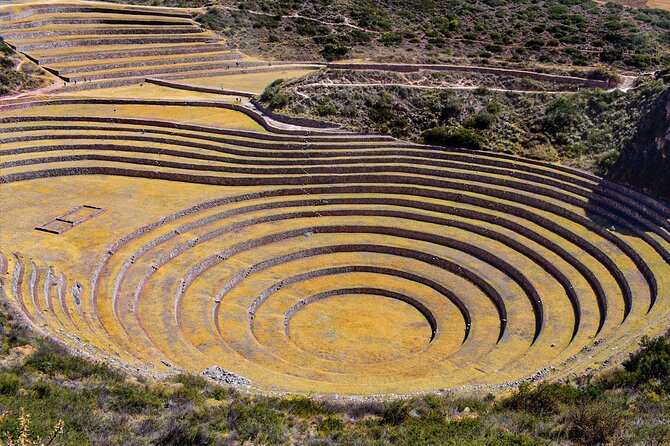
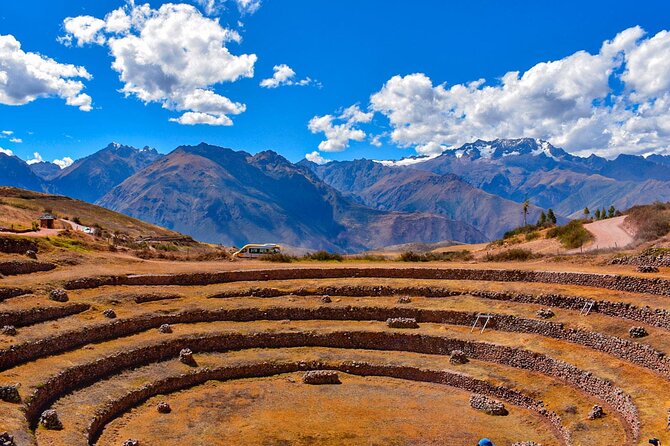
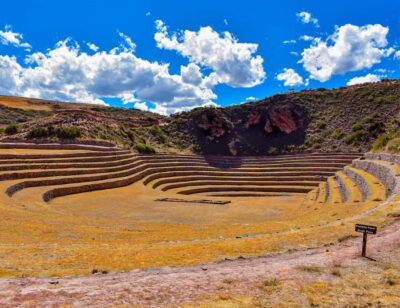
At Moray, the subject changes from textiles to agriculture. The site consists of broad circular terraces carved into a natural bowl, with lower levels cut deeper into the earth.
The design is striking from above, but the explanation is what makes the visit worthwhile. The terraces had irrigation features and created different growing conditions at different levels. The Incas are thought to have used the site to test which crops performed best in different temperatures and elevations.
You can think of Moray as an outdoor agricultural laboratory. The terraces helped create small climate zones, allowing crops to grow at an altitude where conditions would normally be difficult. The guide explains how the Incas worked with temperature, water, and soil rather than treating the site as a simple monument.
The setting adds to the appeal. One detailed account describes views toward Andean glaciers behind the terraces. You get the visual drama of the bowl itself, then the broader mountain setting when you look outward.
Moray admission is not included. The listed fee is $19, or 70 soles. That is a substantial addition to a $15.20 tour, so include it when comparing prices. The entrance cost is not a surprise if you read the inclusions, but it changes the true total.
Plan for altitude here. Moray is lower than Chinchero but still sits at about 3,450 meters, or 11,318 feet. The tour is not presented as strenuous, and most people can participate, but you will enjoy the site more if you walk slowly and keep water close.
Maras salt pools and a working mountain economy
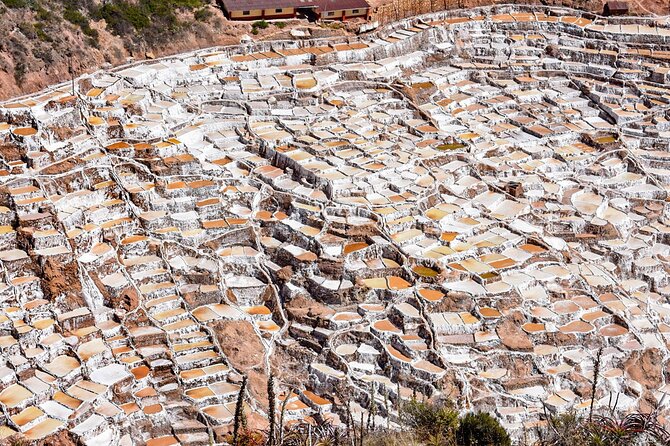
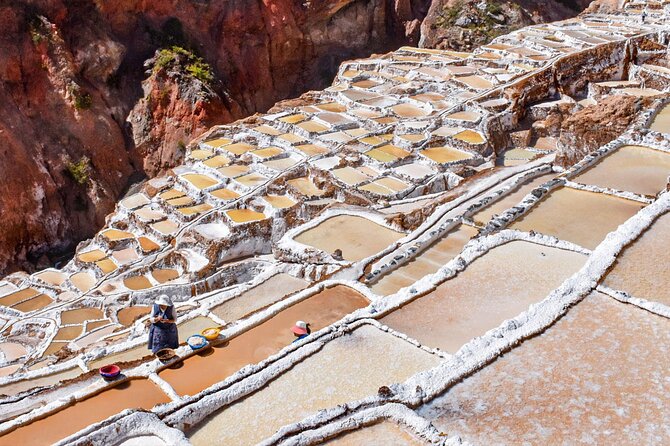
The Maras salt mines are the visual high point for many people. Thousands of small pools spread across the mountainside, each holding saltwater brought from a natural hot spring.
During the dry season, workers fill the pools about every three days. Water evaporates, leaving salt behind. The salt is then ground, treated with iodine, packaged, and sold in markets around the region. This remains an active operation, not a frozen archaeological display.
The site has been worked since pre-Inca times, which gives the visit a long human connection without making it feel abstract. You see a practical system still supporting local communities. The white and tan pools form strong patterns against the mountains, so bring a phone or camera with space for plenty of photographs.
Admission is separate, listed at $6, or 20 soles. Combined with Moray, the two extra entrance fees total $25, or 90 soles. At the tour price, the outing remains a good value if you want these sites, but the advertised fare is not the full cost.
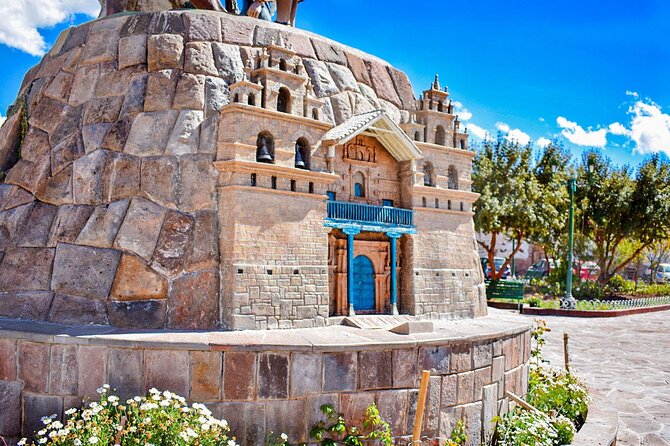
The route passes through Maras village, where thin-stone colonial buildings preserve a different side of the area. The village is not presented as a long walking stop, but the drive adds useful context before you reach the salt pools.
I would give Maras your full attention. The site is large, the view changes as you move, and the salt pools are easy to remember long after smaller stops blur together. If you have to choose where to spend your best photographs, start here.
Same trip, a completely different kind of day:
- Cusco:Chinchero,Moray & Salt Mines drop-off in Ollantaytambo
★ 4.8 · 793 reviews - Sacred Valley: Chinchero, Moray, Ollantaytambo & Pisac+Lunch
★ 4.8 · 501 reviews - Sacred Valley: Maras & Moray by Quad Bike from Cusco
★ 4.6 · 418 reviews - Pisac Indian Market and Ollantaytambo Fortress with Lunch
★ 4.5 · 395 reviews
What the guide adds to the day
The strongest part of this outing is the guiding. Felipe receives especially warm praise for explaining both ancient sites and modern life in the Cusco region. Julio is noted for detailed commentary in English and Spanish, while Eddie is described as friendly and well informed. Manuel is also praised for switching smoothly between Spanish and English.
That matters because the sites are easy to look at but harder to understand on your own. At Moray, the guide connects the terraces to crop testing and irrigation. At Chinchero, the explanation of dyes gives meaning to the weaving demonstration. At Maras, you learn how a salt pool works and why the operation continues.
Guides also help with the practical side. Felipe helped couples take photographs at viewpoints, and one guide shared coca leaves for visitors to try. Those small touches can make a group outing feel more personal.
The exact guide is not guaranteed, so book this for the route rather than for a particular person. Still, the consistent praise for the guiding is one of the best reasons to choose an organized tour instead of arranging only transport.
Transport, timing, and the lunch problem
Pickup is from your hotel in Cusco between 8:20 and 8:40 am. Transportation and a bilingual guide are included, but hotel drop-off is not. The usual return is near Plaza de Armas at about 3:15 pm.
The stated maximum is 16 people. That is smaller than a large coach group, and it helps the guide keep the commentary personal. Still, the minibus can be uncomfortable when full. One direct account found the vehicle especially cramped, so you should not expect luxury transport.
The timing is efficient but tight. You visit Chinchero for about an hour, Moray for about an hour, and Maras for about an hour, with driving between them. The day works because you keep moving, but lateness by one person can affect everyone else. Stay close to the group and return to the vehicle promptly.
There is no included breakfast or lunch. The schedule can run seven hours, and some people found the lack of a meal break difficult. Eat before pickup, carry water, and pack snacks. You return in time for lunch in Cusco if the day runs close to schedule, but you should not depend on finding food during the route.
The real price and what you receive
At $15.20 per person, the base fare is unusually low for hotel pickup, transportation, and a bilingual guide covering three major stops. The price works best when you treat it as a transport-and-guiding package, then add the required site fees.
Your likely listed cost is:
- Tour: $15.20
- Moray admission: $19, or 70 soles
- Maras admission: $6, or 20 soles
- Food and drinks: extra
- Tips: extra
That brings the stated tour and entrance fees to about $40.20 per person before food and tips. Currency conversion can change, so use the local amounts as a guide.
For this total, I think the value is strong. Private transport to all three sites would cost more, and arranging the same route alone would leave you without the history and cultural context that make the stops worthwhile. The tradeoff is comfort: you pay little, but you share a minibus and follow a fixed schedule.
Who should book this outing
I would choose this tour if you have one free day in Cusco and want a broad taste of the region. It suits first-time visitors, solo travelers, couples, and anyone who prefers a guide to explain what they are seeing.
It is also a good fit if you need to return to Cusco by midafternoon. One person used the timing before an evening flight, and the route is short enough to leave the rest of the day open, though airport plans always need a safety margin.
You may want a different option if you dislike shopping stops, need a guaranteed meal break, or want a slow visit at each site. Chinchero is partly focused on textile sales, and the three-stop plan leaves limited time for lingering.
The tour is near public transportation, and most people can participate. It requires good weather, and poor conditions may lead to a new date or a full refund. Free cancellation is available up to 24 hours before the start time. Changes or cancellations inside that window are not accepted and are not refunded.
Should you book the Moray and Maras tour?
Book it if you want Moray, Maras, and Chinchero in one affordable morning-to-afternoon route, and you are comfortable carrying snacks and sharing a minibus. The salt pools and Moray terraces provide the major visual rewards, while the textile center adds a useful connection to present-day Quechua life.
I would not book it for a relaxed food-focused day or a deep visit to Chinchero. You are buying coverage and context, not spacious transport or long free time.
For most people with limited time in Cusco, the balance is favorable. Add the entrance fees to your budget, eat before pickup, bring water, and stay alert during the weaving presentation so you can separate genuine craft information from the sales pitch.
FAQ
What time does the tour pick me up in Cusco?
Pickup is scheduled between 8:20 am and 8:40 am from your hotel.
When does the tour return to Cusco?
The tour is expected to return near Plaza de Armas at around 3:15 pm.
How long does the experience last?
The full outing takes approximately 6 to 7 hours.
Is transportation included?
Yes. Transportation from Cusco and hotel pickup are included.
Is a tour guide included?
Yes. A bilingual tour guide is included.
Are the Moray and Maras entrance fees included?
No. Moray costs $19, or 70 soles, and the Maras salt mines cost $6, or 20 soles.
Is lunch included?
No. Breakfast, lunch, and tips are not included. You should bring water and snacks.
How many people can join the tour?
The stated maximum is 16 travelers.
Can I cancel for a full refund?
Yes, if you cancel at least 24 hours before the experience starts. Cancellations made less than 24 hours in advance are not refunded. If poor weather causes the operator to cancel, you will be offered another date or a full refund.
Just added around Sacred Valley
- Rafting & Zip line Urubamba River 1 Day★ 5.0 · 75 reviews
- Moray and Maras Salt Mines Full Day Tour – Small Groups★ 5.0 · 79 reviews
- Sacred Valley VIP Tour with Maras and Moray from Cusco★ 4.5 · 35 reviews
- Sacred Valley Private Tour, Moray & Salt Mines Incluided★ 5.0 · 41 reviews
- 2-Day Tour: Sacred Valley & Machu Picchu – All Tickets Included★ 5.0 · 42 reviews
- Sacred Valley Full-Day Private Tour from Urubamba & Ollantaytambo★ 5.0 · 112 reviews
- Sam’s Zip Line in Sacred Valley★ 5.0 · 75 reviews
- Salt Mines(Maras),Moray and Chincheros★ 5.0 · 41 reviews
Sacred Valley Tours, compared.
From Cusco: Moray, Maras Salt Mines & Chinchero Weavers Tour
Read our review →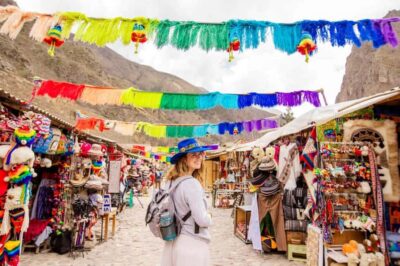
Cusco: Sacred Valley, Pisac, Ollantaytambo, Salt Mines Moray
Read our review →
Cusco:Chinchero,Moray & Salt Mines drop-off in Ollantaytambo
Read our review →
Sacred Valley: Chinchero, Moray, Ollantaytambo & Pisac+Lunch
Read our review →
Sacred Valley: Maras & Moray by Quad Bike from Cusco
Read our review →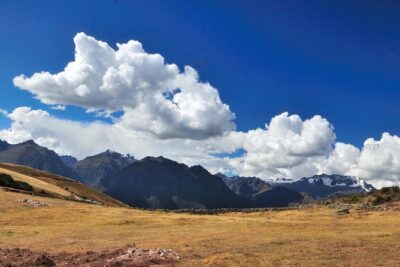
Pisac Indian Market and Ollantaytambo Fortress with Lunch
Read our review →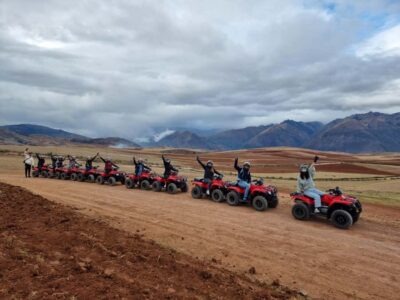
From Cusco: Quad bike tour Moray and Salt Mines
Read our review →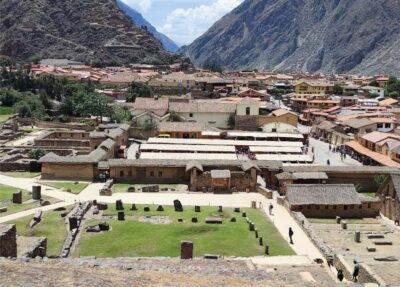
From Cusco: 2-Day Trip to the Sacred Valley and Machu Picchu
Read our review →Browse the lists this tour appears in