
Reviewed · SACRED VALLEY TOURS
Complete Sacred Valley Tour Small group Pisac, Maras, Moray & Ollantaytambo
The most striking part of this day is its range. You move from Pisac’s high terraces to the curious circular fields of Moray, then to Maras, where thousands of salt pools stripe the mountainside. Ollantaytambo finishes the tour with some of the finest Inca stonework in the valley.
I like the small group size, capped at eight, and the way the day combines major ruins with working local places. I also like the guides’ strong focus on Inca farming, science, religion, and engineering. The main drawback is the long schedule: lunch can come as late as 2 p.m., and the included buffet is basic.
Key points to know before booking
- Four major Sacred Valley stops: Pisac, Moray, Maras, and Ollantaytambo give you a broad look at Inca life and engineering.
- Small group of two to eight: You get a more personal guide than on a large coach tour.
- Guides praised by name: Jaime, Jimy, and Juan are noted for clear English, strong explanations, and enthusiasm for Inca culture.
- Bring extra cash: The Sacred Valley ticket costs 70 soles, and the salt mine ticket costs 20 soles.
- Plan for a late lunch: The Urubamba buffet may not begin until around 2 p.m., so pack a snack.
- Useful for a Machu Picchu route: An Ollantaytambo finish can save time if you are continuing by train to Aguas Calientes.
One long day through the Sacred Valley
This is a full, approximately 12-hour outing from Cusco. That sounds demanding because it is. You cover a large portion of the Sacred Valley, with several stops, mountain roads, walking at archaeological sites, and a late meal.
The payoff is variety. Instead of seeing only one famous ruin, you get a connected picture of how the Incas used the valley. Pisac shows terraces and stone construction. Moray raises questions about crop testing. Maras reveals a salt system still shaped by water and evaporation. Ollantaytambo brings you back to monumental Inca masonry.
The group is limited to eight people, and transportation is private with air conditioning. Pickup from your Cusco hotel is available if you select that option. Otherwise, the stated meeting point is Plaza Regocijo in central Cusco.
The tour has earned a 4.8 rating from 45 reviews, with 98 percent recommending it. The strongest praise goes to the guides, especially Jaime and Jimy, who explain the sites clearly and keep the history connected to what you are actually seeing.
A few more Sacred Valley days worth comparing
- From Cusco: Sacred Valley & Maras Salt Mines Tour with Lunch
★ 4.8 · 2,227 reviews - From Cusco: Moray, Maras Salt Mines & Chinchero Weavers Tour
★ 4.8 · 1,925 reviews - Cusco: Sacred Valley, Pisac, Ollantaytambo, Salt Mines Moray
★ 4.6 · 1,058 reviews
Pisac ruins: terraces above the valley
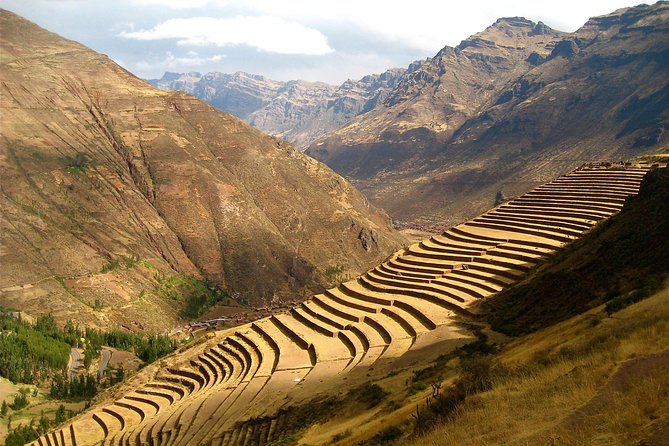
Pisac is your first major archaeological stop, with about an hour at the site. The ruins offer a useful introduction to Inca planning because you see more than walls and doorways. The mountainsides are shaped with broad agricultural terraces, while stonework and carved details show the care put into both practical and ceremonial buildings.
Your guide can help explain how these terraces supported farming in a high-altitude setting. The Sacred Valley has unusually fertile plains for the Andes, and the Incas used irrigation and contour terracing to make the most of that advantage.
Allow yourself time to look beyond the main structures. The scale of the terraces is the point. From above, the valley opens wide beneath you, and you begin to understand why this area mattered so much to the Inca state.
The Sacred Valley admission ticket is not included. The stated cost is 70 soles in cash. Carry the correct amount if possible, since the tour information specifically notes cash payment.
Pisac Market: crafts and a short cultural stop
After the ruins, you spend about 45 minutes at the Pisac Market. This is a chance to meet local people and shop for crafts, rather than another archaeological lecture.
You may find textiles, small souvenirs, and handmade goods, but the short time means you should decide quickly how much shopping you want to do. If you prefer ruins to retail stops, this portion may feel less important. If you want a chance to browse local crafts, it gives the day a change of pace.
One useful detail is that the cultural stops did not feel overly forced in the experience described. Still, shopping stops vary from person to person. You do not need to buy anything, and you should keep an eye on the clock because the tour has several more sites ahead.
The Sacred Valley views between stops
The drive itself matters. The fertile valley floor contrasts with the steep Andean slopes, where terraces and irrigation channels show how carefully the Incas worked with the land.
Your guide and driver point out photo locations along the route. These pauses help you grasp the valley’s size, something that is harder to understand from inside an archaeological site.
The scenery changes as the day continues, but the roads and timing also add to the fatigue. You are not spending a quiet morning in one village. You are crossing the valley in a set order designed to cover several attractions in one day.
Same trip, a completely different kind of day:
- Cusco:Chinchero,Moray & Salt Mines drop-off in Ollantaytambo
★ 4.8 · 793 reviews - Sacred Valley: Chinchero, Moray, Ollantaytambo & Pisac+Lunch
★ 4.8 · 501 reviews - Sacred Valley: Maras & Moray by Quad Bike from Cusco
★ 4.6 · 418 reviews - Pisac Indian Market and Ollantaytambo Fortress with Lunch
★ 4.5 · 395 reviews
Moray: the Inca farming experiment
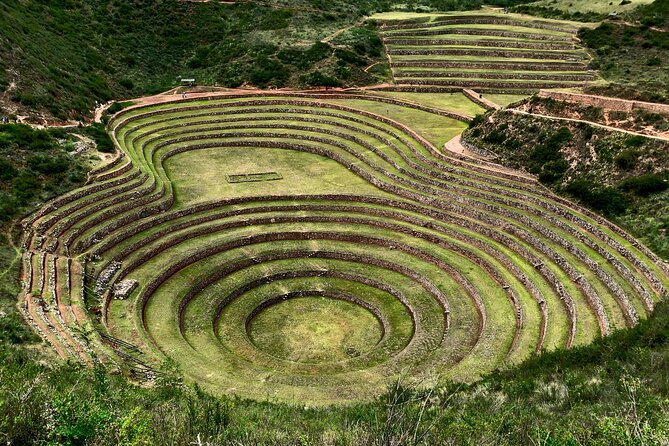
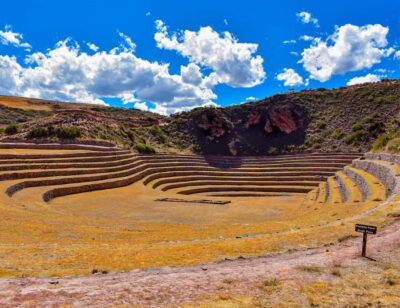
Moray receives about an hour, with admission extra. Its three bowl-shaped, amphitheater-like terraces are among the most unusual sights in the Cusco region.
The terraces are cut deep into the earth in circular levels. They are widely thought to have helped the Incas test growing conditions for different crops. Temperature, sunlight, wind, and elevation could vary from one level to another, giving farmers a practical way to compare conditions.
Your guide adds value here because the shape alone does not explain the site. Without context, Moray can look like a large set of rings in the ground. With an explanation of farming and crop testing, it becomes part of the larger story of Inca planning and food production.
The one-hour visit gives you time for photos and a proper look, though you should not expect a long, unhurried walk. The tour must keep moving to reach Maras and Ollantaytambo later in the day.
Maras salt pools: a bright mountainside stop
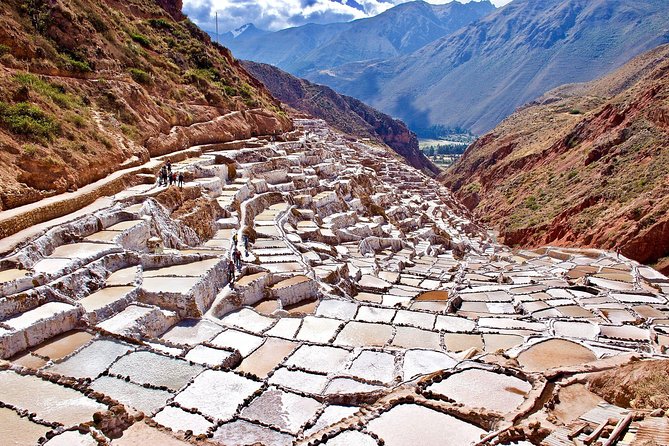
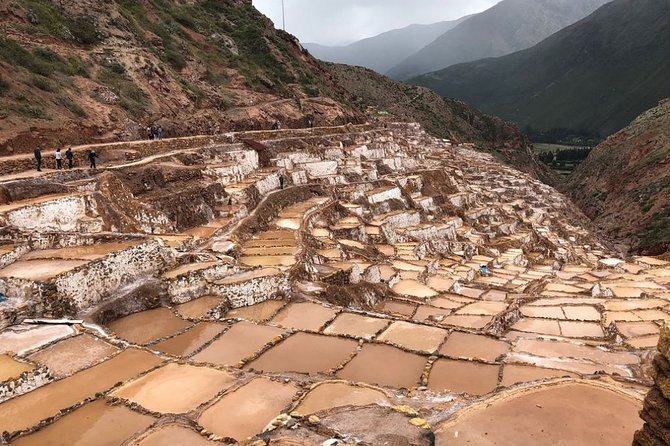
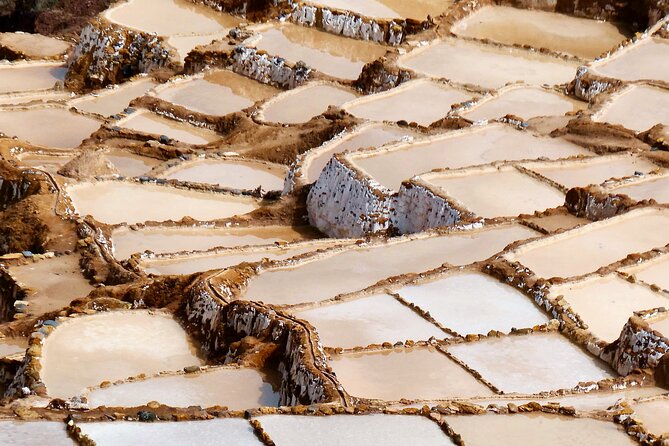
The Maras salt mines are about two miles from Moray. The site contains more than 3,000 small salt pools, cut into the mountainside and filled by a small stream.
As water evaporates, it leaves salt behind. From a distance, the pools form a pale, irregular pattern across the slope. This is one of the best photo stops on the route because you can frame the salt pools against the Andes.
Maras dates to the colonial period and developed as a salt-producing center. That gives the stop a different feel from Pisac, Moray, and Ollantaytambo. You are not looking only at an Inca monument. You are seeing a long-running production site shaped by water, labor, and the mountain itself.
The visit lasts about 45 minutes, though some comments about the actual schedule suggest the time at Maras and Moray can sometimes be closer to 15 to 30 minutes. Be ready to take your pictures and listen to the explanation without expecting a long stay.
The salt mine fee is listed as 20 soles per person in cash. The tour details repeat this charge in two places, so budget 20 soles and carry cash.
Ollantaytambo: the day’s grand finale
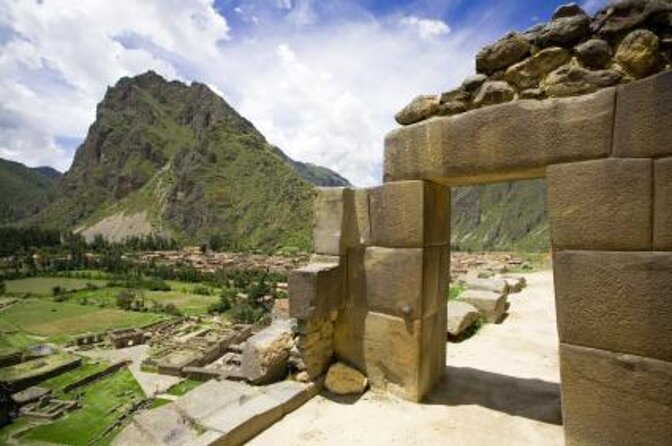
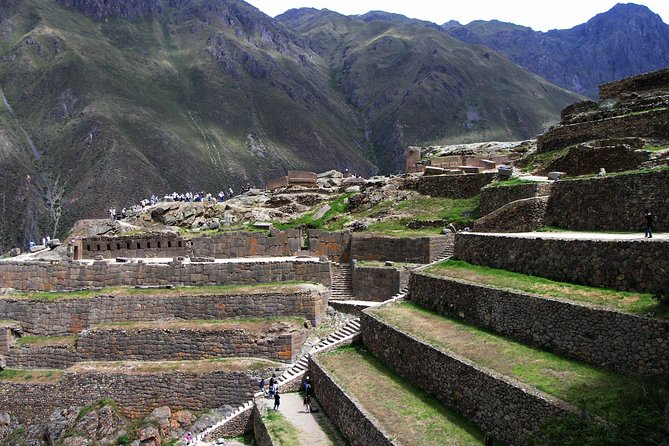
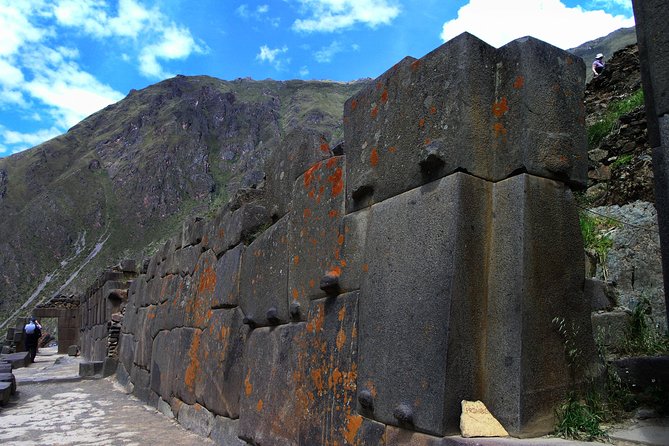
Ollantaytambo gets about an hour and is the final major archaeological stop. Built during the height of Inca power, the site is known for huge stone terraces, carefully fitted masonry, and an imposing position above the town.
The ruins give you a strong sense of Inca construction skill. Look for the large stones and the way the terraces climb the slope. The site also includes a striking rock formation associated with Wiracocha, the Inca god.
An hour is enough for a focused visit, but not enough to explore every corner at a slow pace. Wear shoes you can walk in and stay with the group, since the site involves uneven ground and steps.
Ollantaytambo is especially useful for route planning. The tour can be convenient if you are continuing toward Aguas Calientes and Machu Picchu. One experience described a drop-off in central Ollantaytambo, about a 5 to 10 minute walk from the train station. Since the general meeting information says the activity ends back at the meeting point, confirm the drop-off option you select before booking.
What the guide adds to the day
The guide is the most important part of a tour like this. Ruins such as Moray and Ollantaytambo are impressive on their own, but explanations help you understand why they were built and how they fit into Inca society.
Jaime and Jimy are specifically praised for clear English, patience, and strong knowledge of Inca culture. Juan is noted for explaining the sites in several languages and for covering Inca discoveries, science, religion, and farming.
The guides also appear attentive to altitude. One account describes a guide encouraging breaks and being patient with photos. That matters because the day is long and the sites are not at low elevation. You should still pace yourself, drink water, and tell the guide if you need a pause.
The tour is offered in English and Spanish. That is helpful for mixed-language groups, although the exact language balance may depend on the people booked that day.
Lunch in Urubamba: useful, but keep expectations modest
A buffet lunch in Urubamba is included. This saves you from arranging a meal during a tightly timed day, and some descriptions praise the variety and generous portions.
The timing is the bigger issue. Lunch may come around 2 p.m., which is late for many people. Bring a snack for the morning, especially if you do not like eating a large meal late in the day.
The setting and food can be simple. One detailed account described a large, fairly empty hall, average buffet food, and dishes that were not labelled or covered from flies. Plain choices such as rice and pasta were the safer picks in that account.
I would treat lunch as a practical break, not a highlight. You are paying for the convenience of having food built into the route. If food quality matters greatly to you, this is one part of the experience where you may want to keep expectations sensible.
Price, tickets, and overall value
The tour costs $73.47 per person. That price includes private air-conditioned transportation, a professional English or Spanish guide, buffet lunch, and a small group of two to eight people.
You must add the site fees:
- Sacred Valley tourist ticket: 70 soles, cash only
- Maras salt mine ticket: 20 soles, cash only
That makes the real cost higher than the advertised tour price, but the package still offers a fair amount for a 12-hour day. You are covering four major stops, transport, guiding, lunch, and the practical work of organizing the route.
The value is strongest if you want to see several sites in one day and prefer a guide to explain what you are seeing. It is weaker if you want long, quiet visits at each place or if you dislike shopping stops and late lunches.
Who should book this Sacred Valley tour?
I would choose this tour if you have limited time in Cusco and want a broad introduction to the Sacred Valley. It suits you especially well if you want history explained in English or Spanish, prefer a small group, and appreciate having transport and lunch arranged.
It is also a smart option for a longer Peru route that continues through Ollantaytambo. The possible Ollantaytambo finish can reduce backtracking before a train journey, but confirm the exact end point.
You may want another plan if you prefer independent travel, slow photography, or an early lunch. The schedule is packed, and the day can feel tiring by the final ruins.
Final call: a strong full-day introduction
I would book this tour for its route and its guides. Pisac, Moray, Maras, and Ollantaytambo each show a different side of the Sacred Valley, and the small group makes a long day more manageable.
Go in prepared: bring cash for the 90 soles in listed entrance fees, carry a snack, and expect a basic late buffet. If those points suit your travel style, this is a practical and well-priced way to see the valley’s major sights in one sweep.
Free cancellation is available up to 24 hours before the start time. Changes or cancellations made later are not accepted for a refund.
FAQ
How long does the Sacred Valley tour last?
The tour lasts approximately 12 hours.
What places are included?
The route includes the Pisac Archaeological Park, Pisac Market, Moray, the Maras salt mines, and the Archaeological Park at Ollantaytambo.
How large is the group?
The group has between two and eight people.
Is hotel pickup in Cusco included?
Pickup from your Cusco hotel is included if you select that option. The stated meeting point is Plaza Regocijo in Cusco.
Is lunch included?
Yes. A buffet lunch in Urubamba is included.
Are entrance fees included?
No. The Sacred Valley tourist ticket costs 70 soles, and the Maras salt mine ticket costs 20 soles. Cash payment is specified for these fees.
Is the tour offered in English?
Yes. A professional guide is provided in English or Spanish.
Can the tour end in Ollantaytambo?
An Ollantaytambo drop-off option is available according to the tour information and may be useful if you are continuing to Machu Picchu. Confirm the selected end point when booking, since the general meeting details also describe a return to the meeting point.
Just added around Sacred Valley
- Rafting & Zip line Urubamba River 1 Day★ 5.0 · 75 reviews
- Moray and Maras Salt Mines Full Day Tour – Small Groups★ 5.0 · 79 reviews
- Sacred Valley VIP Tour with Maras and Moray from Cusco★ 4.5 · 35 reviews
- Sacred Valley Private Tour, Moray & Salt Mines Incluided★ 5.0 · 41 reviews
- 2-Day Tour: Sacred Valley & Machu Picchu – All Tickets Included★ 5.0 · 42 reviews
- Sacred Valley Full-Day Private Tour from Urubamba & Ollantaytambo★ 5.0 · 112 reviews
- Sam’s Zip Line in Sacred Valley★ 5.0 · 75 reviews
- Salt Mines(Maras),Moray and Chincheros★ 5.0 · 41 reviews
Sacred Valley Tours, compared.
From Cusco: Moray, Maras Salt Mines & Chinchero Weavers Tour
Read our review →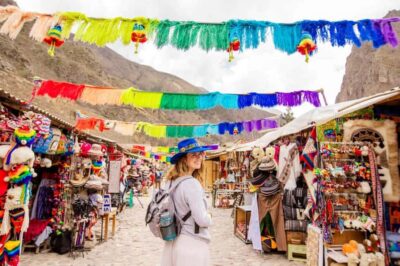
Cusco: Sacred Valley, Pisac, Ollantaytambo, Salt Mines Moray
Read our review →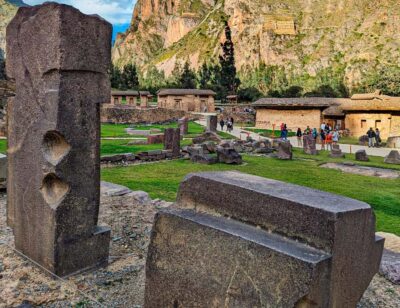
Cusco:Chinchero,Moray & Salt Mines drop-off in Ollantaytambo
Read our review →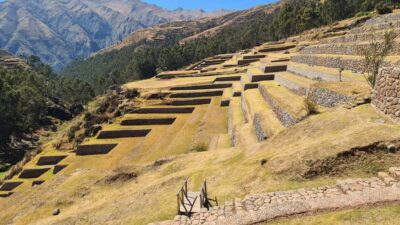
Sacred Valley: Chinchero, Moray, Ollantaytambo & Pisac+Lunch
Read our review →
Sacred Valley: Maras & Moray by Quad Bike from Cusco
Read our review →
Pisac Indian Market and Ollantaytambo Fortress with Lunch
Read our review →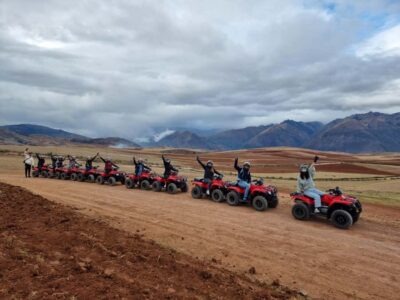
From Cusco: Quad bike tour Moray and Salt Mines
Read our review →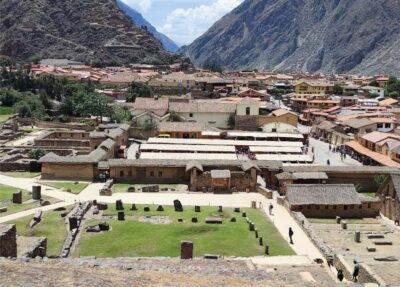
From Cusco: 2-Day Trip to the Sacred Valley and Machu Picchu
Read our review →Browse the lists this tour appears in