
Reviewed · SACRED VALLEY TOURS
From Cusco: Moray, Maras Salt Mines & Chinchero Weavers Tour
Moray’s giant Inca terraces and the bright salt pools of Maras pack a surprising amount of history into one half-day outing. I like the way this trip moves between archaeology, living Quechua craft, and working local industry instead of showing you ruins alone. Moray at 11,318 feet is the star for me, while the Salineras gives you the most unusual photographs.
I also like the practical timing. The tour lasts about six and a half hours, includes hotel pickup, and returns you to Cusco in time for lunch on your own. Guides including Felipe, Julio, Jhon, and Manuel receive especially warm praise for clear explanations and careful attention. The main drawback is that entrance fees are extra, and the weaving and Maras stops include shopping time that may not suit everyone.
Key points at a glance
- Moray at high altitude: Walk around huge circular agricultural terraces built by the Inca, with views across the surrounding mountains.
- Three thousand salt pools: See the Salineras, a pre-Inca saltworks still producing salt for regional use.
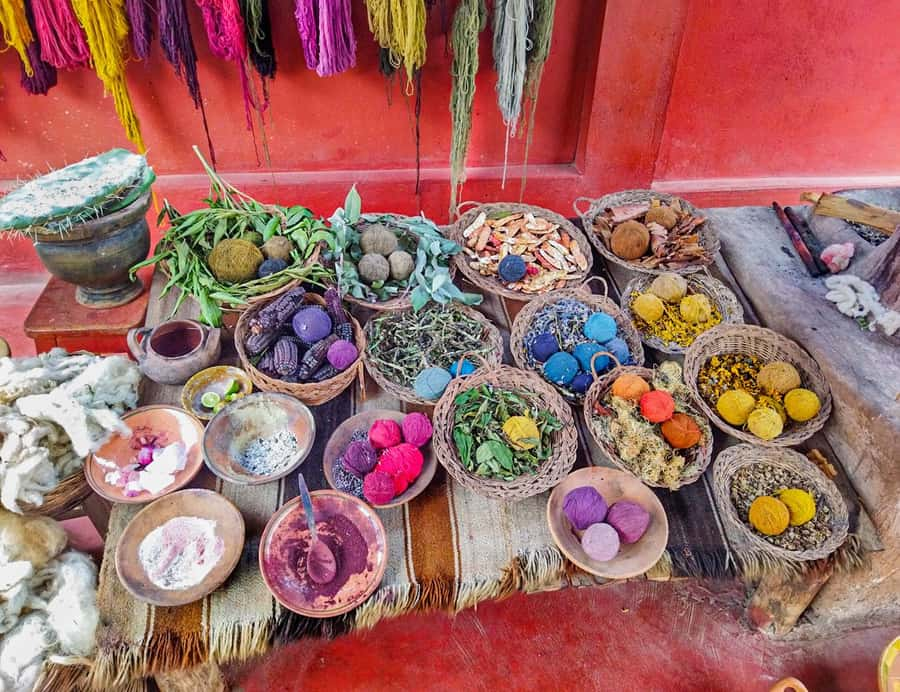
- Chinchero textile traditions: Watch artisans use plants to create natural dyes and demonstrate Andean weaving.
- A relaxed half-day plan: The stops generally last from about 20 to 60 minutes, giving you time to look around without an all-day commitment.
- Strong value at $15: Transportation, hotel pickup, and a bilingual guide are included, but Moray and Salineras admission must be paid separately.
- Bring protection from the sun: Several walks have little shade, and the high-altitude sun can feel fierce even when the air is cool.
Why this short Cusco trip works so well
This is a useful first outing from Cusco because it gives you three different views of the region. At Chinchero, you see culture that is still practiced. At Moray, you see the Inca working with soil and climate. At Maras, you see a salt operation that began before the Inca period and continues today.
I like this combination because none of the stops feels like a repeat of the last one. You are not simply moving from one stone site to another. You shift from a workshop to an archaeological site, then to a working salt mine, with mountain scenery filling the gaps between them.
The tour is listed at $15 per person, which is unusually low for a guided outing that includes transportation and pickup. You should budget extra for admission: 70 soles for Moray and 20 soles for the salt mines. You will also want cash for snacks, souvenirs, and any purchases at the textile or salt stops.
At this price, the experience is best understood as an efficient introduction rather than a private, slow-paced archaeological study. Small-group departures are available, and a private option can be selected if you want more control over the pace and questions.
A few more Sacred Valley days worth comparing
- From Cusco: Sacred Valley & Maras Salt Mines Tour with Lunch
★ 4.8 · 2,227 reviews - Cusco: Sacred Valley, Pisac, Ollantaytambo, Salt Mines Moray
★ 4.6 · 1,058 reviews - Cusco:Chinchero,Moray & Salt Mines drop-off in Ollantaytambo
★ 4.8 · 793 reviews
Chinchero: living Quechua textile work
The first major stop is Chinchero, at about 3,762 meters. The altitude matters here. You may already feel Cusco’s thin air, and this village is higher still, so take the morning slowly and keep water close.
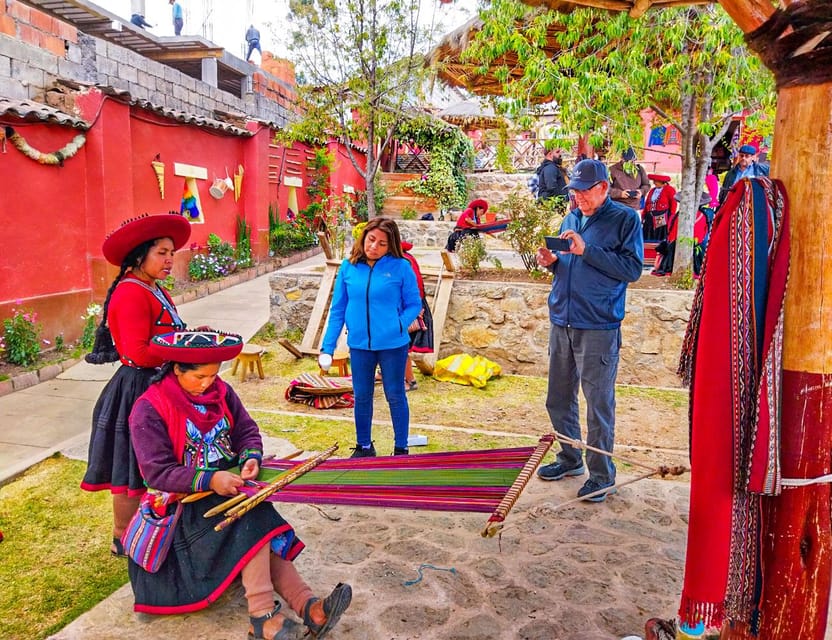
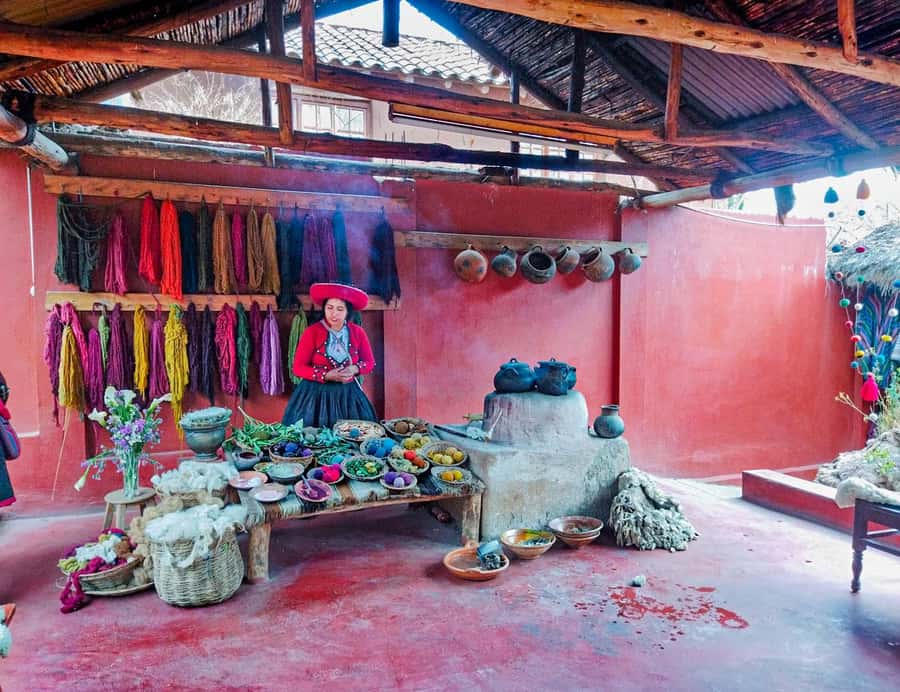
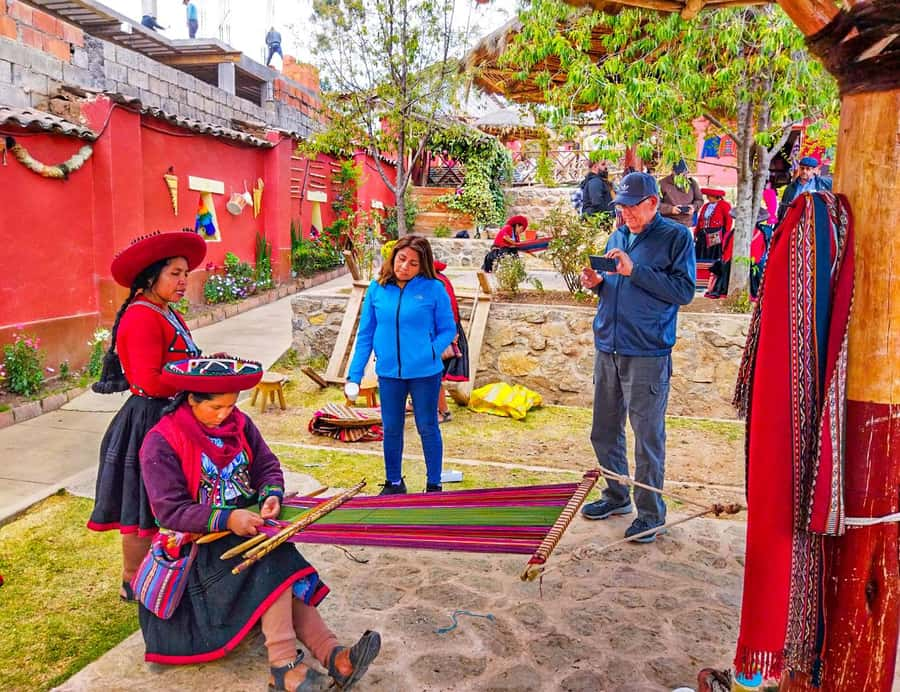
The weaving workshop is more than a quick display of finished scarves. You see how local artisans use plants to make colors for Andean textiles, then learn about the Quechua tradition behind the work. Some demonstrations include alpaca products, and you will have time to browse and shop.
This is a good place to ask questions. A strong guide can explain how the dyes are made, how the designs connect to local culture, and why alpaca fiber is valued. Felipe is repeatedly singled out for clear explanations and personal warmth, while other guides such as Julio, Jhon, and Manuel are also praised for making the cultural details easy to follow.
The shopping element deserves a fair warning. This stop is built partly around buying textiles and other handmade goods. You might find good souvenirs here, but if you are not shopping, the workshop portion will be the main reason to pay attention. The time listed is about one hour, so it is not a rushed five-minute sales stop, but it is still more commercial than Moray or the salt mines.
Moray’s circular terraces at 11,318 feet
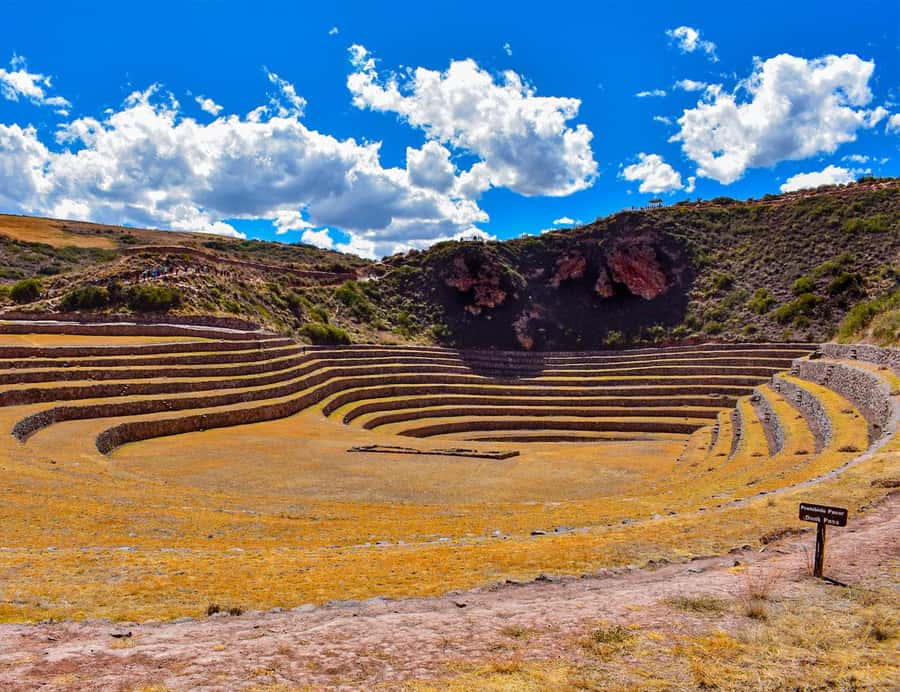
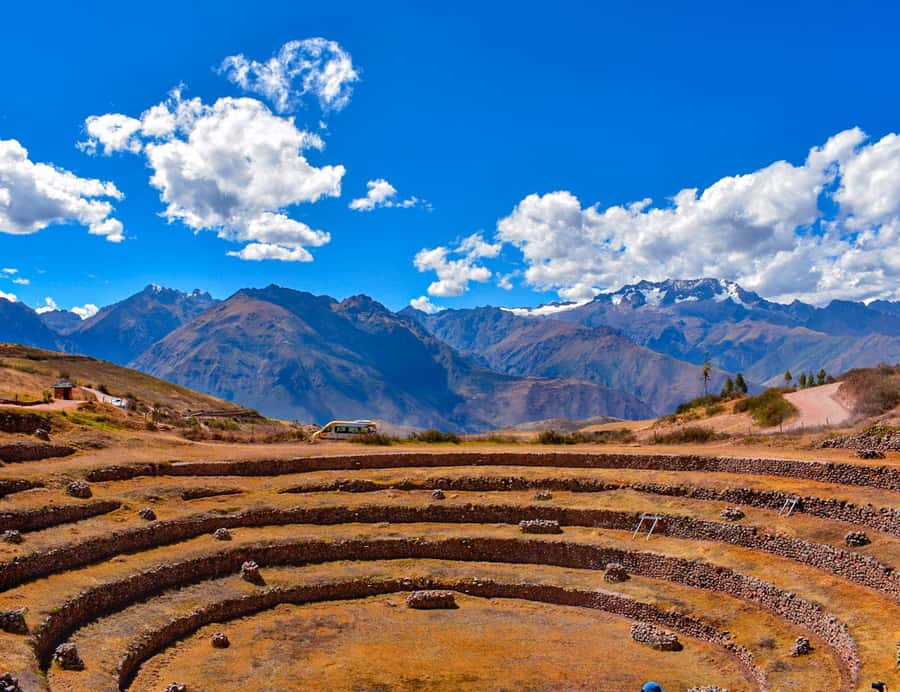
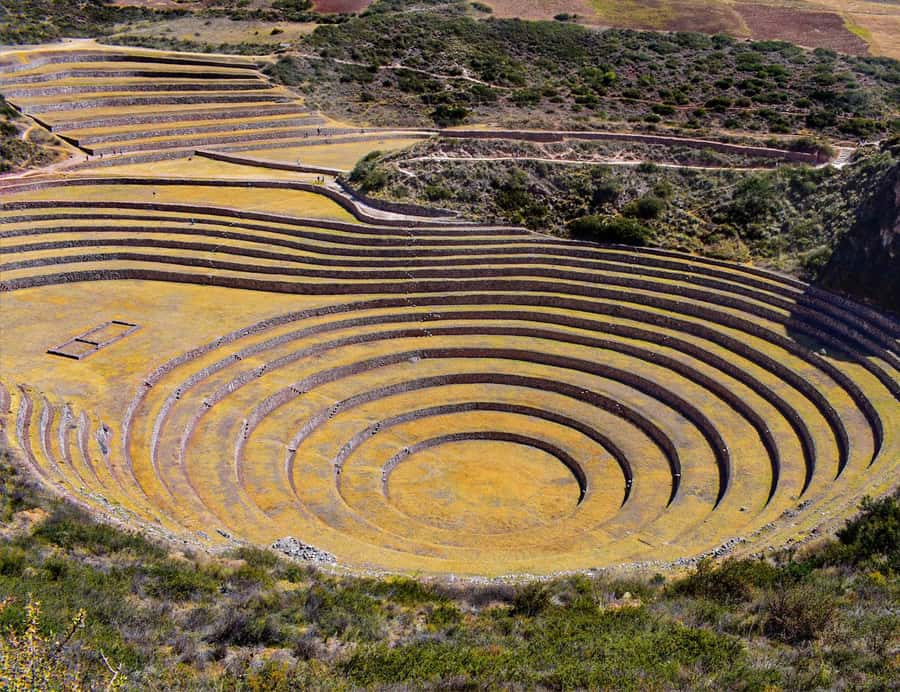
Moray is the most striking archaeological stop. Its terraces form enormous circles cut into the earth, descending in neat rings. The site sits at about 3,450 meters, or 11,318 feet, so the air is thin and the sun can be intense.
The Inca used the terraces for agriculture, and the site includes an irrigation system. Your guide will explain how the different levels may have helped with farming in varied conditions. The exact purpose of every detail is not something you should expect to grasp from a quick look alone, which is why the guided explanation matters here.
You have about 40 minutes for the walk and guided visit. That is enough to take in the main view, hear the history, and get photographs, but it is not a long exploratory visit. The site is open and exposed, with little shade. Wear comfortable shoes, use sunscreen, and bring a hat.
Moray also shows why this trip is not just a sightseeing loop. The terraces connect Inca engineering with daily needs: food, water, soil, and altitude. I find that practical angle more interesting than simply hearing that a site is old.
The high elevation can affect your pace. You do not need to treat the visit like a hike, but short uphill sections may feel harder than expected. If you are still adjusting to Cusco, stay near your guide and do not hurry for photographs.
Maras Village and the salt pools
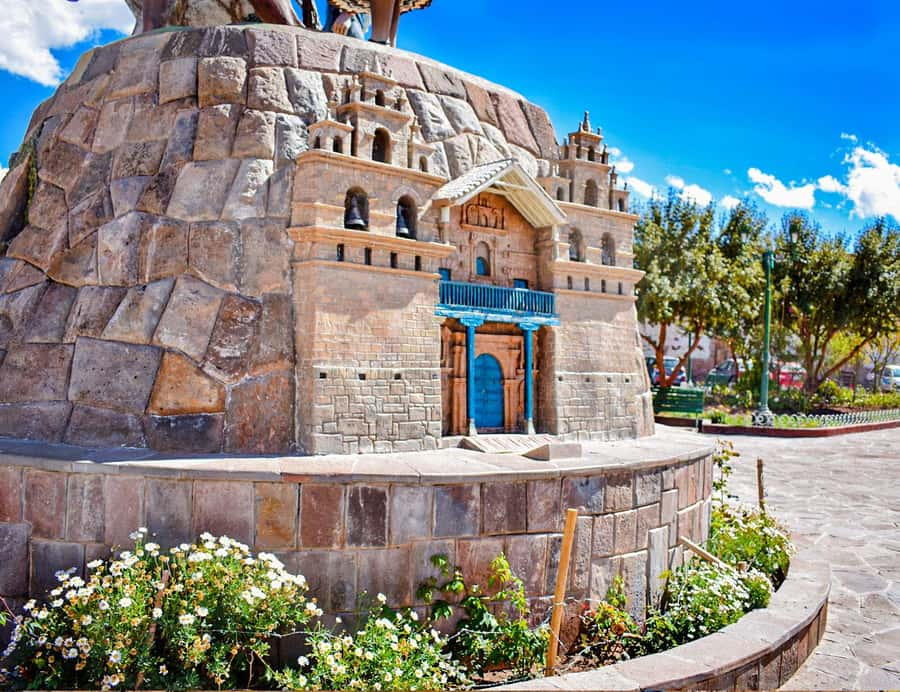
After Moray, the route continues toward Maras Village. The village is noted for colonial architecture and thin-stoned buildings, offering a change from the monumental terraces. The scheduled time here is about 20 minutes, with some free time and another opportunity to shop.
This is a shorter stop, so think of it as a glimpse rather than a full village tour. It breaks up the day and helps you see how colonial construction sits within the same high Andean setting as the older Inca sites.
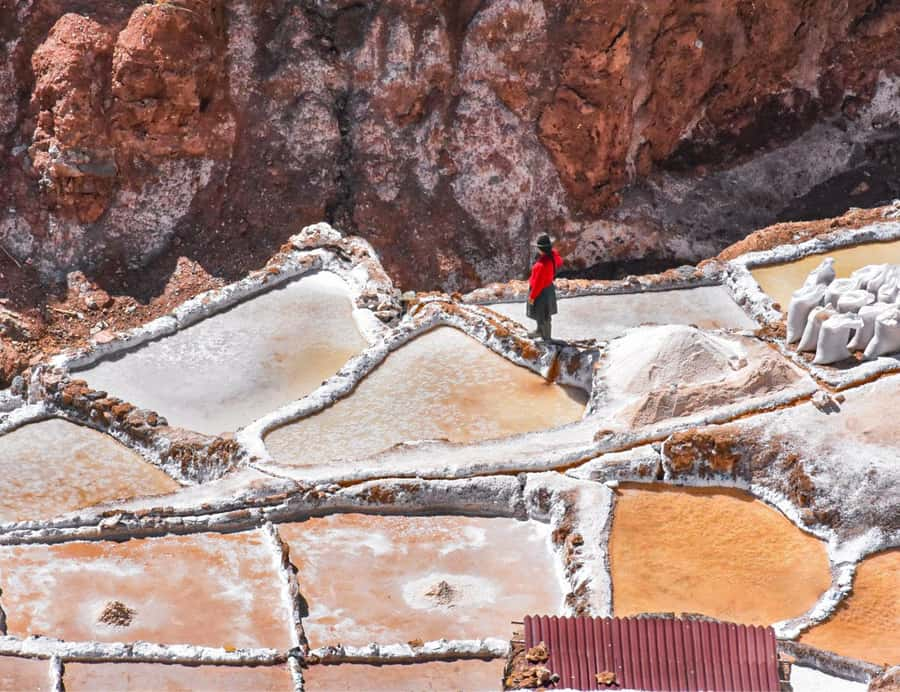
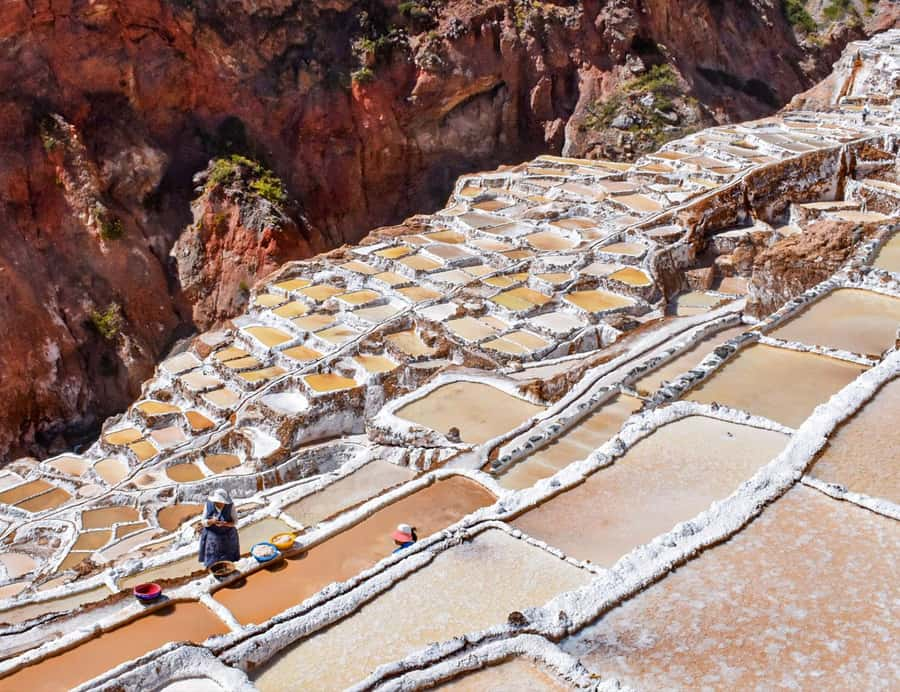
The Salineras comes next, and this is the most visually unusual part of the trip. Thousands of small pools cover the hillside in a bright, stepped pattern. The site includes about 3,000 salt pools, and salt production here dates to pre-Inca times.
What makes the stop worthwhile is that it is still a working place. Salt is collected, processed, and distributed around the region. You are not looking at an abandoned ruin. You are seeing a local industry built around a natural saltwater source and maintained through generations.
You will have about 40 minutes for the guided walk and photographs. The narrow roads near the salt mines require careful driving, and the final approach may feel more winding than the smooth highway sections. The vehicle is described as comfortable and clean, though one particularly warm day made the van feel hot. Dress for the weather and keep water handy.
The salt pools are not always bright white. Their appearance can vary with weather, season, and production conditions, so do not expect every photograph to match a postcard. Still, the pattern of small pools against the mountain setting is hard to duplicate anywhere else on this route.
You can buy salt after the visit. This makes a small, useful souvenir, especially if you prefer something connected directly to the place rather than another decorative item.
Same trip, a completely different kind of day:
- Sacred Valley: Chinchero, Moray, Ollantaytambo & Pisac+Lunch
★ 4.8 · 501 reviews - Sacred Valley: Maras & Moray by Quad Bike from Cusco
★ 4.6 · 418 reviews - Pisac Indian Market and Ollantaytambo Fortress with Lunch
★ 4.5 · 395 reviews - From Cusco: Quad bike tour Moray and Salt Mines
★ 4.7 · 314 reviews
The road, vehicle, and pace
The tour runs for about 390 minutes, or six and a half hours. Pickup is available from hotels outside Cusco’s Centro Histórico, while central meeting and drop-off points include Plaza Regocijo and the historic center.
You should wait in your hotel lobby about 10 minutes before the scheduled pickup. Hotel drop-off is not included, so check your return point carefully when planning the afternoon.
The day usually begins around the morning and finishes in the city in time for lunch, although you should confirm the exact start time when booking. That timing makes this a sensible choice before a free afternoon, a dinner reservation, or another Cusco activity.
The vehicle covers a fair amount of road, but the itinerary breaks the travel into manageable sections. Stops tend to run from roughly 20 to 60 minutes. One useful feature is that the day does not depend on long walks. You will walk at Moray and the salt mines, but this is not a strenuous trekking outing.
I like the balance between explanation and free time. Guides such as Felipe and Julio are praised for teaching without filling every second with talk. You can listen during the drive, ask questions at the sites, and take your own photographs during the free portions.
If you get carsick, the route may still require some preparation because of the mountain roads. One useful feature is the regular rhythm of stops, which breaks up the ride. Bring water, look ahead rather than down at your phone, and sit where you usually feel most comfortable in a vehicle.
What the guide adds
The quality of this experience depends heavily on the guide. The best guides connect the locations instead of treating them as separate photo stops.
Felipe is noted for his warmth, cultural explanations, and attention to altitude, hats, and sunscreen. Julio is praised for explaining Inca history in detail while keeping the mood light. Jhon, Manuel, Roy, Rehider, and John also receive strong praise for clear communication and good organization.
The guide may also help with practical problems. One guide assisted a visitor dealing with forgotten items and money exchange, while another helped with photographs and checked that people were comfortable at altitude. These small actions matter on a day spent moving between several places.
English and Spanish tours are available. If you select a private tour, the pace and discussion can feel more personal. In a small group, you get the value of a shared vehicle and guide, though the timing will naturally follow the group.
What to bring and what to budget
Pack lightly, but do not arrive unprepared. You will need:
- Passport
- Cash for entrance fees and purchases
- Water
- Sunscreen
- Sun hat
- Comfortable walking shoes
- Camera
- Light clothing for warm periods
The weather can change, and the tour operates in rain or shine. A warm afternoon at altitude can feel surprisingly strong, especially during the walks around Moray and the salt mines. A light layer is useful, but do not rely on heavy clothing alone.
The required extra fees are important when judging the $15 price. Moray costs 70 soles and the salt mines cost 20 soles. Since these are not included, the actual day costs more than the headline fare, but it remains a good deal once you count the vehicle, guide, and pickup.
Lunch is not included. The tour returns to Cusco in time for you to eat on your own, which I consider a benefit rather than a problem. You are free to choose your own restaurant instead of being sent to a fixed buffet.
Who should book this tour?
I would choose this trip if you want a manageable introduction to the Sacred Valley without spending a full day visiting four or five archaeological sites. It suits first-time visitors, solo travelers who want organized transport, couples, and anyone with a busy Cusco schedule.
It also works well as a lighter day before a major trek. The walking is limited, the stops are varied, and the schedule leaves room to rest afterward. You still need to respect the altitude, but you are not signing up for a long mountain hike.
History and archaeology fans will get the most from Moray and the saltworks. Shoppers and craft lovers will appreciate the Chinchero workshop and alpaca goods. Photographers will have plenty to work with, from circular terraces to salt pools and Sacred Valley mountain views.
I would be less enthusiastic if you dislike shopping stops or want a long, quiet visit at each archaeological site. The schedule is efficient, not slow. You see several places in one day, but you do not have hours to wander independently at any one of them.
Should you book the Moray and Maras tour?
Yes, if you want strong value and a well-paced half-day that mixes Inca engineering, living Quechua craft, and a working pre-Inca salt operation. The combination is more varied than the low price suggests, and the guides make a real difference.
Book it knowing that admission fees are extra, the route includes shopping time, and the sun can be fierce. Bring cash, water, a hat, and comfortable shoes. If you want a more personal pace, select the private option. If you want to see the main sights without giving up an entire day, this is an easy choice.
The activity offers free cancellation up to 24 hours before departure, and you can reserve now and pay later. That gives you some flexibility while you settle your Cusco plans.
FAQ
How long does the tour last?
The tour lasts about 390 minutes, or six and a half hours.
What places does the tour visit?
It visits Chinchero, Moray, Maras Village, and the Maras Salt Mines.
Is hotel pickup included?
Yes, hotel pickup is included for hotels outside Cusco’s Centro Histórico. You should wait in the hotel lobby 10 minutes before pickup.
Is hotel drop-off included?
No. Drop-off is provided at listed central locations, including Plaza Regocijo and the Centro Histórico.
Are entrance fees included?
No. Moray admission costs 70 soles, and entry to the salt mines costs 20 soles.
Is a guide included?
Yes. A bilingual English- and Spanish-speaking guide is included.
Is transportation included?
Yes. Transportation for the tour is included.
Can I book a private tour?
Yes. Private and small-group options are available, depending on the option you choose.
What should I bring?
Bring your passport, cash, a camera, sunscreen, a sun hat, and comfortable shoes.
Does the tour run in bad weather?
Yes. The tour takes place rain or shine, so bring suitable clothing for changing conditions.
Just added around Sacred Valley
- Rafting & Zip line Urubamba River 1 Day★ 5.0 · 75 reviews
- Moray and Maras Salt Mines Full Day Tour – Small Groups★ 5.0 · 79 reviews
- Sacred Valley VIP Tour with Maras and Moray from Cusco★ 4.5 · 35 reviews
- Sacred Valley Private Tour, Moray & Salt Mines Incluided★ 5.0 · 41 reviews
- 2-Day Tour: Sacred Valley & Machu Picchu – All Tickets Included★ 5.0 · 42 reviews
- Sacred Valley Full-Day Private Tour from Urubamba & Ollantaytambo★ 5.0 · 112 reviews
- Sam’s Zip Line in Sacred Valley★ 5.0 · 75 reviews
- Salt Mines(Maras),Moray and Chincheros★ 5.0 · 41 reviews
Sacred Valley Tours, compared.
Cusco: Sacred Valley, Pisac, Ollantaytambo, Salt Mines Moray
Read our review →
Cusco:Chinchero,Moray & Salt Mines drop-off in Ollantaytambo
Read our review →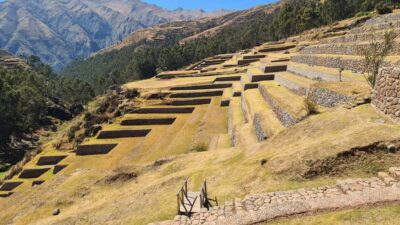
Sacred Valley: Chinchero, Moray, Ollantaytambo & Pisac+Lunch
Read our review →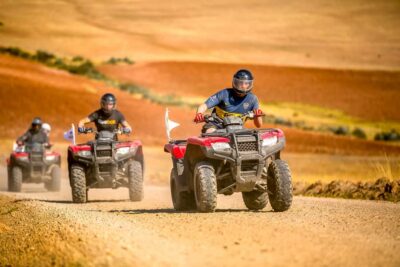
Sacred Valley: Maras & Moray by Quad Bike from Cusco
Read our review →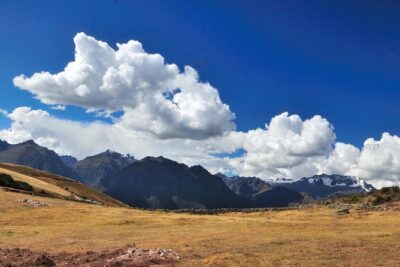
Pisac Indian Market and Ollantaytambo Fortress with Lunch
Read our review →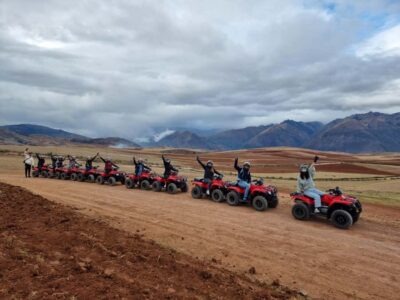
From Cusco: Quad bike tour Moray and Salt Mines
Read our review →
From Cusco: 2-Day Trip to the Sacred Valley and Machu Picchu
Read our review →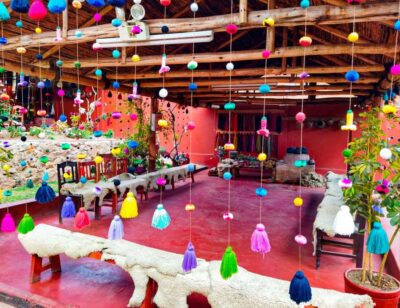
Cusco:Sacred Valley Pisaq,Ollantaytambo,Chinchero with Lunch
Read our review →Browse the lists this tour appears in