
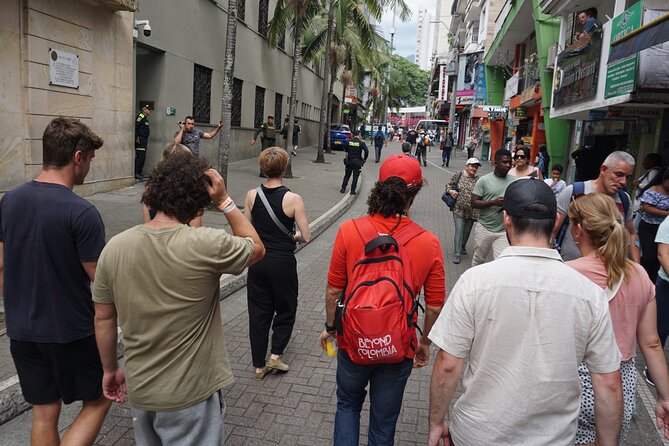
Reviewed · MEDELLíN TOURS
Post-conflict Shared Tour (Paul) and Violence Medellin
Medellín’s Violence and Post-Conflict Tour uses ordinary streets and public squares to explain extraordinary changes. You walk from San Antonio Park to the Memory House Museum, linking violence, politics, education, public art, and peacebuilding along the way.
I like the small group limit of 10 people, which gives you a better chance to ask direct questions. I also like the guide-led storytelling. Guides such as Paul, Alejandro, Miguel, Daniel, Manuel, and Sebastian have been praised for clear, thoughtful explanations of Colombia’s difficult past.
The main drawback is that the stops are mostly open public spaces rather than major sights. Some places may look plain on their own, so the value depends heavily on your guide and your interest in history. One serious warning: the guide has occasionally failed to appear, with no contact afterward, so keep your booking details and meeting time handy.
Key things to know before you book
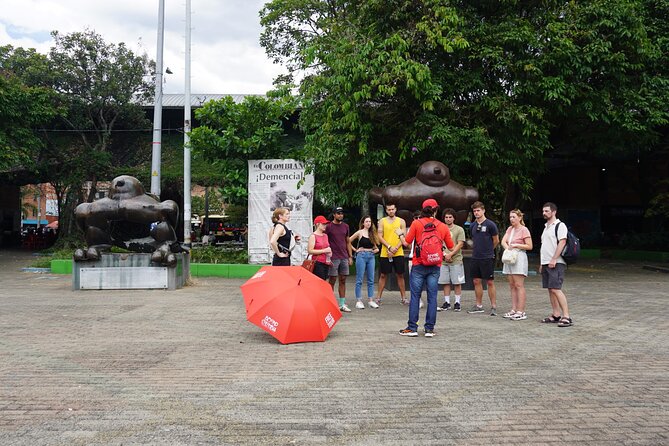
- A three-hour walk through central Medellín: The route links eight stops between San Antonio Park and the Memory House Museum.
- A history lesson built around public spaces: Parks, a school square, cultural center, apartment towers, and murals all help explain urban change.
- Small shared group: The tour accepts a maximum of 10 people, a useful limit for a sensitive subject and open discussion.
- Strong guide-dependent experience: Paul, Daniel, Miguel, Manuel, Alejandro, and Sebastian are named in the available feedback, but your guide may vary.
- The $14 price works like a prepaid tip: The amount goes to the guide, minus the Viator commission, rather than paying for entrance tickets or food.
Why this Medellín walk is different
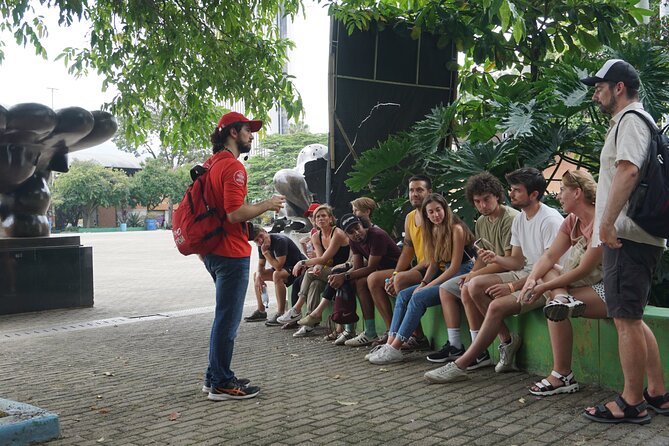
Many city walks focus on plazas, churches, food, or viewpoints. This one asks you to read the city as a record of conflict and repair. A park may show how public space changed. A cultural center may reveal how education and art help rebuild trust. A mural may carry a message that is easy to miss if you walk past alone.
That approach gives the tour a clear purpose. You are not simply collecting photographs. You are trying to understand how Medellín and Colombia moved through violence and continue to face the work of peace.
The subject is serious, but the format is not a lecture in a closed room. You move through the city at a steady pace and stop often. The listed schedule allows about 22 minutes at each of eight locations, which creates a useful rhythm: listen, look around, ask questions, then walk on.
The tour begins at 2 pm. That timing leaves your morning open, but you should be ready for a full afternoon on foot. The provider says you should have a strong level of physical fitness. Bring water, wear comfortable shoes, and do not plan a tight appointment immediately afterward.
A few more Medellin days worth comparing
- Medellin: Comuna 13 Graffiti Tour, Cable Car & Street Food
★ 4.8 · 9,046 reviews - Medellín: The Real Pablo Escobar Tour
★ 4.8 · 3,205 reviews - Medellín: Comuna 13 True Story and Street Food Tour
★ 4.9 · 1,779 reviews
San Antonio Park: starting with a changing city
The first stop, San Antonio Park, sets up the central idea of the walk. Your guide explains the park’s past and its place in daily city life, then points out how the area has changed over time.
This is a good starting point because it gives you a physical reference for Medellín’s transformation. Instead of beginning with a distant political timeline, you begin in a public place shaped by the city’s changing needs.
Do not expect a ticketed attraction here. Admission is free, and the stop is mainly about interpretation. The park may not hold your attention visually for 22 minutes without a good explanation, so this is where your guide’s skill matters most.
A guide such as Paul may spend more time on the detailed chain of events surrounding Medellín and Colombia. Other guides have been praised for making political and social issues easier to follow. Pay attention to names, dates, and connections, and ask questions when the story gets complex.
Plazuela San Ignacio: education as a tool for peace
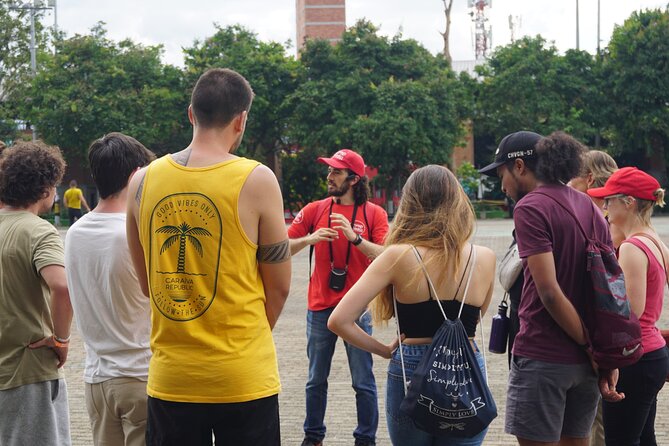
At Plazuela San Ignacio, the subject turns toward education. Your guide traces the development of education in Medellín and explains why schools and learning became part of the city’s effort to build peace.
This stop helps widen your view. The story is not only about armed conflict or political violence. It is also about the long work of giving people better opportunities, strengthening communities, and creating places where different groups can meet.
The square itself is free to visit. Its importance comes from the ideas discussed there, not from an admission-controlled monument. If you want a tour centered only on famous buildings, this may feel slow. If you want to understand how a city tries to prevent violence from repeating, it is one of the more useful stops.
Comfama San Ignacio: culture, learning, and community life
The next stop is Comfama San Ignacio, a cultural center focused on art, culture, and education. Here, the guide explains programs designed to strengthen social ties and support peaceful coexistence.
This is one of the route’s clearest examples of the practical side of peacebuilding. Political agreements matter, but daily life also depends on places where people can learn, make art, and spend time together. The stop shows how a cultural institution can be part of a wider social effort.
Admission is free. The value comes from the explanation of what the center does and why it matters. The available information does not promise a special exhibition or a formal interior tour, so you should think of this as a guided look at the center’s role rather than a museum visit.
The guide may also help you connect this stop with the previous one. Education is not presented as an abstract slogan. It appears through actual institutions and programs in central Medellín.
Same trip, a completely different kind of day:
- Medellín: Comuna 13 District Tour with Cable Car Ride
★ 4.8 · 1,467 reviews - Medellin: Coffee Tour with Transport, Snacks and Tastings
★ 4.7 · 1,357 reviews - From Medellín: Paragliding Tour with GoPro Photos & Videos
★ 4.9 · 1,210 reviews - Medellín: Pablo Escobar Tour with beer included
★ 4.7 · 612 reviews
Torres de Bomboná: reading architecture as urban change
Torres de Bomboná brings architecture into the conversation. The towers represent modern construction in Medellín, and the guide explains their story and role as a city reference point.
This stop is useful because buildings can reveal what a city wants to become. Modern towers may signal new investment, changing housing needs, or an effort to reshape an area. Your guide also asks you to consider how architecture affects urban life, rather than treating buildings as decoration.
There is no admission fee. Again, the towers may not be a must-see attraction by themselves. Their importance depends on the context your guide provides. You may find this part especially interesting if you like cities as working places, where housing, public space, and design reflect social choices.
Pasaje Cervantes: murals with a message
Pasaje Cervantes shifts the focus from large structures to street-level art. You stop to see colorful murals and hear about the artists and the messages behind the work.
This is likely to be one of the more immediately visual sections of the route. The murals give you something concrete to study while the guide explains how art can change the feel and use of a public passage.
The stop also fits the larger theme. Public art can mark a neighborhood, invite people into a shared space, and give a community a way to speak about its past or hopes. Do not treat the murals as simple decoration. Look for the connection between the images and the social story your guide has been building.
Like the earlier stops, the passage is free. You may want a little extra time for photographs, but the listed schedule gives each location roughly 22 minutes, so listen first and photograph second.
Boston Park: time to pause and think
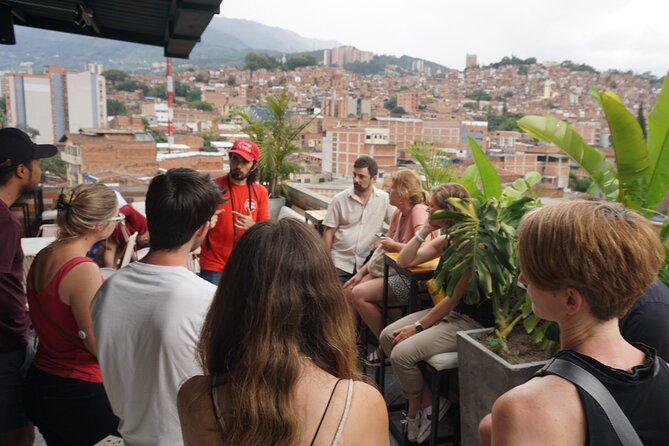
Boston Park is described as a place to rest and reflect. Your guide invites you to share thoughts about what you have seen and learned so far.
That pause matters. The walk covers conflict, education, public policy, and urban change in a short period. Boston Park gives you room to sort those ideas before the final stops.
This is also a useful moment to ask questions you held back earlier. Guides have been praised for answering questions clearly and speaking with passion, especially on Colombia’s national and local struggles. Daniel has been singled out for an honest and insightful approach, while Miguel has been praised for explaining social dynamics in clear English.
The park itself is free. Its strength is not a famous object or formal attraction, but the chance to turn a guided walk into a conversation.
Simona Duque Park: remembering a human rights figure
The route continues to Simona Duque Park, a tribute to a woman associated with the fight for human rights. Your guide tells her story and explains her legacy.
This stop gives the tour a personal face. Large political events can feel distant. Learning about one person’s work helps bring the subject back to individual choices, courage, and responsibility.
The supplied details say admission is not included, but they do not state a separate ticket price. Keep that in mind when comparing the tour’s low cost with other paid experiences. Most of the route takes place in public areas, yet not every stop is described as free.
The park also adds balance to the tour. The subject is not only what happened to Medellín. It includes the people who worked to defend rights and improve life in difficult conditions.
Bicentenario Park and the Memory House Museum
The final stop is Bicentenario Park, a modern public space linked to ideas about sustainability and Medellín’s future. Here, the group reflects on the challenges and possibilities facing the city as it continues along a path toward peace.
The tour ends at the Memory House Museum, located at Parque Bicentenario, Cl. 51 #36-66. The supplied details identify the museum as the endpoint, but they do not say that museum admission is included or that you enter as part of the walk. Treat the finish as a useful location for continuing your own visit, not as a guaranteed museum tour.
Ending here makes sense. The earlier stops explain the past and the tools used to respond to it. Bicentenario Park turns the question forward: what still needs to happen, and what kind of city is Medellín trying to build?
You may want to stay in the area afterward, but no additional visit or meal is included. Snacks, lunch, and tips are not included in the standard inclusions, although the $14 payment is described as the suggested tip for the guide.
What the $14 price really covers
At $14 per person, this is inexpensive for a three-hour guided walk. It becomes especially good value if you want context that you would be unlikely to gather from simply walking between the parks and passages yourself.
The price needs a little explanation. This is a shared experience called a Free Walking Tour, and the amount paid in advance is the suggested guide tip. It goes directly to the guide after the Viator commission. You are not paying for a meal, museum admission, or a bundle of attraction tickets.
That model has two effects. First, you get an affordable way to spend an afternoon with a certified guide. Second, the experience depends strongly on the person leading it. The strongest accounts describe guides who speak clear English, answer questions, and explain both national and local struggles with care.
There is also a practical risk. Two reports describe the guide failing to appear and making no contact. That is a serious service problem, even though most of the available feedback is positive and the experience is recommended by 97 percent of people, with a 4.8 rating from 69 reviews. Confirm your meeting point at San Antonio Park, arrive early, and keep the provider’s contact details available.
Group size, walking demands, and who should go
The group maximum is 10 people. That is small enough for a more personal discussion and useful when the subject raises difficult questions. It also makes it easier to hear your guide in public spaces.
You should be comfortable walking for about three hours. The tour passes through eight locations, and the provider specifically asks for a strong physical fitness level. Exact walking distances are not provided, so I would not book it if long periods on foot are difficult for you.
This tour suits you best if:
- You want to understand Medellín beyond its popular attractions.
- You are interested in Colombia’s political and social history.
- You prefer discussion and interpretation over formal museum displays.
- You want a small group and a low upfront cost.
- You are willing to think about difficult subjects with respect.
It may not suit you if you want a relaxed sightseeing walk with little serious discussion. Some stops are ordinary public spaces, and the experience will not work as well if you need every location to offer a dramatic view or a famous monument.
Service animals are allowed, and the route is near public transportation. The information does not provide more detailed accessibility guidance, so ask the provider directly if you need specific information about surfaces, stairs, or rest points.
My advice on the guides
The named guides connected with the experience include Paul, Alejandro, Sebastian, Miguel, Daniel, and Manuel. You cannot assume which person will lead your date, but the feedback gives you a useful idea of what to value.
Paul is described as especially strong on the detailed and complex history surrounding Medellín and Colombia. Alejandro is praised for answering questions about the conflict. Miguel is noted for clear English and for explaining national and local struggles, while Manuel is described as bringing politics, history, and the continuing path toward peace to life.
Daniel is associated with an honest, authentic, and insightful style. Sebastian is praised for the way he tells the stories and creates a warm tone.
Those differences matter. The tour is not built around expensive attractions, so the guide is the main feature. If you get someone who explains clearly, listens carefully, and treats the subject seriously, the $14 feels like a smart use of an afternoon.
Should you book the Violence and Post-Conflict Tour?
I would book it if you want a thoughtful introduction to Medellín’s past and present, especially if you have already seen the central sights and want to understand the forces behind the city’s changes. The mix of parks, education, culture, architecture, murals, and human rights gives the walk more range than its low price suggests.
I would skip it if your main goal is beautiful scenery, shopping, food, or famous landmarks. Several locations are visually modest, and the walk asks you to listen closely.
For the best chance of a good experience, arrive ready for a serious conversation, wear proper walking shoes, and keep the afternoon free. The tour’s value rests on the guide, but with a strong guide such as Paul, Daniel, Miguel, or one of the others named above, you can leave with a clearer understanding of Medellín than a standard sightseeing loop provides.
FAQ
How much does the tour cost?
The price is $14 per person. This amount is treated as the suggested tip for the guide and goes directly to the guide after the Viator commission.
How long does the tour last?
The tour lasts approximately three hours. The route includes eight stops, with about 22 minutes listed for each stop.
What time does the tour begin?
The tour starts at 2 pm.
Where does the tour begin?
The meeting point is San Antonio Park, Cl 44 #50, La Candelaria, Medellín, Antioquia, Colombia.
Where does the tour end?
The tour ends at the Memory House Museum at Parque Bicentenario, Cl. 51 #36-66, La Candelaria, Medellín.
What is included in the price?
A certified guide is included.
Are food, drinks, and entrance tickets included?
Snacks, lunch, and tips are not included. The first six stops list free admission. Admission is not included for Simona Duque Park and Bicentenario Park.
How large is the group?
The shared tour has a maximum of 10 people.
Can I cancel for a full refund?
Yes. You can cancel at least 24 hours before the experience start time for a full refund. Cancellations or changes made less than 24 hours before the start time are not refunded or accepted.
Just added around Medellin
- comuna 13 graffitour & cable car★ 5.0 · 52 reviews
- Commune 13, Graffitour street food. History.All inclusive★ 5.0 · 35 reviews
- Aerial Hammocks, Zip and Waterfall Trek on Medellin Private Tour★ 5.0 · 39 reviews
- Barrio transformation and urban escalator of Comuna 13★ 5.0 · 47 reviews
- Walking tour downtown Medellín★ 5.0 · 39 reviews
- Tour Santa Fe de Antioquia★ 5.0 · 46 reviews
- Transport airport hotel or hotel airport (private service)★ 4.5 · 54 reviews
- Medellin: Rooftop Bar Crawl with VIP Access & Hidden Clubs★ 4.5 · 86 reviews
Medellín Tours, compared.
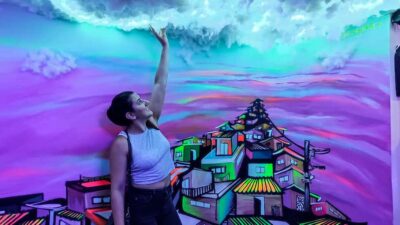
Comuna 13 Graffiti Tour, Cable Car & Street Food
Read our review →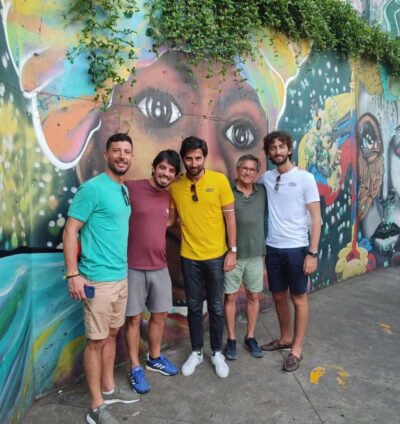
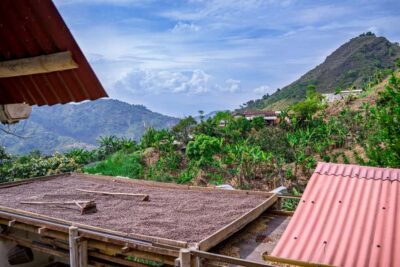
Coffee Tour with Transport, Snacks and Tastings
Read our review →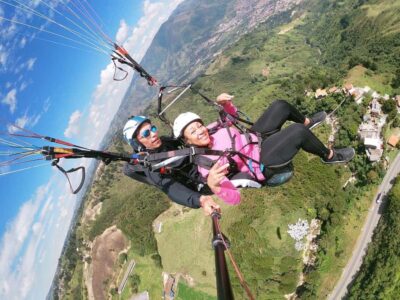
Guatapé Day Trip & Boat to Pablo Escobar’s Estate
Read our review →
Private City Tour with Metrocable and Comuna 13
Read our review →
Street Food and Poblado Rooftop Tour with a Local
Read our review →Browse the lists this tour appears in