
Reviewed · MACHU PICCHU TOURS
Cusco in 2-days: Sacred Valley and Machu Picchu
Machu Picchu is the headline, but the best part of this two-day trip may be the first day. You move from Chinchero’s alpaca textiles to Moray’s giant agricultural terraces, then on to the working salt pools at Maras and the massive Inca stones of Ollantaytambo.
I like the small group limit of eight and the careful mix of private road transport, train travel, and guided visits. I also like that guides such as Robinson, Teddy, Yoel, and Robin have earned strong praise for clear explanations, patience, local insight, and practical help. The tradeoff is simple: this is a packed program, and Day 2 begins at 4 a.m.
Key points to know before booking
- The Sacred Valley comes first: Chinchero, Moray, Maras, Urubamba, and Ollantaytambo fill Day 1.
- Machu Picchu is a long day: Expect a 4 a.m. pickup, train travel, a guided site visit, and a late return to Cusco.
- The best overnight plan is Aguas Calientes: You can leave the Day 1 group at Ollantaytambo and sleep near Machu Picchu, though the listed hotel is not included.
- Small groups matter: The maximum group size is eight, making stops easier to manage than on a large coach tour.
- Budget for extras: The Sacred Valley entrance fee, hotels, lunch at Aguas Calientes, and tips are not included.
- The price buys coordination: At $599 per person, the value comes from arranging permits, trains, buses, guides, and private transfers in a short window.
Why this two-day plan works
This experience is built for you if your time in Cusco is short but you still want more than a quick Machu Picchu visit. It covers the major Sacred Valley sights on Day 1, then handles the complicated rail and bus connections to Machu Picchu on Day 2.
That saves you from arranging separate transport, train tickets, site permits, and local transfers. You also get a fluent English-speaking licensed guide for the listed visits, plus a private comfortable bus for the road sections.
The pace is the price you pay for seeing so much. Day 1 begins in Cusco and moves steadily through several sites. Day 2 starts before dawn and does not end until you are returned to your Cusco hotel. You get strong coverage, but not much spare time.
The maximum of eight people is a real advantage. A small group can usually board buses, gather around a guide, and keep to the schedule more easily. It also gives the guide more chance to answer questions about Inca farming, local salt production, textiles, and regional customs.
More 2-Day Trips in Machu Picchu
- From Cusco: 2-Day Trip to the Sacred Valley and Machu Picchu
★ 4.6 · 265 reviews - Cusco: Machu Picchu 2-Day Inca Trail with Panoramic Train
★ 4.9 · 260 reviews - From Cusco: 2-Day Inca Trail to Machu Picchu
★ 4.2 · 244 reviews
Chinchero starts the morning with living craft
Pickup begins in Cusco, with the first scheduled visit at Chinchero around 8:15 a.m. The stop centers on a textile center with alpacas and llamas, along with Andean weaving traditions.
This is more than a quick photo stop. Chinchero helps you see how local craft remains tied to daily life and community identity. You can look at woven goods, watch demonstrations, and speak with artisans through the guide or staff at the center.
Keep your expectations in check. The focus is on the textile center, not a long walk through every part of Chinchero. If you dislike shopping stops, ask your guide how much time is planned for browsing. If you want a useful souvenir, this is one of the more fitting places to buy one, since the visit connects the object with a local skill.
The early start also works in your favor. You reach the first stop before the day becomes too crowded, though the exact timing can shift with road conditions and group needs.
Moray explains Inca farming in a striking way
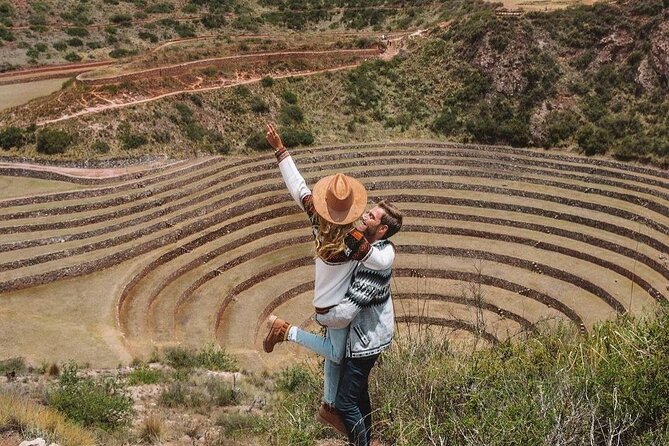
Around 9:45 a.m., the bus reaches Moray. The site is known for enormous circular terraces cut into the earth, shaped almost like a natural amphitheater.
The Inca used these terraces as agricultural testing grounds. The different levels created changes in temperature and growing conditions, allowing experimentation with crops suited to varied elevations.
Moray is easy to remember because the form is so unusual. Your guide can give the site meaning beyond the famous view, explaining why the terraces were built and how farming supported the Inca state.
The admission fee is not included, so you should set aside money for the Sacred Valley entry requirements. The supplied details list the Sacred Valley entrance fee as S/ 90 per person, while individual site fees are also marked as not included. Confirm exactly which ticket you need before departure, since access rules and ticket arrangements can change.
You will explore the ruins on foot, but the information provided does not give a full hiking distance. Wear comfortable shoes and bring water. Moray sits at high elevation, and the day becomes more comfortable if you move at a steady pace.
Maras shows an old salt system still in use
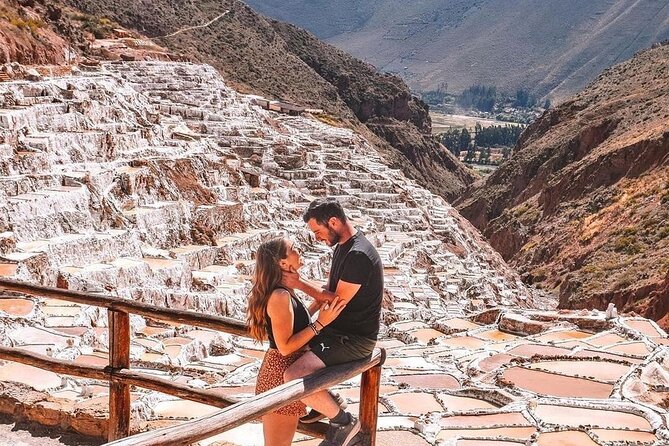
The next stop, around 11:15 a.m., is Salinas de Maras. Thousands of small salt pools spread across the slope, fed by a natural saltwater spring.
Local families still maintain and harvest the pools using traditional methods. That detail makes Maras especially valuable: you are not only seeing an old Inca-era practice preserved for display. You are seeing a working local system that still supports families.
The terraces are highly photogenic, but the real interest is in how the pools function. Water moves through the network, evaporates, and leaves salt behind. Your guide can explain how ownership and upkeep are handled by local families, each maintaining pools passed down through generations.
Admission is listed as extra. The stop involves uneven ground and outdoor walking, so sensible footwear is useful. You should also expect direct sun or changing mountain weather, depending on the day.
More 2-Day Trips in Peru
- Machu Picchu: Inca Trail 2-Day Overnight Guided Tour
★ 4.9 · 203 reviews - Short Inca trail to MachuPicchu || 2days – 1nigth ||
★ 5.0 · 103 reviews - 2-Day Machu Picchu Tour by train from Cusco ( All included )
★ 5.0 · 85 reviews - Machu Picchu & Sacred Valley 2-Day Tour
★ 5.0 · 82 reviews
Urubamba is the right place to stop for lunch
By about 1:15 p.m., the group reaches Urubamba for a local meal. Lunch is included, with vegetarian and vegan options available.
This break matters more than it may seem. The morning includes several high-altitude stops, and the afternoon continues with Ollantaytambo. A proper meal gives you time to sit down, eat, and reset before the next major archaeological site.
The details do not specify a particular restaurant or menu, so do not book this expecting a fixed signature dish. You can expect regional Peruvian food, with plant-based choices available by request or arrangement.
The meal lasts about 45 minutes. That is enough for a useful pause, but not a leisurely restaurant afternoon. If you have dietary needs, tell the company before departure rather than waiting until you sit down.
Ollantaytambo is the key decision point
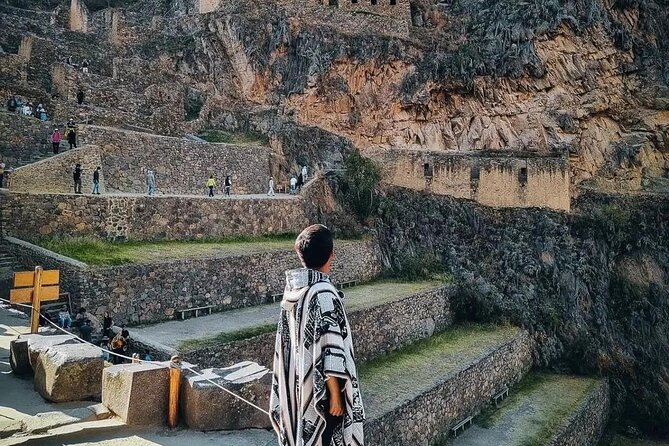
Ollantaytambo is one of the strongest stops on Day 1. The site served as a military, religious, and agricultural center during the Inca period. Its stonework and terraces show how carefully the settlement was planned.
The site is also where the trip splits into two practical options. The preferred plan is to leave the group, take the train to Aguas Calientes, and spend the night there before visiting Machu Picchu. This cuts down the next morning’s road transfer and puts you closer to the entrance.
The alternative is returning to Cusco after the Sacred Valley day, then accepting the 4 a.m. pickup for Day 2. That option may suit you if you already have a Cusco hotel and do not want to pay for another night. It also makes for a much harder morning.
The listed schedule shows arrival back in Cusco around 5:15 p.m. if you return with the group. Times are approximate, and the train option needs careful coordination. Ask before booking how your luggage, hotel, and train connection will be handled.
Hotels in Cusco and Aguas Calientes are not included. The company can recommend options, but the room cost is yours. If you choose Aguas Calientes, book the hotel separately and confirm where you should meet the guide the next morning.
The 4 a.m. transfer sets the tone for Day 2
The second day begins with hotel pickup in Cusco at 4 a.m., followed by a roughly two-hour transfer to Ollantaytambo. You then board the train around 6:10 a.m. for the two-hour trip to Aguas Calientes.
This is an early and tightly timed morning. The advantage is that the train carries you through the Urubamba Valley without another long road journey. The drawback is fatigue, especially if you stayed in Cusco rather than Aguas Calientes.
The train is listed as round trip in Expedition class. That is a standard tourist service, not a luxury rail product, but it handles the important connection in comfort. Train schedules are fixed, so be ready before pickup and keep your ticket and identification easy to reach.
Arrival in Aguas Calientes is scheduled for about 8 a.m. A guide representative meets you at the station and helps with the bus to Machu Picchu. The bus ride takes about 45 minutes.
This handoff is one of the strongest reasons to use an organized service. Machu Picchu involves several separate steps, and a guide meeting you at the station reduces the chance of confusion after the train ride.
Machu Picchu gets the main two hours
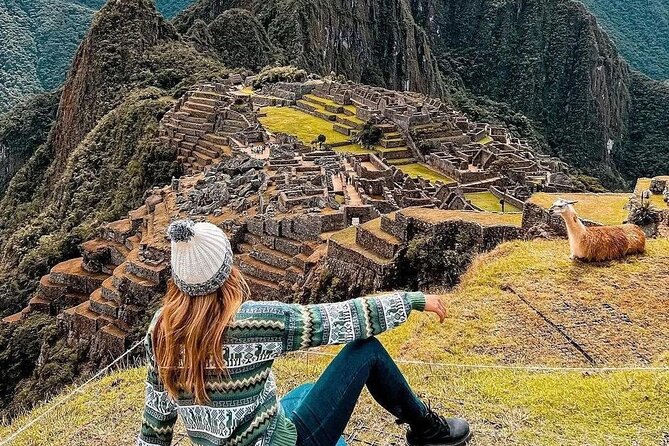
The guided visit begins around 9 a.m. inside the Historic Sanctuary of Machu Picchu. The entrance permit and the round-trip bus tickets from Aguas Calientes are included.
The scheduled guided visit lasts about two hours. Your guide should help you understand the function of the terraces, ceremonial areas, stone buildings, and mountain setting instead of leaving you to wander without context.
Do not expect a long free period after the guided portion. The plan has you leaving Machu Picchu around 11:30 a.m., taking the bus back to Aguas Calientes, and finding lunch there. Lunch in Aguas Calientes is not included, so budget for it separately.
The promise of a spectacular sunrise needs a careful reading. The schedule supplied here reaches Machu Picchu around 9 a.m., after the early train and bus connections. You may see beautiful morning light, but this is not an arrival before dawn. If sunrise is your top priority, ask the operator whether the permit, bus, and train times for your date actually support it.
Site rules and circuit access can affect what you see. Your entrance permit is included, but the exact route is controlled by current Machu Picchu regulations. Treat your guide’s instructions as part of the visit, not as a nuisance.
The return trip is useful but tiring
After lunch, you return by train to Ollantaytambo. A private driver waits there for the trip back to your Cusco hotel.
This final leg is practical and reassuring, especially after a full day at Machu Picchu. It also makes Day 2 a very long day from start to finish. The return schedule gives you little room for delay, so keep the evening free and avoid booking a flight or important event immediately afterward.
Private transport is included for the road portions, along with airport transfers and staff assistance according to the package details. Since airport transfer arrangements can vary around the main tour, confirm the pickup time and whether the transfer is connected to your tour booking.
Guides can shape the whole experience
The strongest praise attached to this company centers on its guides. Robinson is repeatedly singled out for explaining Inca culture, finding good timing at major sites, and helping the day run smoothly. Teddy is praised for patience, local cultural insight, and keeping the mood cheerful. Yoel is associated with strong support on demanding walks and clear answers to questions.
Those names do not guarantee who will lead your departure. Still, they give you a useful picture of the guide style to expect: personal attention, cultural explanation, and help with the practical details.
The company also uses drivers who are praised for punctuality and comfort. That matters here because the road sections are long, and the train connections leave little room for confusion.
Is $599 a fair price?
At $599 per person, this is not a budget sightseeing day. It can be good value if you want one company to coordinate private transport, licensed guides, Expedition-class train tickets, Machu Picchu permits, local buses, first-aid readiness, and hotel pickup.
The price does not cover everything. You need to add the Sacred Valley entrance fee of S/ 90 per person, hotels in Cusco or Aguas Calientes, lunch in Aguas Calientes, and tips. The cost rises if you choose the recommended overnight in Aguas Calientes.
For a solo planner, the convenience may justify the price. You would otherwise need to coordinate several vehicles, train times, entrance permissions, and meeting points. For a larger group that enjoys handling its own bookings, buying each part separately might offer more control.
The small group cap strengthens the value. You are paying for coordination, but not for a large bus full of people. Ask for a complete written price before confirming so you know which Sacred Valley tickets and transfers are covered.
Who should book this experience?
I would choose this for a first visit to Cusco when you have only two days available for the Sacred Valley and Machu Picchu. It is also a good fit if you prefer a guide, want transport arranged, and do not want to manage Peru’s rail and permit system yourself.
It suits active people who can handle early mornings, several site visits, and a long return day. You do not need to complete a major hike, but there is walking at archaeological sites and outdoor stops.
I would not choose it if you want slow meals, long time at each ruin, or a relaxed Machu Picchu visit. It is also a poor match if you strongly dislike fixed schedules or if your plans may change, since the booking is non-refundable and cannot be amended.
Final call: a strong short version of Peru’s Inca heartland
Book this tour if you want efficient coverage, a small group, solid guide support, and the major Sacred Valley sights before Machu Picchu. The recommended overnight in Aguas Calientes makes the plan easier, but it adds a hotel cost.
Skip it if you have enough time to spread the journey over three or four days, or if you want a trek rather than a sightseeing program. For a short visit, though, the combination of Moray, Maras, Ollantaytambo, the train ride, and a guided Machu Picchu visit gives you a lot in two demanding days.
FAQ
What is included in the $599 tour price?
The package includes lunch, private road transportation, English-speaking licensed guides, Expedition-class round-trip train tickets between Ollantaytambo and Aguas Calientes, Machu Picchu entrance permits, round-trip bus tickets to Machu Picchu, first-aid support, airport transfers with staff, and hotel pickup.
Is the Sacred Valley entrance fee included?
No. The Sacred Valley entrance fee is listed separately at S/ 90 per person. The individual admission charges for Moray, Maras, and Ollantaytambo are also marked as not included.
Are hotels included?
No. Hotels in Cusco and Aguas Calientes are not included. You can ask the company for recommendations based on your preferences.
Can I stay in Aguas Calientes between the two days?
Yes. At Ollantaytambo on Day 1, you can leave the group, take the train to Aguas Calientes, and stay there before visiting Machu Picchu. This option is recommended, but your hotel is not included.
What time does the second day begin?
If you are picked up in Cusco, hotel pickup is scheduled for 4 a.m. The transfer to Ollantaytambo takes about two hours, followed by a train departure scheduled around 6:10 a.m.
Is lunch included on the second day?
No. Lunch after leaving Machu Picchu in Aguas Calientes is not included. The local lunch on Day 1 in Urubamba is included, with vegetarian and vegan options available.
How large is the tour group?
The maximum group size is eight people. This does not include the separate train and public bus portions, which operate according to their own schedules.
More 2-Day Trips in Sacred Valley
- From Cusco: Sacred Valley & Machu Picchu 2-Day Tour by Train
★ 4.9 · 79 reviews - Private Tour: 2-Day Exploration of the Sacred Valley and Machu Picchu
★ 5.0 · 69 reviews - Sacred Valley Experience and Machu Picchu Sunrise 2-day Journey
★ 5.0 · 60 reviews - 2-Day Tour in Sacred Valley and Machu Picchu from Cusco
★ 5.0 · 59 reviews
Just added around Machu Picchu
- 10-Day Taste Peru Experience: Lima, Nasca, Cusco & Machu Picchu★ 5.0 · 63 reviews
- Wonderful Cusco 5-Day Tour with Entrance to Machupicchu★ 5.0 · 46 reviews
- Machu picchu one day by train all included★ 4.5 · 53 reviews
- A Day at Machu Picchu, Journey to the Heart of the Andes★ 5.0 · 55 reviews
- Tour to Machupicchu By Train Full-Day★ 4.5 · 56 reviews
- Tour To Machupicchu 2 Days by Train★ 5.0 · 64 reviews
- Machu Picchu 1 Day Tour from Cusco by Train★ 5.0 · 44 reviews
- 2-Day Tour: Sacred Valley & Machu Picchu – All Tickets Included★ 5.0 · 42 reviews
Machu Picchu Tours, compared.
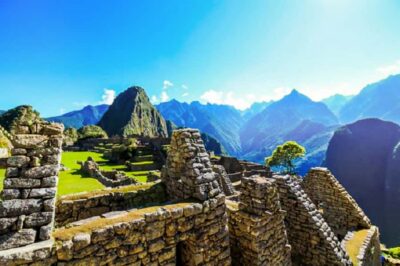
From Cusco: Full-Day Group Tour of Machu Picchu
Read our review →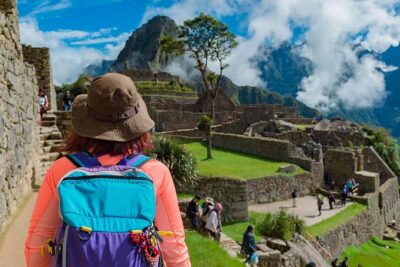
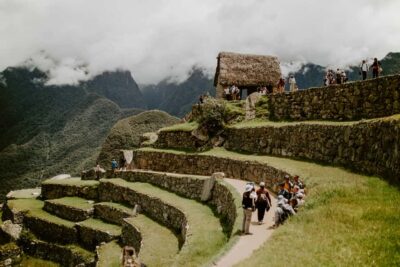
Machu Picchu: Full-Day Tour from Cusco with Optional Lunch
Read our review →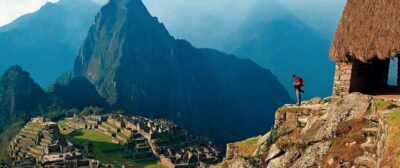
Cusco: 4-Day Inca Trail to Machu Picchu with Accommodation
Read our review →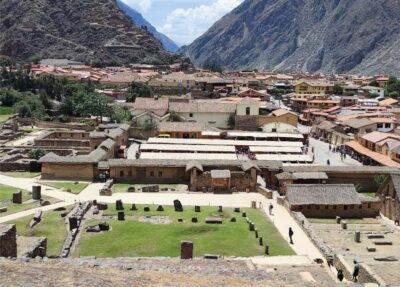
From Cusco: 2-Day Trip to the Sacred Valley and Machu Picchu
Read our review →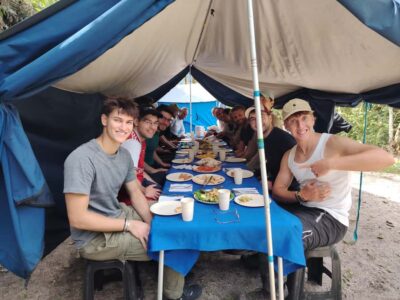
Cusco: Machu Picchu 2-Day Inca Trail with Panoramic Train
Read our review →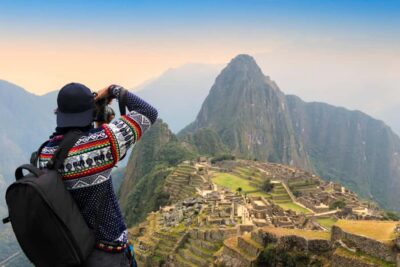
Machu Picchu: Inca Trail 2-Day Overnight Guided Tour
Read our review →Browse the lists this tour appears in