
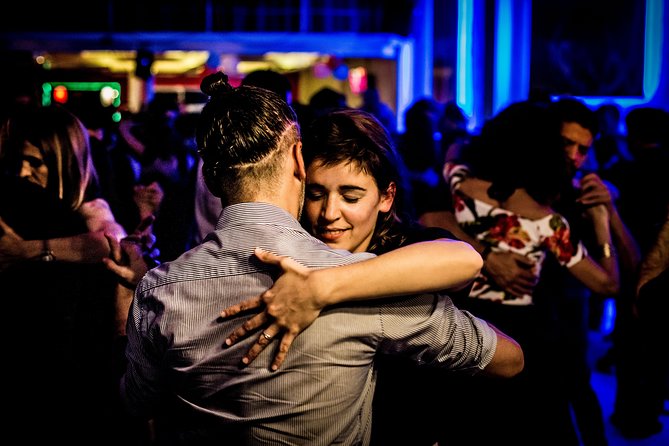
Reviewed · TANGO SHOWS
Buenos Aires – Private Tango lesson
Buenos Aires gives you many ways to watch tango, but this private lesson lets you try the dance yourself. In one focused hour, you learn the embrace, walking pattern, basic step, and ocho, then link them into a simple sequence you can actually dance.
I like the personal format and the effort to place you in a studio near your hotel. I also like the teaching style: instructors such as Martin, Joshua, Celeste, Gabriela, and Veronica are praised for patience, clear English, and adjusting the class to each student. The main drawback is time. Sixty minutes passes quickly, especially if you want advanced steps or need time to get comfortable with the embrace.
Key points to know before booking
- Your own private class: Only your group participates, so you can ask questions and learn at your own pace.
- A studio near your hotel: The exact studio is arranged after you provide your location in Downtown, Palermo, or another Buenos Aires area.
- Good for first-timers: You do not need prior dance training, though an hour gives only a first taste of tango.
- Useful for experienced dancers: Teachers can check your basics, correct posture and connection, and add harder movements such as the ocho.
- The strongest teaching feature: Patience, clear explanations, positive feedback, and attention to musicality are central to the lesson.
- Bring the right footwear: Comfortable shoes are required, and dance shoes are helpful if you plan to work on intermediate movements.
Your first hour in Argentine tango
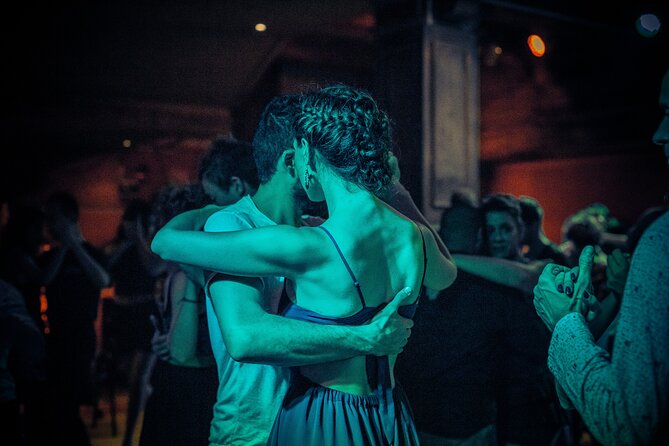
This is not a dinner show with a staged performance and a packed audience. It is a practical dance lesson in a studio, with a professional teacher working only with your party.
You begin by getting comfortable with the basic stance. Tango is not just a series of foot patterns. Your posture, balance, upper-body connection, and way of walking matter just as much. A good instructor will likely slow things down at this point, since rushing into steps makes tango feel harder than it needs to be.
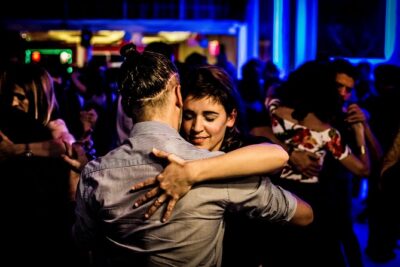
The class then moves through the embrace and basic walk. For a complete beginner, this can be the most useful part of the hour. You start to understand how two people move together without pulling, pushing, or staring at their feet.
From there, the teacher introduces the basic step and the ocho, a turning action that gives tango its distinctive shape. The lesson may also include other movements, depending on your level and how quickly you pick things up. Students with some ballroom experience have been able to move toward more technical work, while people with no dance background have finished with a short choreography.
That is a sensible goal for one hour. You will not become a tango dancer in a single class, but you can leave with enough structure to feel what the dance is about. You may even manage a complete little tango before the lesson ends.
More Workshops in Buenos Aires
- Buenos Aires: Private Tango Lesson
★ 4.9 · 244 reviews - Tango Porteño Show with Optional Dinner and Tango Lesson
★ 4.0 · 97 reviews - Spanish Group Course in Buenos Aires, Argentina: 20 Lessons
★ 5.0 · 72 reviews
Why the private format works so well
A group class can be fun, but it forces you to keep pace with strangers. Here, the instructor can stop, repeat, or change the exercise for you and your partner.
That matters when one person has dance experience and the other does not. It also helps if you are nervous about making mistakes. Joshua, Martin, Art, and other instructors are described as patient and encouraging, with positive feedback balanced by useful corrections. That approach keeps the class light without turning it into a vague, no-instruction dance session.
The private setup is also useful for groups of friends. A group of six, made up of three couples, can work together in the same class. If the group has an uneven number of men and women, the company may arrange an instructor to help balance the activity, as happened with a group of two women and one man.
You should still expect to participate rather than watch. Tango involves close contact, coordination, and repeated practice. If you are traveling with a partner, it is worth agreeing beforehand that the goal is to learn and laugh through the awkward bits.
The studio location is arranged around your stay
The listed meeting point is Buenos Aires, but the actual studio is not necessarily at the address shown on the booking platform. The company contacts you and arranges a studio as close as possible to your hotel or accommodation.
That can save a surprising amount of time in Buenos Aires. A class near Downtown may be convenient for a central hotel, while Palermo can work well if you are staying in that area. One group was placed in a studio within an easy 20-minute walk of its hotel, and another class took place in an old, bohemian-looking building. The exact setting varies, but the effort to match the studio to your location is a real advantage.
Give your accommodation details as soon as possible. The company specifically asks for your location so it can select the closest available studio. Palermo lessons on weekends are limited, as are bookings made less than 36 hours ahead, so last-minute plans may have fewer choices.
The activity runs Monday through Saturday from 11:00 a.m. to 7:00 p.m. Hotel pickup and drop-off are not included, though transfers can be added for an extra fee. In most cases, you make your own way to the studio using public transportation or a walk from your hotel.
What the instructors teach, from embrace to ocho
The class is built around skills you can use on a tango floor, not just a quick photo opportunity.
You first learn how to stand and connect. The embrace needs to feel stable but not stiff. Once that feels more natural, the teacher introduces the walk, which is the heart of Argentine tango. A beginner often expects dramatic leg movements, but the basic walk and the quality of the connection are more important.
Next comes the basic step. This gives you a simple framework for moving with a partner. The ocho adds a change of direction and introduces the turning action that makes tango look more complex.
The teacher may also explain musicality, posture, and the emotion of the dance. Joshua is specifically praised for teaching connection, posture, musicality, and the feeling behind the movement, not only the steps. That broader focus is valuable because tango can otherwise become a memory test.
The class adjusts to your background. Beginners can work on fundamentals and a small routine. Dancers with previous ballroom lessons can receive corrections to their basics and progress toward intermediate movements. One student with five tango lessons found the hour especially useful for checking technique and adding more advanced steps.
If you have some dance training, tell the instructor at the start. You may prefer technical corrections and more material rather than a long introduction to counting.
More Tango Shows in Buenos Aires:
- Buenos Aires: Tango Show at Tango Porteño & Optional Dinner
★ 4.6 · 981 reviews - Buenos Aires: Madero Tango Show with Optional Dinner
★ 4.3 · 748 reviews - La Ventana Tango Show in Buenos Aires
★ 4.5 · 646 reviews - Tango Porteño: The Best Tango Night in Buenos Aires
★ 4.6 · 567 reviews
A friendly choice for nervous beginners
You do not need to know how to dance before booking. Several instructors have worked with people who had never danced before, including partners where one person felt unable to dance at all.
That does not mean the class is effortless. Tango asks you to pay attention to your feet, balance, partner, and timing at once. The best sign is that the teacher can make those demands feel manageable. Gabriela, Martin, Joshua, and Art are each praised for patience, clear guidance, and a calm manner that helps students relax.
English communication has also been a strong point. The lesson is not presented as a silent demonstration where you must copy every move. Instructors can explain what to do, adjust the pace, and offer feedback in understandable English.
A little humor helps, too. Beginners often laugh during the first attempts at walking together or turning in the same direction. That is part of the value. You get a genuine introduction to the dance without the pressure of performing in front of a room full of strangers.
How much can you really learn in 60 minutes?
You can learn the building blocks and put them into a basic sequence. You should not expect mastery, a full social-dance repertoire, or advanced choreography in one hour.
The time limit is the main weakness of this experience. Several students wished they had booked longer or another lesson. If you are starting from zero, the first 10 or 15 minutes may go toward posture, foot placement, and understanding how to move as a pair. By the time the class becomes comfortable, the hour may be nearly over.
Still, one hour is a good introduction for a busy Buenos Aires itinerary. It gives you enough to decide if you want to continue. You can also book two lessons, which allows the first session to cover the essentials and the second to focus on musicality, turns, or more demanding movements.
If you already take tango at home, an hour can be more productive. A teacher can watch your walk, correct small habits, and add steps without spending as much time explaining the idea of partner dance.
The setting is simple, personal, and away from the crowds
The studio format gives you a quieter place to concentrate. You are not learning in a public square or performing for an audience. That is helpful when you are still finding your balance and learning the embrace.
Studios vary. One class took place in a characterful old building, while others used private rooms free from distractions. You should not book this expecting a grand theater or a formal show venue. The appeal is the lesson itself and the chance to work closely with a local teacher.
The company handles the studio arrangement, but you should confirm the meeting details before setting out. The location is arranged with you and is not necessarily the address shown on Viator. Clear communication through WhatsApp has helped students find the right place and coordinate the start time.
A small timing problem has occurred for at least one booking, though the class still went ahead well. I would leave a little breathing room around the appointment rather than scheduling a major attraction immediately afterward.
Is $39 a fair price for the private class?
At $39 per person, this is good value if you want instruction rather than a performance. The price includes one private tango teacher and all fees and taxes. For a couple, the total cost buys a full hour of one-on-one attention, not a seat in a large class.
The value is strongest when you use the private format well. Tell the instructor your experience level, ask for corrections, and speak up if you want more technique or more time practicing the basic walk. If you simply copy a short routine and leave, you will receive less from the same price.
You also avoid the cost of a dinner tango show, where the meal, venue, and stage production make up much of the bill. Those shows can be enjoyable, but they do not teach you how to dance. This class gives you an active way to experience tango at a lower price.
The cost does not include transportation. Since the studio is arranged near your hotel, that may be a small expense or an easy walk. If you need a transfer, ask about the extra fee before booking.
Practical tips for a smoother lesson
Wear comfortable shoes that stay securely on your feet. You do not need special tango shoes for a beginner class, but dance shoes can help if you plan to work on intermediate movements.
Bring water if you expect a physical lesson. One student specifically recommended water and dance shoes for harder steps. The class is only an hour, but tango requires steady concentration and repeated movement.
Arrive ready to communicate. Tell the teacher if you have ballroom experience, if one partner is completely new, or if you want to focus on social dancing rather than choreography. The lesson can then match your needs instead of following one fixed script.
If you are booking on a weekend in Palermo, or within 36 hours of the class, contact the company early. Availability is limited in those cases. Confirmation is provided at booking, and the activity is near public transportation.
Cancellation is free up to 24 hours before the start time. Changes or cancellations inside that window are not refunded. The experience also requires good weather, and a weather cancellation offers a new date or a full refund.
Who should book this Buenos Aires tango lesson?
This is a strong pick for couples who want to share an activity instead of only watching a show. It also suits friends, families, and small groups who like private instruction and do not want to match the pace of strangers.
Beginners get a kind introduction, provided they accept that the first class will cover basics rather than mastery. Dancers with some experience may gain even more because the teacher can move quickly to posture, connection, musicality, and technical corrections.
I would think twice if you dislike close partner dancing, want a long lesson, or prefer to observe rather than participate. The hour is short, and the class requires active attention from both people.
Should you book it?
Book this lesson if you want to do more than watch tango in Buenos Aires. The private setting, nearby studio arrangement, patient instructors, and $39 price make it an easy way to try the dance without committing to a full course.
For a first visit, one hour is enough to learn the embrace, basic walk, basic step, and ocho, then dance a simple sequence. If the class clicks, book a second lesson. Tango is best understood through repetition, and the first hour may leave you wanting more.
FAQ
How long is the private tango lesson?
The lesson lasts approximately 60 minutes.
How much does the experience cost?
The listed price is $39 per person.
Is the class private?
Yes. Only your group participates in the activity, with one private tango teacher.
Where does the lesson take place?
The company arranges a dance studio as close as possible to your hotel or location in Buenos Aires, including areas such as Downtown and Palermo. The studio is not necessarily the address shown on Viator.
What will I learn during the class?
The lesson covers the tango embrace, walking, the basic step, the ocho, and additional movements suited to your level. You may also work on posture, connection, musicality, and a simple sequence.
Do I need dance experience?
No. Most people can participate, and the class is suitable for beginners. Students with previous dance or tango experience can work on corrections and more advanced steps.
What should I wear or bring?
Bring comfortable shoes. Dance shoes and water may be useful if you plan to work on intermediate movements.
Are hotel transfers included?
No. Hotel pickup and drop-off are not included. Transfers can be added for an additional fee by contacting the company.
When can I take the lesson?
The listed operating hours are Monday through Saturday from 11:00 a.m. to 7:00 p.m. Palermo weekend availability is limited, as is availability for bookings made less than 36 hours in advance.
Just added around Buenos Aires
- Private Airport Transfer In or Out: Aeroparque (AEP)–Buenos Aires★ 5.0 · 73 reviews
- Sailing with Wine Tasting in Buenos Aires★ 5.0 · 50 reviews
- Traditional Argentine FoodTour with optional Michelin Experience★ 4.5 · 56 reviews
- Unique Tailored Tours – The Hummingbird Trip★ 5.0 · 69 reviews
- Experience The Essence of Buenos Aires in San Telmo★ 5.0 · 51 reviews
- Tigre Speedboat – The Delta s Captain – CITYSAILING TIGRE★ 5.0 · 75 reviews
- La Ventana Tango Show & Dinner with Optional Classic Bus Ride★ 4.5 · 77 reviews
- Private Airport Transfer in or out with english speaking driver.★ 4.5 · 69 reviews
Tango Shows, compared.
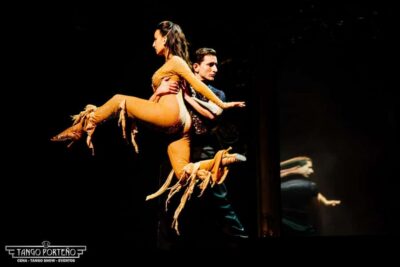
Tango Porteño: The Best Tango Night in Buenos Aires
Read our review →
Palacio Tango: Tango Show at the Piazzolla Theater
Read our review →
Browse the lists this tour appears in