
Reviewed · SAMBA & CARNIVAL SHOWS
Rio: Carnival Backstage Tour at Samba City with Cocktail
Rio Carnival is not simply a parade. It is a year-round operation involving giant floats, thousands of costumes, dancers, musicians, designers, and builders. This tour takes you behind the colorful show at City of Samba, where Grande Rio’s workshop gives you a closer look at how the spectacle is made.
I like two things especially: you get practical insight into the competition and planning, then you get to join in with costumes and a samba lesson. The main drawback is the meeting point, which can be confusing among the port warehouses, and indoor photography is restricted, so do not expect unlimited picture-taking.
Key things to know before you go
- See the working home of Grande Rio: Visit the factory of the 2022 Carnival champion and learn how parade pieces are prepared.
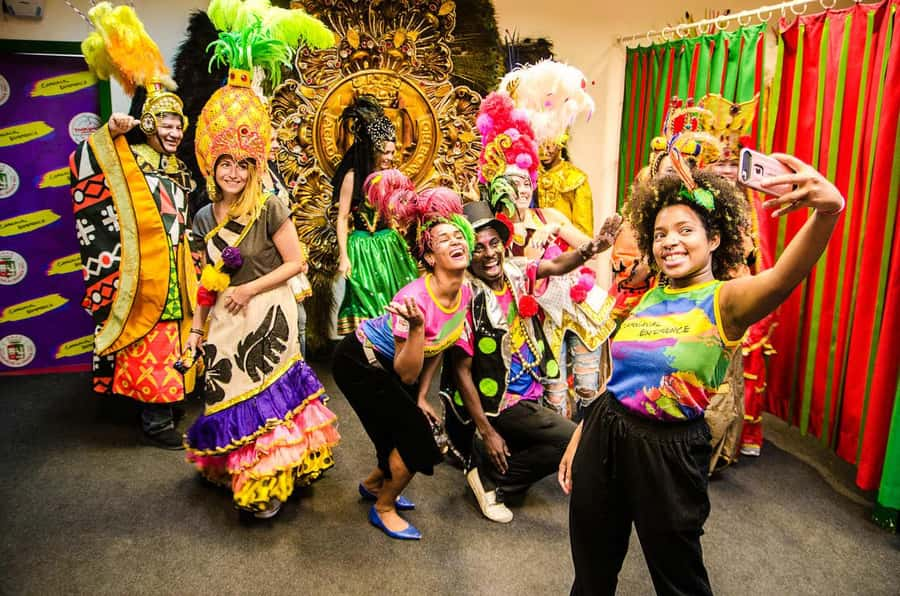
- Try on real parade costumes: The costume session is playful, colorful, and one of the tour’s strongest features.
- Learn why Carnival is a competition: Your guide explains the samba schools, judging, planning, and pressure behind the show.
- Expect an active finale: A professional dancer leads a samba workshop, followed by a caipirinha or nonalcoholic drink.
- Allow 90 to 150 minutes: The exact length can vary, so leave room in your schedule.
- Find the entrance carefully: Look for staff in colorful Carnaval Experience shirts at City of Samba.
Why City of Samba changes how you see Carnival
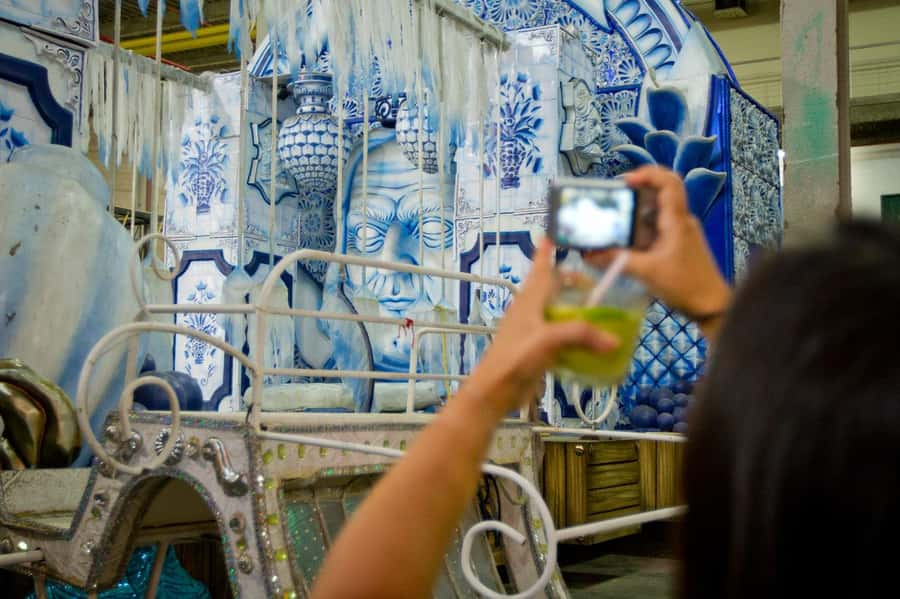
The Sambadrome performance lasts only a short time, but the work behind it begins soon after the previous Carnival ends. This visit helps you understand that the parade is a competition, not just a party. Samba schools prepare themes, music, costumes, props, choreography, and floats with the aim of earning points from judges.
That context matters. After walking through the factory, the huge figures and feathered costumes at the Sambadrome make more sense. You begin to notice the design choices, the number of people involved, and the sheer amount of labor needed for a few minutes of parade time.
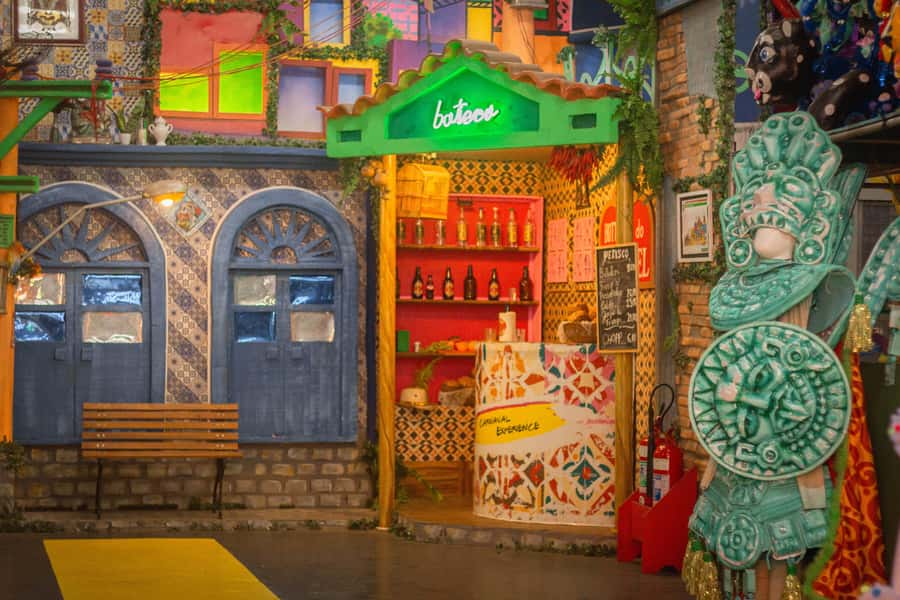
The tour takes place at City of Samba in Rio’s port district. The complex is made up of large, light-brown warehouses. Grande Rio’s building is part workshop, part storage area, and part window into the machinery behind Carnival.
I would not choose this only as a substitute for seeing the parade. It does something different. The Sambadrome gives you the noise and spectacle. City of Samba gives you the planning, construction, and people who make that spectacle possible.
More City Tours in Brazil
- Rio de Janeiro: Private Guided City Tour
★ 4.6 · 207 reviews - Rio de Janeiro: Half-Day Christ the Redeemer and City Tour
★ 4.4 · 101 reviews - Petrópolis: Imperial City Tour
★ 3.7 · 95 reviews
Finding the warehouse near AquaRio
The meeting point is at the main entrance to City of Samba on Binário do Porto Avenue. It is about 200 meters from AquaRio, near the Rio Star Ferris wheel and the Cidade do Samba VLT station.
The entrance is not a grand tourist gate. It can look like a regular warehouse complex, which explains why some people have trouble finding it. Allow extra time, especially if you are using a rideshare or walking from the port attractions.
Look for the Carnaval Experience team in colorful shirts. Staff may be in the square or in front of the Grande Rio warehouse. If you use a map app, search for Carnaval Experience or Cidade do Samba main entrance, rather than relying only on the attraction name.
The VLT is the clearest public transport option listed for the tour. Get off at Cidade do Samba station. By car or taxi, use the address at 60 Rivadávia Corrêa if you need paid street parking.
Pickup can be arranged as an optional extra. If you book it, the driver arrives 15 minutes before the scheduled time, and you should wait in your hotel lobby. Give the operator the exact meeting place in advance by phone, WhatsApp, or email.
Inside Grande Rio’s Carnival factory
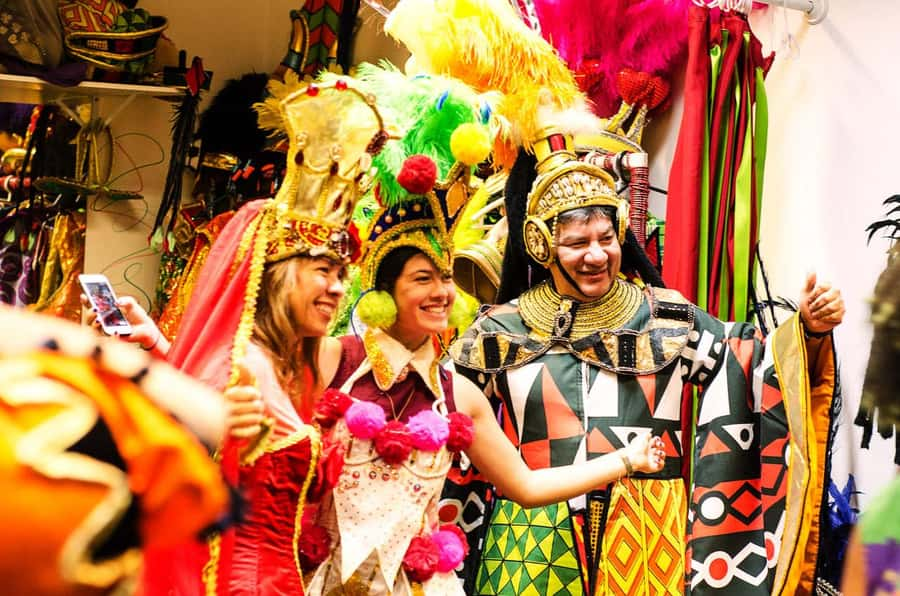
The main part of the visit is a guided walk through the factory of Grande Rio, the samba school identified with the 2022 Carnival title. The setting is practical rather than polished. You are seeing the place where parade materials are prepared, stored, and organized.
You can expect to see floats and understand how the different parts of the show fit together. The tour also covers the preparation of more than 3,000 costumes. That number is useful because it shifts your focus from the star dancer at the front to the enormous group effort behind every parade entry.
At the right time of year, the visit can feel especially immediate. Close to Carnival, costumes and props are nearer to completion, and the pressure of the upcoming competition is easier to grasp. At other times, you may see past costumes, designs, and parade pieces while learning how the process works.
One limitation is worth knowing. A backstage tour does not mean you will watch every stage of costume production in action. One visitor specifically wished to see more costumes being made. The tour is strongest as an explanation of the process and a look at the finished work, rather than as a craft class.
The guide is important here. Guides named Sol, Ton, Lea, Lias, and Jaquel have been praised for bringing energy and personal feeling to the subject. The guide roster changes, but the experience is designed to be led in several languages, including English, Portuguese, Spanish, French, German, Hebrew, and Italian.
The story behind samba and the parade competition
The exhibition adds a useful layer to the factory visit. Your guide explains the history of samba and Rio Carnival, along with the role of samba schools and the annual competition.
This section is not just background filler. It helps explain why a costume can represent a theme, why a float is built around a story, and why the samba schools invest so much time and money into a single parade. You also learn that the planning starts almost immediately after the last Carnival finishes.
A good guide will connect the display to the workshop around you. That is where the experience becomes more than a quick warehouse visit. Instead of seeing feathers, fabric, and painted structures as decoration, you begin to see them as parts of a judged performance.
The quality of the explanation can vary with the individual guide. Most comments describe the guides as friendly, entertaining, and well prepared, but one person found the guide less eager to answer questions. If you are curious, ask early and directly. This is a better tour for people who want cultural context than for anyone who only wants photos.
More City Tours in Rio de Janeiro
- Rio Samba Bus: hop-on hop-off city tour in Rio de Janeiro
★ 3.8 · 94 reviews - Learn the History of Rio with an Unforgettable City Center Walking Tour
★ 5.0 · 82 reviews - Rio: Christ Redeemer by Train & City Highlights Morning Tour
★ 4.4 · 74 reviews - Rio de Janeiro: Private City Tour with Hotel Pickup
★ 5.0 · 49 reviews
Costumes, surprises, and the best photo opportunity
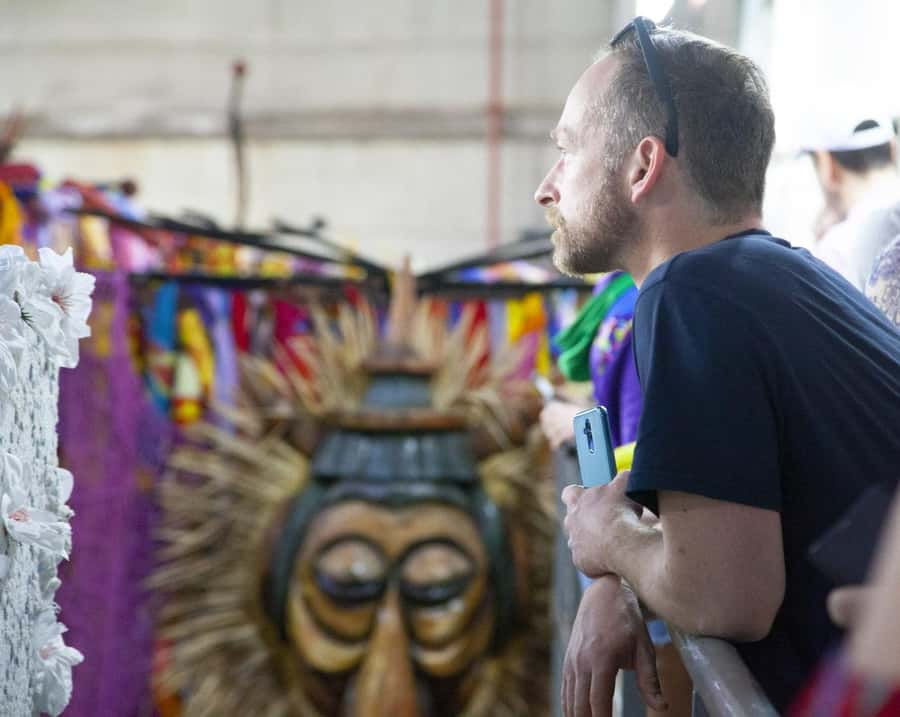
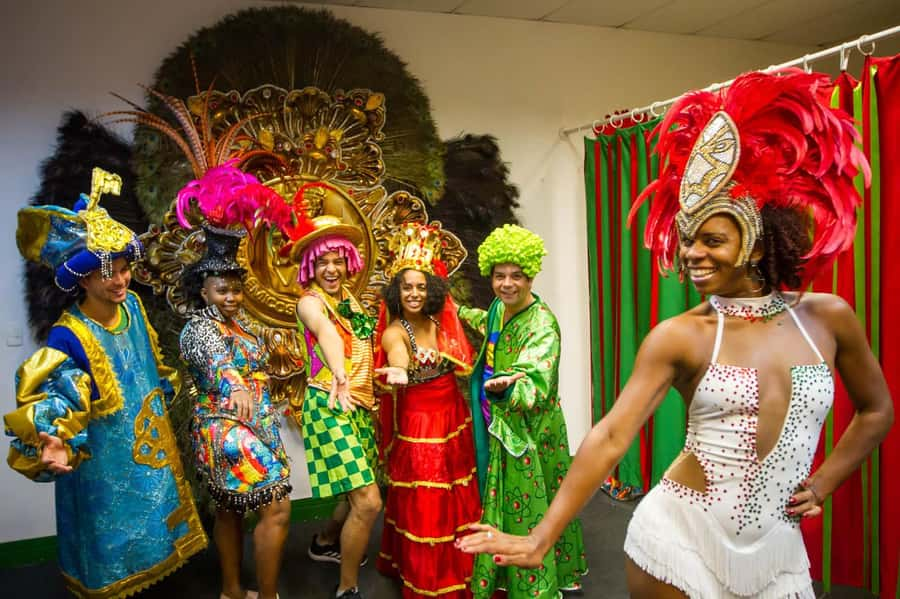
The costume try-on is one of the tour’s most enjoyable sections. You can put on authentic parade costumes and experience the weight, color, and exaggerated style at close range. It is a good way to understand that Carnival clothing is made to read from far away, under bright lights, while people are moving.
This part works for adults, families, and anyone who would rather participate than simply listen. You do not need samba experience to enjoy it. The point is not to look perfect. It is to feel, briefly, what it is like to become part of the show.
Photography needs a little care. The information for the activity says photography inside is not allowed, while the experience includes costume photos and the tour description refers to pictures when permitted. Follow the guide’s instructions and ask where pictures are allowed. Do not assume you can photograph every float, costume, or production area.
That restriction may disappoint visitors who want a full photographic record. It also protects the backstage setting, especially when new parade designs are being prepared. Think of the costume session as a guided moment, not an open photo shoot.
A professional samba lesson to finish
The tour includes a samba workshop with a professional dancer. Depending on the group and timing, you may also see a samba performance before taking part yourself.
This is a short introduction, not a serious dance course. You learn a few basic movements and get a feel for the rhythm. The atmosphere is meant to be light and social, so you do not need dance training or special clothing.
The lesson is a smart addition because it connects the factory’s objects with the people who wear and perform in them. A float or costume can look impressive on its own, but samba gives the show its movement and sound.
Some activity descriptions have used the word salsa, but this is a Rio Carnival experience centered on samba. If you are nervous about joining in, you can watch at first and follow along when you feel ready.
The caipirinha and what the $27 price buys
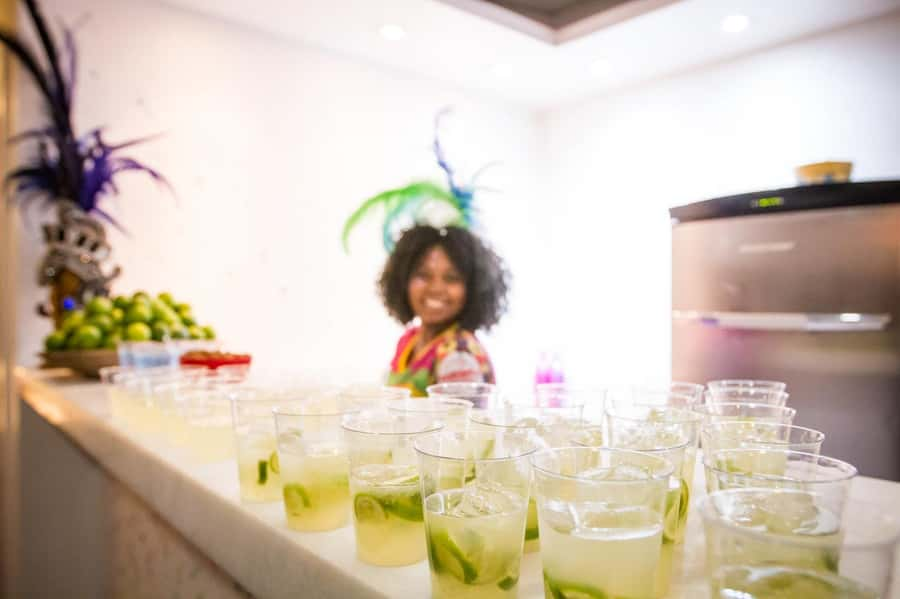
At about $27 per person, this is a good-value introduction to Carnival. You receive the guided factory visit, the exhibition, the costume experience, the dance activity, water, and a caipirinha. A nonalcoholic option is available, which makes the final drink suitable for people who do not want alcohol.
The value comes from the range of the experience. A basic museum visit might explain Carnival, but it would not normally include access to a samba school factory, costume try-on, and a dance session. A parade ticket gives you the finished show, but not the work behind it.
The price does not include transportation. That is important in Rio, where the port district may not be close to your hotel. You can reach City of Samba by VLT, taxi, rideshare, or on foot from nearby attractions, but build in time to locate the entrance.
The activity is non-refundable, so check your schedule and meeting details before paying. Since the tour can last from 90 to 150 minutes, avoid booking it too close to another fixed appointment.
When to fit it into your Rio plans
This is a particularly useful activity before attending a parade at the Sambadrome. You will recognize more of what you see, and the scale of the performance will feel less mysterious.
It also works well outside Carnival season. You may not see every part of the factory in active production, but you can still learn how the schools plan the event and view costumes and designs from previous years.
The tour fits neatly into a port-district day. AquaRio and the Rio Star are close to the entrance, and the Museum of Tomorrow is reachable on foot from the area. You can combine the visit with those attractions, but leave enough time to arrive at City of Samba without rushing.
Choose a small-group departure if available. The activity offers small groups, and a smaller party makes it easier to hear the guide, ask questions, and take part in the costume and dance portions.
Who will enjoy this most
I would recommend this to first-time visitors who want more than a quick Carnival photo. It is also a strong choice if you are attending a parade and want to understand what happens before the dancers enter the Sambadrome.
Families and mixed-age groups should find plenty to do. The tour combines a walk, displays, dressing up, movement, and a drink, so it does not depend on one long talk. People who enjoy design, costume, event planning, or Brazilian culture will get the most from the factory visit.
It may be less suitable if you want a quiet museum experience or unrestricted photography. The samba lesson is part of the fun, so anyone determined to remain entirely passive may not enjoy the format as much.
Language choice is another advantage. Live guides are available in English, Portuguese, Spanish, French, German, Hebrew, and Italian, though you should confirm the language and departure time when booking.
Practical advice for a smoother visit
Arrive early. The warehouse setting can be confusing, and several people have had trouble locating the right entrance. Look for the colorful Carnaval Experience shirts and, if needed, ask for the Grande Rio warehouse.
Wear comfortable shoes for the walking portion. The activity is not described as strenuous, but you will be moving around a large complex and standing during explanations and demonstrations.
Bring water if you prefer to have your own, although water is included. Keep your camera or phone ready only where the guide allows photography. Indoor smoking and drones are not permitted.
If you need pickup, arrange the exact hotel meeting point ahead of time. The provider can be reached by phone or WhatsApp at +55 21 96765-9549, or by email at [email protected].
Should you book the Samba City backstage tour?
I would book it if you want to understand why Rio Carnival takes so much work, not just watch the final parade. The strongest parts are the Grande Rio factory, the explanation of the competition, the costume try-on, and the friendly samba session.
At $27, it offers a lot for a short activity. Just plan carefully for the warehouse meeting point, remember that transportation is extra, and accept that photography is controlled. If you are going to the Sambadrome, schedule this beforehand. If not, it still gives you a lively, practical look at one of Rio’s defining traditions.
FAQ
Where does the Rio Carnival backstage tour meet?
The meeting point is at the main entrance to City of Samba on Binário do Porto Avenue, about 200 meters from AquaRio. Look for the Carnaval Experience team in colorful shirts, either in the square or near the Grande Rio warehouse.
How long does the tour last?
The activity lasts between 90 and 150 minutes. Starting times vary, so check availability when booking.
Is transportation included?
No. Transportation is not included, but optional pickup is available. You can also reach City of Samba by VLT, car, taxi, rideshare, or on foot from nearby attractions.
Which languages are available?
Live guides are available in French, Portuguese, English, Spanish, German, Hebrew, and Italian. Confirm the available language for your chosen departure.
Is the caipirinha alcoholic?
The tour includes an alcoholic beverage, including a caipirinha. A nonalcoholic version is also available.
Can I take photographs inside?
Photography inside is not allowed in general. Costume photos may be possible in designated situations, so follow the guide’s instructions about where and when you can take pictures.
More Samba Shows in Rio De Janeiro
- Rio de Janeiro: Beginner Samba Lesson in Ipanema
★ 4.9 · 1,071 reviews - Rio: Pub Crawl in Lapa with Cachaça Tasting and Live Samba
★ 4.7 · 881 reviews - Hop-ON Hop-OFF Sightseeing Bus in Rio de Janeiro – Rio Samba Bus
★ 3.5 · 457 reviews - Rio de Janeiro: Samba Class in Copacabana
★ 4.6 · 262 reviews
Just added around Rio De Janeiro
- Skip the Line: Lagoa Misteriosa Admission Ticket with Scuba Diving Experience★ 5.0 · 81 reviews
- Rio de Janeiro: Tijuca Peak Guided Hike★ 4.7 · 56 reviews
- Sugarloaf Mountain Fast-Pass Ticket and Guided Tour★ 4.4 · 62 reviews
- Rio de Janeiro: Sugarloaf Mountain Hike and Climb★ 5.0 · 45 reviews
- Rio de Janeiro: Sunrise Lookout and Christ the Redeemer Tour★ 5.0 · 121 reviews
- Rio de Janeiro: Samba Class and Samba Night Tour★ 4.6 · 115 reviews
- Rio Surf Experience★ 4.9 · 37 reviews
- Rio Samba Bus: hop-on hop-off city tour in Rio de Janeiro★ 3.8 · 94 reviews
Samba & Carnival Shows, compared.


Hop-ON Hop-OFF Sightseeing Bus in Rio de Janeiro – Rio Samba Bus
Read our review →
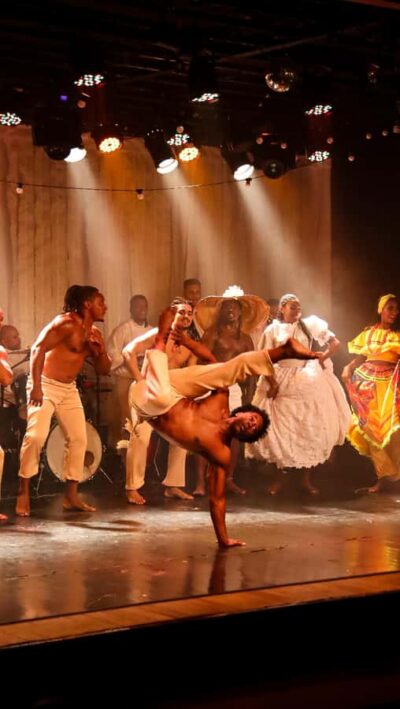

Ginga Tropical – Brazilian Samba and Folklore Show
Read our review →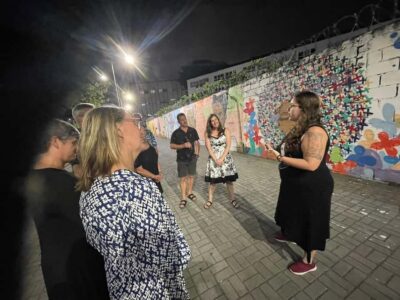
Pedra do Sal: Live Samba Night with Local Guide & Drink
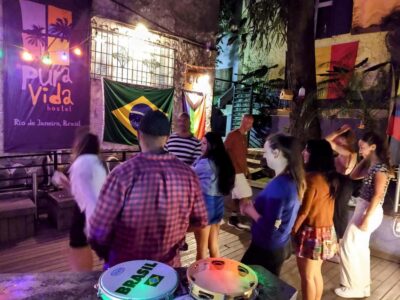
Read our review →
Browse the lists this tour appears in